 Blaine Window
 Windows Built for a Dakota Creek Address
Dakota Creek sits close enough to the water and to Semiahmoo Bay that homes here take a different kind of weather beating than houses further inland in Whatcom County. Salt-laden air moves through on the wind, driving rain comes in sideways off the water for weeks at a stretch, and the shaded, damp stretches of the year keep moss and mildew active on north-facing walls and trim long after other parts of the county have dried out. Windows are one of the first things on a house to show that wear, and one of the most expensive things to get wrong. This page is about what window replacement actually looks like when it's done right for a Dakota Creek home — not a generic rundown of window types, but the specific decisions that matter for houses in this part of Blaine.
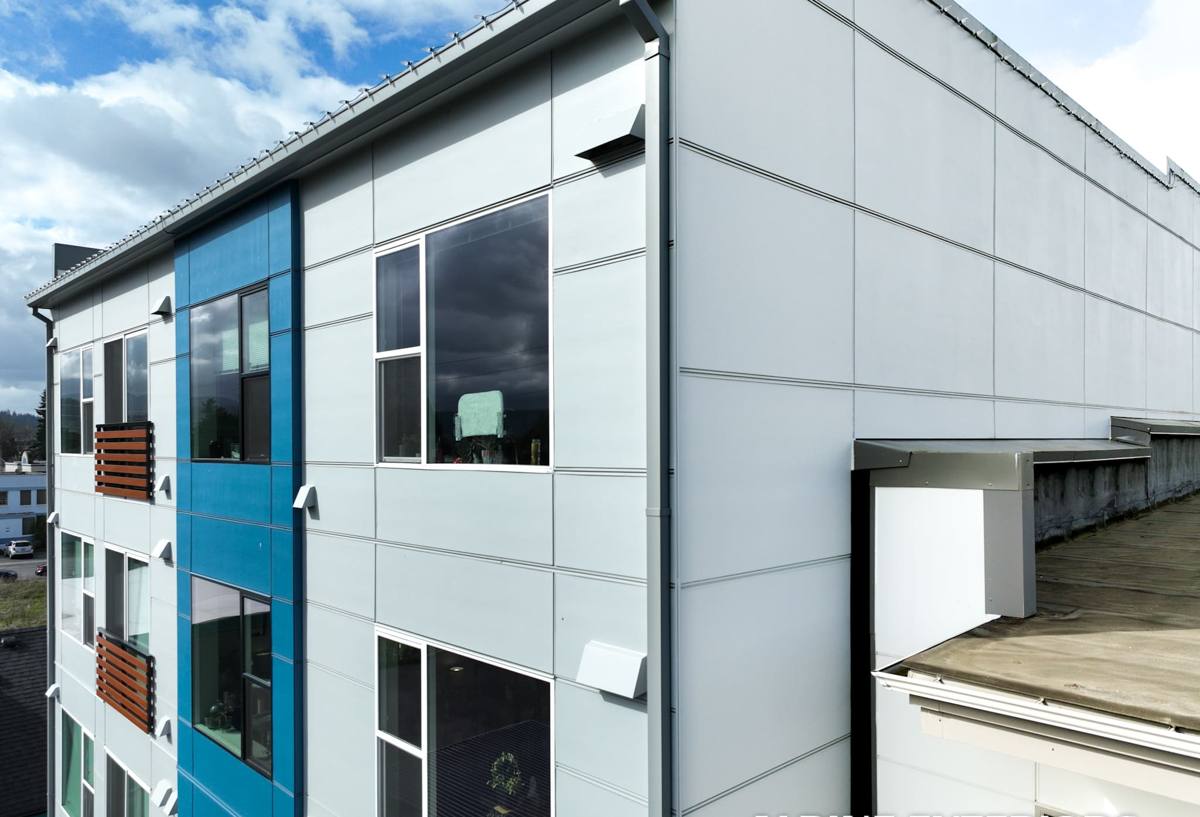
What Salt Air and Driving Rain Do to Windows Over Time
Every window failure we see out here traces back to one of a few things: moisture finding a way in, hardware corroding faster than it should, or seals breaking down under constant damp-dry cycling. None of these show up overnight. They build for years before a homeowner notices a drafty room, a foggy double-pane, or a sash that won't latch cleanly anymore.
Salt Air and Metal Hardware
Airborne salt accelerates corrosion on exposed metal — hinges, cranks, balance mechanisms, and lower-quality cladding fasteners. On a house a mile inland, cheap hardware might last a decade. Close to the water, it can start seizing up or rusting through in half that time. This is one of the biggest reasons hardware quality matters more here than the glass package does.
Driving Rain and Wind-Driven Water
Blaine gets rain that doesn't fall straight down — storms off the water push it sideways into window faces, sills, and the flashing details around the frame. A window that would perform fine in a calmer climate can leak here if the flashing, sill pan, and sealant details aren't installed to handle wind-driven water specifically. This is an installation issue as much as a product issue.
Moss, Shade, and Standing Moisture
Shaded exterior walls and window trim in this area hold moisture longer through the fall and winter. Wood trim and sills that aren't properly sealed or that sit in near-constant shade become a place for moss and mildew to take hold, and once wood starts absorbing water around a window opening, the frame and the wall assembly behind it are both at risk.
Signs a Dakota Creek Home Needs Window Replacement
- Visible fogging or a cloudy haze between panes — the seal has failed and the insulating gas is gone
- Windows that feel drafty even when latched, especially on walls that face the water or prevailing wind
- Wood sills or trim that feel soft, discolored, or are growing moss or mildew
- Cranks, locks, or balances that are stiff, corroded, or no longer hold the sash in place
- Paint or finish that's bubbling or peeling specifically around the window opening, not the wall in general
- Noticeably higher heating costs in winter with no other explanation
- Condensation forming on the inside of the glass regularly during cold, wet weeks
What a Correct Window Replacement Job Involves
Replacing a window is not just swapping the sash or dropping a new unit into the old opening. Done right, it's a sequence of steps where skipping any one of them is what leads to the leaks and failures we get called out to fix a few years later.
Inspecting the Opening, Not Just the Window
Before anything gets ordered, we look at the framing, sill, and sheathing around the existing window. If there's rot, soft wood, or old water damage behind the window itself, that has to be addressed first — a new window installed over a compromised opening will fail again regardless of how good the unit is.
Full Removal vs. Insert Replacement
An insert (or "pocket") replacement fits a new window into the existing frame and is faster and less invasive when that frame is still sound. A full-frame replacement removes everything down to the rough opening, which costs more and takes longer but is the right call when there's water damage, the opening needs to change size, or the existing frame can't be trusted anymore. We'll tell you honestly which situation you're in — it's usually obvious once the old window is off.
Flashing and Sill Pan Details
This is the step that matters most for a house exposed to driving rain. Proper flashing directs water that gets past the exterior cladding back out and away from the framing, and a sill pan gives any water that reaches the sill somewhere to drain instead of pooling against wood. On a home taking wind-driven rain regularly, this detail is the difference between a window that lasts and one that leaks in five years.
Sealing and Insulating the Gap
The gap between the new window frame and the rough opening gets sealed and insulated correctly — not overpacked with expanding foam, which can bow the frame and cause the sash to operate poorly, and not left with gaps that let air and moisture through. This is a place where installer experience shows up directly in how the window performs.
Exterior Trim and Finish
Once the window is set, the exterior trim gets re-installed or replaced and properly sealed and finished. Given how much moss and mildew activity we see on shaded trim in this area, finish quality and proper caulking at every joint is not a cosmetic afterthought — it's part of keeping water out.
Choosing Materials for a Coastal Whatcom County Climate
Material choice matters more here than in drier inland climates, mostly because of how each option handles constant moisture exposure and salt air over the long run.
| Material | How It Handles This Climate | Maintenance Reality |
|---|---|---|
| Vinyl | Doesn't rot or corrode from salt air; handles moisture well | Low — periodic cleaning, no repainting |
| Fiberglass | Very stable in temperature swings and damp conditions; strong resistance to warping | Low — durable finish, minimal upkeep |
| Wood (unclad) | Classic look but most vulnerable to the moss, mildew, and rot risk in shaded, damp areas | High — needs regular painting/sealing to hold up |
| Clad Wood (vinyl or aluminum-clad) | Exterior face resists moisture and salt; interior keeps a wood look | Moderate — cladding protects the exposed side |
We don't push one material on every job. A lot of it comes down to how exposed the wall is — a window on the water-facing side of a house has a different risk profile than one tucked under an eave on the leeward side, and we'll walk that with you before recommending anything.
Hardware and Glass Considerations
Whatever frame material you choose, ask about the hardware finish and corrosion resistance specifically — this is where salt air does the most damage over time, often well before the frame or glass shows any wear. On the glass side, a quality dual-pane unit with a warm-edge spacer system resists the seal failure that shows up as fogging between panes; that spacer detail matters more in a climate with this much sustained humidity and temperature swing between a cold, wet night and a sunny afternoon.
Our Process for Dakota Creek Homeowners
- Free on-site estimate. We look at your existing windows, the condition of the openings, and how exposed each wall is to wind and rain.
- Honest recommendation. We'll tell you which windows need full-frame replacement versus an insert, and which material makes sense for your budget and exposure — no upsell for its own sake.
- Written scope and price. You get a clear breakdown before any work starts, so there are no surprises mid-project.
- Careful removal and inspection. We check the framing and sill behind each window as it comes out and flag anything unexpected before proceeding.
- Installation with proper flashing and sealing. This is the step we don't rush, because it's the one that determines whether the job holds up through a few winters of driving rain.
- Final walkthrough. We check operation, sealing, and finish with you before we call the job done.
Why Local Experience in Dakota Creek Matters
A window crew that mostly works drier inland areas doesn't think about flashing details, sill pans, or hardware corrosion the same way a crew working Blaine's waterfront-adjacent neighborhoods does, because they don't have to. Working regularly in and around Dakota Creek means we've seen how salt air and driving rain actually behave against these homes — which walls take the worst of it, which details fail first, and which shortcuts show up as callbacks two or three years later. That's not something you can pick up from a spec sheet; it comes from doing the work in this specific climate, on this specific coastline, repeatedly.
What Window Replacement Typically Involves Cost-Wise
Costs vary by window size, material, whether it's an insert or full-frame replacement, and how many windows you're doing at once. As a broad range, straightforward vinyl insert replacements tend to run toward the lower end per window, while full-frame replacements, fiberglass, or clad-wood units run higher given the added labor and material cost. We'll never give you a real number until we've actually looked at your windows and openings — anything else is a guess.
- Number of windows being replaced at once (per-window cost usually drops with volume)
- Insert replacement vs. full-frame replacement
- Frame material (vinyl, fiberglass, clad wood)
- Glass package and hardware quality
- Extent of any hidden rot or water damage found once the old window is removed
- Trim and finish work needed to complete the exterior
If your windows in Dakota Creek are fogging, drafty, sticking, or showing moss and moisture damage around the trim, it's worth having them looked at before another wet season adds to the problem. We offer free, no-pressure estimates — fill out the form below and we'll come take a look at what you're actually working with.