 Blaine Window
 Building Decks for Semiahmoo's Waterfront Exposure
Semiahmoo sits right on the water, out on the spit near the Canadian border, and that location comes with a specific set of building problems most inland Whatcom County decks never have to deal with. Salt-laden air off the bay moves through fasteners, framing connectors, and railing hardware every day, not just during storms. Add Blaine's long stretch of driving rain and a moss season that can run from October through April, and a deck built to generic specs will show corrosion, staining, and soft spots years before it should. We've built and repaired decks in this specific pocket of Whatcom County long enough to know which shortcuts fail first out here, and we don't take them.
This page covers what a custom deck actually needs to hold up in Semiahmoo's environment — not a general overview of deck building, but the material, fastener, and drainage decisions that matter for this exact location.
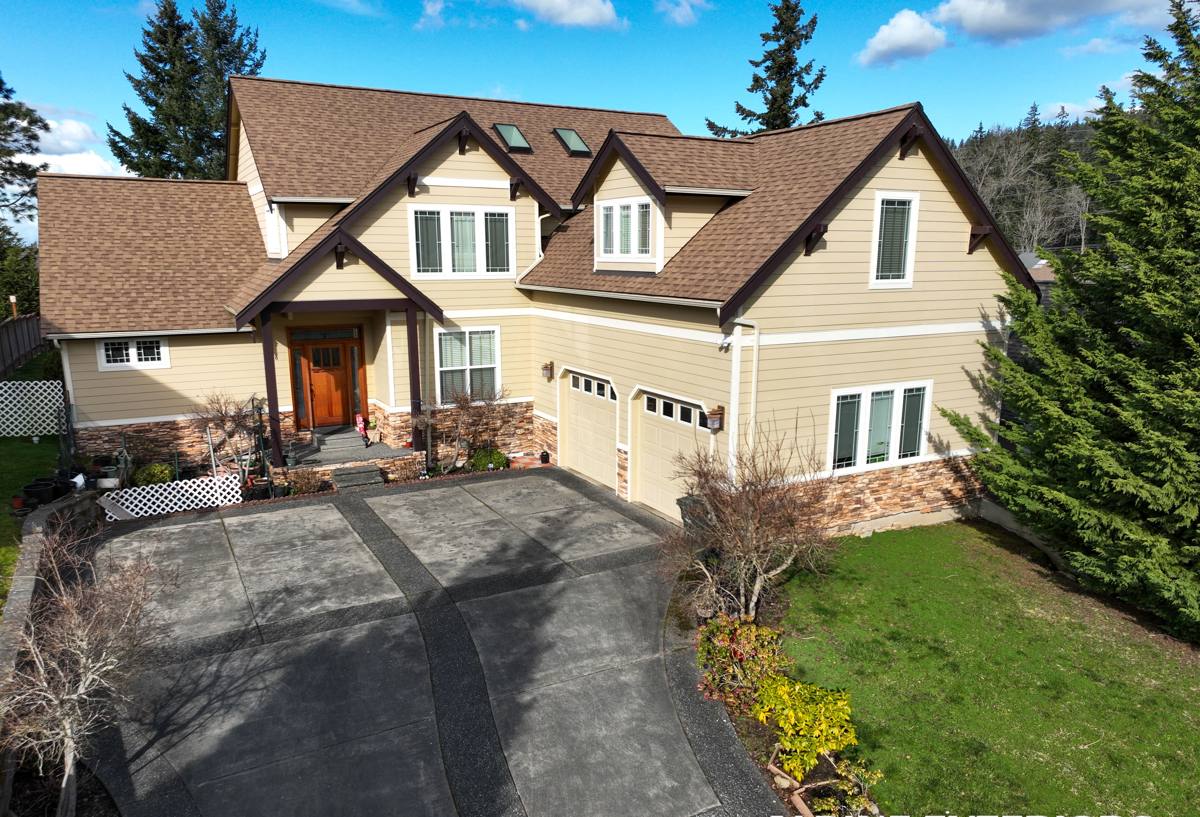
What Salt Air Actually Does to a Deck
Salt air is a slow, constant corrosive. It doesn't just rust exposed nails — it works into the threads of structural screws, the crimped joints of joist hangers, and the mechanisms inside gate latches and hinges. On a standard-grade deck, this shows up first as rust bleed streaking down the decking boards below any galvanized hardware, then later as actual loosening of structural connections.
Where It Hits Hardest
- Joist hangers and structural screws — the connections holding the frame together
- Railing post bases and any exposed metal brackets
- Deck fasteners near the ground or under low overhangs where salt film doesn't get washed off by rain
- Hinges, latches, and hardware on gates or built-in bench frames
The fix isn't complicated, it's just a spec decision: stainless steel fasteners and structural connectors in coastal-rated finishes, not the standard hot-dipped galvanized hardware that's fine forty minutes inland but underperforms right on the water. It costs more up front. On a Semiahmoo deck, it's not optional if you want the frame to outlast the decking.
Driving Rain and Where Decks Actually Rot
Blaine gets weather that comes in sideways off the Strait of Georgia, and a deck's vulnerable points aren't usually the open, exposed field of decking — it's everywhere water gets trapped or redirected against wood it shouldn't touch.
The Ledger Board
The ledger — where the deck attaches to the house — is the single most common rot point on decks in this climate, full stop. If flashing isn't installed correctly behind the siding and over the ledger, water tracks down the house wall and sits against the band joist and rim, and you don't see it until the deck starts to feel spongy near the house or paint starts bubbling on the siding above it. Proper ledger flashing (metal flashing, not just a bead of caulk) is one of those details that's invisible when done right and expensive when ignored.
Framing Connections and End Grain
End grain on joists and beams absorbs water many times faster than the face grain. Cut ends that aren't sealed, or joist hangers that trap water against the wood instead of letting it drain, create rot pockets inside a structure that looks fine from the top. We seal cut ends during framing and use hangers with drainage gaps rather than solid-bottom brackets that hold standing water against the joist.
Moss: The Slow Problem Nobody Notices Until It's a Safety Issue
Moss doesn't rot wood directly, but it does two things that cause real damage over a Whatcom County winter: it holds moisture against the decking surface far longer than bare wood would dry on its own, and once established, it makes the deck surface genuinely slick — a real fall hazard on stairs and ramps especially.
What Actually Slows Moss Growth
- Airflow underneath the deck — low, boxed-in decks with no ventilation stay damp longer and grow moss faster than decks with proper clearance and skirting vents
- Board spacing — gaps sized correctly for the material let water drain through instead of pooling on the surface
- Surface texture and material choice — some composite and PVC decking resists moss better than others; smooth-grain cedar sheds water differently than brushed or grooved composite
- Shade and grade — decks under heavy tree cover or on the north/shaded side of a house will always need more attention regardless of material
No decking material is moss-proof in this climate. The goal is a build that dries out fast between rain events, because moss needs sustained moisture more than it needs any particular surface.
Choosing a Decking Material for This Environment
Every material has trade-offs here. We'll walk you through what fits your budget, your maintenance appetite, and how exposed your specific lot is to wind and salt spray.
| Material | Salt Air Behavior | Moss Resistance | Maintenance | Typical Lifespan |
|---|---|---|---|---|
| Cedar | Naturally rot-resistant; needs sealed fasteners and periodic finish | Moderate — needs cleaning and re-oiling to keep surface shedding water | Annual cleaning, refinish every 2-3 years | 15-20 years with upkeep |
| Composite (capped) | Excellent — doesn't absorb salt or corrode | Good, varies by brand and surface texture | Periodic washing, no sealing/staining | 25-30+ years |
| PVC | Excellent — fully synthetic, no wood fiber to hold moisture | Good to very good depending on texture | Low — occasional washing | 25-30+ years |
| Tropical hardwood (ipe, etc.) | Very good — dense, naturally weather-resistant | Moderate — dense grain sheds water well when clean | Periodic oiling to maintain color; low structural maintenance | 25+ years |
For most Semiahmoo homes we build with composite or PVC decking specifically because the material itself doesn't care about salt exposure — the corrosion risk moves entirely to the hardware, which we can control with fastener choice. Cedar is still a good option for homeowners who want a natural look and are willing to keep up with finish maintenance; it just needs more attentive upkeep this close to the water.
Structural Details That Matter on This Site
Footings and Frost Depth
Footings need to be sized and set to the depth required by Whatcom County's building code for frost protection, and on waterfront lots we also check soil conditions before assuming a standard footing will hold — some spots along the spit have sandier, less stable soil than a typical inland lot.
Wind Bracing
Open water exposure means more sustained wind load on a deck structure, especially for elevated decks or ones with solid railings that catch more wind than open baluster rail. We brace posts and beams accordingly rather than building to the bare minimum spec that works fine on a sheltered inland lot.
Railing Code
Any deck over 30 inches above grade needs a guard rail at least 42 inches high with baluster spacing that won't pass a 4-inch sphere — this is standard code, not a Semiahmoo-specific rule, but it's worth confirming on any custom design with unusual railing styles, cable rail, or glass panels, since those systems have their own spacing and structural requirements.
Our Process for a Semiahmoo Deck Build
- On-site assessment — we look at your lot's specific wind and water exposure, existing drainage, and how the deck will tie into the house
- Design and material selection — sized to your budget, walking through the material trade-offs above rather than defaulting to one product
- Permitting — we handle the Whatcom County permit process and build to current code, including footings, railing, and ledger attachment requirements
- Framing with coastal-rated hardware — stainless fasteners and connectors, sealed end cuts, drainage-gap hangers
- Ledger flashing done correctly — proper metal flashing integrated with your siding, not just sealant
- Decking installation — spacing and fastening method matched to the material for proper drainage and expansion
- Final walkthrough — we go over basic maintenance specific to your material choice so moss and salt exposure stay manageable
What to Check Before You Sign Off on Any Deck Build Here
- Fasteners and structural connectors are stainless steel or explicitly rated for coastal/marine exposure
- Ledger board has real metal flashing integrated with the house's siding or building paper
- Footings meet Whatcom County frost depth and are appropriate for your soil
- There's enough clearance and venting underneath the deck for airflow
- Railing height and baluster spacing meet current code
- Cut ends and field cuts on framing lumber are sealed before installation
- You understand the maintenance schedule for whatever decking material you chose
Why Local Experience on This Specific Site Matters
A deck built to a generic spec sheet can look identical to a properly built one on install day. The difference shows up two, five, and ten years later — in whether the ledger stays dry, whether the hardware holds up, and whether the deck surface stays usable through a Whatcom County winter instead of turning into a moss-slicked hazard. A crew that already works Semiahmoo and the Blaine waterfront isn't guessing at what this environment does to a deck; we've seen it happen and we build to avoid it from the start.
If you're planning a new deck or replacing one that hasn't held up to the salt air and rain, we're glad to come out, look at your specific site, and put together a straightforward, no-pressure estimate. Use the form below to get started.