 Blaine Window
 Windows Built for Peace Arch's Border-Country Weather
Peace Arch sits about as close to the water and the international line as a Whatcom County neighborhood gets. That location is part of what makes it a good place to live, but it's hard on windows. Homes here take on a steady mix of salt-laden air off the Semiahmoo and Boundary Bay shoreline, wind-driven rain that comes in sideways more often than straight down, and a wet season that stretches long enough to grow moss on anything that holds moisture. Window installation in this kind of setting isn't just about picking a good-looking unit and setting it in the opening. It's about details — flashing sequence, sealant choice, frame material, drainage — that decide whether a window is still performing well in fifteen years or has already let water into the wall cavity.
We install windows across Blaine and greater Whatcom County, and Peace Arch jobs get the same standard as everywhere else: correct prep, correct materials for coastal exposure, and a finished install that sheds water instead of holding it.
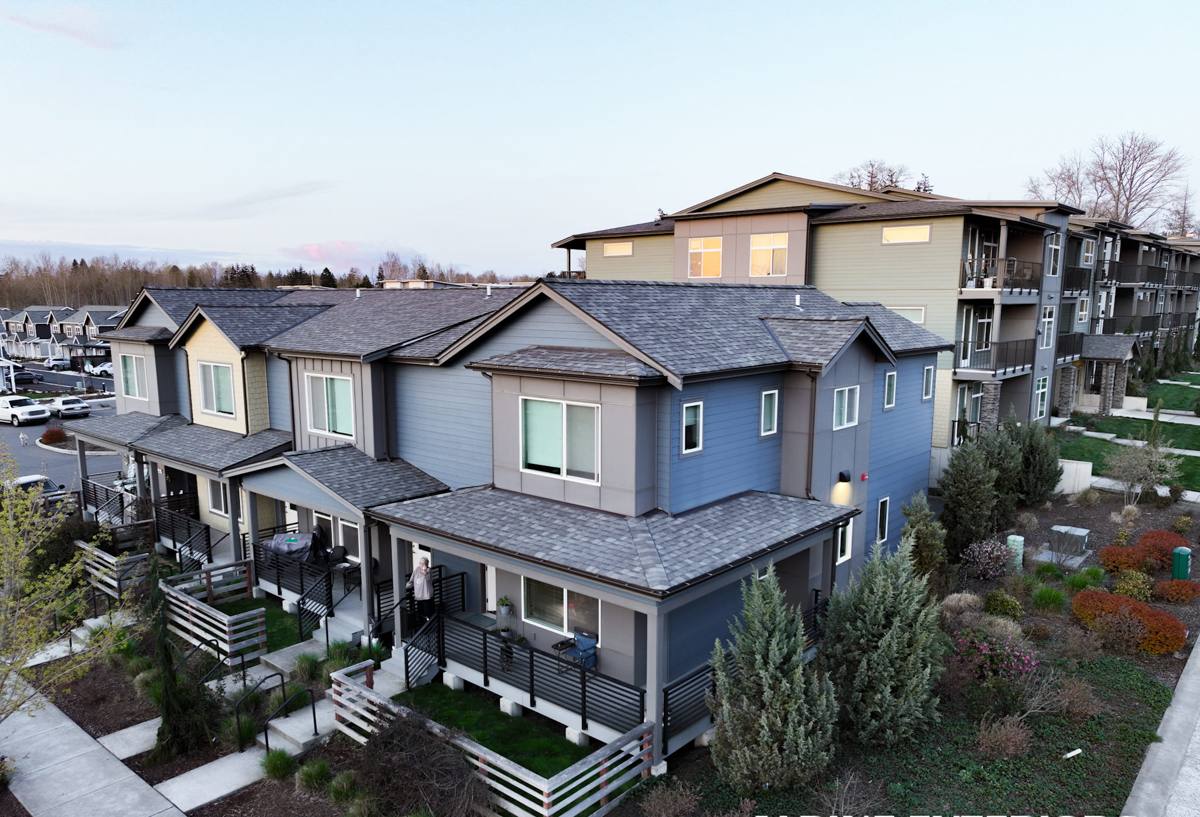
What Salt Air, Driving Rain, and Moss Season Actually Do to a Window
Salt Air
Airborne salt from the nearby bay settles on everything outside, including window frames, hardware, and fasteners. Over years, it accelerates corrosion on lower-grade metal components — hinges, balance systems, screws — and can dull or pit finishes that aren't rated for coastal exposure. It also mixes with dust and moisture to form a film that traps water against the frame instead of letting it run off.
Driving Rain
Wind off the water doesn't just fall on a window — it pushes against it. That lateral pressure forces water into gaps that would stay dry in a calmer climate. A window that's watertight in a light shower can still leak in a wind-driven storm if the flashing and sealant weren't installed to handle horizontal pressure, not just gravity.
Long Moss Season
Extended damp weather keeps exterior surfaces wet for days at a time. Moss and algae take hold anywhere water sits or drains slowly — sills, bottom corners of frames, and trim that isn't sloped to shed water. Beyond the appearance issue, trapped moisture under moss growth is exactly the condition that rots wood trim and breaks down sealant faster than dry-climate exposure ever would.
What a Correct Installation Involves
A window install that holds up in Peace Arch's climate comes down to sequence and material choice, not just the window itself.
- Removing the old unit without tearing surrounding sheathing or siding more than necessary
- Inspecting the rough opening for hidden rot, soft framing, or prior water damage before anything new goes in
- Installing a sloped sill pan so any water that gets past the window drains back out, not into the wall
- Flashing in the correct shingle-lap order — building paper or house wrap, then sill pan, then window flange, then jamb and head flashing layered so upper courses always overlap lower ones
- Sealing with a sealant rated for the substrate and for sustained wet exposure, not a general-purpose caulk
- Shimming and fastening the unit square and plumb so it operates smoothly and doesn't stress the frame
- Insulating the gap between frame and rough opening without overpacking, which can bow the frame
- Finishing interior and exterior trim so water sheds away from the opening, not toward it
Skip or rush any one of those steps and the window can look fine for a year or two before a leak shows up — usually as a stain, a soft spot in drywall, or a moldy smell that's already evidence of damage happening inside the wall.
Our Process for a Peace Arch Window Job
1. On-Site Assessment
We look at each opening individually — orientation to prevailing wind and rain, condition of the existing frame and sill, and any signs of past water intrusion. A window on the weather side of a house facing the bay gets treated differently than one on a sheltered wall.
2. Product and Material Selection
We walk through frame material, glass package, and hardware options based on that specific opening's exposure, not a one-size answer for the whole house.
3. Prep and Removal
Old units come out carefully so we can inspect the framing underneath. If we find rot or damage, we address it before the new window goes in — installing a new window over a compromised opening just hides a bigger problem.
4. Installation
Sill pan, flashing, sealant, and fastening follow the sequence above, matched to sustained wind-driven rain rather than fair-weather conditions.
5. Trim, Cleanup, and Walkthrough
Interior and exterior trim get finished, the site is cleaned up, and we walk through operation and care with the homeowner before calling the job done.
Choosing Window Materials for a Marine Climate
Every frame material handles salt air and constant moisture differently. There's no single right answer for every home — it depends on exposure, budget, and how much upkeep the owner wants to take on.
| Frame Material | Coastal Durability | Maintenance | Notes |
|---|---|---|---|
| Vinyl | Good — won't rust or corrode | Low — occasional rinse to clear salt film | Common, cost-effective, wide performance range depending on quality tier |
| Fiberglass | Very good — stable in wet, salty air | Low | Holds paint and dimension well over time; higher upfront cost |
| Wood (clad exterior) | Depends on cladding quality and detailing | Higher — exposed wood needs upkeep | Warm interior look; exterior must be well protected from driving rain |
| Aluminum (uninsulated) | Prone to corrosion and condensation near salt air unless thermally broken | Moderate to high | We generally steer homeowners away from bare aluminum on exposed coastal walls — corrosion and condensation issues in this climate outweigh the upfront savings |
For most Peace Arch homes, vinyl or fiberglass frames with a quality low-E, dual- or triple-pane glass package strike the right balance between upfront cost and long-term performance in salt air and sustained wet weather.
Signs a Window Needs Replacing, Not Just Repair
- Fogging or moisture trapped between panes — the seal has failed and the insulated glass unit can't be repaired
- Soft, spongy, or discolored wood at the sill or jamb
- Visible moss or algae growth on the frame or sill that keeps returning after cleaning
- Drafts or a noticeable temperature difference near the window on windy days
- Difficulty opening, closing, or locking that isn't fixed by simple hardware adjustment
- Paint or finish that's peeling specifically around the window opening, not the whole wall
- A musty smell or stain on interior trim or drywall near the window
Any one of these can be a simple fix. Several at once, especially combined with soft framing, usually points to full replacement being the more honest long-term answer.
What Affects the Cost of a Window Installation
| Factor | Why It Matters |
|---|---|
| Frame material | Vinyl, fiberglass, and clad-wood options carry different material and labor costs |
| Glass package | Low-E coatings, gas fills, and multi-pane glass affect both cost and long-term energy performance |
| Condition of the existing opening | Hidden rot or framing damage found during removal adds repair scope before the new window can go in |
| Number and size of openings | Larger units and full-house jobs bring per-unit costs down versus single-window replacements |
| Exposure and orientation | Openings on the weather side of the house may call for upgraded flashing or sealant details |
| Trim and finish work | Matching existing interior trim or exterior siding detail adds labor |
Costs vary enough project to project that we don't quote broad numbers on a page — an on-site look at the actual openings is the only way to give a homeowner an accurate figure.
Why a Crew That Already Works Peace Arch Matters
Window installation isn't a one-size-fits-all trade. A crew that's worked this specific stretch of Blaine already knows what a bay-facing wall goes through in a winter storm, which older homes in the area tend to have moisture issues hiding behind the siding, and how much flashing detail is actually needed versus what's overkill. That local pattern recognition shows up in fewer surprises during removal, fewer callbacks after a hard rain, and a finished job that's sized to what Whatcom County weather actually demands — not a generic installation standard written for a drier climate.
It also means we're not guessing at code requirements or typical construction methods used in local homes. We've seen what works and what fails here, and we build accordingly.
Caring for New Windows in This Climate
- Rinse frames and sills periodically to clear salt residue before it builds up a film
- Keep gutters and downspouts clear so roof runoff isn't dumping extra water onto window heads
- Clear moss or algae from sills and trim promptly rather than letting it establish
- Check exterior caulk lines yearly and have any cracked or separated sealant redone before wet season
- Operate hardware a few times a season so mechanisms don't seize from disuse and moisture
None of this is heavy maintenance — it's the same kind of upkeep any coastal home in Whatcom County needs, and it goes a long way toward protecting the investment in new windows.
Get an Honest Look at Your Windows
If you're in Peace Arch and dealing with drafts, fogged glass, sticking sashes, or just aging windows that haven't been looked at in years, we're happy to come take a look. There's no pressure and no obligation — just a straight assessment of what your windows need and what it would take to fix it right. Use the form below to request a free estimate.