 Blaine Window
 Roofing in Sumas Takes a Different Kind of Beating
Sumas sits in a low, flat valley near the Canadian border, in a stretch of Whatcom County that was reclaimed farmland long before it was a residential community — much of the surrounding lowland was once lake bed, drained generations ago for agriculture. That history matters for roofs. Low-lying valley air holds moisture longer than a hillside or coastal bluff would, and Sumas gets more fog, dew, and standing humidity than towns just a few miles away. Add the marine-influenced weather that pushes inland off the Strait of Georgia — long stretches of driving rain, salt-tinged air on windy days, and short winter daylight that keeps roofs damp for hours after the rain stops — and you get a climate that's genuinely hard on shingles, flashing, and attic spaces.
The most visible result is moss. Whatcom County's moss season isn't a two-week nuisance here — on a shaded, north-facing slope in Sumas, moss can be actively growing nine or ten months a year. Moss holds water against the roof surface, lifts shingle edges, and works its way under flashing. A roof that would last 25 years in a drier climate can lose several years of service life to moss and moisture alone if it wasn't built, ventilated, and flashed correctly in the first place.
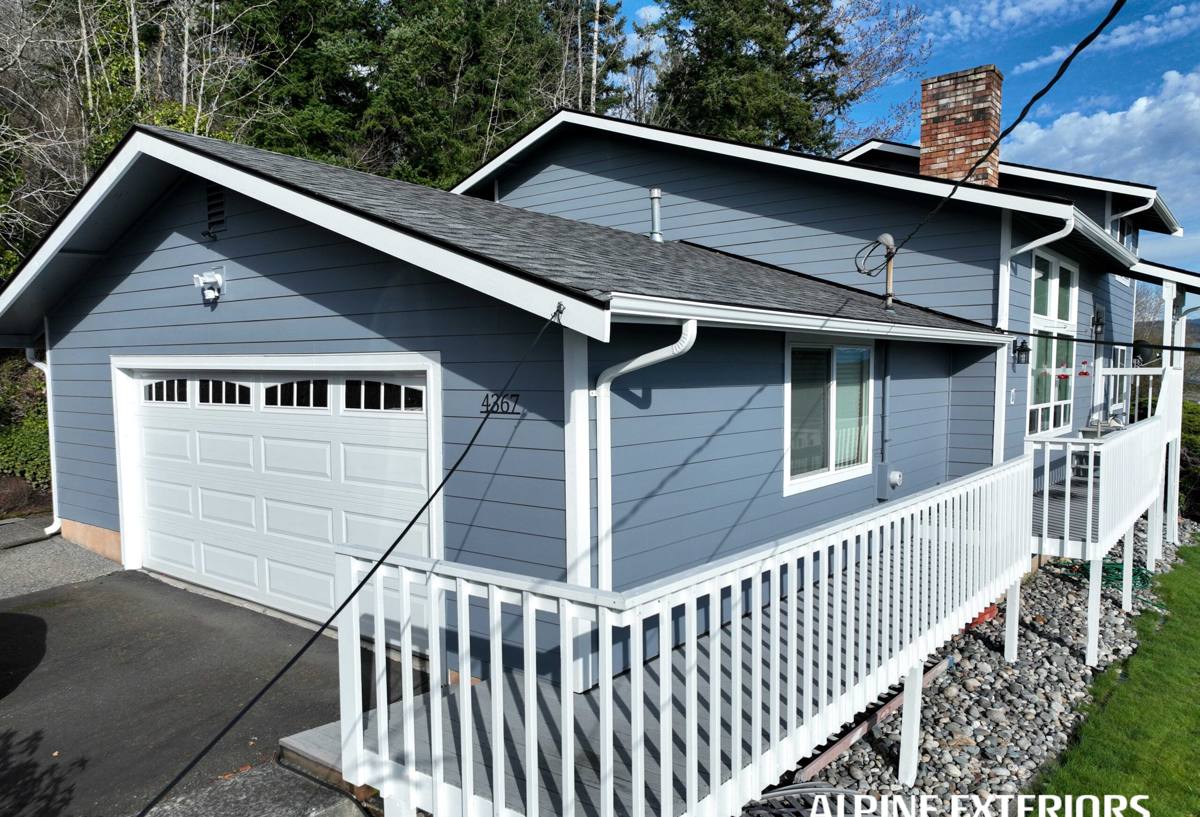
What "Correct" Actually Means on a Roof Replacement
A new roof is more than shingles nailed over the old ones. Every full replacement we do in Sumas includes the same core steps, because skipping any one of them is where roofs fail early:
Full Tear-Off, Not an Overlay
We strip the roof down to the decking on every replacement. Overlaying new shingles on old ones traps moisture between layers, hides rot, and voids most manufacturer warranties. It also means we never actually see the condition of the decking underneath — and in a valley climate, that's exactly where hidden damage tends to hide.
Decking Inspection and Repair
Once the old roofing is off, we check every sheet of decking for soft spots, delamination, and water staining. Any compromised plywood or OSB gets replaced before anything new goes down. This step gets skipped by crews trying to move fast — it's also the single most common reason a "new roof" starts sagging or leaking within a few years.
Ice-and-Water Barrier at Vulnerable Points
Eaves, valleys, and any low-slope transitions get a self-adhering waterproof membrane underneath the primary underlayment. In a valley setting where wind-driven rain can push water uphill under shingles, this barrier is what keeps that water from ever reaching the decking.
Synthetic Underlayment Across the Field
We use synthetic underlayment rather than old-style felt paper. It handles repeated wet-dry cycles better, doesn't wrinkle or tear as easily during installation, and holds up through the weeks between tear-off and final shingle if weather delays a job.
Flashing Done Right, Every Time
Chimneys, skylights, sidewalls, and roof-to-wall transitions fail more often from bad flashing than from bad shingles. We install new step flashing, counter-flashing, and valley metal on every replacement — we don't reuse old flashing just because it "still looks fine."
Ventilation: The Part Homeowners Never See but Always Notice Later
An under-ventilated attic is one of the fastest ways to shorten a roof's life in this climate. Warm, moist air from inside the house rises into the attic; without a real path in and out, that moisture condenses on the underside of the decking. Over a wet Whatcom County winter, that condensation can do as much damage as an actual roof leak — and it also accelerates moss growth on the outside, because a warmer, damper roof surface holds moisture that a properly ventilated one would shed.
On every replacement we evaluate intake (usually soffit vents) and exhaust (ridge vents or box vents) together, as a system. Adding a ridge vent without enough intake at the eaves does very little — air has to be able to enter before it can exit. We size and balance ventilation to the actual attic, not a one-size-fits-all vent kit.
Choosing the Right Roofing Material for a Sumas Property
There's no single "best" roofing material — the right choice depends on the home's roof pitch, budget, and how much long-term maintenance the homeowner wants to take on. Here's how the common options actually compare for a valley property dealing with sustained moisture and moss pressure:
| Material | Typical Lifespan Here | Moss/Moisture Behavior | Maintenance Load |
|---|---|---|---|
| Architectural asphalt shingle | 25–30 years | Good with algae-resistant granules; needs periodic moss treatment | Low to moderate |
| 3-tab asphalt shingle | 15–20 years | More prone to curling and moss lift over time | Moderate |
| Standing-seam metal | 40–50+ years | Sheds moisture fast, very moss-resistant on steeper pitches | Low |
| Synthetic composite (rubber/polymer) | 30–40 years | Handles moisture well, more flexible in cold snaps than natural slate | Low |
We install architectural asphalt shingle and standing-seam metal most often in this area. Both perform well against driving rain and moss when paired with correct underlayment and ventilation. We're generally cautious about wood shake in this particular climate — it can look great, but sustained valley moisture and moss pressure demand a maintenance schedule most homeowners underestimate, and the ongoing upkeep cost often changes the math versus a lower-maintenance option.
Color and Granule Choice Matters More Than People Expect
Darker shingles with copper- or zinc-infused granules resist algae and moss growth noticeably better than plain granules, especially on the shaded, north-facing slopes common on Sumas lots with tree cover. It's a small spec detail, but it directly affects how often you'll need moss treatment down the road.
Our Installation Process, Start to Finish
- On-site inspection — we walk the roof and attic, check decking condition where visible, and note ventilation and flashing issues before quoting anything.
- Written estimate — a clear scope of work and material selection, no vague allowances.
- Material delivery and site protection — landscaping, gutters, and siding get covered before tear-off starts.
- Full tear-off and decking inspection — old roofing removed, decking checked and repaired as needed.
- Underlayment, ice-and-water barrier, and flashing installation.
- Roofing material installation to manufacturer spec, including proper nailing pattern and exposure.
- Ventilation balancing — intake and exhaust checked together, not treated as an afterthought.
- Full site cleanup, including a magnetic sweep for stray nails.
- Final walkthrough with the homeowner before we consider the job done.
Signs a Sumas Home Needs a New Roof, Not Another Repair
- Granules collecting in gutters or at downspout outlets
- Shingles that are curling, cupping, or cracking, especially on south- and west-facing slopes
- Visible moss or dark algae streaking across large sections, not just isolated spots
- Daylight visible through the attic roof deck, or damp insulation after a heavy rain
- Sagging rooflines or soft spots felt when walking the roof
- Flashing that's rusted, lifted, or separating from chimneys and sidewalls
- A roof already past, or close to, its material's expected service life
- Repeated small leaks in different spots rather than one isolated failure
One or two of these on their own might mean a targeted repair is enough. Several at once, or a roof already near the end of its expected lifespan, usually means a repair is just delaying an inevitable replacement — and spending money twice.
What Drives the Cost of a Sumas Roof Replacement
| Factor | Why It Matters |
|---|---|
| Roof size and number of facets | More valleys, hips, and dormers mean more flashing, cutting, and labor time |
| Roof pitch and access | Steeper or harder-to-access roofs require more safety equipment and time |
| Decking condition | Hidden rot or delamination found at tear-off adds material and labor |
| Material choice | Asphalt, metal, and composite have significantly different material costs |
| Ventilation upgrades needed | Adding proper intake/exhaust venting where none existed adds scope |
| Layers being removed | Tearing off multiple existing layers takes longer than a single-layer tear-off |
We don't quote a number without seeing the roof first — anyone who does is guessing, and guesses tend to turn into change orders once the tear-off exposes what's actually underneath.
Why It Matters That We Already Work in Sumas
A crew that mainly works drier or more sheltered parts of Whatcom County can still install a roof — but they may not default to the ventilation ratios, algae-resistant shingle specs, or moss-focused flashing details that a valley property like a Sumas home actually needs. We build every replacement in this area around the same conditions: sustained dampness, long moss seasons, and the driving rain that comes with living this close to the border and the marine weather that pushes in off the coast. That's not a marketing line — it changes real decisions on the job, from how much intake ventilation we install to which granule coating we recommend on a shaded slope.
We're also straightforward about scope. If a repair genuinely solves the problem, we'll say so instead of pushing a full replacement. If a full tear-off is the honest answer, we'll explain exactly why before any work starts.
If your roof is showing its age, or you just want a straight answer on whether repair or replacement makes more sense for your home, we're happy to take a look. Fill out the form below for a free, no-pressure estimate.