 Blaine Window
 Storm Damage Roof Repair for Nooksack Homes
Nooksack sits back from the water compared to Blaine and the rest of the Whatcom County coastline, but it sits inside the same weather system, and that system doesn't stop delivering wind and rain just because a property is a few miles inland. When a storm moves through and takes shingles, flashing, or gutters with it, Nooksack homeowners are usually looking at the same underlying repair problem as anyone closer to the Strait — they just may not think to call a Blaine-based crew first. We work this area regularly, and a roof that's been through a wind event needs the same careful, honest assessment wherever it sits in the county.
This page covers what storm damage repair actually involves for a Nooksack home, what the local climate does to roofing systems over time, and how to tell a repair that's done right from one that's just a quick patch that buys a season or two before the same leak reappears.
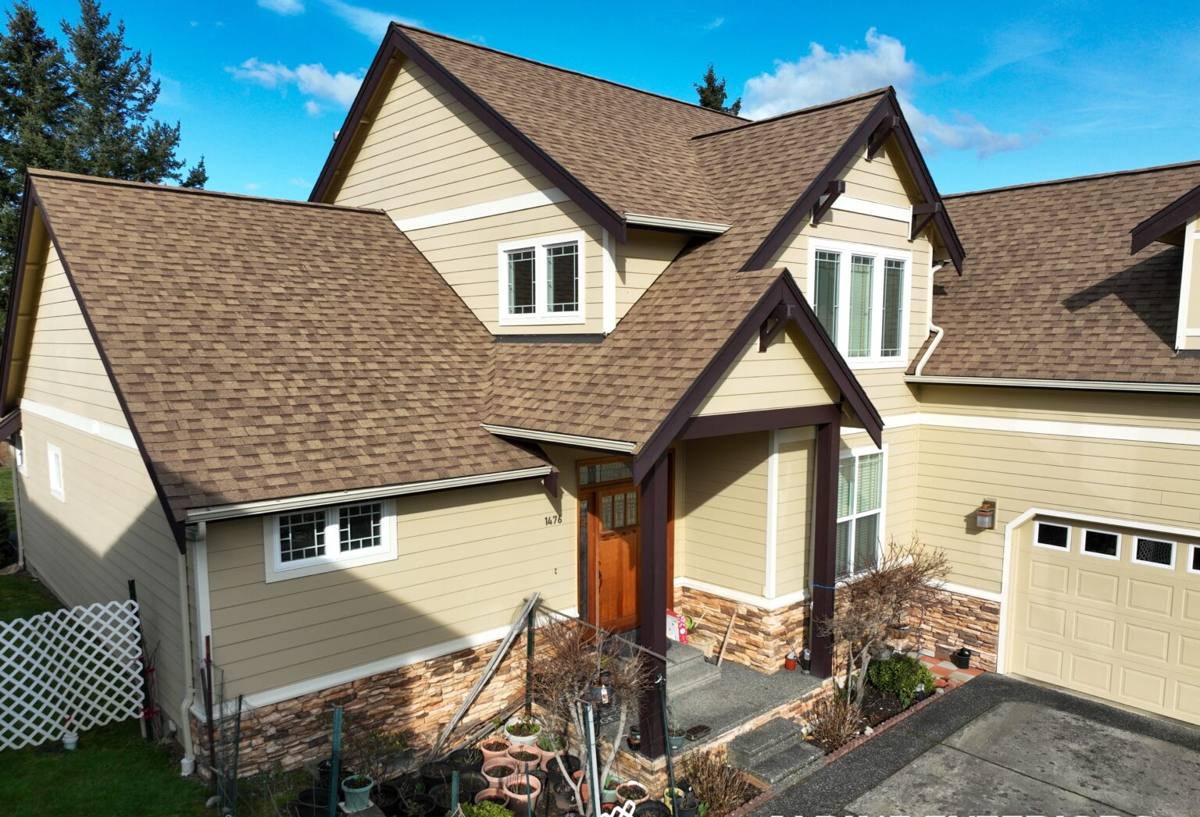
What Nooksack's Climate Puts a Roof Through
Wind-Driven Storms Moving Through the County
Storm systems that push in off the Strait of Georgia and roll across Whatcom County don't lose all their force by the time they reach inland communities like Nooksack. Sustained wind events can still lift shingle tabs, work fasteners loose, and drive rain sideways under roof edges and around flashing details — the same mechanism that damages coastal roofs, just usually with somewhat less direct salt exposure than a property sitting right on Semiahmoo Bay or Drayton Harbor. That distinction matters for material selection, but not for the basic physics of wind-driven rain finding a weak point in a roof system.
A Long Moss and Moisture Season
Whatcom County's mild, wet climate produces a moss and moisture season that runs long on shaded or north-facing roof slopes, and Nooksack's tree cover and river-valley humidity give it plenty of that. Moss doesn't just look bad — it holds moisture against shingles and underlayment far longer than a dry roof surface would, which softens materials over time and makes them more vulnerable to wind and impact damage during a storm. A roof that's already carrying a moss load going into storm season is a roof that's more likely to show real damage from the same wind event that a well-maintained roof shrugs off.
Repeated Wetting and Drying Cycles
Between storm events, roofs across this part of the county go through frequent wetting and drying, which stresses fasteners, sealant, and flashing joints over years of exposure even without a single dramatic storm. That slow wear is often what turns an ordinary wind event into a real leak — the storm doesn't create a weak point out of nowhere, it usually exploits one that's already been developing.
What Actually Counts as Storm Damage
Not every roof problem after a windy week is storm damage in the insurance or repair sense, and not every real storm-caused problem is obvious from the ground. The categories worth understanding:
- Wind-lifted or missing shingles: Tabs that have been pried up, cracked, or blown off entirely, often concentrated at roof edges, ridges, and corners where wind uplift is strongest.
- Flashing displacement or failure: Metal flashing around chimneys, vents, skylights, and roof valleys can shift or separate under wind load without any visible shingle damage nearby.
- Impact damage: Branches, debris, or hail can bruise or puncture shingles in ways that don't always show as an obvious hole from the ground.
- Gutter and fascia damage: Wind and falling debris commonly take out gutters, downspouts, and fascia boards alongside roof-surface damage, and a full assessment should catch all of it in one visit.
- Underlayment and decking exposure: Once shingles are compromised, the underlayment and roof decking beneath them are exposed to whatever weather follows, which is how a single storm event turns into progressive water damage over the following weeks if it isn't addressed.
Signs Worth Checking After a Windstorm
Storm damage isn't always dramatic. A roof can look mostly fine from the driveway and still have real problems. After any significant wind or rain event, it's worth walking the property and checking for:
- Shingle fragments or granules collecting in gutters, downspouts, or on the ground near the foundation
- Curled, cracked, or visibly lifted shingle tabs, especially near ridges and roof edges
- Gaps or shifted panels in flashing around chimneys, vents, or skylights
- New or expanding water stains on interior ceilings, especially near exterior walls or plumbing vents
- Sagging or soft spots when walking the attic, if it's safely accessible
- Loose, dented, or detached gutters and downspouts
- Visible daylight through the roof deck from inside the attic
Interior staining is often the last sign to show up, sometimes weeks after the storm that actually caused the damage. That delay is one of the more common reasons homeowners assume a leak is new when the entry point has been open for a while.
What a Correct Storm Damage Repair Actually Involves
An Inspection That Covers the Whole System, Not Just the Obvious Spot
A repair that only addresses the shingles a homeowner can see from the ground misses the point. A proper storm damage assessment covers the full roof plane, all flashing details, the gutter system, and — where accessible — the attic side of the decking, because wind damage rarely announces itself in just one location.
Matching Materials, Not Just Covering the Gap
A repair should use shingles and flashing that match the existing roof system in type and, as closely as possible, in appearance and manufacturer spec — not whatever's on the truck. Mismatched materials can create their own weak points at the transition, which defeats the purpose of the repair.
Flashing Gets the Same Attention as Shingles
Flashing failures are one of the most common sources of a leak that a shingle-only repair misses entirely. If storm winds moved flashing at a chimney, vent, or valley, that has to be corrected and properly sealed as part of the repair — patching the shingles around it without addressing the flashing itself just delays the same leak.
Underlayment Gets Checked, Not Assumed
Once shingles have been compromised by a storm, the underlayment beneath deserves a look before new shingles go back down. Underlayment that's been exposed to weeks of weather can be compromised even if it looks intact at a glance.
Repair or Replace? What Actually Drives That Call
Not every storm-damaged roof needs a full replacement, and not every repair is the right long-term answer. The honest answer depends on a few factors that a proper inspection should weigh together rather than defaulting to whichever option is easier to sell.
| Factor | Leans toward repair | Leans toward replacement |
|---|---|---|
| Age of existing roof | Roof is well within its expected service life | Roof was already approaching the end of its lifespan before the storm |
| Extent of damage | Damage is localized to one section or a handful of shingles | Damage is spread across multiple roof planes |
| Underlying condition | Decking and underlayment are sound once exposed | Decking shows rot, softness, or widespread underlayment failure |
| Material availability | Matching shingles are still in production and obtainable | Existing shingle line is discontinued and can't be reasonably matched |
| Storm history | First significant event this roof has weathered | Roof has taken repeated storm damage over recent seasons |
Where the honest call is a repair, that's what we recommend and price. Where the damage or underlying condition points toward replacement being the more responsible long-term choice, we'll say so plainly rather than patching something that's likely to need the same work again after the next storm.
Insurance Documentation, Handled Straight
Most storm damage repair work in this part of Whatcom County runs through a homeowner's insurance claim, and the quality of the documentation affects how smoothly that process goes. A thorough inspection with clear photos and a written scope of damage gives an adjuster something concrete to work from, which tends to move a claim along faster than a vague description of "storm damage" without specifics.
We're not public adjusters and don't represent ourselves as one — our role is to document what the roof actually needs and give a straight assessment a homeowner can bring to their insurer, not to negotiate the claim on the homeowner's behalf. Where our documentation can support a legitimate claim, we provide it. We won't inflate a scope of work to pad a claim, and we won't recommend repairs a roof doesn't need.
How the Process Works
- Initial call and scheduling: We get basic details on the storm event and any visible or interior signs of damage, then schedule an inspection.
- Full roof inspection: We assess the entire roof system — shingles, flashing, gutters, and decking where accessible — not just the area a homeowner flagged.
- Written scope and estimate: A clear breakdown of what's damaged, what needs to happen to correct it, and an honest repair-versus-replace recommendation.
- Temporary protection if needed: Where a roof has active exposure, we address that before the full repair is scheduled, so the interior isn't taking on more water in the meantime.
- Repair work: Matched materials, correct flashing detail, and underlayment checked before anything gets closed back up.
- Final walkthrough: We go over the completed work with the homeowner before considering the job done.
Why a Crew That Already Works Nooksack and Blaine Matters
Storm damage repair isn't a specialty product line — it's a judgment call made under time pressure, usually while a homeowner is worried about active water intrusion. That judgment gets better with familiarity. A crew that regularly works Blaine and the surrounding Whatcom County communities, Nooksack included, has already seen how wind events in this specific weather pattern tend to damage roofs, which flashing details fail first, and which materials hold up against the area's long moss season and driving rain. That's a different starting point than a crew brought in from outside the region for a single storm-chasing job, with no ongoing stake in how the repair holds up here next winter.
We're not a storm-chasing outfit that shows up after a big weather event and disappears once the work is done. We're based in this area, we service what we install, and a Nooksack homeowner calling us after a storm is calling a crew that will still be around if a question comes up next season.
If a recent storm has left shingles, flashing, or gutters damaged on a Nooksack home, we're glad to take a look and give a straight, no-pressure assessment. The estimate is free, and there's no obligation attached to it — just fill out the form below to get started.