 Blaine Window
 Cherry Point Takes Weather Differently Than Inland Blaine
Cherry Point sits right up against the Strait of Georgia, which means the wind and salt spray that roofs here deal with are a step above what you'd see just a few miles inland in Blaine proper. Storms coming off the water hit roofs at a different angle, carry more moisture, and deposit salt residue that inland Whatcom County homes never have to think about. When we get called out to Cherry Point after a storm, we're rarely looking at one isolated problem — it's usually a combination of wind-lifted shingles, salt-accelerated wear on fasteners and flashing, and moss that's been quietly working into a weak spot for months before the storm finished the job.
Homeowners out here often ask why their roof seems to age faster than a friend's roof in town. The honest answer is exposure. Constant onshore wind, salt-laden air, and a moss season that runs long into the year all add up. None of that means Cherry Point roofs are doomed — it just means storm repairs here need to account for conditions a generic repair crew might not think to check.
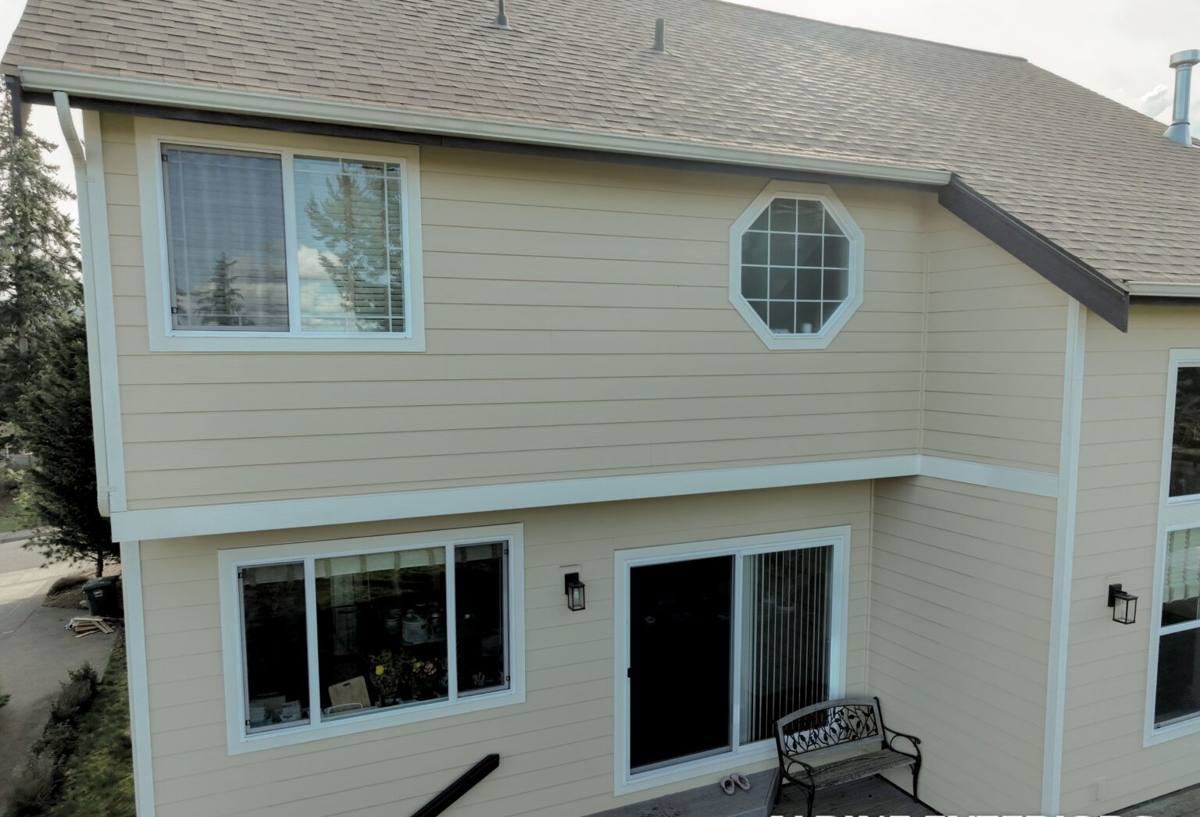
What Storm Damage Actually Looks Like on a Cherry Point Roof
Storm damage isn't always the dramatic, obviously-missing-shingles kind. Some of the most common issues we find after a wind event or heavy rain system include:
- Shingles that have been lifted and re-seated by wind, leaving a broken seal that won't show a leak until the next heavy rain
- Flashing around chimneys, vents, and roof-to-wall transitions pulled loose or bent by gusts
- Granule loss on shingles from wind-driven rain, which accelerates aging even without a visible tear
- Gutters and downspouts pulled away from fascia, redirecting water back under the roof edge
- Moss mats that trapped water during the storm and held it against the roof deck longer than the storm itself lasted
- Corrosion starting on fasteners and metal flashing where salt air has been working on them before the storm even hit
The tricky part is that a lot of this damage doesn't announce itself right away. A lifted shingle can look fine from the ground and still let water in during the next rain. That's why a proper post-storm roof check isn't just a walk-around — it's a hands-on inspection of the specific points where wind, salt, and moss tend to do their work.
Why Salt Air Changes the Repair, Not Just the Damage
Salt air doesn't just make damage happen faster — it changes what a correct repair looks like. Fasteners and flashing that are fine for an inland roof can start corroding years earlier out here. When we repair a Cherry Point roof, we're checking the condition of surrounding metal and fasteners even outside the immediate storm-damaged area, because salt exposure means nearby components are often closer to failing too.
What a Correct Storm Repair Actually Involves
A rushed storm repair — tarp it, nail down what's obviously loose, call it done — is how the same roof ends up with a second leak six months later. A correct repair follows a sequence:
- Full roof inspection, not just the area where the leak or damage was reported. Wind damage rarely stays confined to one spot.
- Underlayment and decking check wherever shingles were lifted or missing, since trapped moisture from the storm can already be affecting the wood underneath.
- Flashing evaluation at every penetration and transition point, since these are the most common places storm damage turns into a slow leak later.
- Matching materials as closely as possible to your existing roof, so the repair doesn't stand out or create a mismatched wear pattern down the road.
- Moss and debris clearing as part of the same visit, since leaving moss in place undermines even a perfect repair.
Skipping any of these steps doesn't save the homeowner much time, but it does mean the next storm finds the same weak points again.
Our Process for a Cherry Point Storm Call
When we're called to a storm-damaged roof in this area, the process is straightforward and we walk you through it at each step:
- Assessment first. We inspect the roof, document what we find with photos, and explain what's storm-related versus pre-existing wear.
- Honest scope. We tell you plainly whether this is a targeted repair or whether the damage points to a bigger problem worth addressing now rather than patching around.
- Straightforward estimate. You get a clear breakdown of what needs to happen and why, in plain language, before any work starts.
- Repair done right. Matching materials, proper flashing work, and attention to the salt-air and moss factors specific to this location — not a generic patch job.
- Documentation you can use. If you're filing an insurance claim, we provide the kind of documentation adjusters actually want to see.
Repair or Replace? What Actually Drives That Decision
Not every storm-damaged roof needs replacing, and not every roof that "looks fine" is actually fine. The honest factors that determine which direction makes sense:
| Factor | Leans Toward Repair | Leans Toward Replacement |
|---|---|---|
| Age of roof | Well within expected lifespan | Already near or past typical service life |
| Extent of damage | Isolated area, sound roof elsewhere | Damage scattered across multiple sections |
| Underlying decking | Dry, solid wood underneath | Soft spots or moisture staining found |
| Fastener/flashing condition | Minimal corrosion for the roof's age | Widespread salt corrosion beyond this storm's damage |
| Moss history | Managed, minor buildup | Long-term moss damage to shingles or decking |
We'll never push replacement when a repair genuinely solves the problem — but we also won't recommend a repair that's just going to mask a bigger issue for a season and leave you calling us again after the next storm.
Moss Season and Long-Term Roof Health in This Area
Blaine and the surrounding Whatcom County coastline get a moss season that runs longer than most parts of the state, and Cherry Point's damp, shaded, salt-humid conditions are about as favorable to moss growth as it gets. Moss does more than look bad — it holds moisture against the roof surface, works its way under shingle edges, and slowly lifts them over time. A storm-damaged roof with existing moss is more vulnerable, because the moss has often already compromised the seal in the exact spots where wind and rain do the most damage.
Part of doing a storm repair right in this area means addressing moss as part of the job, not treating it as a separate, optional add-on. A repair that ignores moss already established near the damaged area is a repair that's likely to need revisiting.
Insurance Claims and Documentation
Most storm damage claims come down to documentation. Insurance adjusters want clear evidence connecting the damage to the storm event, not just a description of a leak. When we inspect a storm-damaged roof, we document:
- The specific type and location of damage found
- Photos tied to the areas affected
- A written assessment distinguishing storm damage from pre-existing wear
This kind of documentation tends to move a claim along faster and with fewer questions than a bare repair estimate. We're happy to work directly with your adjuster or provide records you can submit yourself.
What to Do Right After a Storm — Before We Arrive
If you've just been through a storm and are waiting on an inspection, a few practical steps help protect the home in the meantime:
- Check attic spaces or ceilings for water stains, even faint ones — early signs of a leak are often subtle
- Clear visible debris from gutters if it's safe to do so from the ground
- Take photos of any obviously displaced shingles, debris, or visible damage for your own records
- Avoid climbing onto the roof yourself, especially with wet or moss-covered surfaces — this is exactly when slips happen
- Note the date and general conditions of the storm for insurance purposes
Why Local Cherry Point Experience Matters Here
A crew that mostly works drier, inland roofs doesn't automatically know to check fastener corrosion on a two-year-old roof, or to treat moss as part of a storm repair rather than a separate job. Working this specific stretch of Whatcom County coastline regularly means knowing which parts of a roof take the most punishment from onshore wind, where salt air does its damage first, and how long moss has typically had to work on a given roof before a storm exposes the weak point. That local pattern recognition is the difference between a repair that holds and one that's a temporary fix.
If your Cherry Point home has taken storm damage, or you're not sure whether recent weather caused a problem that hasn't shown itself yet, we're glad to take a look. Reach out for a free, no-pressure estimate using the form below — we'll give you a straight answer about what's actually going on with your roof.