 Blaine Window
 Point Roberts' Climate Is Harder on Siding Than Most of Whatcom County
Point Roberts sits out on its own peninsula on the Salish Sea, separated from the rest of Whatcom County by water and, geographically, by Canada. That location is part of what makes it a beautiful place to own a home — and part of what makes siding fail faster there than it does a few miles inland. Homes here take a steady diet of salt-laden marine air, wind-driven rain coming off the strait, and long stretches of gray, damp weather that keep moss and mildew active for much of the year.
Salt air is corrosive to exposed metal fasteners and trim, and it accelerates the breakdown of anything that isn't built to handle a marine environment. Driving rain doesn't just wet a wall's surface — on exposed or waterfront lots, wind pushes water sideways and up under laps, trim, and penetrations that would stay dry in a calmer setting. And moss season in this part of the Pacific Northwest can run from fall through spring on shaded, north-facing walls and anywhere tree cover blocks the sun, holding moisture against the siding surface for weeks at a time.
None of that means siding is doomed here. It means the material and the installation both have to be chosen for this specific climate, not for a generic Pacific Northwest average. That's the lens we use on every Point Roberts siding job.
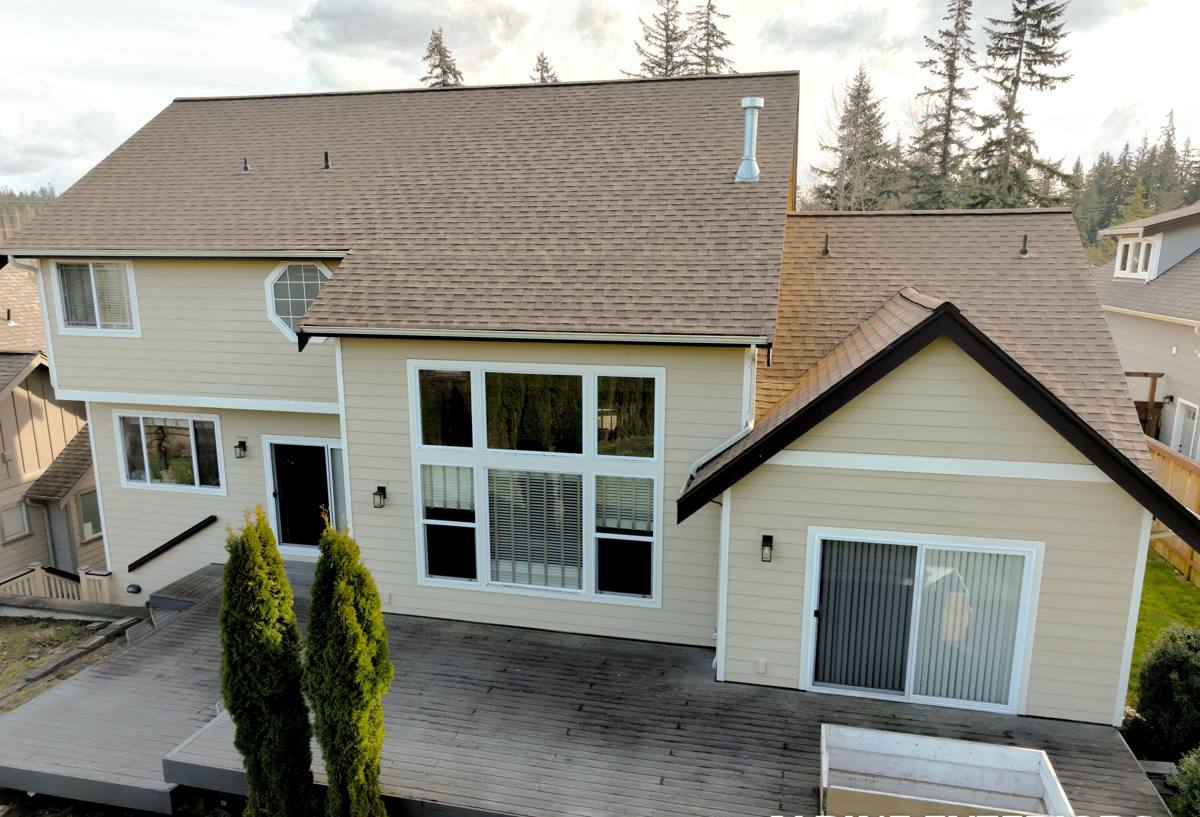
Signs Your Point Roberts Home Needs New Siding
Siding failure in a marine climate doesn't always announce itself with an obvious crack. Often it shows up as a pattern of smaller issues that, together, tell you the wall assembly is no longer doing its job.
- Soft or spongy spots when you press on the siding, especially near the bottom courses and around window and door trim
- Paint that's bubbling, peeling, or needing repainting more often than it used to
- Persistent moss or green/black staining that comes back within a season of cleaning
- Visible warping, buckling, or gaps opening up between boards or panels
- Swelling or delamination at cut edges and butt joints
- Rising energy bills that suggest the siding and the barrier behind it are no longer keeping wind and moisture out
- Rust streaking from fasteners, or fasteners backing out of the surface
Any one of these can be a minor repair. Several at once, especially on the same elevation, usually means the underlying material has reached the end of what it can handle in this environment.
What Correct Siding Replacement Actually Involves
Siding replacement is not just stripping off old boards and nailing up new ones. Done right, it's a full rebuild of the wall's weather-resistive system, and skipping any layer is how a brand-new install ends up with the same rot problems five years later.
Tear-off and inspection
Once the old siding is off, the sheathing underneath gets inspected. In a climate like this, it's common to find soft or water-stained sheathing behind areas where the old siding failed — that has to be repaired or replaced before anything new goes on, or the new siding is just covering up a problem.
Weather barrier and flashing
A correctly lapped weather-resistive barrier, properly integrated flashing at windows, doors, and any roof-to-wall intersections, and correct flashing at penetrations (vents, hose bibs, light fixtures) are what actually keep driving rain out of the wall. This step matters more in a wind-driven-rain environment than almost anything else in the job.
Proper fastening and clearances
Fastener type, spacing, and depth all affect how well siding holds up to wind and moisture cycling. Ground clearance and clearance from roof lines, decks, and hardscaping also matter — siding installed too close to grade or to a horizontal surface stays wet longer and invites moss and rot regardless of the material.
Trim, caulking, and finish details
The small details — corner trim, caulking at joints, touch-up paint on cut edges — are what keep water from finding its way in at the seams. These are also the details that get rushed on a job priced too low or crewed too thin.
Why We Install Only James Hardie Fiber Cement
We install James Hardie fiber cement siding exclusively. We don't install vinyl, LP SmartSide, Cemplank, Allura, or primed wood siding like spruce or cedar. That's a deliberate standard, not a lack of options, and it's worth explaining why.
Vinyl siding can crack or warp in temperature swings, and its seams and J-channels give wind-driven rain more opportunities to work behind the material over time. Engineered wood products like LP SmartSide perform well in many climates but rely on an intact factory coating to resist moisture — any breach at a cut edge or fastener hole becomes a point of vulnerability in a damp, salt-air environment. Primed wood siding needs a disciplined repainting schedule to keep performing, which is a real maintenance burden on an exposed coastal property. Other fiber cement brands may be reasonable products, but we've standardized on one system so we can guarantee installation consistency and warranty support rather than juggling install specs across multiple products.
James Hardie's HZ5 product line is engineered specifically for climates with prolonged moisture exposure — the Pacific Northwest coast is exactly what that engineering targets. It's non-combustible, which matters for wildfire-adjacent insurance considerations even in a marine climate. The ColorPlus factory finish is baked on and warrantied against fading and peeling, which removes the repaint cycle from your maintenance list. And Hardie backs the product with a strong, transferable limited warranty, which is meaningful protection when you're facing salt air and driving rain year after year.
What Siding Replacement Costs in Point Roberts
Every home is different, and the only way to get an accurate number is a walk-around estimate. But the factors that move the price are consistent, and it helps to know them before you start budgeting.
| Cost Factor | Why It Matters Here |
|---|---|
| Sheathing condition | Water damage found during tear-off adds repair scope before new siding can go on |
| Home size and wall complexity | More corners, dormers, and trim details mean more labor and material |
| Siding profile and accessories | Lap width, trim style, and accent details (shakes, board and batten) affect material cost |
| Exposure and elevation | Waterfront or wind-exposed walls often need extra attention to flashing and fastening |
| Access and staging | Peninsula logistics can affect delivery scheduling and site staging compared to mainland jobs |
| Color and finish | Factory ColorPlus finishes vs. field-painted options carry different upfront costs |
We'll walk your home, note the specific factors that apply to your property, and give you a real number in writing — not a rough phone estimate.
Our Process, Start to Finish
- On-site walkthrough to assess current siding condition, wall exposure, and any moisture concerns
- Written estimate with product, scope, and timeline laid out clearly
- Material ordering and scheduling, coordinated around Point Roberts access and delivery logistics
- Tear-off and sheathing inspection, with any needed repairs addressed before moving forward
- Weather barrier and flashing installation at all penetrations and transitions
- James Hardie siding installation to manufacturer spec, including fastening and clearances
- Trim, caulking, and finish work
- Final walkthrough with you before we call the job done
Why a Crew That Already Works Point Roberts Matters
Point Roberts is a U.S. community that's only reachable by road through Canada, or by water or air. That's not a small detail when it comes to hiring a contractor. A crew that hasn't worked the peninsula before has to figure out material delivery logistics, border-crossing timing for equipment and supplies, and job-site staging on the fly — and those learning costs tend to land on the homeowner's timeline, if not the homeowner's invoice.
A crew that already works this area has that logistics worked out before your project starts. We know how to plan delivery windows, how to schedule crew time around crossing considerations, and how to keep a job moving without the delays that catch first-timers off guard. That translates into a more predictable timeline and fewer surprises once work begins — which matters more here than it would on a job a few blocks from the shop.
It also matters for follow-up. If a warranty question or a minor adjustment comes up after the job is done, you want a contractor who's still going to be making regular trips out to the peninsula, not one for whom your job was a one-time special trip.
Caring for Your New Siding
Correctly installed James Hardie siding is low-maintenance, but "low-maintenance" isn't "no-maintenance," especially in this climate. A periodic rinse-down to keep salt residue and moss spores from building up, prompt attention to any caulking that starts to fail at trim joints, and keeping nearby trees and shrubs trimmed back so walls get some airflow and sunlight will all extend the life of the installation. None of that is heavy lifting, but it's worth doing on a schedule rather than only after you notice a problem.
If you're seeing early signs of wear on your current siding, or you're just planning ahead for a home on the peninsula, we're happy to take a look and give you a straight answer about what your home actually needs. Reach out for a free, no-pressure estimate — there's a form below to get started.