 Blaine Window
 Why Point Roberts Siding Takes a Different Kind of Beating
Point Roberts sits apart from the rest of Whatcom County — a small community reachable by land only by driving through Canada and back across the border, and surrounded by water on three sides. That geography puts homes out there closer to open salt water than almost anywhere else in our service area, and it shows in the siding. Salt-laden air, wind-driven rain coming straight off the Strait, and a moss season that can run most of the year all put more sustained pressure on exterior cladding here than a typical inland Whatcom County home sees. Siding that would show only minor wear after ten years inland can show real, structural damage in the same span out here, and the repair calls we get from Point Roberts tend to be further along than the same complaint would be somewhere more sheltered.
This page is specifically about siding repair for Point Roberts homes — patching damaged sections, replacing individual boards, and fixing the underlying cause of a failure — not full re-siding. We install and repair James Hardie fiber cement exclusively, so everything below assumes that system, except where a homeowner is still deciding whether repair is even the right call.
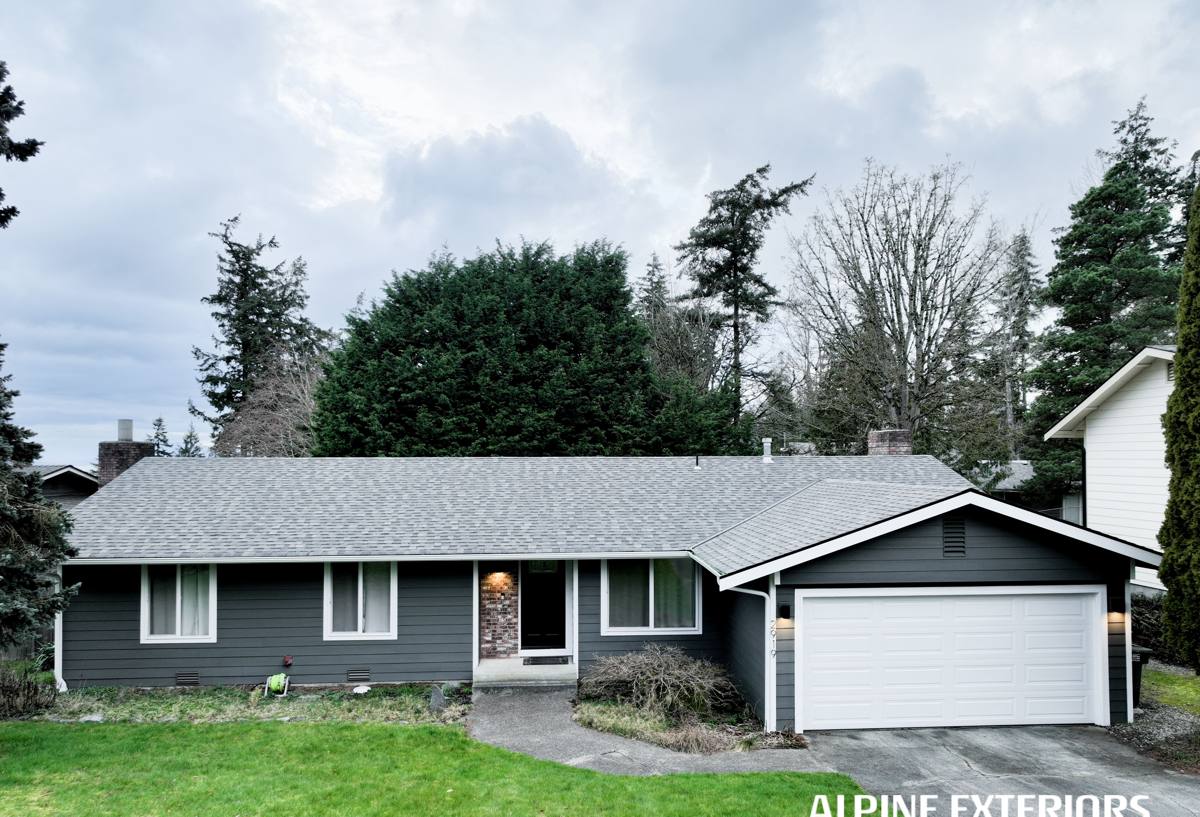
Repair or Replace: Making the Right Call
The first real decision on almost any repair call isn't how to fix the visible damage — it's whether patching is still the right move, or whether it would just paper over a bigger problem. On a coastal home with years of salt and moisture exposure behind it, that distinction matters more than it would inland.
| Factor | Usually points to repair | Usually points to replacement |
|---|---|---|
| Extent of damage | Isolated boards or one section of one wall | Damage spread across multiple elevations of the house |
| Cause | A single, identifiable failure point — old flashing, a failed fastener, one cracked board | Ongoing, systemic moisture intrusion behind the cladding |
| Condition behind the siding | Sheathing and framing are still sound once opened up | Rot has already reached the sheathing or framing |
| Existing material | Remaining Hardie siding elsewhere on the home is in good shape | Original siding is a different product with a pattern of recurring failures |
| Color match | ColorPlus finish is recent enough to match closely | Years of sun and salt exposure have faded the field beyond a workable match |
We'll tell a homeowner plainly when a repair is the right, lower-cost move — and just as plainly when patching a few boards would only delay a bigger job while the actual cause keeps working on the wall behind it.
What a Correct Siding Repair Actually Involves
Finding the Real Cause Before Patching Anything
Replacing a damaged board without figuring out why it failed is the most common shortcut in siding repair, and it's the one that guarantees the same spot fails again. A cracked, stained, or soft board is usually a symptom of something else — a flashing detail that never sealed right, a fastener that let go, a clearance problem at grade, or a joint that's been taking wind-driven rain for years. Every repair we do starts by figuring out what actually let water or damage in, not just which board looks bad.
Matching James Hardie ColorPlus Panels
One real advantage of repairing Hardie fiber cement instead of the primed wood or vinyl products we don't install: factory-applied ColorPlus finish holds its color far more consistently over time than field-applied paint, which makes a patch repair much more likely to actually blend in. That said, matching still gets harder the older the existing siding is and the more sun and salt exposure it's had — a five-year-old wall matches easily, a fifteen-year-old one may not. We say so upfront when a patch will be visible rather than promising a seamless match we can't deliver.
Flashing and Sealant at the Repair Point
Whenever siding comes off, whatever caused the original failure needs to be corrected before new material goes back up — new flashing, properly lapped and sealed, not a bead of caulk smeared over the old problem. That step is easy to skip because it's invisible once the new board is in place, and it's exactly the step that decides whether the repair holds for years or fails again the next wet season.
Checking Behind the Panel for Hidden Moisture
Visible siding damage is often only the part you can see from the yard. Before a repair gets closed back up, the sheathing and water-resistive barrier behind the damaged section need to be checked for moisture, staining, or soft spots. Closing a wall over damage that hasn't actually been addressed just moves the failure a few years down the road and hides it better in the meantime.
Common Point Roberts Siding Problems We're Called Out For
Certain complaints show up on Point Roberts repair calls more often than they do elsewhere in our service area, mostly because of the exposure and because a fair number of homes out there are part-time or seasonal residences where small problems can go unnoticed between visits.
- Moss and algae staining low on walls and at north-facing sections that rarely get direct sun
- Rust streaking from corroding fasteners or trim hardware on older installations
- Cracked or lifted boards at window and door trim, where wind-driven rain concentrates
- Failed caulk joints that were never designed to be a wall's primary water defense
- Damage that went unaddressed for a season or more because the home sits empty part of the year
What Happens When a Repair Gets Put Off
Salt air and driving rain don't pause because a repair got scheduled for later, and a small problem on Point Roberts siding rarely stays small for long. A cracked board or an open joint that would take a modest patch this season can let enough moisture behind the cladding over a winter that the next visit involves replacing sheathing, not just siding. That's a meaningfully bigger job, and it's the outcome we're trying to help homeowners avoid by being honest about urgency rather than treating every repair call the same.
Seasonal homes are worth calling out specifically here. If nobody's checking on a house for weeks or months at a stretch, a minor leak at a window return or a lifted board at grade has that much longer to do damage before anyone notices. A pre-season or end-of-season walk-around, even a quick one, catches most of these problems while they're still a repair instead of a rebuild.
Why Working Here Requires Planning Around the Border
Point Roberts is a U.S. exclave: getting there by road means crossing into Canada and back across the border, since there's no direct land connection to the rest of Whatcom County. That doesn't change the repair work itself, but it changes who's realistically available to do it well and promptly. A contractor based elsewhere who treats a Point Roberts repair as a one-off job is absorbing crossing time and border uncertainty for work that might only take a few hours once a crew is actually on-site — which either pushes the job to the bottom of the schedule or pushes the price up to cover the overhead. A crew that already routes regular trips out to Point Roberts as a normal part of its Blaine-area territory doesn't carry that friction, and repair calls don't sit waiting for a slow week to make the trip worthwhile.
Our Process for a Point Roberts Repair Call
- Initial description. A phone call or a few photos usually tells us enough to know whether this looks like a straightforward patch or something that needs an in-person look first.
- On-site inspection. We look at the damage, check behind it where needed, and figure out the actual cause rather than just the visible symptom.
- Written scope and price. Before any work starts, the homeowner gets a clear description of what's being repaired, what caused it, and what it costs — no surprises added mid-job.
- The repair itself. Matched material, corrected flashing and sealant at the failure point, and fastening done to Hardie's spec, not a shortcut version of it.
- Documentation. A record of what was found and fixed, useful for the homeowner's own records and for any future work on the same wall.
What Affects the Cost of a Repair
| Factor | Why it moves the price |
|---|---|
| Extent of damage | A single board is a different job than a whole wall section showing the same failure |
| Accessibility | Second-story sections, steep rooflines, or tight side yards take longer to work safely |
| Color match difficulty | Older, more faded ColorPlus finishes take more effort to blend than recent installations |
| Hidden damage found once opened up | Rot or moisture behind the visible damage adds scope that wasn't apparent from the outside |
| Trip logistics | Crews already routing through Point Roberts regularly keep this factor from inflating the estimate |
Questions to Ask Before You Hire Anyone for Point Roberts Siding Repair
- Do you regularly work in Point Roberts, or would this be a one-off trip out here?
- Will you identify and fix what actually caused the damage, or just replace the board that looks bad?
- What siding product are you repairing with, and will it reasonably match what's already on the house?
- Will you check behind the removed siding for hidden moisture or rot before closing the wall back up?
- Is the full scope and price in writing before work starts, with no vague allowances added later?
If you're dealing with damaged, stained, or failing siding on a Point Roberts home, we're glad to take a look and give you a straight answer on whether it's a repair or something bigger — with a free, no-pressure estimate using the form below.