 Blaine Window
 James Hardie Siding, Built for Lynden Homes Specifically
This page is about one product, on one type of property: James Hardie fiber cement siding, installed on homes in and around Lynden. We're not going to try to sell you on siding in general — if you're here, you've likely already narrowed the field to Hardie or you're trying to understand why we'd steer you that direction. Either way, the question that actually matters for a Lynden property isn't "is fiber cement a good idea," it's "what does this specific product need to look like on this specific house, in this specific climate, to actually perform for the next thirty or forty years."
We install James Hardie fiber cement exclusively, and we work in Lynden regularly, not as an occasional out-of-town job. That distinction matters more on a Hardie install than it does on some other exterior work, because so much of how this product performs comes down to installation detail rather than the material itself. A crew that's worked Lynden's mix of open farmland, tree-sheltered residential lots, and everything in between has already seen how those different exposures play out on a real wall, not just on a spec sheet.
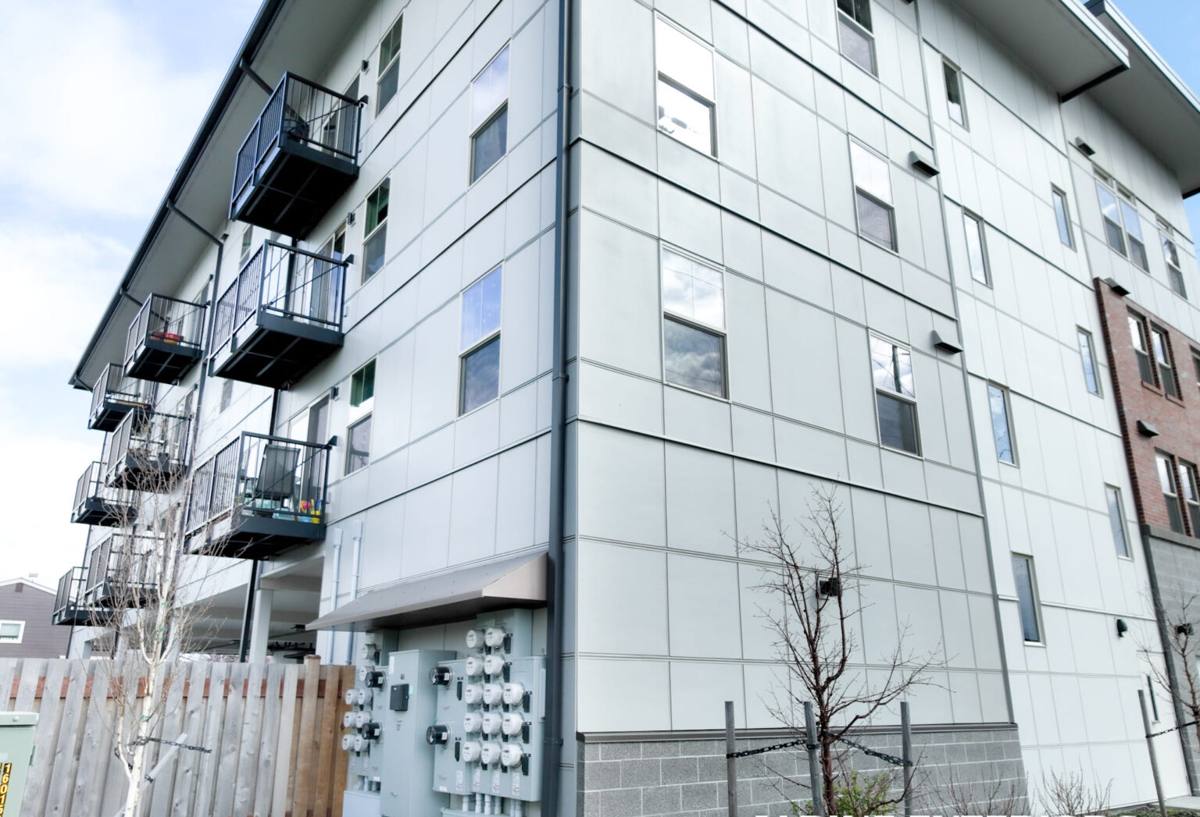
What Lynden's Climate Asks of a Siding System
Salt Air That Reaches Farther Inland Than People Expect
Lynden sits back from the immediate coastline, and it's a fair assumption that salt exposure is someone else's problem — a Blaine or Birch Bay problem, not a Lynden one. It's not quite that simple. Marine air moves across this whole part of Whatcom County, and over years it works on fasteners, flashing, and lower-grade trim hardware even on properties well inland. It's a slower process than at the shoreline, but it's real, and it's one more reason the fastener and flashing choices on a Hardie install matter as much as the board itself.
Driving Rain, Not Straight-Down Rain
Fall and winter rain here rarely falls politely straight down. Wind pushes it sideways into wall assemblies, into the joints where a roof meets a wall, and into any gap a rushed installation leaves behind. Fiber cement handles moisture better than most alternatives at the material level, but that advantage only shows up if the flashing, clearances, and drainage plane behind the siding are done right. The board can be perfect and a wall can still fail if the water management around it isn't.
A Moss Season That Barely Takes a Break
Mild temperatures and near-constant moisture add up to a moss and mildew season that runs close to year-round on shaded walls. Lynden's landscape makes this uneven from property to property — an open field-facing wall on a farm property dries out fast, while a wall shaded by mature trees or backed up against a tree line often doesn't. Any siding that holds moisture against the substrate, or that gives moss an organic surface to grip, turns into a maintenance problem here. Fiber cement doesn't feed that cycle the way wood-based materials do, but even Hardie siding needs the right clearances and drainage behind it to actually shed water instead of trapping it.
The James Hardie Product System, and What Fits a Lynden Home
James Hardie isn't a single product — it's a system of lap siding, panels, shingle profiles, and trim, all engineered to work together. Picking the right combination for a specific house matters as much as picking Hardie in the first place.
| Product | What It Is | Where It Fits on Lynden Homes |
|---|---|---|
| HardiePlank lap siding | Horizontal overlapping boards, the most common Hardie profile | The default choice for farmhouses, traditional two-story homes, and most standard residential construction in the area |
| HardiePanel vertical siding | Large flat vertical panels with battens or exposed seams | Used on gables, shop-style outbuildings, and newer-build homes going for a more modern or barn-inspired look, common on some newer Lynden-area properties |
| HardieShingle | Staggered or straight-edge shingle profile | Accent gables, dormers, or full facades on craftsman-style homes wanting more texture |
| HardieTrim | Fiber cement trim boards for corners, fascia, and window/door surrounds | Pairs with any of the above; matters more than it seems, since trim takes as much weather exposure as the field siding |
Most Lynden projects end up using HardiePlank as the primary field material with HardieTrim throughout, and HardiePanel or HardieShingle brought in as an accent on a gable or entry feature. There's no single "right" combination — it depends on the home's existing architecture and what the homeowner actually wants it to look like — but it's a decision worth making deliberately, not defaulting into.
Why the HZ5 Line and ColorPlus Finish Matter Here
James Hardie engineers its boards differently for different climate zones, and that's not a marketing detail — it changes how the product is formulated. The HZ5 line is built for regions with sustained moisture exposure and freeze-thaw cycling, which describes Lynden's winters accurately, as opposed to HZ10, which is engineered for hot, humid, or high-UV regions further south. We specify HZ5 on Lynden installs because it's the version actually built for what this climate does to a house, not because it's the only option on a price sheet.
Color, meanwhile, comes from ColorPlus Technology on most installs rather than field-applied paint — a finish baked on in multiple coats under factory conditions before the boards ever reach the site. That process holds up better against salt-tinged air and sustained wet seasons than a coating applied on a jobsite, where weather at the time of application is out of anyone's control. On a shaded, moss-prone wall, a light ColorPlus color will show organic staining more visibly than a mid-tone gray or brown — worth factoring into Lynden's tree-sheltered pockets, though it's not a reason to rule out a lighter color outright, just something to weigh alongside your wall's actual orientation.
What Correct Installation Actually Involves
Fiber cement's real-world performance depends on installation quality more than most homeowners expect going in. The material itself resists moisture, fire, and rot at the core, but a rushed or out-of-spec install can undercut all of that. On a Lynden job, a few details get particular attention:
- Manufacturer-specified clearances above grade, roofline, and deck surfaces, so splash-back and standing moisture stay off the board edge
- A drainage plane or rain screen behind the siding, so any moisture that gets past the surface has somewhere to go instead of sitting against the sheathing
- Correct fastener type, spacing, and depth — under- or over-driven fasteners are one of the most common causes of cracking on fiber cement
- Flashing at every window, door, and wall penetration, angled to direct wind-driven rain out and away rather than let it pool at a seam
- Factory-cut edges used wherever the layout allows, with field cuts sealed to manufacturer spec so the ColorPlus protection isn't compromised at raw edges
None of this is exotic — it's published in James Hardie's own installation specifications. But it's also the kind of detail that's invisible once the siding is up and easy to shortcut on a job where the crew doesn't have deep, repeated experience with this specific material in this specific climate. That's the actual argument for hiring a crew with real Hardie experience in this area, not a general claim that "we're the best."
How a Hardie Project Runs on a Lynden Property
Walkthrough and Product Selection
We start by walking the property — current siding condition if there is any, wall orientation and sun/shade exposure, and what architectural style the home is working with — and use that to talk through which Hardie products and colors actually fit, rather than defaulting to one standard package.
Tear-Off and Sheathing Check
Once old siding comes off, the sheathing underneath gets checked for rot or soft spots before anything new goes up. Covering damaged sheathing with new siding just hides a problem that gets worse behind the wall, and on older Lynden farmhouses with decades of prior siding history, this step regularly turns up something worth addressing before we move forward.
Installation to Manufacturer Spec
James Hardie's warranty depends on following their published installation specifications, not a general fiber cement standard. Clearances, fastener spacing, flashing, and drainage detailing all get handled to that spec as the baseline expectation, not as an add-on.
Final Walkthrough
We walk the finished job together, cover basic care and what to expect from the ColorPlus finish over time, and make sure the finished product matches what was estimated before calling the job done.
Warranty: What Actually Transfers With the House
James Hardie backs its siding with a transferable, non-prorated limited warranty on the substrate, plus a separate warranty on ColorPlus finish and color retention, provided the installation follows Hardie's published specifications. The transferability is worth understanding clearly: if you sell the home before the warranty period ends, that coverage generally moves to the next owner, which is a real point in a home's favor if it goes on the market down the road. That warranty structure is also part of why installation quality isn't optional — an out-of-spec install can put warranty coverage at risk regardless of how good the board itself is.
Why a Crew That Already Works Lynden Matters
Lynden isn't a uniform town from a siding contractor's perspective. It's a mix of open dairy and farm properties with long, exposed wall runs, older in-town homes with decades of prior repair history, and newer residential construction on smaller lots with different setback and access conditions. A crew that only shows up for the occasional job here tends to treat all of that the same way. A crew that works the area regularly has already seen which wall orientations on farm properties take the worst of the wind, which older homes tend to have sheathing issues once the old siding comes off, and which newer subdivisions have HOA or design guidelines worth checking before ordering material.
That familiarity also matters after the job is done. Warranty questions, a maintenance question five years out, or a color-match need for an addition are easier conversations with a crew that's still working in the area than with a company that finished the job and moved on to the next region.
What to Ask Before Hiring Anyone for a Hardie Install
- Are you a certified James Hardie installer, and how many Hardie projects have you completed in Whatcom County specifically?
- Which Hardie product lines and HZ rating are you specifying, and why those for this house?
- Will you show large-format ColorPlus samples outdoors, not just a printed color card?
- What's your plan for flashing, drainage plane, and fastener spec — can you walk through it in plain terms?
- How do you handle sheathing repair if rot turns up once the old siding comes off?
- Are you licensed and bonded in Washington, and will you pull the required permit?
If you're weighing James Hardie siding for a Lynden home, we're glad to walk the property, talk through product and color options that actually fit the house, and put together a free, no-pressure estimate. Reach out using the form below to get started.