 Blaine Window
 Bellingham's Marine Climate Is Hard on Exterior Siding
Bellingham sits on Bellingham Bay, part of the Salish Sea, and shares the same weather pattern that runs the length of Whatcom County's coastline, including Blaine to the north. That means siding here deals with three things at once: salt-laden air off the water, long stretches of driving, wind-pushed rain, and a moss and algae season that can run most of the year on shaded or north-facing walls. Any one of these is manageable. Together, over years, they expose the difference between siding that was installed correctly and siding that was installed to look good on closing day.
Salt air is corrosive to fasteners and trim metal, and it also holds moisture against a wall longer than dry inland air would. Driving rain doesn't just fall on siding, it drives sideways into laps, seams, and butt joints, which is exactly where a lot of siding failures start. And moss doesn't care what the material is, it will take hold on any surface that stays damp and shaded long enough, but how a material handles that dampness afterward is where the real differences show up.
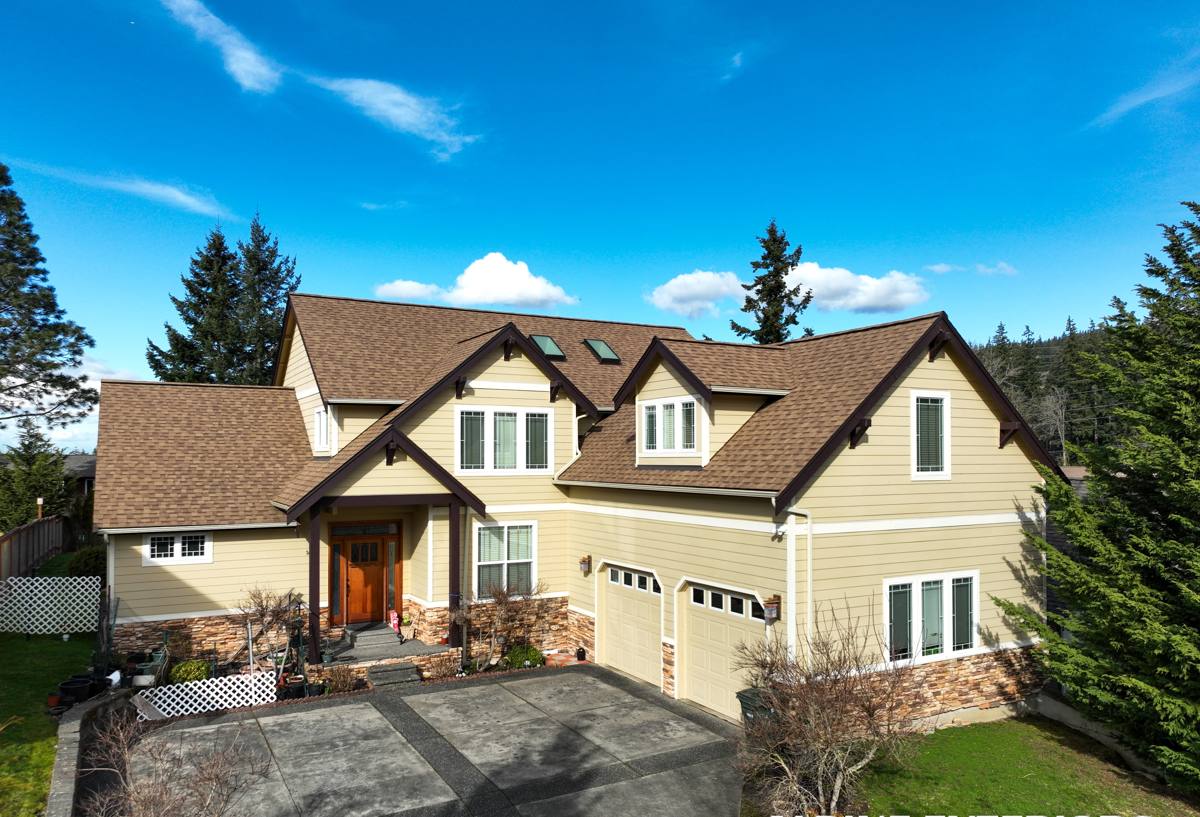
Signs a Bellingham Home Needs Replacement, Not a Repair
Not every siding problem calls for a full replacement, but in this climate small problems tend to hide bigger ones underneath. Before recommending a full tear-off, we look for patterns like these:
- Soft or spongy spots when you press on the siding, especially near the bottom courses or below windows
- Persistent black or green staining that comes back within weeks of cleaning, particularly on north- and west-facing walls
- Visible cupping, buckling, or delamination, common on older wood-based or engineered wood siding that has taken on moisture
- Paint that won't hold, peeling or blistering again within a year or two of repainting
- Gaps opening up at butt joints, corner boards, or window trim that weren't there when the house was newer
- A musty smell in an adjacent room, or visible moisture staining on interior walls near an exterior wall
Any one of these on its own might be a repair. Several at once, especially combined with a home's age, usually means the water-resistive barrier and sheathing behind the siding have been compromised, and patching the surface won't fix what's happening underneath.
What a Correct Siding Replacement Job Actually Involves
Full Tear-Off and Sheathing Inspection
We remove the existing siding down to the sheathing rather than installing over it. This is the only way to actually see what years of Whatcom County weather have done to the wall. Soft sheathing, rusted fasteners, or rotted framing at window and door openings get found and fixed here, before anything new goes up. Skipping this step is how a new siding job ends up hiding the same moisture problem that caused the old one to fail.
Weather-Resistive Barrier and Flashing Details
Given how much wind-driven rain this area gets, the housewrap and flashing details matter as much as the siding itself. That means correctly lapped weather-resistive barrier, properly integrated window and door flashing, kick-out flashing where rooflines meet walls, and flashing above any horizontal trim or band board. These are the details that keep driving rain from working its way behind the cladding, and they're also the details that get rushed on lower-bid jobs.
Installing to Manufacturer Specification
James Hardie siding has documented fastening patterns, clearances, and caulking requirements, and those specifications assume a wet, coastal-adjacent climate like this one. Correct fastener spacing, proper gapping at butt joints, and the right clearance from grade, roof lines, and decks all affect how the siding performs over the following decades, not just how it looks the week it's installed.
Why We Install Only James Hardie Fiber Cement Here
We standardized on James Hardie fiber cement for every siding replacement we do, including in Bellingham, and we don't install vinyl, engineered wood, or bare cedar siding. That's not a marketing position, it's a response to what this specific climate does to exterior materials over time.
| Siding Material | Moisture & Moss Behavior | Salt Air Exposure | Typical Maintenance |
|---|---|---|---|
| Vinyl siding | Sheds water but traps condensation behind panels; can warp under heat and grow algae in shaded, damp areas | Fasteners and trim accessories can corrode over time; panels themselves resist salt but the assembly can loosen | Periodic washing; replacement panels can be hard to color-match years later |
| Cedar or primed wood siding | Absorbs and releases moisture, which drives cupping, checking, and paint failure in a wet climate | Salt air accelerates finish breakdown, requiring more frequent recoating | Repainting or restaining on a recurring cycle, plus caulk maintenance |
| Engineered wood siding | Wood-based core is sensitive to sustained moisture exposure at cut edges and joints | Coastal humidity adds to edge-swelling risk if seams aren't sealed and maintained | Regular inspection of edges, seams, and caulking is important to protect the core |
| James Hardie fiber cement | Non-combustible, dimensionally stable cement-based material; doesn't swell, warp, or feed moss the way organic materials can | Resists salt-driven deterioration; factory ColorPlus finish is engineered for UV and moisture exposure | Occasional washing; factory finish holds color far longer than field-applied paint |
Fiber cement isn't immune to moss simply landing on the surface, nothing is, but because the material itself doesn't absorb and hold moisture the way wood-based products do, it doesn't feed a moss problem or degrade from one the same way. Paired with a factory-applied ColorPlus finish and Hardie's climate-engineered HZ product lines, it's built for exactly the combination of salt air, rain, and shade that Bellingham homes deal with. That's the whole reason we put it on homes instead of the alternatives.
Our Process, From Estimate to Finished Job
- On-site walkthrough to assess current siding condition, look for moisture damage, and measure the home
- A written estimate that spells out material, tear-off scope, and any anticipated sheathing or trim repair
- Scheduling that accounts for Whatcom County's rainy stretches, so tear-off happens with dry-in planned
- Full removal of old siding and inspection of sheathing and framing, with any repairs reviewed with you before covering them up
- Installation of weather-resistive barrier, flashing, and James Hardie siding to manufacturer specification
- Final walkthrough so you can see the completed work and ask questions before we consider the job done
What Siding Replacement Costs Depend On in Bellingham
Every home is different, but the same handful of factors drive most of the cost variation we see on siding replacement jobs in this area.
| Cost Factor | Why It Matters |
|---|---|
| Total square footage and wall complexity | More corners, gables, and dormers mean more cutting, fitting, and flashing detail |
| Condition of the sheathing underneath | Hidden moisture damage found during tear-off adds repair scope that isn't visible from an exterior inspection alone |
| Trim and detail work | Corner boards, window and door trim, fascia, and band boards all add material and labor beyond flat wall coverage |
| Siding profile and finish | Lap widths, shingle-style panels, and ColorPlus finish options are priced differently than a basic smooth lap in a field-painted color |
| Site access and prep | Multi-story walls, tight side yards, and landscaping that needs protecting all affect labor time |
We walk through these factors on-site rather than quoting off a phone call, because the sheathing condition in particular can't be estimated accurately without seeing what's actually behind the current siding.
Living With Your New Siding: Moss, Algae, and Salt Air Maintenance
Even the right material still lives in a wet, shaded, salt-air climate, so a little ongoing care goes a long way. Rinsing siding down once or twice a year, especially on north-facing walls and areas shaded by trees, keeps moss and algae from getting a foothold. Keeping gutters clear and downspouts directed away from the wall prevents the kind of constant wetting that speeds up any exterior material's aging. Trimming back vegetation that keeps a wall in shade for most of the day also helps, since shade and moisture together are what moss actually needs to spread. None of this is heavy maintenance, but skipping it lets a manageable climate do more damage than it should.
Why Hiring a Crew That Already Works in Bellingham Matters
A siding crew that mostly works drier inland climates will often use the same flashing and fastening habits everywhere, because those habits hold up fine where wind-driven rain and salt air aren't part of daily weather. In Whatcom County's coastal towns, those same shortcuts show up as moisture problems within a few years instead of decades. A crew that already works Bellingham and Blaine regularly has already seen which details matter here, from how much clearance siding needs above grade and decking to which walls tend to hold moss and need extra attention at installation. That local pattern-recognition is hard to substitute for, no matter how good a crew is elsewhere.
If your home's siding is showing wear, or you're just trying to plan ahead before a small problem becomes a bigger one, we're happy to take a look. Fill out the form below for a free, no-pressure estimate on siding replacement for your Bellingham home.