 Blaine Window
 Siding Built for Lynden's Corner of Whatcom County
Homes on the Lynden side of the Blaine area sit in a tough spot for exterior materials. You're close enough to the coast to pick up salt-laden air on windy days, far enough inland to get long stretches of standing damp and shade, and squarely inside a Pacific Northwest rain pattern that doesn't let up for months at a time. Add in the moss and algae growth that thrives in that combination of moisture and mild temperatures, and you've got a climate that is genuinely hard on siding — harder than most manufacturers' marketing materials let on.
This page is about one job in one area: installing siding correctly on a Lynden-area home, with a product chosen specifically to hold up here. We only install James Hardie fiber cement siding. That's not a brand preference we picked out of a catalog — it's the product we've found actually performs when it's up against salt air, driving rain, and a moss season that can run from October well into spring.
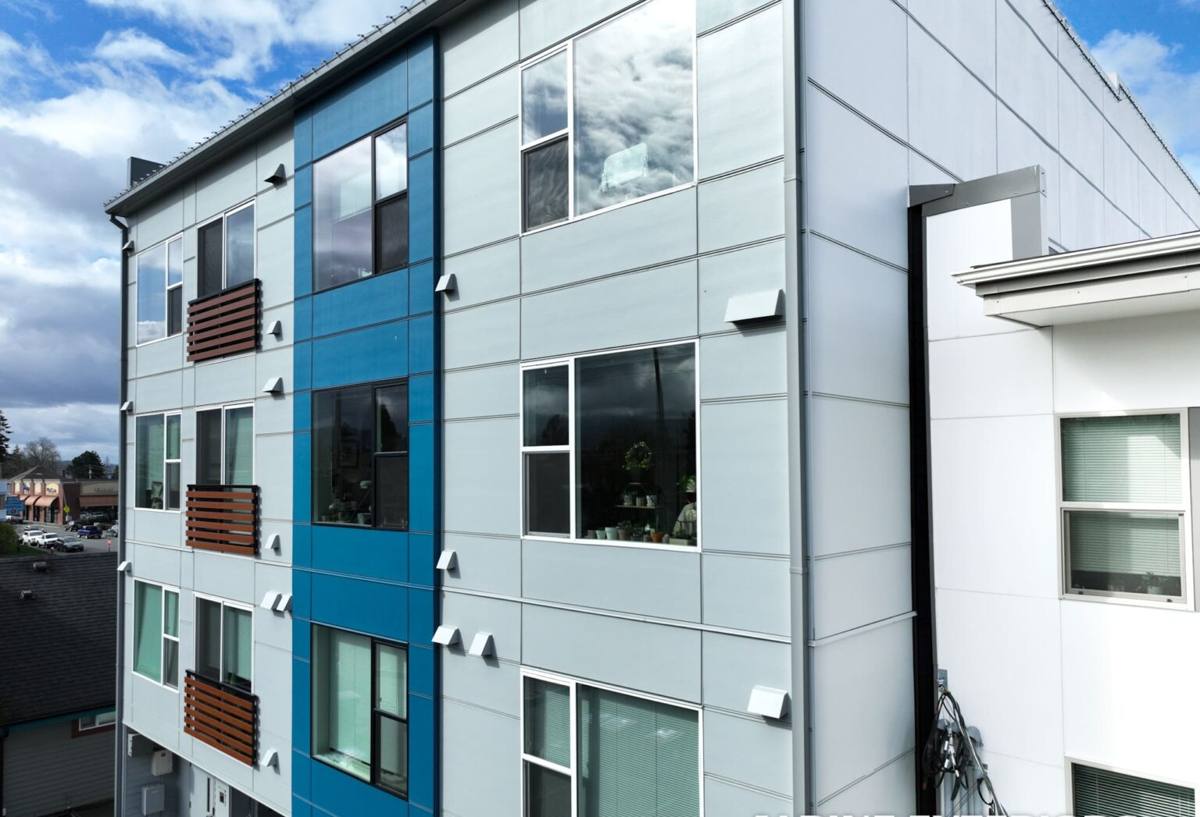
What Lynden's Climate Actually Does to Siding
Salt Air
Whatcom County's coastal exposure means airborne salt can travel further inland than people expect, especially on windy days off the water. Salt accelerates corrosion on fasteners and trim metal, and it can degrade certain paints and coatings faster than a manufacturer's warranty language assumes. Siding material and finish both matter here — a factory-baked finish holds up differently than a field-applied one.
Driving Rain
It's not just rainfall totals that matter — it's wind-driven rain hitting a wall assembly sideways instead of dripping straight down. That kind of exposure tests every seam, every piece of flashing, and every inch of caulk on a house. A siding system that isn't detailed for wind-driven rain will eventually let water behind it, no matter how good the material itself is.
Moss and Algae
Shaded walls, north-facing elevations, and anything near overhanging trees are prone to moss and algae growth for a good chunk of the year. Beyond the cosmetic issue, moss holds moisture against the wall surface, which is exactly the condition that causes rot, coating failure, and paint breakdown over time.
Why This Isn't a "Pick Any Siding" Situation
A lot of siding products perform fine in a dry, moderate climate and struggle in exactly the conditions Lynden and the surrounding Blaine area produce every winter. Wood-based products are the clearest example — anything with wood fiber in it needs consistent moisture management to avoid swelling, delamination, or rot, and that's a hard standard to meet reliably in a climate this wet for this long. Vinyl siding can also underperform here: it can warp with temperature swings, and its seams and J-channels rely heavily on installation precision to keep wind-driven rain out.
James Hardie fiber cement is engineered specifically around moisture resistance. It doesn't absorb water the way wood-based products do, it's non-combustible, and its ColorPlus factory finish is baked on under controlled conditions rather than applied on-site — which matters when you're dealing with salt exposure and UV. Hardie also makes climate-specific HZ product lines, engineered for different moisture and temperature profiles across the country. That's the kind of product-to-climate matching this area actually needs.
Material Comparison for This Climate
| Factor | James Hardie Fiber Cement | Wood-Based Products | Vinyl |
|---|---|---|---|
| Moisture absorption | Very low | High — needs vigilant sealing | None, but seams are vulnerable |
| Salt air / coastal exposure | Factory finish resists fading and chalking | Field finish degrades faster near salt | Can chalk and become brittle over time |
| Wind-driven rain performance | Strong when installed to spec with proper flashing | Dependent on constant maintenance | Dependent on seam and trim installation quality |
| Moss/algae resistance | Hard, dense surface resists growth better | Porous surface holds moisture, invites growth | Smooth surface, but traps moisture behind panels if ventilation is poor |
| Fire resistance | Non-combustible | Combustible | Can melt/deform under heat |
What a Correct Siding Installation Actually Involves
Fiber cement siding only performs the way it's designed to when the installation matches the manufacturer's specifications. A lot of the failures homeowners see on Hardie siding aren't material failures — they're installation shortcuts. In a climate like Lynden's, those shortcuts show up faster than they would somewhere drier.
Weather Barrier and Flashing First
Before a single piece of siding goes up, the wall needs a correctly lapped weather-resistant barrier and properly integrated flashing at every window, door, and penetration. This is the layer that actually stops wind-driven rain from reaching the sheathing — the siding itself is the second line of defense, not the only one.
Proper Fastening and Clearances
Hardie siding has specific fastener spacing, fastener type, and clearance requirements — including gaps at the bottom of the siding above grade, decks, and roof lines. Getting these clearances wrong is one of the most common causes of moisture problems in wet climates, because it lets standing water wick into the bottom edge of the board.
Caulking and Joint Treatment
Butt joints, trim intersections, and penetrations all need to be treated according to Hardie's published details — not just caulked generically. In a driving-rain environment, joint detailing is often the difference between a wall that stays dry and one that doesn't.
Painting and Touch-Up
ColorPlus finish comes factory-applied and doesn't need painting, but any field-cut edges need to be sealed with the correct touch-up product to maintain the moisture protection at the cut line.
- Weather-resistant barrier installed with correct laps and integrated flashing at all openings
- Manufacturer-specified fastener type, spacing, and penetration depth
- Proper clearance gaps at grade, roofing, decks, and other transitions
- Butt joints and trim intersections detailed per Hardie's installation guide
- All field cuts sealed with approved touch-up product
- Rainscreen or ventilation gap addressed where the wall assembly calls for it
- Final walk-through checking caulking, trim, and fastener finish
Our Process for a Lynden-Area Siding Job
We start with an on-site look at the home — checking the current siding condition, the wall assembly underneath where accessible, and any specific exposure issues like shaded north walls or areas that catch wind-driven rain directly. From there we walk through the Hardie product lines and colors that make sense for the home, talk through the realistic cost factors, and put together a clear scope before anything gets scheduled.
During installation, we follow Hardie's published fastening and clearance specifications rather than treating them as optional — because in this climate, that's the difference between siding that lasts and siding that causes problems in five years. We also address the wall assembly itself, not just the visible siding, since a lot of moisture issues in this region start behind the cladding, not on the surface.
Cost Factors Homeowners Should Understand
Siding installation costs vary based on several factors, and it's worth understanding them before comparing quotes.
| Factor | Why It Affects Cost |
|---|---|
| Home size and wall complexity | More corners, dormers, and trim details mean more labor and material cuts |
| Removal of existing siding | Tear-off, disposal, and any sheathing repair add to scope |
| Wall assembly condition | Rot or moisture damage found underneath needs to be addressed before new siding goes up |
| Hardie product line selected | Different HZ lines and profiles (lap, shingle, panel) carry different material costs |
| Trim and accessory scope | Corner boards, window trim, and fascia detailing all factor into total cost |
We don't quote a job without seeing the home first — broad ranges without an inspection tend to be misleading in either direction, especially when older siding might be hiding moisture damage.
Why Local Experience in This Area Matters
A crew that regularly works the Blaine and Lynden area already knows which walls tend to take the worst of the wind-driven rain, which elevations need extra attention for moss, and how salt exposure tends to show up on trim and fasteners over time. That's not something you get from a general installation manual — it comes from doing the work in this specific climate repeatedly and paying attention to what actually holds up.
It also means we're not guessing at product selection. We know which Hardie lines and details make sense for this part of Whatcom County, and we install to that standard on every job, not just the ones where it's convenient.
Get a Straightforward Estimate
If your Lynden-area home needs new siding, or you want a second opinion on a bid you've already gotten, we're happy to take a look and walk you through what a correct James Hardie installation would involve for your specific house. There's no pressure and no obligation — just a clear look at your home and an honest estimate. Fill out the form below to get started.