 Blaine Window
 Window Replacement in Semiahmoo: What This Stretch of Blaine Requires
Semiahmoo sits out on a narrow spit at the edge of Blaine, with Semiahmoo Bay on one side and Drayton Harbor on the other, just south of the Canadian border. It's one of the more exposed residential settings in Whatcom County — open water on more than one side, very little natural windbreak, and a housing mix that ranges from older cottages built decades ago to newer condos and homes oriented toward the water view. Whatever the age or style, windows on this stretch take a harder beating than windows a few miles inland, and a replacement job here has to account for that from the first measurement to the last bead of sealant.
We replace windows. That's the trade we focus on, and on a property like this it matters. Window replacement isn't just swapping an old unit for a new one off a shelf — it's matching the right frame material and glazing to a marine climate, getting the flashing right on a wall assembly that takes wind-driven rain from more than one direction, and doing it in a way that holds up through a moss season that barely lets up. A window that looks right on installation day and starts leaking two winters later wasn't actually installed correctly, whatever the sales pitch said going in.
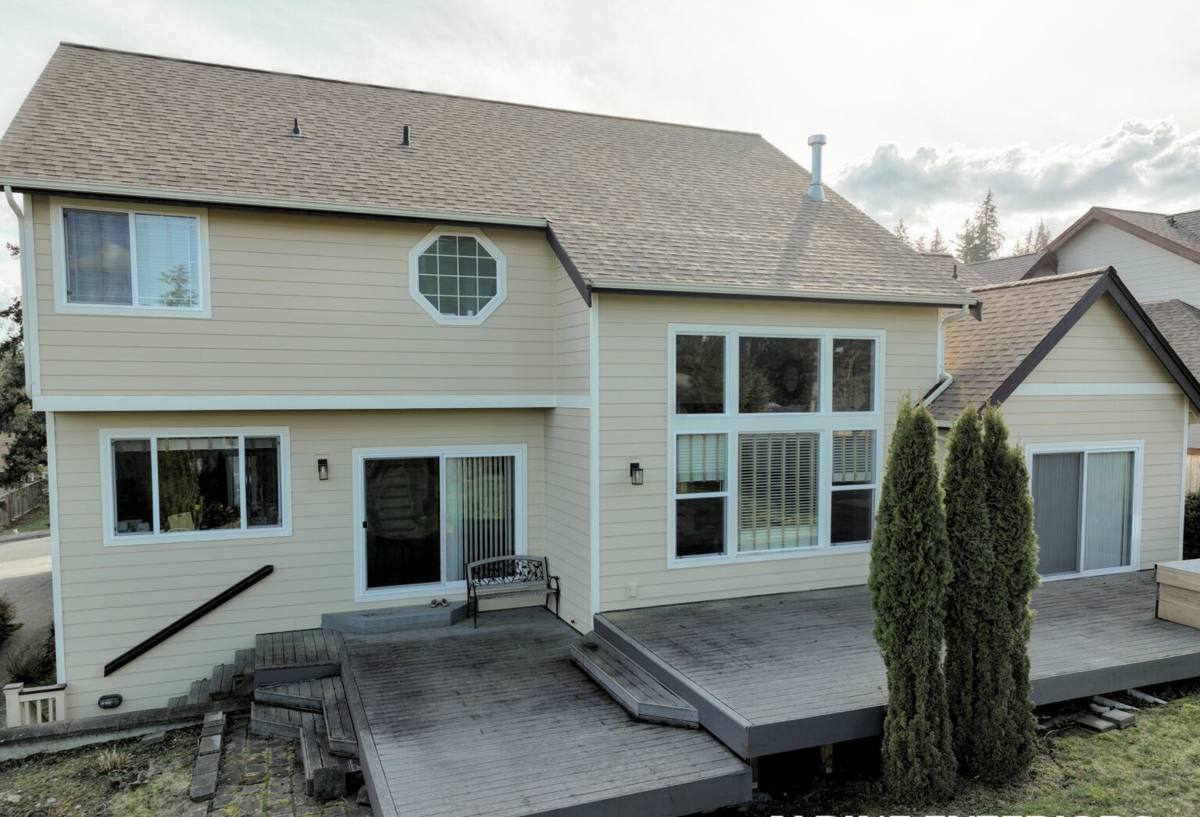
What Salt Air, Driving Rain, and Moss Do to Windows on the Spit
Salt Air and Hardware Corrosion
Because Semiahmoo has water on more than one side, salt-laden air moves across these properties from multiple directions rather than one prevailing exposure the way it might a few miles inland. That accelerates corrosion in window hardware — hinges, locks, balance mechanisms — and in lower-grade fasteners and frame components faster than it would in a drier, more sheltered part of Blaine. Aluminum-framed windows and budget hardware tend to show pitting or stiffness noticeably sooner out here than they would inland.
Wind-Driven Rain From More Than One Direction
With little to break the wind on the spit, rain doesn't fall straight down onto these homes — it gets pushed sideways into wall assemblies and window openings with real force. That matters because wind-driven rain finds gaps and seams that would stay dry in a calmer setting. A window unit can be well-built and still leak if the flashing around it wasn't detailed for that kind of sideways pressure.
A Moss and Mildew Season That Runs Most of the Year
Mild temperatures and near-constant humidity give moss and mildew a long growing season across this part of Whatcom County, and window sills, trim, and the framing around older units are common places it takes hold — especially on shaded, north-facing walls. Anywhere water sits instead of draining away becomes a growth surface eventually, and damp buildup around a window frame is often the first visible sign that the seal or flashing behind it has already started to fail.
Signs a Semiahmoo Window Is Due for Replacement
Not every window problem calls for full replacement, but a few signs point that direction more often than not on a property this exposed:
- Fogging or trapped moisture between panes on a double-pane window, which usually means the seal has failed
- Hardware that's stiff, pitted, or corroded from salt exposure, even when the glass and frame still look fine
- Sills or trim that feel soft, look discolored, or show visible rot
- Noticeable drafts or cold spots with the window fully closed and locked
- Visible daylight or gaps where the frame meets the siding
- Windows that stick, won't stay open, or are getting harder to lock the way they used to
- Paint or finish failing on window trim faster than on the rest of the exterior
What a Correct Replacement Involves on a Property Like This
Measuring and Assessing the Opening
We start with a field measurement of the actual opening rather than assuming it matches a standard size, especially on older Semiahmoo cottages that may predate current manufacturer sizing. We also check for hidden damage — soft framing, failed flashing, or water staining behind the trim — that a visual inspection from outside won't show. Anything we find gets addressed before a new window goes in, not discovered after.
Flashing and Weatherproofing
This is the step that decides whether a replacement window performs for decades or starts leaking again within a few wet seasons. Correct flashing laps properly with the weather-resistive barrier and siding around the opening, directs water out and away from the rough opening instead of trapping it behind the trim, and gets sealed with materials rated for sustained moisture exposure — not caulk used as a substitute for flashing. Given how much wind-driven rain a spit property takes on, we treat this as the standard on every job, not an upgrade someone has to ask for.
Frame Material and Glazing Selection
We'll walk through the honest trade-offs for your specific property rather than defaulting to whatever's fastest to install. Frame material and glazing package both affect how a window performs against salt air, temperature swings, and interior condensation — covered in more detail below.
Finish and Trim Integration
New windows need to integrate cleanly with the existing siding and trim, especially on view-oriented openings where the window is a visually prominent part of the exterior. We plan that finish work before the new unit arrives so the result reads as a clean installation rather than a patch job.
Frame and Glazing Choices for This Climate
| Frame Material | Behavior in Salt Air & Moisture | Maintenance | Best Fit for Semiahmoo |
|---|---|---|---|
| Vinyl | Resists corrosion and rot; performs reliably under sustained marine exposure | Low; no painting or sealing needed | Cost-effective choice for most standard replacement openings |
| Fiberglass | Dimensionally stable through temperature swings; strong resistance to moisture and corrosion | Low; can be painted later if a color change is wanted | Larger or view-oriented openings that need extra stability |
| Wood-clad (exterior-clad wood) | Cladding protects the exterior face, but any breach exposes the wood core to sustained moisture | Higher; depends on cladding integrity and interior finish upkeep | Interior wood look where the exterior cladding is properly detailed and maintained |
| Uncladded wood | Absorbs and releases moisture readily; least suited to sustained salt air exposure | High; regular refinishing needed | Generally not our recommendation for this exposure without a serious upkeep commitment |
What actually moves the price on a replacement job is fairly consistent: overall size and number of units, glazing package, frame material, hardware grade, and the condition of the existing opening — whether framing or flashing repair is needed before the new window can go in. We won't quote a number without seeing the openings in person, but we'll walk through which of those factors apply to your project before you commit to anything.
Our Process, Start to Finish
- On-site assessment — we check each window's frame, hardware, and seal condition, and how the existing flashing ties into the siding around it
- Honest recommendation — which windows are reasonable candidates for repair versus which should be replaced, explained plainly
- Ordering and lead time — a realistic timeline for the new units to arrive, since larger or custom sizes take longer than stock
- Removal and opening prep — the old unit comes out carefully, and any hidden framing or flashing issues get corrected before the new window goes in
- Installation and flashing — the new window is set, shimmed, and flashed to handle wind-driven rain from more than one direction
- Trim and finish — exterior trim is integrated to match the surrounding siding and architecture
Why a Crew That Already Works Semiahmoo Matters
Manufacturer installation instructions are written for average conditions in a moderate climate, and Semiahmoo's exposure rarely matches that description. A crew that has actually flashed windows on this spit, dealt with salt-corroded hardware on a decade-old install, and worked through a wet Whatcom County winter here knows which parts of a standard installation are non-negotiable in this setting, and where extra time on flashing or sealant is worth it even when it isn't strictly required somewhere calmer.
If your property is part of a condo association or has shared exterior guidelines, there's often an added step of getting window changes approved before work begins. That's worth checking early, since it can affect the timeline more than the installation itself does.
What to Ask Before Hiring for Window Replacement on Semiahmoo
- Ask how they detail flashing for wind-driven rain from more than one direction, not just which window brand they sell
- Confirm current Washington contractor licensing and active liability insurance
- Get a written scope that separates the window's manufacturer warranty from the contractor's installation warranty
- Ask about realistic lead times, especially for larger or custom-sized units
- Ask for a straightforward read on which windows are worth repairing versus replacing, rather than a blanket answer
If you're dealing with drafty, foggy, or corroded windows on a Semiahmoo property, or you're just planning ahead for a home that's due for an update, it's worth having someone look at the actual openings before you start pricing units. We offer free, no-pressure estimates for window replacement in Semiahmoo and the surrounding Blaine area — use the form below to get a time on the schedule.