 Blaine Window
 Deck Replacement in Nooksack: What This Climate Actually Requires
Nooksack sits inland along the Nooksack River, in the same stretch of Whatcom County we work across every week, from Blaine down through Lynden, Everson, and Sumas. It doesn't take a direct hit off the water the way a bay-front lot does, but it sits inside the same weather system — the marine air moving in off the Strait, the driving rain that comes with it, and a moss season that runs longer here than it does in most of the country. A deck is one of the few structures on a home that has no roof or siding to shield it from any of that, which is why decks in this part of the county tend to fail well before the rest of the house shows its age.
When a deck reaches the point of replacement rather than repair, the goal isn't just to put new boards down where the old ones were. It's to fix whatever let the old deck fail in the first place — usually something in the framing, fastening, or drainage that a simple resurfacing job would leave in place. This page covers what that actually looks like for a deck replacement in Nooksack: how to tell a deck is done, what a correct replacement involves, and how our process works.
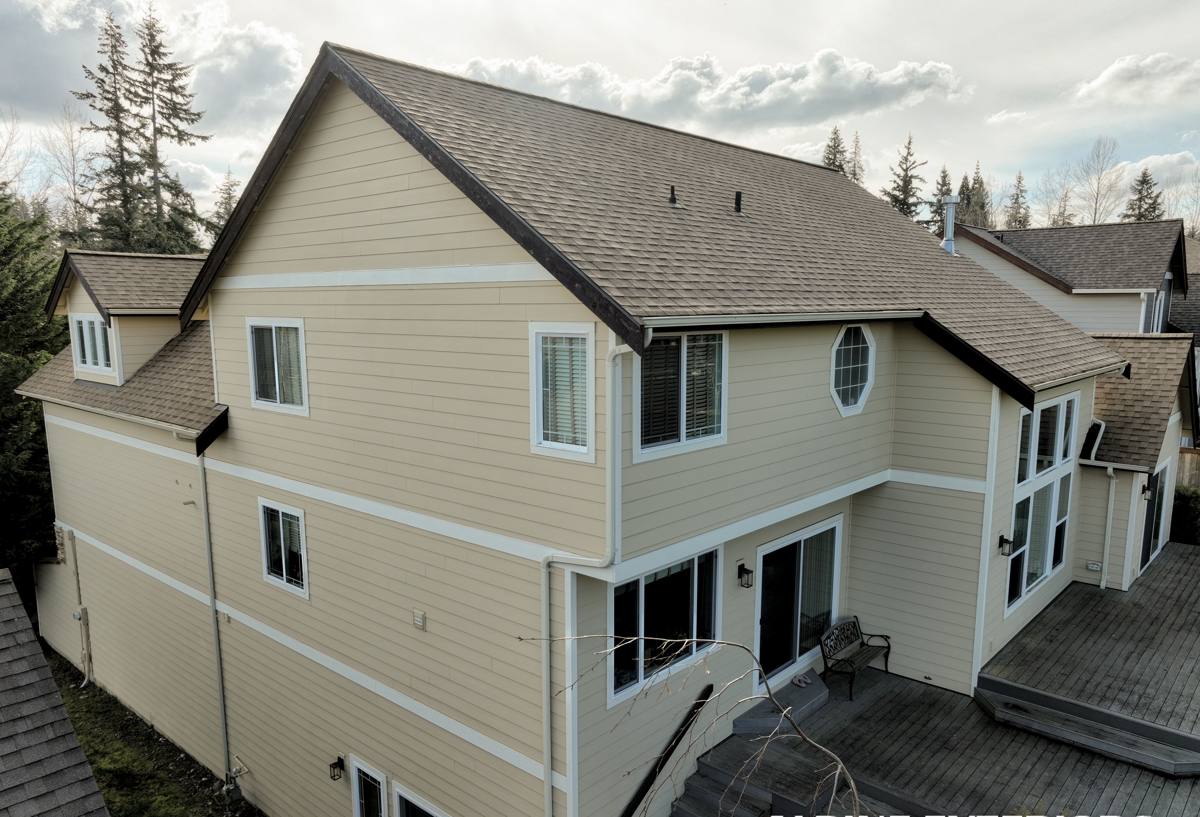
How Whatcom County's Climate Wears Down a Deck
Salt-Laden Marine Air
Whatcom County's weather comes off the Strait of Georgia and the Salish Sea, and that marine air carries salt further inland than most homeowners assume. It settles on exposed metal — fasteners, brackets, post hardware — and speeds up corrosion in ways that aren't always visible until a fastener has already lost real holding strength. On a deck, that's a structural concern, not a cosmetic one, since it's a surface people stand and walk on.
Driving Rain
Rain in this region rarely just falls straight down. Wind pushes it sideways, up under railings, and into any gap where a ledger board meets the house or where deck boards weren't spaced correctly to begin with. A deck built without those details in mind can look fine in dry weather and still be taking on water every time a storm rolls through with any wind behind it.
A Moss Season That Runs Most of the Year
Mild temperatures paired with near-constant moisture give moss a long growing season across Whatcom County, and a horizontal deck surface is one of the first places it takes hold. Shaded areas and north-facing decks usually show it first, and any decking material with surface porosity gives moss something to grip onto and hold moisture against.
Signs a Nooksack Deck Needs Replacing, Not Just Repairing
Not every aging deck needs a full tear-out. But there's a point where patching individual boards or hardware stops making sense, because the underlying structure has already been compromised. Signs it's time to talk about replacement rather than repair:
- Soft or spongy spots in the decking surface, which usually means moisture has already reached the framing underneath
- Visible rot, splitting, or delamination at multiple points rather than one isolated board
- Fasteners that are rusted, staining the boards around them, or backing out on their own
- A ledger board connection showing water staining on the siding or rim joist behind it
- Railing posts that wobble or flex more than they used to, which often points to post base or footing deterioration
- A substructure that was undersized or poorly detailed for the deck's age and span in the first place
- Persistent moss or algae that keeps returning within weeks of cleaning, suggesting the surface is staying damp longer than it should
Any one of these on its own might be a repair. Several together, especially anything touching the framing or ledger connection, usually means the deck has reached the end of what patching can reasonably fix.
Repair or Replace: How to Think About It
Homeowners often ask us to just look at the surface and tell them if it needs new boards. The honest answer depends on what's underneath, which is why we check framing and connections before recommending either path.
| Situation | Repair Usually Makes Sense | Replacement Usually Makes Sense |
|---|---|---|
| Deck age | Under 10-12 years, framing sound | Original construction is older or framing shows wear |
| Damage extent | A few isolated boards or fasteners | Widespread rot, corrosion, or soft spots |
| Ledger connection | Dry, properly flashed | Staining, rot, or missing flashing at the house connection |
| Footings and posts | Stable, correctly sized | Undersized, shifting, or showing deterioration |
| Code compliance | Meets current railing and fastening standards | Built to older standards that no longer meet code |
We'll always tell you honestly which side of that table your deck falls on. A repair that's genuinely enough to get more years out of a sound structure is the right call more often than homeowners expect — replacement isn't the answer just because a deck looks tired.
Choosing Decking Material for a Replacement
A replacement is a chance to correct a material choice that wasn't right for this climate the first time, not just match what was there before. The three main options homeowners weigh are wood, capped composite, and cellular PVC.
Wood
Pressure-treated lumber and cedar are familiar and can look good when new, but both require regular sealing or staining to hold up against sustained moisture, and both are more vulnerable to fastener corrosion in this region's salt-tinged air over time. If a deck's original wood surface is what failed, replacing it with the same material without changing the maintenance plan usually just leads to the same outcome on a similar timeline.
Capped Composite
Capped composite boards have a plastic shell around a wood-fiber core, which resists moisture absorption and staining far better than uncapped composite or raw wood. For a replacement in this climate, that cap layer is doing real work — it's the difference between occasional washing and an ongoing sealing schedule.
Cellular PVC
PVC decking has no wood fiber at all, so moisture absorption at cut edges and fastener holes isn't a concern the way it can be with composite. It costs more up front and can flex more under concentrated point loads, but for a deck with heavy shade or persistent moisture exposure, some homeowners decide the added cost is worth the reduced maintenance over the life of the deck.
What a Correct Replacement Involves
The decking surface is what homeowners notice, but in this climate the framing, fastening, and drainage details underneath are what actually determine how long a replacement lasts. A correctly done replacement in Nooksack includes:
- Full removal of the old decking surface and inspection of the framing underneath before anything new goes on
- Assessment of existing footings and posts, with replacement or reinforcement where they're undersized or deteriorated rather than reused as-is
- Stainless steel or coastal-grade corrosion-resistant fasteners throughout, in place of standard hardware that starts corroding within a few seasons in this region's air
- Correct board gapping for drainage and material movement, so wind-driven rain can actually shed rather than pool between boards
- New or corrected ledger board flashing where the deck ties into the house — one of the most common failure points on an older deck
- Joist spacing matched to the specific decking product's span rating, not just the old layout reused by default
- Railing and post attachment brought up to current code, since older decks in this area are often built to standards that have since changed
- Grading and ventilation underneath the deck so moisture doesn't sit against the new framing between storms
Skipping any of those to save time on a replacement usually just resets the clock on the same problem that took out the original deck.
How Our Replacement Process Works
We start with a site visit to look at the existing deck in person — framing condition, ledger connection, footing stability, and how the site's sun, shade, and drainage actually behave through the year. That inspection is what determines whether replacement is really the right call, or whether a targeted repair would do the job. If replacement makes sense, we walk through decking material options based on budget, how the space gets used, and how much upkeep the homeowner actually wants to take on.
Permitting in Whatcom County generally follows standard setback, structural, and elevation requirements for a deck replacement, and we handle that as part of the job. Once permitted, the old surface comes off, the substructure gets inspected and corrected where needed, and the build proceeds in sequence — framing and footings first, then the decking surface, railing, and any stairs. We finish with a walkthrough covering what the specific material chosen actually needs going forward, which is usually minor, but worth knowing.
Keeping a New Deck From Repeating the Old Problem
A correctly built replacement still needs some routine attention in this climate to reach its full lifespan. A short list worth keeping on hand:
- Rinse the deck surface periodically to clear pollen, organic debris, and airborne salt residue before it works into the surface or cap layer
- Keep the gaps between boards clear of leaves and debris so water and airflow can move the way the design intends
- Check railing posts and hardware once a year for early corrosion or loosening, especially heading into the wet season
- Trim back overhanging branches or plants holding moisture against the deck or blocking sun and airflow across the surface
- Treat any soft framing or standing water underneath as a structural issue that needs attention right away, not something to watch and wait on
Why It Matters That We Already Work This Area
A crew that mostly builds decks in drier, more sheltered parts of the state can still do competent work, but a replacement in Nooksack has variables that don't come up everywhere — corrosion-grade fastener requirements from this region's marine air, drainage detailing for wind-driven rain, and a moss season long enough that surface porosity actually matters in material selection. Working across Whatcom County regularly, from Blaine through the inland towns, means we're not guessing at those requirements on your project. We've seen which decking products and fastening details actually hold up to this specific combination of conditions and which ones are worth the extra time rather than an upsell.
That familiarity also shows up in the smaller judgment calls on a replacement — knowing what to look for once the old surface comes off, and being straightforward about whether a section of framing is worth saving or should just be replaced along with everything else.
Whether your deck is showing soft spots, failing hardware, or you just want an honest read on whether repair or full replacement makes more sense, we're happy to walk the site with you and lay out the options plainly. Reach out below for a free, no-pressure estimate.
```