 Blaine Window
 Fiber Cement Siding Built for Semiahmoo's Exposure
Semiahmoo sits out on the water at the edge of Blaine, Washington, close enough to Semiahmoo Bay and Drayton Harbor that salt air, wind, and constant moisture are part of daily life for most homes here, not just the ones with a direct water view. That waterfront position, a few miles from the Canadian border, puts Semiahmoo homes through more sustained marine exposure than most other parts of Whatcom County ever see. Fiber cement is the one siding material we've found that consistently holds up to it, and this page walks through why, what a correct installation actually involves, and how we handle a siding project on the peninsula from first look to finished wall.
This isn't a general overview of every exterior service we offer. It's focused specifically on fiber cement siding for Semiahmoo homes, because the climate here creates a distinct set of demands that a generic siding page for Whatcom County wouldn't cover in enough detail to actually be useful.
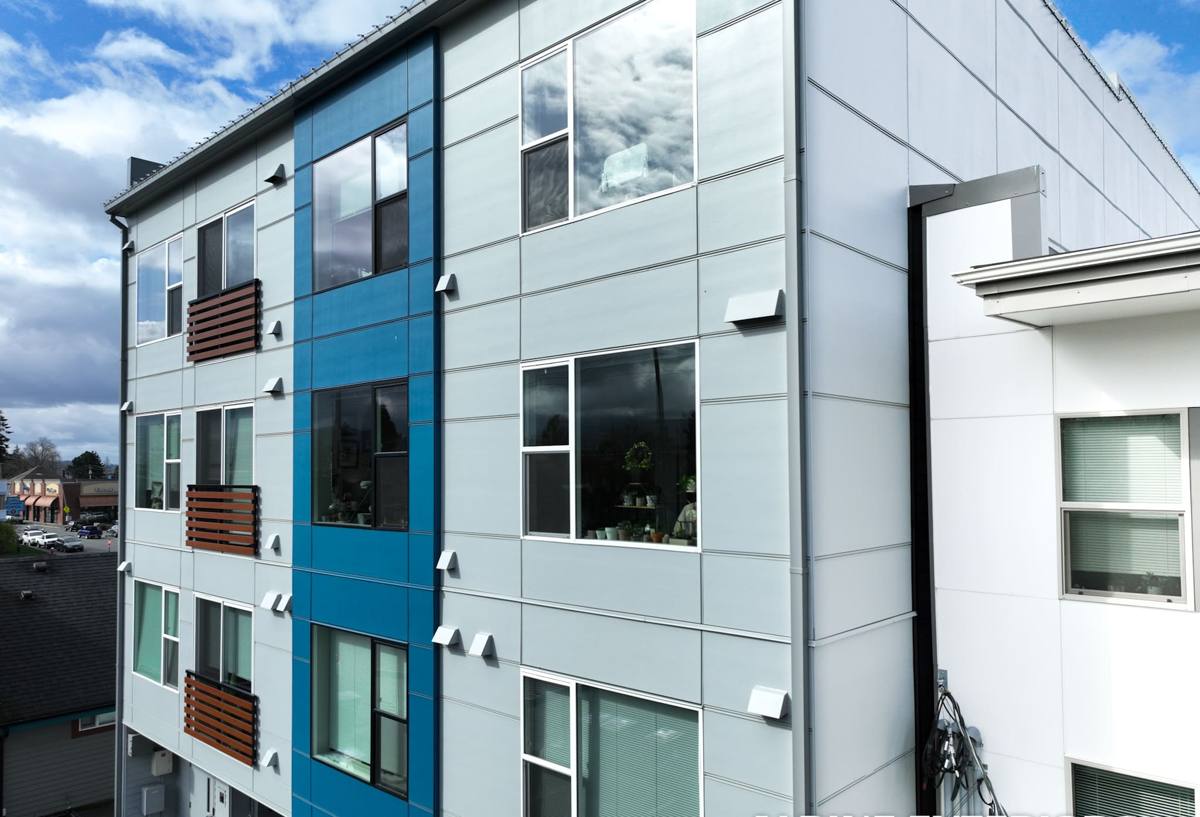
What Semiahmoo's Climate Does to Siding
Salt Air Off Semiahmoo Bay
Homes on or near the peninsula sit close enough to open water that salt-laden air reaches the exterior of the house almost daily, not only during storms. Salt accelerates corrosion in fasteners, flashing, and any exposed metal trim, and it breaks down lower-grade paints and coatings faster than they'd wear further inland. This close to the bay, the margin for a cut corner in materials or hardware is thin, and it shows up sooner than homeowners expect, sometimes within a handful of wet seasons rather than a decade or more.
Driving Rain and Open Wind
Storms moving in off the water rarely drop rain straight down on a Semiahmoo home. Wind pushes it sideways into siding joints, window flashing, and the seams where trim meets wall. That wind-driven load is harder on a house than the same total rainfall would be somewhere more sheltered, and it's exactly the kind of moisture that finds any gap a rushed installation leaves behind. Being this exposed to open water means the pattern shows up here more often, and with more force, than in areas set back from the shoreline.
A Long Moss Season
Mild temperatures and near-constant moisture add up to a moss and mildew season that can run most of the year on shaded, north-facing, or tree-covered walls. Any siding material with even a little surface porosity becomes a growth surface given enough damp months in a row, and Semiahmoo's marine climate provides plenty of them. Homes with heavier tree cover or tighter lot spacing tend to see it earliest and worst, especially on the side of the house that gets the least direct sun.
Why Fiber Cement Is the Right Material for This Location
We install James Hardie fiber cement siding exclusively. That's a professional standard we hold to, not a sales pitch, and it comes directly from watching how different siding products perform, or don't, in marine environments like this one.
- Non-combustible core: Fiber cement doesn't feed a fire the way wood-based siding products can, which matters for both safety and insurance considerations.
- Factory-applied ColorPlus finish: The color is baked on under controlled factory conditions instead of brushed on in the field, so it holds its finish longer against the fading and chalking that salt air and sun exposure cause faster this close to open water.
- Climate-engineered HZ formulation: Hardie's HZ5 product line is engineered for regions with sustained moisture and freeze-thaw cycling, which fits a marine-exposed community like Semiahmoo well.
- Dimensional stability: Fiber cement doesn't swell, cup, or warp the way engineered wood products can after years of repeated wetting from wind-driven rain.
- Strong transferable warranty: Hardie backs the product with one of the stronger warranty structures in the industry, provided the installation follows their published spec.
We don't install LP SmartSide, vinyl siding, Cemplank, Allura, primed spruce, or cedar. Each has a legitimate place in the broader market, and plenty of homeowners are satisfied with them in less demanding settings. But on a peninsula this exposed to salt air and driving rain, we've made the call to install one system we fully stand behind rather than offer something cheaper that quietly shifts maintenance risk onto the homeowner a few years down the road.
What a Correct Fiber Cement Installation Involves
Fiber cement only performs the way it's rated to when it goes on correctly, and in a spot as exposed as Semiahmoo, the installation details matter more than they would somewhere more sheltered. A few things we won't skip:
- Rain screen gap: A small drainage cavity behind the siding lets any moisture that gets past the exterior surface drain and evaporate instead of sitting against the wall sheathing.
- Correct fastener type and spacing: Hardie specifies corrosion-resistant fasteners and exact placement for a reason. Loose spacing or the wrong fastener is one of the more common causes of early failure we find on tear-offs near the water.
- Properly lapped house wrap and flashing: Every seam and penetration needs to shed water downward and outward, especially on walls that face open water directly.
- Sealed butt joints and trim transitions: Open or poorly sealed joints are where salt-laden moisture finds its way behind the siding first.
- Correct clearances from grade, roof, and decks: Keeping the bottom edge of the siding clear of standing moisture and splash-back matters more on a low-lying, waterfront lot than it does further inland.
None of this is exotic. It's Hardie's own installation spec, followed consistently rather than shortcut on the parts of the job that are hardest to see once the wall is closed up.
Caring for Fiber Cement Siding Near the Water
Correct installation gets a Semiahmoo home most of the way there, but a little routine attention keeps it performing for the long haul. An occasional rinse knocks accumulated salt film off the surface before it has a chance to work on caulking and trim. Caulking at joints and trim transitions is worth a visual check every year or two, since it's the first thing to give out under sustained wind and salt exposure. Keeping gutters clear and trimming back vegetation that shades a wall also cuts down on the standing moisture that feeds moss growth on the sides of the house that already dry out the slowest.
Our Process for a Semiahmoo Siding Project
- On-site inspection: We walk the property, check the existing siding and substrate for hidden moisture damage, and look at how the home is oriented to prevailing wind and water exposure before recommending a scope of work.
- Tear-off vs. overlay decision: On a home this close to the water, we lean toward full tear-off more often than not, since it's the only reliable way to confirm the sheathing underneath hasn't already taken on moisture damage.
- Product and color selection: We walk homeowners through Hardie's plank, shingle, and panel options, along with ColorPlus finish choices that suit the home's style and its exposure to sun and salt air.
- Installation to spec: Rain screen, fastening, flashing, and joint details go in following Hardie's published requirements, not a shortened version of them.
- Final walkthrough and cleanup: We review the finished work with the homeowner and leave the site clean before we consider the job done.
Fiber Cement Siding Cost Factors for Semiahmoo Homes
| Factor | What It Affects | Semiahmoo Consideration |
|---|---|---|
| Tear-off vs. overlay | Labor and disposal cost | Hidden moisture damage from years of marine exposure often makes tear-off the safer call |
| Home size and wall complexity | Material and labor hours | More corners, dormers, and trim transitions mean more flashing and joint work |
| Siding profile and finish | Material cost | Plank, shingle, and panel options each carry different material and labor pricing |
| Substrate condition | Repair scope before siding goes on | Sheathing exposed to years of wind-driven rain may need repair before install |
| Fastener and flashing detail | Long-term durability, not sticker price | Corrosion-resistant hardware costs more upfront but matters more this close to salt water |
These are general drivers, not a quote. Every home on the peninsula sits at a slightly different distance from open water and under different tree cover, so we walk the property before putting a real number on the work rather than pricing it sight unseen.
Signs a Semiahmoo Home Needs New Siding
- Moss or dark staining that returns quickly after cleaning
- Soft or spongy siding, especially low on the wall or around window trim
- Rust staining or corroded fasteners and trim, more common this close to the water
- Peeling paint or visible warping on shaded, north-facing walls
- Cracking, buckling, or open gaps at butt joints and corners
- A musty smell or staining on an interior wall that shares an exterior wall
Why a Crew That Already Works Semiahmoo Matters
A crew that works this stretch of Blaine regularly sees how salt air, driving rain, and moss actually behave on real Semiahmoo homes over a full year, not just how a product performs on a spec sheet. That familiarity shapes practical decisions on install day: where extra flashing attention pays off, which walls stay wet longest, and which fastener and clearance choices are worth the extra time so a homeowner isn't dealing with a callback after the next storm off the water. It also means fewer surprises once tear-off starts, since a crew that's opened up other Semiahmoo walls before has a good sense of what's likely hiding behind the existing siding on a home this exposed. Semiahmoo's exposure isn't identical to more sheltered parts of Blaine or inland Whatcom County, and a crew that knows the difference builds accordingly instead of applying a generic approach.
A Straightforward, No-Pressure Estimate
If your Semiahmoo home needs new siding, or you're not sure whether what's on the walls now is holding up the way it should, we're glad to take a look and give you a straight answer. Reach out using the form below to schedule a free, no-pressure estimate.