 Blaine Window
 Why Sandy Point Roofs Wear Differently Than Roofs Farther Inland
Sandy Point sits right up against the water, and that changes the math on how long a roof actually lasts. A shingle rated for 25 or 30 years in a typical inland neighborhood doesn't get the same lifespan a few blocks from Semiahmoo Bay. Salt-laden air corrodes exposed metal faster, wind-driven rain off the water finds its way into laps and seams that would stay dry elsewhere, and the tree cover and shade common in this part of Whatcom County keep roof surfaces damp long after a storm has passed. That dampness is what feeds moss.
None of this means a roof in Sandy Point is doomed to fail early. It means the materials, ventilation, and detailing have to be chosen and installed with those specific conditions in mind. A roof replacement done the same way you'd do it in a dry inland subdivision is a roof replacement that's going to disappoint the homeowner in year eight or ten instead of year twenty-five.
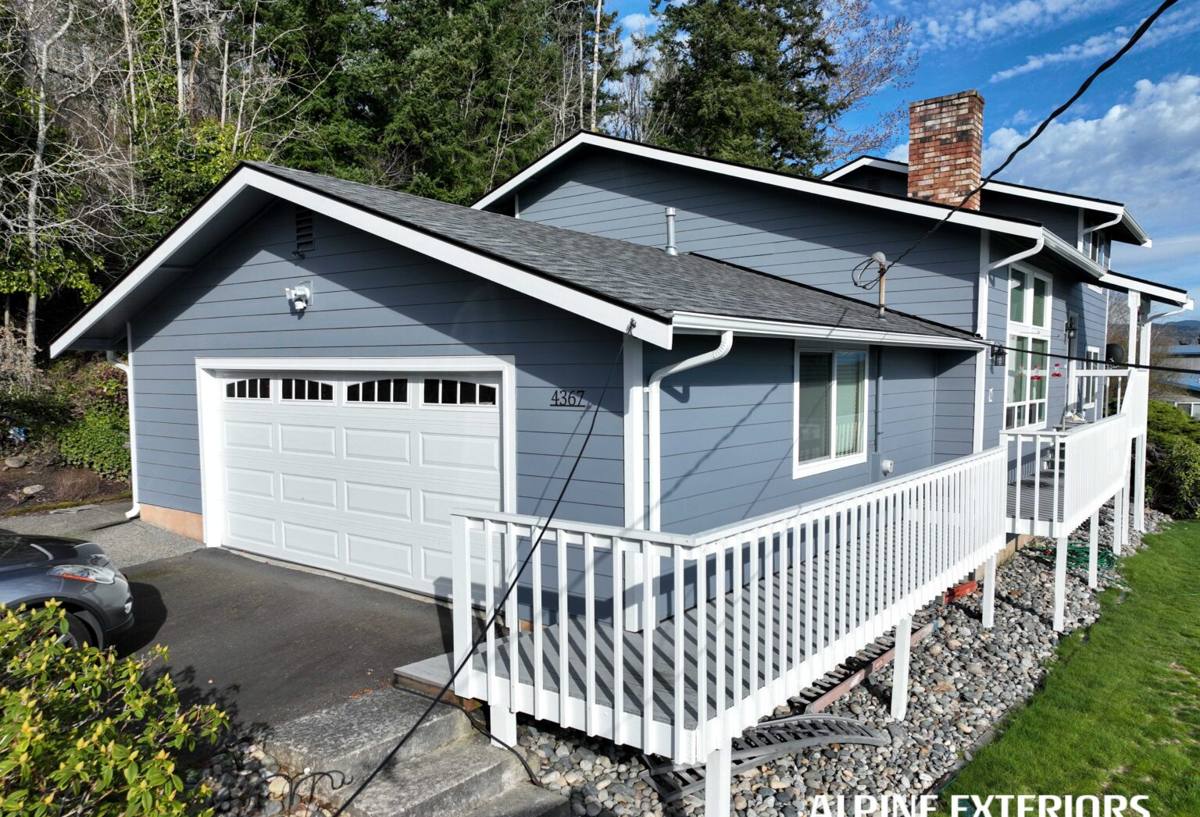
How the Local Climate Actually Attacks a Roof
Salt Air and Corrosion
Airborne salt settles on every exterior surface near the water, including the roof. Over time it accelerates rust on exposed fasteners, flashing, and any hardware that isn't rated for a marine or near-marine environment. This is a bigger deal on some materials than others, which is why product selection near the water matters more than it does a mile or two inland.
Driving Rain
Storms coming off the Strait of Georgia and Puget Sound don't just fall straight down — wind pushes rain sideways, up under eaves, and into any gap in flashing or underlayment that wouldn't normally see water. Roofs here need details built for wind-driven rain, not just vertical rainfall, especially around valleys, chimneys, skylights, and low-slope transitions.
Moss and Moisture
Whatcom County's long wet season, combined with shade from mature trees and the naturally moist marine air around Sandy Point, gives moss a long runway to establish itself. Moss holds water against the roof surface, works its way under shingle edges, and can lift granules and tabs over time. A roof that never gets a chance to dry out between rain events is a roof where moss control has to be part of the plan, not an afterthought.
Signs a Sandy Point Home May Need a Roof Replacement Rather Than a Repair
- Granules collecting in gutters or at downspout outlets in noticeable amounts
- Shingles that are cupping, curling at the edges, or visibly thin in spots
- Moss established in patches rather than a light surface film — especially on north-facing or shaded slopes
- Rust staining or corrosion visible on flashing, vent caps, or fasteners
- Soft spots in the roof deck felt when walked, or sagging visible from the ground
- Daylight visible through the roof deck from inside the attic
- Repeated leaks in the same area even after past patch repairs
- The roof is approaching or past its rated service life for the material installed
One or two of these on their own might point to a targeted repair. Several together, especially on a roof that's already in its second or third decade, usually mean replacement is the more honest recommendation — patching a roof that's failing broadly just delays the real cost and risks interior damage in the meantime.
What a Correct Roof Replacement Actually Involves
A roof replacement is more than swapping old shingles for new ones. In a location like Sandy Point, the parts that don't show from the ground are what determine whether the new roof actually holds up to the climate.
Full Tear-Off and Deck Inspection
We remove the existing roofing down to the deck rather than layering over it. That's the only way to actually see the condition of the sheathing underneath — moisture damage, soft spots, and rot don't show up until the old material is off. Any damaged decking gets replaced before anything new goes down.
Underlayment Built for Wind-Driven Rain
Given how much of Sandy Point's weather comes in sideways off the water, underlayment selection and installation matter as much as the shingle itself. Self-adhered membrane in vulnerable areas — eaves, valleys, around penetrations — gives the roof a second line of defense if wind ever pushes water past the surface layer.
Flashing Done Right
Flashing around chimneys, skylights, vent pipes, and wall-to-roof transitions is where most leaks actually originate, not out in the open field of the roof. Corrosion-resistant flashing, properly lapped and sealed, is non-negotiable this close to salt air.
Ventilation
Balanced intake and exhaust ventilation keeps the underside of the deck drier and more temperature-stable, which reduces condensation, extends shingle life, and helps limit the conditions moss thrives in. Ventilation is easy to overlook because it's invisible once the job is done, but it's one of the biggest factors in how long a roof actually lasts here.
Final Details
Drip edge, ridge caps, gutter apron, and proper fastening patterns all sound minor, but they're exactly the details that either hold up to decades of coastal weather or become the reason for a callback in year five.
Material Options for a Salt Air, High-Moss Environment
There's no single "best" roofing material for every home — it depends on budget, roof pitch, the home's style, and how much maintenance the homeowner wants to take on. Here's how the common options generally compare for a property like one in Sandy Point.
| Material | Salt Air Durability | Moss Resistance | Typical Maintenance |
|---|---|---|---|
| Architectural asphalt shingles | Good with corrosion-resistant fasteners and flashing | Moderate — benefits from algae-resistant granules and periodic cleaning | Low to moderate |
| Metal roofing (standing seam or coated panel) | Very good when properly coated and fastened | High — sheds moisture quickly, little surface for moss to grip | Low |
| Composite/synthetic shake | Good | Moderate to high depending on product | Low to moderate |
| Wood shake or shingle | Fair — requires diligent maintenance near salt air | Low — moisture-retentive material is more hospitable to moss | High |
We don't install every product on this list on every home, and we're upfront about why. Wood shake, for example, can look great, but it holds moisture longer and needs more consistent upkeep to perform well in a shaded, marine-influenced setting — that's a maintenance and moisture-management trade-off worth knowing before you commit to it, not a knock on the product itself. For most Sandy Point homes, a quality architectural shingle with the right underlayment and flashing package, or a coated metal roof for homes that want the lowest long-term maintenance, tends to be the more practical fit.
Cost Factors Homeowners Should Understand
Roof replacement costs vary by roof size, pitch, complexity, and material, so we'd rather walk your specific roof than quote a number that doesn't mean anything for your house. That said, these are the factors that move the price up or down the most:
| Factor | Why It Matters |
|---|---|
| Roof size and number of layers to remove | More square footage and tear-off work means more labor and disposal cost |
| Roof pitch and accessibility | Steep or hard-to-access roofs require more safety setup and slower, more careful work |
| Deck condition | Rotten or soft sheathing found during tear-off has to be replaced before roofing can go on |
| Material selected | Asphalt, metal, and composite products carry different material and labor costs |
| Number of penetrations | Chimneys, skylights, and multiple vents each need individual flashing work |
| Ventilation upgrades | Adding or correcting intake/exhaust ventilation adds some cost but pays back in roof lifespan |
Broadly, homeowners in this area should expect a range that reflects mid-tier to higher-quality materials and proper coastal detailing — we'll give you an itemized number after we've actually looked at your roof, not a phone estimate.
Our Process, Start to Finish
- On-site inspection. We walk the roof, check the deck where accessible, look at ventilation, and note existing moss, flashing condition, and any trouble spots.
- Written estimate. You get a clear breakdown of materials, scope, and cost — no surprise add-ons sprung on you mid-project.
- Material selection. We talk through the options above based on your home, budget, and how much maintenance you want to take on long-term.
- Tear-off and deck repair. Old roofing comes off, the deck is inspected, and any damaged sheathing is replaced before new material goes down.
- Underlayment, flashing, and roofing installation. Installed to handle wind-driven rain, not just standard vertical exposure.
- Ventilation check and correction. We confirm intake and exhaust are balanced for the attic space.
- Cleanup and final walkthrough. Site cleared of debris and nails, and we walk the finished roof with you.
What to Ask Before Hiring a Roofing Contractor Near the Water
- Do you carry current licensing and insurance, and can you provide proof?
- Have you worked on homes in this specific area before, and do you understand its exposure to salt air and driving rain?
- What underlayment and flashing materials do you use, and why?
- How do you handle ventilation as part of a replacement, not just as an afterthought?
- What's included in the written warranty, both for materials and for workmanship?
- Will you do a full tear-off, or are you proposing to roof over existing layers?
- Can you give a straight answer about moss — how it happens here and how the new roof will manage it?
Why Experience With Sandy Point Specifically Matters
A roofing crew that mostly works dry, inland neighborhoods can still do competent work — but they may not default to the corrosion-resistant fasteners, the extra underlayment at vulnerable points, or the ventilation adjustments that a marine-exposed, moss-prone property in Whatcom County actually needs. Those aren't upgrades we push to increase the price; they're the baseline for doing the job right in this specific setting.
Working regularly in and around Blaine and communities like Sandy Point means we already know which details tend to fail first in this climate, and we build the replacement to address them from day one rather than treating them as future repair calls.
If your roof is showing wear, holding moss, or you're just not sure whether repair or replacement makes more sense for your home, we're happy to take a look. Reach out below for a free, no-pressure estimate — we'll walk the roof, answer your questions honestly, and give you a clear picture of your options.