 Blaine Window
 Roofs in Sandy Point Work Harder Than Most
Sandy Point sits close enough to the water that every roof out there is dealing with something most inland Whatcom County homes don't: near-constant marine air, wind-driven rain that finds its way under loose or aging materials, and a moss season that runs longer than almost anywhere else in the state. None of that is exotic or rare — it's just a heavier, more constant version of what every roof in this region deals with. But it changes what "roof repair" needs to mean if the fix is going to actually last.
A patch job that would hold up fine on a dry, sheltered roof somewhere inland can fail in a season or two out here. Salt-laden air accelerates corrosion on exposed metal. Persistent dampness feeds moss and algae growth on north-facing and shaded slopes. And wind off the water doesn't just add pressure — it drives rain sideways and upward under shingle edges and flashing laps in ways that straight-down rain never tests. Repairing a roof correctly in Sandy Point means accounting for all three, not just fixing the spot that's currently leaking.
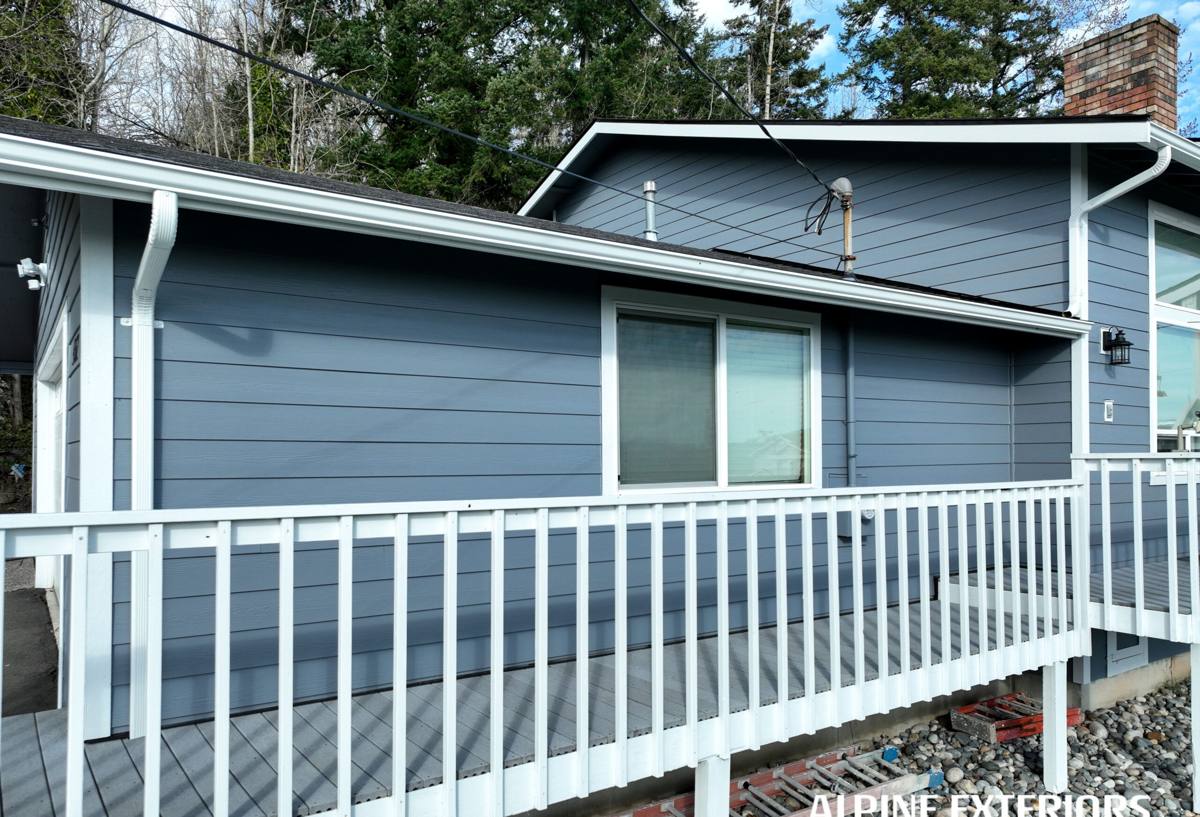
The Repairs We See Most Often in This Area
Every roof is different, but living and working in this corner of Whatcom County, certain failure patterns show up again and again on Sandy Point homes.
Moss-Related Damage
Moss doesn't just look bad — it holds moisture against the roofing material, lifts shingle edges as it grows, and works its way under flashing and into seams. On shaded or north-facing sections, moss can establish itself within a couple of years of a roof being cleaned, and if it's left unchecked it accelerates granule loss on asphalt shingles and can rot the wood substrate underneath cedar or older roofing.
Flashing Failures
Flashing around chimneys, skylights, vent pipes, and roof-to-wall transitions is almost always where leaks actually start, even when the visible damage shows up somewhere else on the ceiling. Wind-driven rain is especially hard on flashing because it can push water uphill or sideways into laps and seams that were never designed to handle water moving in that direction.
Wind and Storm Lift
Gusts off the water can lift shingle tabs, loosen ridge caps, and work fasteners loose over time, even without a single dramatic storm event. The damage is often gradual — a few tabs at a time — which is why roofs that look fine from the ground can still have real vulnerabilities up close.
Corrosion on Metal Components
Nails, flashing, vents, and gutter hardware exposed to salt-laden air corrode faster than the same materials would inland. Once corrosion starts on a fastener or a flashing edge, it's only a matter of time before it stops doing its job.
What a Correct Repair Actually Involves
A roof repair done right starts with figuring out why the damage happened, not just patching the spot where water is getting in. Here's what that looks like in practice.
- Full inspection, not a spot check — the area around a leak or damaged section is checked along with adjacent flashing, valleys, and fastener lines, since coastal wind and moisture rarely stay confined to one small spot.
- Root-cause diagnosis — a leak that shows up in one place often originates somewhere else entirely, especially with wind-driven rain, so we trace it back rather than repairing where the stain appears.
- Matching materials, not mismatched patches — repairs should match the existing roofing in type, weight, and, where possible, color, so the fix blends in and performs the same as the surrounding material.
- Proper flashing detail — flashing gets reset or replaced with correct laps and sealant, not just caulked over, since caulk alone is a short-term fix that fails under UV and moisture cycling.
- Ventilation check — poor attic ventilation traps moisture that contributes to moss growth and premature aging from underneath, so we check that the repair isn't just masking a ventilation problem.
Our Process, Start to Finish
We keep the process straightforward so you know what's happening at each stage and aren't guessing about cost or timeline.
- Initial call and scheduling — you describe what you're seeing (a stain, a missing shingle, visible moss, a leak during storms), and we schedule a time to look at it in person.
- On-site inspection — we get up on the roof (weather permitting) and check the damaged area plus the surrounding flashing, valleys, and fastener condition, and take a look at attic ventilation if accessible.
- Written estimate — you get a clear explanation of what's actually wrong, what needs to be repaired, what materials will be used, and an honest cost range before any work starts.
- Repair work — the actual fix, done to match existing materials and using fasteners and flashing suited to a marine-air environment.
- Final check — we confirm the repair holds and walk you through anything else worth keeping an eye on, like a moss patch nearby or aging flashing elsewhere on the roof.
Repair or Replace? How We Help You Decide
Not every damaged roof needs to be replaced, and not every repair is worth doing if the roof is near the end of its service life. We'll always give you a straight answer about which situation you're in.
| Factor | Leans Toward Repair | Leans Toward Replacement |
|---|---|---|
| Age of roof | Under 15-20 years, depending on material | Near or past typical material lifespan |
| Extent of damage | Isolated to one section or component | Spread across multiple slopes or recurring in several spots |
| Underlying deck condition | Solid, no rot or soft spots | Soft decking, rot, or repeated water intrusion into the substrate |
| Moss and algae history | Recent growth, roof otherwise sound | Long-term moss damage with granule loss or substrate wear |
| Flashing condition overall | Localized failure | Widespread corrosion or aging flashing throughout |
Materials and Methods Suited to a Coastal Whatcom County Roof
Because Sandy Point roofs deal with more salt air and moisture cycling than a typical inland roof, we pay close attention to a few details that matter more here than they would elsewhere.
Corrosion-Resistant Fasteners and Flashing
We use fasteners and flashing metals chosen to hold up under salt-air exposure rather than standard-grade hardware that corrodes faster near the water. A repair is only as durable as its weakest fastener.
Proper Underlayment at Repair Points
Where a section of roofing is opened up for repair, we make sure the underlayment underneath is intact or replaced, since that's the last line of defense if wind-driven rain does get past the surface layer.
Sealants Rated for UV and Moisture Cycling
Coastal sun, salt, and near-constant humidity break down low-grade sealants faster than in drier climates. We use products rated to hold up under that kind of cycling rather than whatever seals fastest.
Moss and Debris: The Maintenance Side of Roof Repair
A lot of the repair calls we get in Sandy Point trace back to moss and debris that had been building for a while. Staying ahead of it is the cheapest way to avoid repeat repairs.
- Have moss physically removed rather than just treated, since chemical treatments alone don't stop the moisture damage already happening underneath established growth.
- Clear gutters and valleys before the fall rains start, since clogged valleys are a common source of water backing up under shingles.
- Trim back overhanging branches where possible to reduce shade, debris buildup, and the conditions moss needs to take hold.
- Have flashing and fastener condition checked every couple of years, not just after a leak appears — corrosion and wear are gradual and easy to catch early.
- Address small issues (a lifted tab, a small gap in flashing) as soon as they're noticed, since they rarely stay small in a wind-and-rain climate.
Why It Matters to Hire a Crew That Already Works This Neighborhood
Roofing crews that mainly work drier, inland areas don't always account for how much harder marine air and wind-driven rain are on a roof. A crew that regularly works Blaine and the surrounding waterfront areas already knows to check flashing more carefully, expects moss in shaded spots even on a newer roof, and uses hardware rated for salt exposure as a default rather than an upgrade. That familiarity shows up in fewer callbacks and repairs that actually hold through the next storm season, not just until the next one.
It also matters for access and logistics — waterfront and near-shoreline properties can have different site conditions than a typical inland lot, and a crew that's worked the area before isn't guessing about how to safely get equipment and materials to the roof.
What Roof Repair Typically Costs
Costs vary based on the scope of damage, roof material, pitch, and accessibility, so we won't quote a number without seeing the roof. In general terms, small isolated repairs (a section of flashing, a handful of shingles) tend to run in the low hundreds of dollars, while more involved repairs — larger sections, multiple flashing points, or moss-damaged decking — can run into the higher hundreds or low thousands depending on scope. We'll always walk you through what's driving the cost before any work begins.
| Cost Factor | Why It Matters |
|---|---|
| Size of damaged area | Larger repairs need more material and labor time |
| Roof pitch and height | Steeper or taller roofs require more safety setup and time |
| Material type | Asphalt, cedar, and metal repairs involve different materials and techniques |
| Underlying deck condition | Rot or soft decking adds carpentry work beyond the surface repair |
| Access to the site | Difficult or tight access can add setup time |
If you're dealing with a leak, a patch of moss you're not sure is a problem yet, or a roof that's just due for a look after another wet Whatcom County winter, we're happy to come take a look. Estimates are free and there's no pressure to move forward — just an honest read on what your roof needs and what it'll take to fix it right. Use the form below to get in touch.