 Blaine Window
 Why Sandy Point Decks Wear Differently Than Decks Inland
Sandy Point sits close enough to the water that salt air is part of daily life, not an occasional visitor. Salt-laden air corrodes fasteners, dulls finishes, and works its way into end grain and joints faster than most homeowners expect. Add Whatcom County's long wet season — months of driving rain followed by a stubborn moss season that can start as early as October and linger into spring — and a deck here is under a different kind of load than one built in a dry inland yard. None of this means a deck can't last for decades. It means the build has to account for these conditions from the framing up, not just at the surface.
We've built and repaired decks throughout this stretch of Blaine long enough to know which shortcuts show up as problems in year two, and which details quietly prevent callbacks ten years out. This page is about what that actually looks like for a deck built specifically for a Sandy Point property.
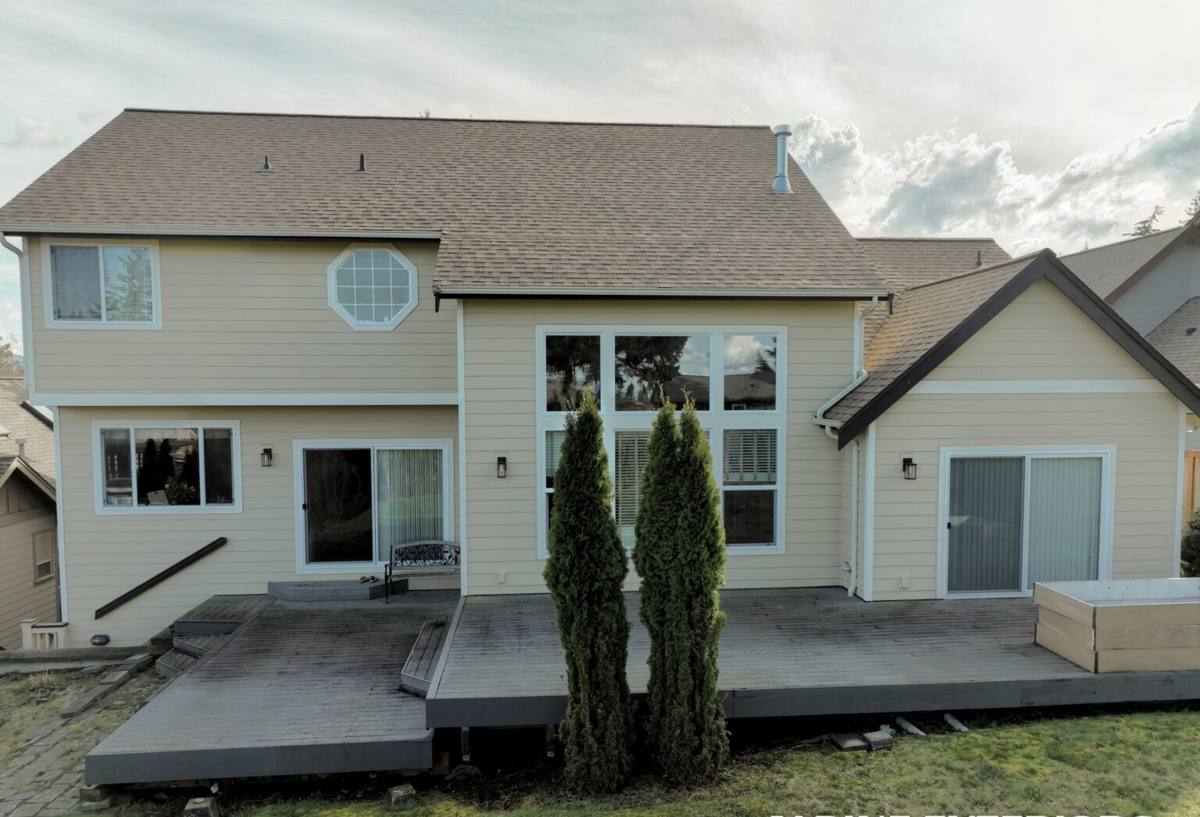
What Salt Air, Rain, and Moss Actually Do to a Deck
Salt Air
Airborne salt accelerates corrosion on anything metal — nails, screws, joist hangers, bolts, and railing hardware. Standard construction-grade fasteners can start rusting within a season this close to the water. Once a fastener corrodes, it loses holding strength long before it looks obviously bad, which is part of why a deck can seem fine right up until a board or railing section fails.
Driving Rain
Rain that comes in sideways off the water finds every gap in flashing, every unsealed fastener hole, and every spot where a ledger board wasn't properly separated from the house wall. Water that gets trapped between a deck surface and the framing below doesn't just sit there — it feeds rot in the framing, which is the part of the deck nobody sees until there's a problem.
Moss and Sustained Moisture
A long, cool, wet season is exactly what moss needs to establish itself, and moss holds moisture against wood and composite surfaces far longer than open air alone would. On horizontal surfaces like deck boards and stair treads, sustained moisture under moss is what turns a maintenance issue into a structural one if it's left unaddressed for years.
What a Correctly Built Deck Needs in This Climate
A deck built for Sandy Point conditions is not a different design — it's the same solid structural fundamentals, executed with material choices and detailing suited to salt exposure and near-constant moisture cycling. The differences that matter most:
- Corrosion-resistant fasteners and hardware rated for coastal or treated-wood exposure, not standard interior-grade hardware
- Proper ledger board flashing and separation from the house to stop water intrusion at the single most common failure point on any deck
- Decking material chosen for how it handles standing moisture and moss growth, not just appearance
- Airflow underneath the deck so framing can dry between rain events instead of staying damp for weeks
- Footings sized and set for local soil and drainage conditions, not a generic minimum
- Railing hardware that won't corrode and loosen over time, since railings take direct weather exposure on all sides
Choosing the Right Decking Material for This Environment
There's no single "best" decking material for every homeowner — it comes down to how much maintenance you want to do, your budget, and how the material behaves under salt air and repeated wet-dry cycling. We'll walk through the honest trade-offs rather than push one option.
| Material | How It Handles Salt Air & Moisture | Maintenance | Typical Lifespan Here |
|---|---|---|---|
| Pressure-treated wood | Good if properly sealed and re-sealed; end grain and fastener holes are the weak points | Annual cleaning, periodic re-sealing/staining | 15-20 years with upkeep |
| Cedar | Naturally rot- and insect-resistant, but softer and needs regular sealing to hold up to driving rain | Regular cleaning and sealing to prevent graying and moss growth | 15-25 years with upkeep |
| Composite decking | Doesn't absorb moisture the way wood does; less prone to rot, though moss can still grow on the surface | Periodic washing; no sealing or staining required | 25-30+ years, varies by product |
| PVC decking | Fully synthetic, essentially immune to rot and moisture absorption | Lowest maintenance of the common options; occasional washing | 25-30+ years, varies by product |
Whichever material you choose, the framing underneath matters more for long-term durability than the surface material does. A composite deck built on poorly flashed, poorly ventilated framing will still develop hidden rot — the visible surface just hides the problem longer.
The Details That Actually Prevent Failures
Ledger Board Flashing
Where the deck attaches to the house is the single highest-risk spot for water intrusion on any attached deck. Correct flashing — installed in the right order relative to the house's siding and weather barrier — keeps water from working its way behind the ledger and into the wall framing. This is not a place to save time.
Fasteners and Hardware
We use fasteners and structural hardware rated for the corrosion exposure this location actually sees, not whatever is cheapest at the standard grade. This applies to joist hangers, structural screws, bolts, and railing hardware alike, since any one weak component can undermine the rest.
Joist Spacing and Board Fastening
Tighter joist spacing than the bare minimum, and a fastening method matched to the decking material, reduces board movement and the gaps where moisture and debris collect. Hidden fastener systems, where compatible with the chosen decking, also reduce the number of exposed fastener penetrations that can become entry points for water.
Ventilation Below the Deck
Framing that can't breathe stays wet longer after every rain event. Proper skirting design, gaps, or vents allow airflow underneath without leaving the space open to significant pest access.
Footings and Framing Built for Local Conditions
Footing depth and sizing need to account for the soil and drainage conditions on your specific lot, not just a generic code minimum. Standing or poorly draining water around footings over time can affect their stability, so proper drainage planning around the footing locations is part of a correct build, not an afterthought. We evaluate this on-site before finalizing a structural plan, since soil and drainage conditions can vary noticeably from one Sandy Point lot to the next even a short distance apart.
Our Deck Building Process
- On-site assessment. We look at your lot's exposure, drainage, existing structure (if replacing a deck), and how the space will be used before recommending a design or material.
- Design and material selection. We walk through layout, decking material, railing style, and hardware choices with the coastal exposure factors above in mind, and give you an honest read on cost versus long-term maintenance for each option.
- Permitting. Deck construction in Whatcom County typically requires a permit depending on size and height; we handle this as part of the project so it's built to code from the start.
- Footings and framing. Footings are set to account for local soil and drainage, and framing is built with corrosion-resistant hardware and proper ledger flashing.
- Decking, railing, and finishing. Surface material is installed with attention to fastening method, drainage gaps, and stair and railing details.
- Final walkthrough. We go over basic maintenance expectations for your specific material so you know what upkeep, if any, to plan for.
What to Ask Before You Hire a Deck Builder Here
Not every contractor who builds decks inland will get the coastal-specific details right, and it's reasonable to ask direct questions before hiring. A checklist worth going through with any contractor you're considering:
- Do you flash and separate the ledger board from the house, and can you explain how?
- What grade of fasteners and hardware do you use, and are they rated for this level of salt exposure?
- How do you handle footing depth and drainage for this type of lot?
- Are you pulling the required permit, and is that included in your quote?
- Can you explain the maintenance trade-offs between the decking materials you're recommending, not just the price difference?
- Do you carry liability insurance and are you licensed to work in Washington?
A contractor who already builds regularly in Sandy Point and similar Blaine-area coastal lots should be able to answer all of these without hesitation, because they're solving for the same conditions on every project.
Why Local Experience Matters for This Job
Deck building fundamentals don't change from town to town, but the judgment calls — how much ventilation is enough, which fastener grade is worth the extra cost, how footings should be set for a particular lot's drainage — are shaped by seeing how decks in this exact environment actually hold up over years, not just at handoff. A crew that has repaired deck failures in this area knows what the early warning signs look like and builds to avoid them the first time, rather than learning coastal lessons at your expense.
If you're planning a new deck or replacing one that's showing its age, we're happy to take a look at your property and talk through what makes sense for your budget, your use of the space, and the realities of building this close to the water. Reach out for a free, no-pressure estimate using the form below — there's no obligation, just an honest assessment of what your project needs.