 Blaine Window
 Roofing for a Corner of Whatcom County That Doesn't Get a Break From the Weather
Nooksack sits in a stretch of Whatcom County where roofs work harder than most people realize. The combination of coastal air moving in off the Salish Sea, long stretches of steady rain rather than short downpours, and a mossy, shaded growing season means an asphalt shingle roof here is under a slightly different kind of stress than the same roof would face inland or in a drier climate. None of that is a reason to avoid asphalt shingles — they remain one of the most practical, cost-effective roofing systems available, and a well-installed shingle roof holds up fine in this region for decades. But "well-installed" is doing a lot of work in that sentence, and it's the part that separates a roof that performs for 25-plus years from one that starts showing problems in year eight.
This page is about that one job — asphalt shingle roofing, done correctly, for homes in and around Nooksack — not a general overview of every roofing option we offer.
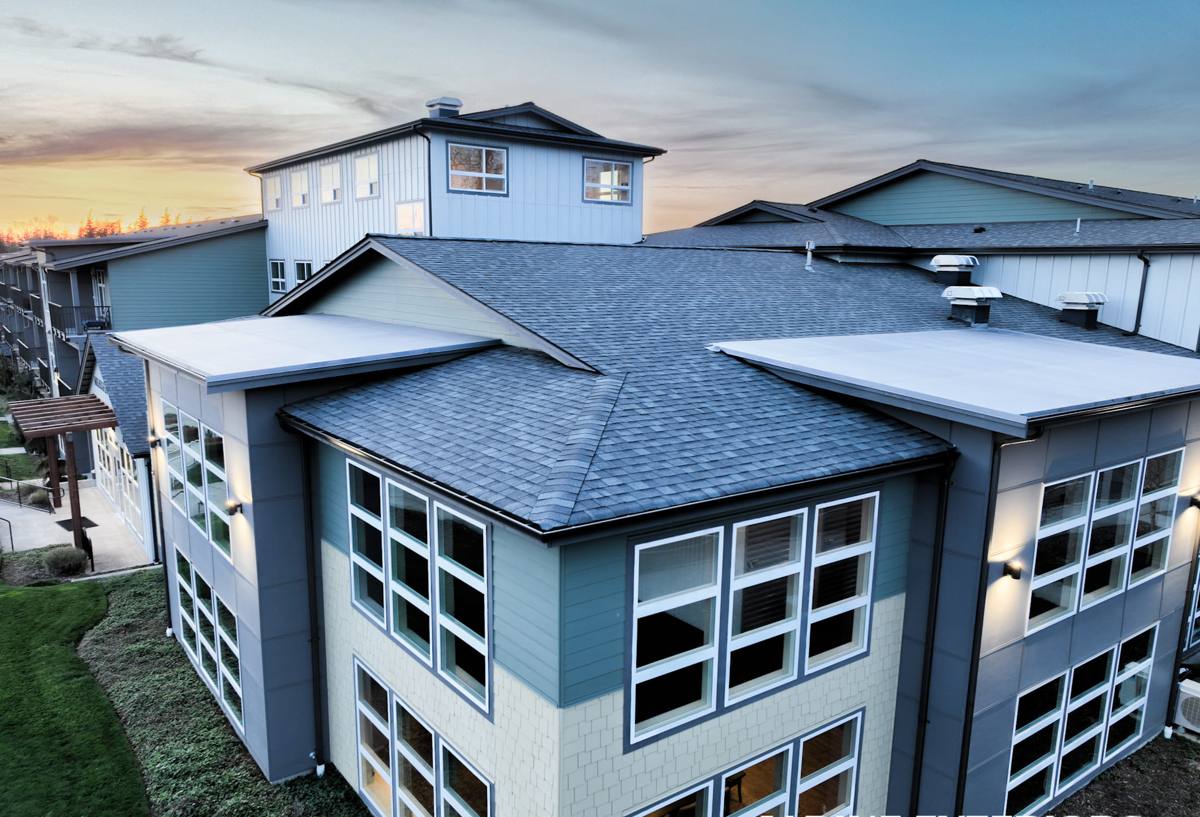
What Salt Air, Driving Rain, and Moss Actually Do to a Shingle Roof
Moisture Load From Driving Rain
Driving rain doesn't just fall on a roof — wind pushes it sideways and up under shingle edges, into hip and ridge lines, and around any flashing that isn't sealed and lapped correctly. A roof built for a drier climate can get away with looser flashing details. A roof in this part of Whatcom County can't. Every seam, valley, and penetration point is a place where wind-driven rain will eventually find a weakness if the installation wasn't done with that specific weather pattern in mind.
Salt Air and Metal Components
Proximity to the water means a steady, low-level exposure to salt-laden air. This doesn't damage the shingles themselves much, but it accelerates corrosion on exposed metal — nails, flashing, vent caps, and gutter hardware. Standard galvanized fasteners and thin flashing stock corrode faster here than they would 50 miles inland. That's a material selection issue as much as an installation one, and it's a detail a lot of out-of-area crews simply don't account for.
Moss and the Long Wet Season
Whatcom County's long, mild, wet stretch of the year is close to perfect moss-growing weather, especially on roof slopes that stay shaded or face north. Moss isn't just cosmetic. As it establishes, it holds moisture directly against the shingle surface, works into the granule layer, and can lift shingle edges as it grows — all of which shortens the life of the roofing system underneath it. A roof designed with this climate in mind accounts for moss from day one, rather than treating it as an afterthought once it's already established.
Choosing the Right Shingle for This Climate
Not every asphalt shingle product is built the same way, and the differences matter more in a wet, mossy, salt-air environment than they would in a milder one. We walk homeowners through the tradeoffs rather than defaulting to whatever is cheapest or most common.
| Shingle Type | Typical Lifespan Here | Moss Resistance | Best Fit |
|---|---|---|---|
| Standard 3-tab | 15-20 years | Low — no algae/moss treatment built in | Budget-driven projects, secondary structures |
| Architectural (laminate) | 25-30 years | Moderate to good, depending on brand | Most primary homes in this climate |
| Algae-resistant (copper/zinc granules) | 25-30 years | Best available in asphalt | North-facing slopes, tree-shaded lots, chronic moss areas |
| Premium/designer laminate | 30+ years | Good, brand-dependent | Homes prioritizing longevity and appearance together |
For most Nooksack homes, we lean toward architectural shingles with algae-resistant granules, especially on any slope that doesn't get much direct sun. The upcharge over standard shingles is modest compared to the cost of dealing with moss-related damage or a shortened roof life down the road.
What a Correct Installation Actually Involves
Tear-Off and Deck Inspection
We don't install over existing layers or skip the deck inspection to save time. Once the old roofing is off, we check the sheathing for soft spots, delamination, or water staining — problems that are invisible until the shingles come off, and that get worse if they're covered back up instead of repaired.
Underlayment and Ice-and-Water Barrier
Given how much wind-driven rain this area sees, we treat synthetic underlayment as the baseline, not an upgrade, and we install self-adhering ice-and-water barrier at eaves, valleys, and around penetrations — the exact spots where wind-driven moisture pushes hardest. This is one of the most commonly shortcut steps in lower-bid roofing jobs, and it's usually invisible once the shingles are down, which is exactly why it matters who's doing the work.
Flashing Details
Step flashing at walls, proper counter-flashing, and correctly lapped valley metal are what actually stop water — the shingles are the second line of defense, not the first. We use corrosion-resistant flashing material specifically because of the salt air exposure common to this area, rather than defaulting to whatever standard stock a crew normally carries.
Ventilation
A shingle roof that traps heat and moisture in the attic ages faster from the underside, and poor ventilation is a major contributor to premature shingle failure and deck rot — both accelerated by our wet climate. We check intake and exhaust balance as part of every install rather than treating ventilation as a separate, optional conversation.
Fastening
Correct nail placement, count, and depth affect wind resistance and warranty validity alike. We follow manufacturer specs exactly, using corrosion-resistant fasteners given the salt air exposure in this area.
Our Process, Start to Finish
- Roof inspection and honest assessment — including the deck, ventilation, and existing flashing, not just a shingle count.
- Written estimate outlining material options, scope, and timeline in plain language, no pressure to decide on the spot.
- Material selection guided by your roof's exposure — sun, shade, slope, and how much moss history the property has.
- Tear-off and deck repair as needed, with any damaged sheathing replaced and documented before covering it.
- Underlayment, flashing, and shingle installation to manufacturer specification, not shortcuts.
- Site cleanup including magnetic sweep for nails and full debris haul-away.
- Final walkthrough so you can see the finished work and ask questions before we consider the job done.
Signs a Nooksack Roof Needs Attention Now
Some warning signs are obvious; others are easy to miss from the ground, especially on a roof with moss or heavy tree cover. Worth checking for:
- Dark streaking or green-black patches, especially on north-facing or shaded slopes
- Granules collecting in gutters or at downspout outlets
- Shingle edges that look lifted, curled, or uneven from the ground
- Soft or spongy spots when walking the attic floor above the roof deck
- Daylight visible through the roof deck from inside the attic
- Water stains on interior ceilings, especially after a stretch of wind-driven rain
- Rusted or discolored flashing around chimneys, vents, or wall intersections
- Moss thick enough to hold visible moisture after a dry day or two
Any one of these on its own isn't necessarily an emergency, but they're worth a professional look rather than waiting for the next wet season to make the decision for you.
Maintenance Between Roofing Projects
A correctly installed shingle roof in this climate still benefits from periodic upkeep, especially around moss control. We recommend gentle, low-pressure moss removal rather than power-washing, which can strip granules and shorten shingle life faster than the moss itself. Keeping gutters clear so water isn't backing up under eave edges, and trimming back overhanging branches to cut down on shade and debris buildup, both go a long way toward getting the full lifespan out of a shingle roof here.
Why Local Experience in Nooksack Actually Matters
A roofing crew that mostly works drier, calmer climates can install a technically fine roof that still underperforms here, simply because the details that matter most in this region — moss-resistant material choice, corrosion-resistant fasteners and flashing, and underlayment sized for wind-driven rain rather than straight-down rain — aren't part of their normal routine. Working regularly in Blaine, Nooksack, and the surrounding parts of Whatcom County means those decisions are standard practice for us, not an afterthought added because a problem already showed up. That familiarity shows up less in any single dramatic fix and more in a roof that simply doesn't develop the common local problems in the first place.
Cost Factors Worth Understanding Before You Get Quotes
Shingle roofing costs vary by roof size, pitch, layers to remove, deck condition, and material tier — there's no honest flat number without seeing the roof. That said, homeowners comparing quotes should understand what drives the range:
| Factor | Why It Affects Cost |
|---|---|
| Roof pitch and access | Steeper or harder-to-access roofs take longer and require more safety setup |
| Number of existing layers | Multiple tear-off layers add labor and disposal cost |
| Deck condition | Rotted or soft sheathing found during tear-off needs replacement before shingles go on |
| Shingle tier | Standard vs. algae-resistant vs. premium laminate changes material cost and lifespan |
| Flashing and ventilation scope | Extra chimneys, skylights, or ventilation upgrades add labor and material |
We'd rather walk your roof and give you real numbers than throw out a broad range that doesn't reflect your actual situation.
If your roof is due for a look, or you'd just like a second opinion before committing to a project, we're glad to come out for a free, no-pressure estimate — the form below is the easiest way to get started.