 Blaine Window
 Roof Replacement Built for Sumas Weather
Sumas sits at the edge of the Nooksack Valley, tucked against the foothills near the Canadian border, and that location gives it a weather pattern all its own. Rain moves in off the Pacific and gets wrung out over Whatcom County before it ever reaches you, and the trees, shade, and humidity that come with living near the foothills mean roofs here stay damp longer than roofs just a few miles away in more open terrain. Combine that with the salt-tinged marine air that works its way inland from the coast near Blaine, and you get a climate that is genuinely hard on shingles, flashing, and fasteners. A roof replacement in Sumas isn't the same job as a roof replacement in a dry inland climate, and it shouldn't be treated like one.
This page covers what actually goes into a correct roof replacement for a Sumas home, what local conditions demand from the materials and methods used, and how our process works from first inspection to final walkthrough.
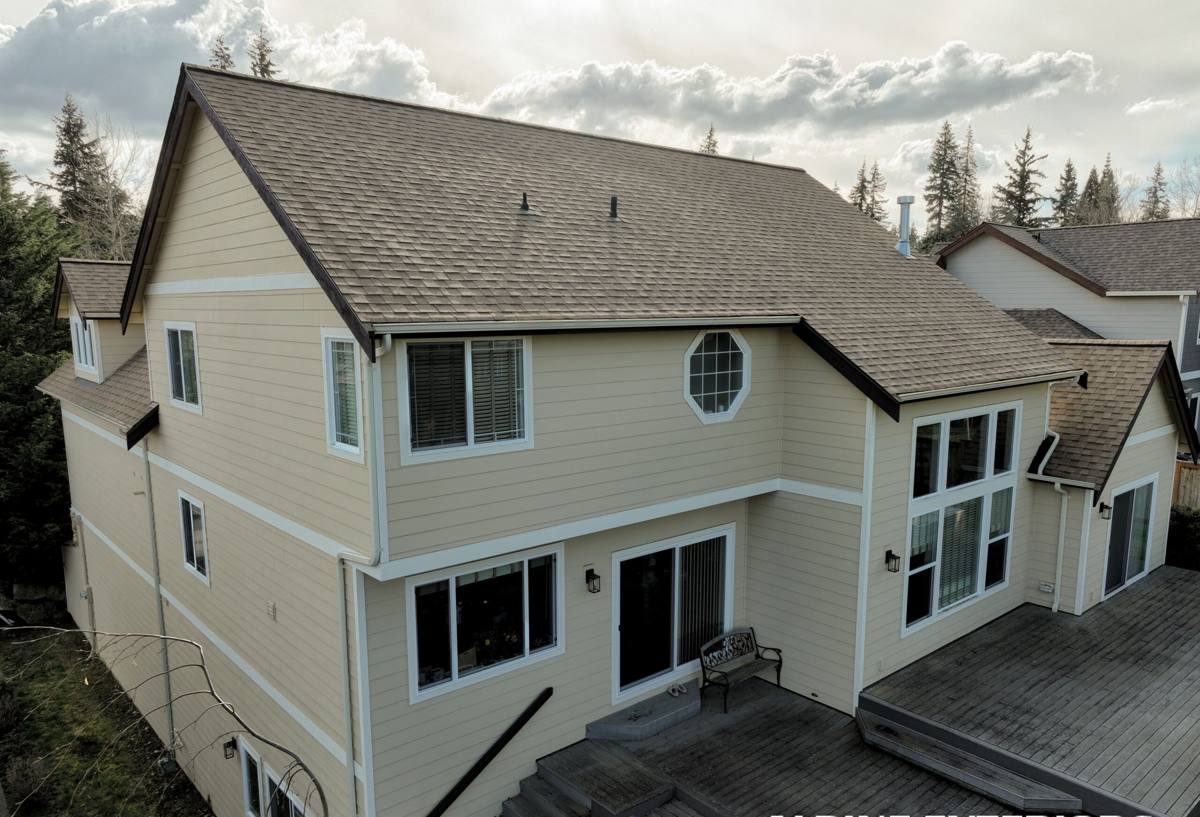
What Sumas Roofs Are Actually Up Against
Extended Moss Season
Whatcom County's moss season runs long — often eight months or more of the year offer the cool, damp conditions moss needs to take hold. In Sumas, shaded roof sections, north-facing slopes, and areas under overhanging trees are especially prone to moss and algae growth. Moss isn't just cosmetic. It holds moisture against the roofing material, lifts shingle edges as it grows, and accelerates granule loss on asphalt shingles. Left unchecked for a few seasons, moss growth can shave years off a roof's service life.
Driving Rain and Wind-Driven Moisture
Rain in this region rarely falls straight down. Wind pushes it sideways under shingle tabs, around flashing, and into any gap in the roof deck's defenses. A roof that's correctly built to shed water on a calm day can still leak during a wind-driven storm if the underlayment, flashing, and fastening weren't done with that reality in mind.
Temperature Swings and Freeze-Thaw Cycling
Sumas sees colder overnight lows than the coastal parts of the county, especially in winter when cold air drains down from the Cascade foothills. That means more freeze-thaw cycling on a damp roof — water gets into small cracks or worn spots, freezes, expands, and widens the damage. Over years, this is one of the quieter reasons roofs fail from the inside out rather than all at once.
Signs a Sumas Roof Needs Replacing, Not Just Patching
Not every roof problem calls for a full replacement, and we'll tell you honestly when a repair is the right call. But there are signs that point toward replacement being the more sensible long-term decision:
- Shingles that are cupping, curling, or losing granules across large sections rather than one isolated spot
- Moss or algae staining that keeps returning within a season or two of cleaning
- Soft spots in the roof deck when walked, which usually means water has reached the sheathing
- Daylight visible through the attic roof boards, or damp insulation below the roofline
- A roof nearing or past the manufacturer's expected service life for its material and local exposure
- Repeated leak calls to the same area even after prior patch repairs
If a roof is showing one or two of these in isolation, targeted repair may still make sense. If several are present at once, that's usually a sign the roofing system as a whole has reached the end of its useful life.
What a Correct Roof Replacement Actually Involves
A roof replacement is more than swapping old shingles for new ones. Done right, it's a full rebuild of the roofing system, and every layer matters for how the roof will hold up against Sumas weather specifically.
Full Tear-Off
We remove the old roofing material down to the deck rather than layering new shingles over old. Layering traps moisture, hides existing deck damage, and voids most manufacturer warranties. A full tear-off is the only way to actually inspect and correct what's underneath.
Deck Inspection and Repair
Once the old material is off, we inspect the roof deck for soft spots, rot, or delamination — issues that are especially common in areas where moisture has been sitting under moss or failed flashing for years. Damaged sheathing gets replaced before anything new goes down. Skipping this step is one of the most common shortcuts in the trade, and it's the one that causes the biggest problems years later.
Underlayment Selection
Given how much wind-driven rain this region sees, underlayment choice matters more here than in drier climates. We use underlayment products suited to the exposure of each roof section, with extra protection at valleys, eaves, and other water-concentration points.
Flashing and Penetrations
Chimneys, vents, skylights, and roof-to-wall transitions are where most leaks actually start — not in the open field of shingles. Flashing gets replaced, not reused, and sealed correctly at every penetration.
Ventilation
Proper intake and exhaust ventilation keeps the attic space dry and temperature-balanced, which reduces moss regrowth, prevents condensation on the underside of the deck, and helps the new roofing material last as long as it's rated to.
Comparing Roofing Material Options for Sumas Homes
There's no single "best" roofing material for every home — the right choice depends on the roof's exposure, slope, budget, and how much long-term maintenance the homeowner wants to take on. Here's how the common options stack up for this climate:
| Material | Moss Resistance | Maintenance | Typical Lifespan Here |
|---|---|---|---|
| Standard asphalt composition shingle | Moderate — benefits from periodic cleaning | Low to moderate | 20-25 years with regular upkeep |
| Algae-resistant (impregnated) shingle | Better resistance to moss and algae staining | Low | 25-30 years |
| Metal roofing | Sheds moss well due to smooth, sloped surface | Low | 40-plus years |
| Cedar shake | Requires active upkeep to resist moss in this climate | High | Highly dependent on maintenance |
We'll walk through these trade-offs honestly during your estimate — including where a lower upfront cost material may mean more maintenance over time, and where a higher upfront investment pays off in fewer callbacks over the life of the roof.
Our Roof Replacement Process
1. On-Site Inspection
We walk the roof in person, check the attic where accessible, and document the actual condition — not just what's visible from the ground.
2. Honest Recommendation
We explain what we found, whether repair or replacement makes sense, and what material options fit the home and budget. No pressure, no upselling beyond what the roof actually needs.
3. Written Estimate
You get a clear, itemized estimate before any work begins, so there are no surprises on the invoice.
4. Scheduling Around Weather
We plan tear-off and installation around forecast windows rather than pushing through rain, since a roof deck exposed to weather mid-project is a preventable risk, not an acceptable one.
5. Tear-Off and Rebuild
Full removal, deck inspection and repair, new underlayment, flashing, ventilation, and roofing material installed to manufacturer specification.
6. Cleanup and Final Walkthrough
Job site debris and old material are hauled off, and we walk the finished roof with you before calling the job complete.
What to Expect and Ask During a Roof Replacement
Whoever you hire, these are reasonable things to expect from a properly run roof replacement in this area:
- A written scope of work that specifies underlayment type, flashing replacement, and ventilation changes — not just "new roof"
- A clear answer on how deck damage, if found, will be priced and handled
- Confirmation of manufacturer warranty terms and whether installation is certified for that warranty
- A plan for protecting landscaping, siding, and gutters during tear-off
- A realistic timeline that accounts for weather delays common to this region
Why Hiring a Crew That Already Works in Sumas Matters
Roofing crews that mostly work drier, milder climates don't always plan for what Whatcom County weather demands — the underlayment coverage, flashing detail, and ventilation balance that matter here aren't universal defaults everywhere. A crew that regularly works in and around Sumas already understands the moss patterns typical to shaded and foothill-adjacent lots, the wind-driven rain exposure common to this part of the county, and how to schedule around a weather window instead of gambling on one. That local familiarity shows up in fewer callbacks and a roof that's actually built for the conditions it has to survive, not just built to code on paper.
Maintaining Your Roof After Replacement
A correctly installed roof still benefits from basic upkeep, especially given the moss season here. Keeping gutters clear, trimming back overhanging branches where practical, and having the roof checked every couple of years for early moss regrowth or flashing wear will help it reach its full expected lifespan. We're happy to point out what to watch for on your specific roof during the final walkthrough.
If your Sumas home's roof is showing its age or you're planning ahead rather than waiting for a leak, we're glad to take a look. Reach out for a free, no-pressure estimate — we'll give you a straight assessment and let you decide from there.