 Blaine Window
 Why Roofs in Custer Wear Faster Than You'd Expect
Custer sits close enough to the water that salt-laden air is a constant, low-grade stress on every exposed surface of a home — fasteners, flashing, and the granules on a shingle roof included. Add in the driving rain that comes through Whatcom County off the Strait of Georgia, often sideways in a winter storm, and you have a roof that's being tested from multiple directions at once: horizontal wind-driven water looking for the smallest gap, and a steady coating of salt air working on metal components year-round.
Then there's moss. Custer's mix of mature trees, shaded rooflines, and a wet season that stretches from fall well into spring gives moss and algae a long runway to establish themselves. Once moss gets a foothold on a roof, it holds moisture against the surface long after the rain has stopped, which is exactly the kind of slow, sustained dampness that shortens a roof's life. A roof built and installed correctly for this climate handles all three of these stresses. One that wasn't will show it early — usually well before the shingles are "old" by manufacturer standards.
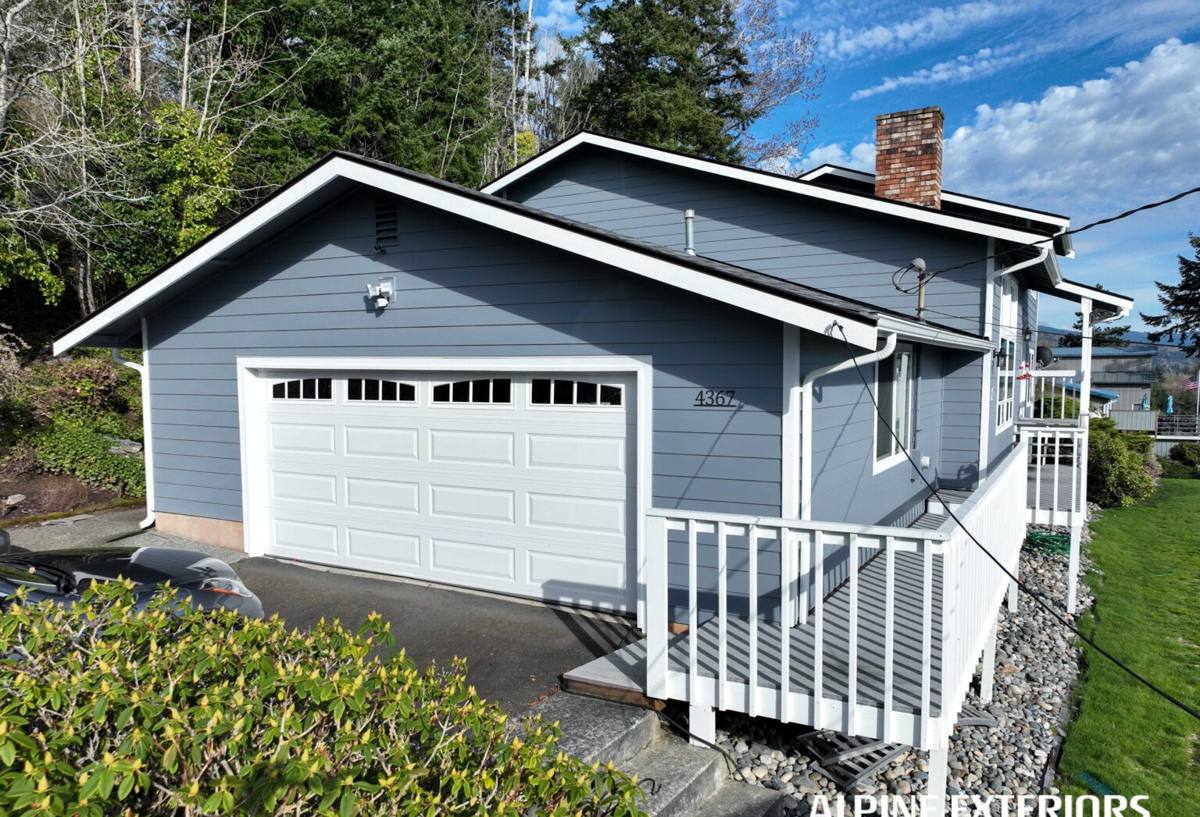
Signs Your Roof Has Moved Past Repair
Not every roof problem means a full replacement, and we'll always tell you honestly when a repair is the right call. But there are signs that point to a roof at the end of its useful life rather than one with an isolated problem:
- Granule loss heavy enough that you're finding grit in gutters and downspouts every time it rains
- Shingles that are curling, cupping, or cracking across large sections of the roof, not just one spot
- Moss mats thick enough to hold visible moisture, especially on north-facing slopes that don't get much sun
- Soft or spongy decking felt underfoot, or visible sagging between rafters
- Repeated leaks at valleys, chimney flashing, or roof penetrations even after past repairs
- A roof already at or past the manufacturer's rated lifespan, especially one that's never had proper ventilation
If you're seeing two or more of these, it's worth having someone take a real look rather than patching the same spot again next winter.
What a Correct Roof Replacement Actually Involves
Tear-Off and Deck Inspection
A proper replacement starts with a full tear-off down to the deck — not a layover on top of existing shingles. That's the only way to actually see the plywood or OSB underneath and find soft spots, delamination, or old water damage before they become a bigger problem. Any damaged decking gets replaced before anything else goes down. Skipping this step is one of the more common shortcuts in the trade, and it's the one most likely to cause an early, expensive failure.
Underlayment and Water Barrier
With the amount of driving rain Custer sees, underlayment isn't just a formality between the deck and the shingles — it's the roof's real backup line of defense. We use synthetic underlayment across the field and self-adhered ice-and-water barrier at the eaves, valleys, and any low-slope transitions where wind-driven rain is most likely to find a way in.
Flashing Details
Flashing at chimneys, skylights, sidewalls, and valleys is where most roof leaks actually start, not in the open field of shingles. Salt air accelerates corrosion on lower-grade or aging metal flashing, so we pay close attention to material choice and clean, correct installation at every one of these transitions rather than relying on caulk to cover a gap.
Ventilation
A roof that can't breathe traps heat and moisture in the attic, which shortens shingle life from underneath and creates the damp, dark conditions moss loves. Balanced intake and exhaust ventilation is part of a correct replacement, not an upsell.
Choosing a Roofing Material for Custer's Climate
There's no single "best" roofing material — the right choice depends on your budget, your roof's exposure, and how much long-term maintenance you're willing to do. Here's how the common options stack up for a coastal, moss-prone, salt-air environment like Custer's:
| Material | Typical Lifespan | Moss/Algae Resistance | Considerations Here |
|---|---|---|---|
| Architectural asphalt shingle | 25-30 years | Moderate (better with algae-resistant granules) | Good value, wide color range, needs periodic moss treatment |
| 3-tab asphalt shingle | 15-20 years | Lower | Lowest upfront cost, shortest lifespan in this climate |
| Standing seam metal | 40-50+ years | High — moss struggles to grip smooth panels | Higher upfront cost, sheds moss and rain fast, needs marine-grade fasteners near the water |
| Composite/synthetic shingle | 30-50 years | Moderate to high depending on product | Impact-resistant, higher material cost |
For most Custer homes, the honest trade-off is between architectural asphalt (solid value, needs some moss upkeep) and standing seam metal (higher cost, dramatically less moss and algae trouble over the life of the roof). We'll walk through both against your budget rather than pushing one option.
Moss and Algae: Prevention Built Into the Job
You can't roof a Custer home and ignore moss — it's part of the climate, not a rare problem. A few things get built into a correct replacement to slow it down: zinc or copper strips near the ridge, which release trace metal ions that inhibit moss growth as rain washes over the roof; algae-resistant shingle granules where asphalt is used; and keeping tree limbs and shaded valleys in mind during design so water and light can reach the roof surface. None of this makes a roof moss-proof forever, but it buys years of extra life and cuts down how often you need professional moss treatment.
Our Process, Start to Finish
Working in and around Blaine and Custer for as long as we have means we know how the weather here actually behaves, not just what the forecast says. That shapes how we schedule and run a job:
- On-site inspection and honest assessment — we look at the deck, flashing, ventilation, and current material condition, not just the shingles on top
- Material and budget conversation — a straightforward comparison of options for your specific roof, not a one-size pitch
- Permitting — Whatcom County roofing permits are pulled and handled before work starts
- Weather-aware scheduling — tear-off is timed around dry windows where possible, and the deck is never left exposed longer than necessary
- Tear-off, deck repair, and installation — done in a continuous sequence to minimize the roof sitting open
- Cleanup and magnetic sweep — yard and driveway cleared of debris and nails before we leave
- Final walkthrough — we go over the finished roof with you before calling the job done
What Affects the Cost of a Roof Replacement
Every roof is different, so we don't quote sight-unseen — but these are the main factors that move the price up or down:
- Roof size and the number of planes, valleys, and penetrations
- Roof pitch and how much staging or safety equipment it requires
- Current decking condition and how much needs replacing
- Material chosen — asphalt versus metal versus composite
- Number of layers being torn off (a roof with old layovers takes more labor)
- Access — how close a dump trailer or crane can get to the house
- Ventilation and flashing upgrades needed to bring the roof up to standard
Broadly, homeowners in this area are usually looking at a range from the mid four figures for a straightforward asphalt replacement on a smaller home up to well into five figures for larger roofs, steep pitches, or a switch to metal. We'll give you a real number after we've actually seen the roof.
Why a Crew That Already Works Custer Makes a Difference
A roofing crew that's worked plenty of roofs in Custer and around Blaine already knows which details matter most for this specific stretch of Whatcom County — how far salt air travels inland, which slopes hold moss longest, where driving rain tends to find weak flashing. That's not something you can fully learn from a manual; it comes from doing the work here repeatedly and seeing what holds up and what doesn't. It also means we're not learning the local permitting process or weather patterns on your dime — we already know them.
If your roof is showing its age or you're just trying to plan ahead before the next wet season, we're glad to come take an honest look. The estimate is free, there's no pressure attached to it, and you'll get a straight answer about whether you need a repair or a full replacement — just fill out the form below to get started.