 Blaine Window
 Why Everson Roofs Wear Differently Than Roofs Inland
Everson sits in Whatcom County, close enough to the coast that salt-laden air still reaches inland on a steady westerly wind, and far enough into the valley that it collects its own share of low cloud, fog, and standing moisture through the fall and winter. That combination is hard on a roof. Salt air accelerates corrosion on exposed fasteners, flashing, and metal roof edges. Driving rain off Puget Sound and the Strait finds every weak seam, lap, and penetration point a roof has. And the long, wet moss season here — often running from October well into April — means organic growth has months, not weeks, to work into shingle edges and roof valleys before a homeowner even notices.
None of that means an Everson roof is doomed. It means repairs have to account for how this specific climate attacks a roof, not just patch the visible symptom. A repair that looks fine in July can fail by January if it wasn't built for what this region actually throws at it.
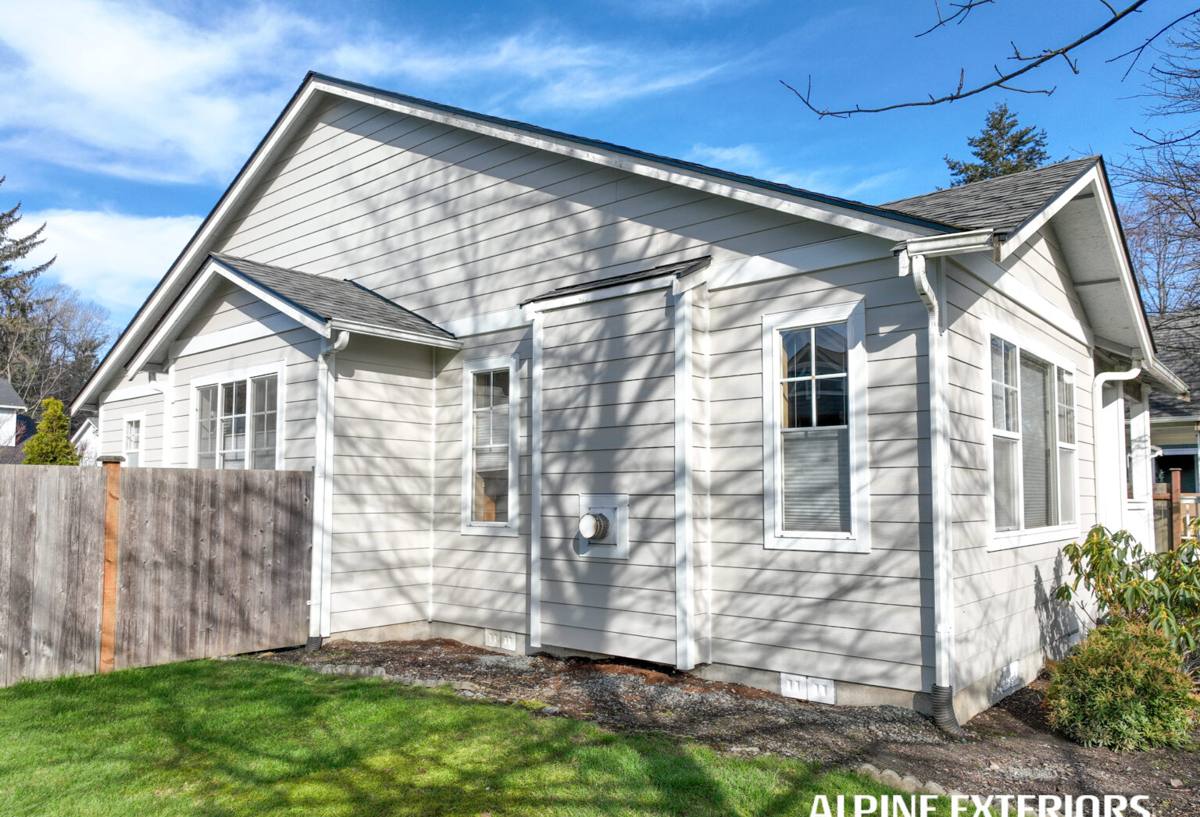
Signs Your Everson Home Needs Roof Repair — Not a Full Replacement
Most roofs don't fail all at once. They fail in sections, usually where water, wind, or moss have been concentrating for the longest. Catching these early is what keeps a repair a repair instead of turning into a replacement.
Water Stains on Ceilings or in the Attic
A brown ring on a ceiling almost always traces back to a specific point of entry — a cracked flashing seal, a lifted shingle tab, or a clogged valley. It rarely means the whole roof is bad. It means water found one weak spot and has been working through it, sometimes for a season or more before it shows indoors.
Missing, Curled, or Cracked Shingles
Wind off the water can lift shingle edges just enough to break the seal without tearing the shingle off outright. Once that seal is broken, every rain after it pushes water further underneath. Curling and cracking are usually sun and age related, but on a roof that's also carrying moss and moisture, deterioration speeds up.
Moss in Valleys, Along Ridges, or Under Shingle Tabs
A little moss on a north-facing slope is common in this county and not automatically an emergency. Moss that's thick enough to hold water against the shingle surface, or that's growing under lifted tabs, is a different problem — it's actively feeding moisture into the roof deck.
Granule Loss and Bare Patches
Granules protect the asphalt layer underneath from UV and weather. Heavy granule loss — visible as bald, darker patches or granules collecting in gutters — means that protection is gone in that spot, even if the shingle hasn't failed structurally yet.
What a Correct Roof Repair Actually Involves
A repair that's done right addresses the cause, not just the leak point. That's the difference between a patch that holds for a year and one that holds for the life of the roof.
A Real Inspection, Not a Guess from the Ground
We get on the roof (or use a close visual inspection where access or safety calls for it) and check the deck, the underlayment where it's exposed, the flashing at every penetration, and the condition of shingles beyond just the section that's leaking. A leak visible in one spot is sometimes fed by damage several feet away, following the slope of the deck underneath.
Matching Materials, Not Just Available Materials
Shingles fade and weather over time. We match color, profile, and where possible manufacturer as closely as the existing roof allows, so a repair doesn't stand out as an obvious patch and so the replaced section performs the same as the surrounding roof.
Flashing and Underlayment Get the Same Attention as Shingles
Most roof leaks in this climate trace back to flashing — around chimneys, skylights, vent pipes, and roof-to-wall transitions — rather than to the shingle field itself. A repair that replaces shingles but ignores worn or improperly lapped flashing underneath is a repair that will leak again.
Cleanup That Doesn't Leave You With a New Problem
Old shingle debris, nails, and moss removed during the repair get cleared from gutters and downspouts before we leave. Leaving debris behind creates the next clog and the next moisture problem, especially heading into a wet Whatcom County winter.
Repair vs. Replacement: How We Help You Decide
Not every damaged roof needs to come off. Here's the general framework we use when walking an Everson homeowner through the decision — every roof is different, but these are the honest factors that matter most.
| Factor | Leans Toward Repair | Leans Toward Replacement |
|---|---|---|
| Roof age | Under 15-18 years (asphalt) | Approaching or past manufacturer's expected service life |
| Damage location | Isolated to one slope, valley, or penetration | Spread across multiple slopes or the whole roof |
| Deck condition | Solid, no rot found during inspection | Soft spots, rot, or repeated past leaks in the same area |
| Granule loss | Localized, minor | Widespread and heavy across the field |
| Moss history | Recent, hasn't reached the deck | Long-term, has lifted shingles or reached the underlayment |
| Repair history | First or second repair on the roof | Repeated repairs in the same areas over recent years |
If a roof lands mostly in the repair column, we'll say so — a repair costs less, disrupts your home less, and is often the right call. If the inspection turns up deck rot or damage that's spread beyond a section, we'll walk you through why replacement is the more honest recommendation rather than stacking another patch on a roof that's past the point where patches hold.
Our Process for an Everson Roof Repair
- Inspection and assessment. We identify every point of concern, not just the one you called about.
- Written scope and estimate. You see exactly what's being repaired and why before any work starts.
- Material matching and prep. We source shingles, flashing, and underlayment that match or properly integrate with your existing roof.
- The repair itself. Damaged materials removed, deck checked and addressed if needed, new flashing and shingles installed to manufacturer specification.
- Gutter and debris cleanup. Nothing left behind to clog drainage or feed future moss growth.
- Final walkthrough. We show you what was done and what to watch for going forward.
Moss, Algae, and Salt Air: An Ongoing Care Checklist
A repair holds longer when the roof around it is maintained. These are the things worth doing between professional visits, especially given how long moss season runs in this part of Whatcom County.
- Keep overhanging branches trimmed back so shaded, damp sections of roof get some sun and airflow
- Clear gutters and downspouts at least twice a year, more often if you're under fir or cedar cover
- Have moss physically removed rather than just treated, since chemical treatments alone don't stop moisture from sitting under existing growth
- Check attic ventilation — poor airflow traps moisture against the underside of the deck and speeds up rot from the inside
- Walk the exterior after major windstorms and note any shingles that look lifted, cracked, or missing
- Address small leaks the season you notice them, not the following spring
Materials We Work With — and Why We're Selective
For repairs, we generally work with asphalt composition shingles, since that's what the large majority of homes in this area already have, and metal roofing components where a home has metal panels or metal flashing systems. We're careful about certain wood-based or low-grade composite products in repair work specifically because of how this climate behaves — sustained moisture and moss pressure punish materials that are sensitive to trapped water or that require more frequent maintenance to perform as intended. That's not a knock on any manufacturer; it's a judgment call based on what holds up with the least ongoing burden on the homeowner in a wet coastal county. When a repair calls for a material decision, we'll explain the trade-offs plainly so you're choosing with full information, not guessing.
Why a Crew That Already Works in Everson Matters
Roof repair isn't just a checklist — it's judgment calls about how a specific roof has weathered a specific climate. A crew that regularly works Whatcom County roofs already knows what moss buildup looks like at three months versus three years, how salt air ages exposed fasteners compared to inland homes, and which flashing details tend to fail first on the roof pitches common in this area. That familiarity means fewer surprises during the inspection and a repair scope that's realistic from the start, instead of a second visit once something else turns up.
It also means straightforward availability. Roof damage doesn't wait for good weather, and a leak found during a November storm needs a response that doesn't take weeks to schedule.
Get a Straightforward Look at Your Roof
If you're dealing with a leak, visible moss buildup, or just want an honest read on where your roof stands before winter, we're glad to take a look. The estimate is free, there's no pressure to book anything on the spot, and you'll get a clear explanation of what we find — repair, replacement, or nothing urgent at all.