 Blaine Window
 Decks in Point Roberts Take a Different Kind of Beating
A deck in Point Roberts doesn't fail the same way a deck fails forty miles inland. This is a small peninsula surrounded almost entirely by water, sitting right at the international border south of Tsawwassen and connected to the rest of Whatcom County only by a drive through Canada. That geography means constant exposure to salt-laden air off Boundary Bay and the Strait of Georgia, wind-driven rain that comes in sideways rather than straight down, and a long, damp moss season that can run from fall through spring. Wood, fasteners, and even composite decking age faster here than they do a short distance away in less exposed parts of Whatcom County.
None of that means a deck in Point Roberts is doomed — it means the repair has to account for the environment it's actually sitting in, not a generic Pacific Northwest climate. That's the difference between a repair that lasts a few seasons and one that lasts closer to the deck's real lifespan.
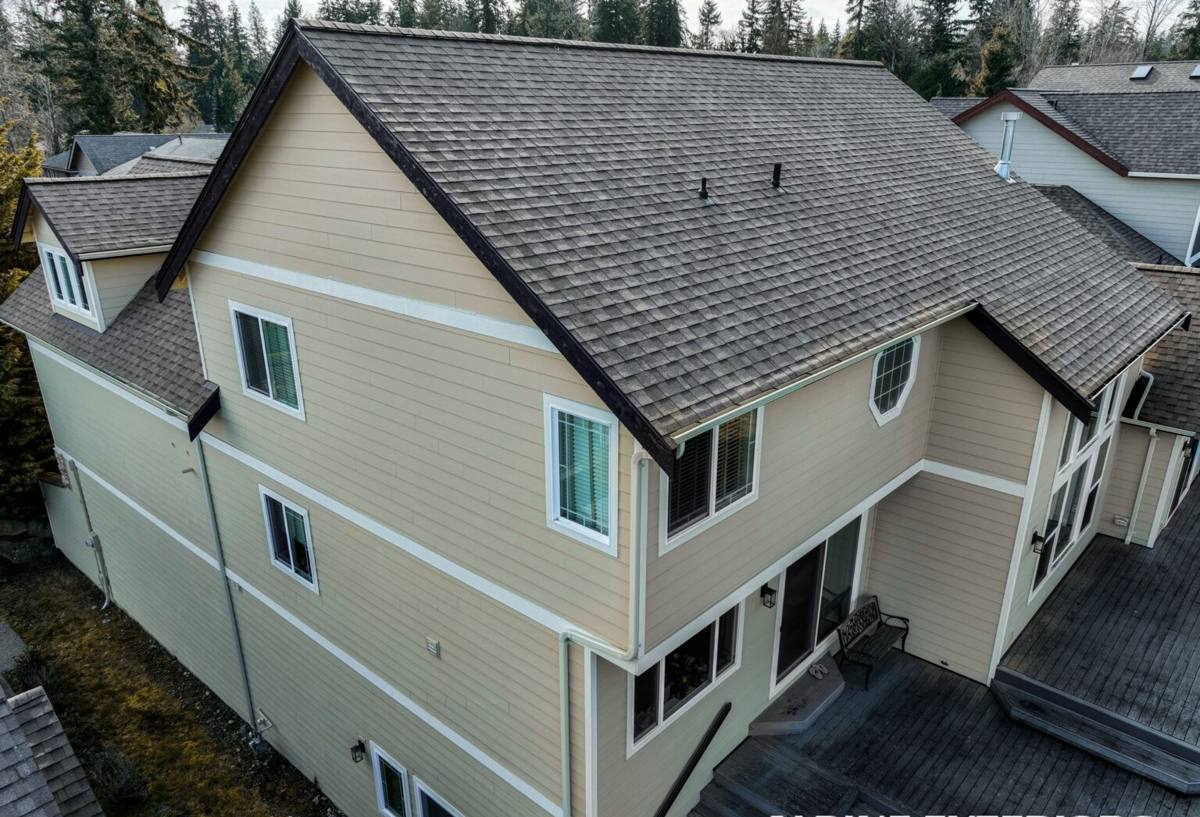
What Salt Air, Rain, and Moss Actually Do to a Deck
Salt Air
Airborne salt accelerates corrosion on anything metal — nails, screws, joist hangers, bolts, and railing hardware. Standard galvanized fasteners that hold up fine elsewhere can start rusting and weakening years ahead of schedule this close to saltwater. Once a fastener corrodes, it loses grip strength long before the rust is visible from the top of a board.
Driving Rain
Wind-driven rain doesn't just fall on a deck, it gets pushed sideways into ledger boards, under flashing, into end grain, and behind fascia. This is where a lot of hidden rot starts — not on the open, visible surface of a deck board, but at the ledger-to-house connection and at cut ends where water can sit.
Moss
A long moss season means more than green boards. Moss and algae hold moisture directly against wood and composite surfaces far longer than open air would, which speeds up decay underneath and makes the walking surface genuinely slick. On stairs and ramps, that's a real safety issue, not just an appearance one.
The Repair Issues We See Most Often on Point Roberts Decks
- Rot at the ledger board where the deck attaches to the house, often hidden behind the rim joist
- Corroded or failing joist hangers, hurricane ties, and structural screws
- Soft, spongy, or delaminating boards near stair stringers and low-clearance areas that stay damp
- Loose or wobbly railing posts where the post base has taken on water over time
- Moss and algae buildup on north-facing or shaded sections that never fully dry out
- Fastener "pop" or staining where corroding screws work loose and streak the decking
- Gaps or warping in boards from repeated wet-dry cycling through the winter
What a Correct Deck Repair Actually Involves
A repair that's done right starts below the surface, not with swapping out the boards that look bad. Here's what we check and address on every deck repair in this area:
Structural Inspection First
Before replacing a single board, we check the ledger board attachment, flashing condition, joists, beams, and posts. A deck can look fine on top and still have a structural problem underneath — that's the part that actually matters for safety.
Ledger and Flashing Correction
If the ledger board or its flashing is letting water track behind the house siding, that gets corrected as part of the repair, not left in place under new boards. Reusing bad flashing under a fresh deck surface just hides the problem for another year or two.
Fastener and Hardware Replacement
Given the salt exposure here, we replace corroded fasteners and hardware with stainless steel or coated fasteners rated for coastal use rather than standard-grade galvanized hardware. It costs a bit more up front and holds up considerably longer in this environment.
Selective Board Replacement
Boards that are rotted, cupped, or structurally compromised get replaced. Boards that are cosmetically weathered but structurally sound can often be cleaned, sanded, and refinished instead of replaced — we'll tell you honestly which category each section falls into.
Moss and Moisture Management
Where moss buildup is contributing to the problem, we treat and clean affected areas and, where practical, address the underlying cause — shading, poor drainage, or lack of airflow underneath the deck — so it doesn't just grow back the following season.
Repair or Replace? How We Help You Decide
Not every deck problem calls for a full rebuild, and not every deck is worth patching indefinitely. The table below covers the main factors we weigh when giving you an honest recommendation.
| Factor | Leans Toward Repair | Leans Toward Replacement |
|---|---|---|
| Ledger board & framing | Solid, no significant rot found | Rot or corrosion at multiple structural points |
| Extent of damage | Isolated boards or a single section | Widespread across most of the deck |
| Deck age | Under 15-20 years, built to a decent standard | Older deck nearing the end of its practical life |
| Fastener condition | Hardware mostly sound, some spot replacement needed | Corrosion throughout, hangers failing |
| Budget goal | Extend usable life a number of years | Want a long-term reset with current materials |
In most cases we can extend a deck's life significantly with a well-targeted repair. We'll always tell you when a repair is genuinely the better value versus when it's just delaying an inevitable rebuild.
Why It Matters That Your Crew Already Works Point Roberts
Point Roberts is a US exclave — reaching it means driving through Canada, and that has real logistical consequences for scheduling, materials, and border crossings with tools and supplies. A crew that treats a Point Roberts job like any other stop on a Whatcom County route often underestimates the planning it takes, which shows up as delayed start times, rescheduled visits, or rushed work to make up for lost time.
We already build Point Roberts jobs into our routing and materials planning from Blaine, so a repair here gets the same unhurried attention as a job across the border in town. That familiarity also means we're not guessing at what this specific microclimate does to wood and hardware — we've seen it, repeatedly, on decks just like yours.
Our Deck Repair Process
- On-site inspection. We look at the whole structure — framing, ledger, fasteners, surface boards, railings, and stairs — not just the spot you called about.
- Honest assessment and quote. You get a clear explanation of what's actually wrong, what needs to happen, and a written estimate before any work starts.
- Repair work. Structural issues are corrected first, then hardware and fasteners, then surface boards and finish work.
- Cleanup and walkthrough. We clean the site and walk the deck with you so you know exactly what was done and what to watch for going forward.
Materials That Hold Up in This Environment
Material choice matters as much as workmanship in a salt-air, high-moisture setting. Depending on your deck and your goals, that can mean naturally rot-resistant wood species, pressure-treated lumber rated for ground contact where it's structurally exposed, or composite decking for lower ongoing maintenance. For hardware, we favor stainless steel or coastal-rated coated fasteners over standard galvanized products in this specific area — the added corrosion resistance is worth it when the alternative is replacing fasteners again in a few years. We'll walk through the trade-offs in maintenance, appearance, and upfront cost for your specific deck rather than defaulting to one product for every job.
Timing a Repair Around Moss Season
Moss and algae growth here tends to build through the wetter months and peak by late winter into early spring, which is also when slick surfaces are most likely to cause a fall. Late spring through summer, when things dry out, is generally the best window for repair work — boards and framing get a chance to dry properly before we replace or refinish anything, and any protective treatments have time to cure. That said, structural issues like a compromised ledger or failing hardware shouldn't wait for ideal weather; those get addressed as soon as reasonably possible regardless of season.
Signs Your Point Roberts Deck Needs a Repair Visit
- Boards feel spongy, soft, or flex noticeably underfoot
- Visible rust streaks running down from screws or nail heads
- Gaps opening up around the ledger board where it meets the house
- Railings or posts that wobble or feel loose when pushed
- Persistent moss or algae that keeps returning in the same spots
- Stair treads that feel slick even when the surface looks dry
- Discoloration or dark staining on the underside of the deck
If any of these sound familiar, it's worth having the deck looked at before the next wet season adds to the damage.
If your Point Roberts deck is showing signs of wear from the salt air, rain, or moss, we're glad to take a look. Reach out for a free, no-pressure estimate using the form below, and we'll give you a straight answer on what your deck actually needs.