 Blaine Window
 Building New in Peace Arch: Why the Window Package Matters
Peace Arch sits close enough to the water and the border that new-construction homes here take a different kind of weather beating than builds ten miles inland. If you're framing a new house or an addition in this part of Blaine, the windows aren't just a line item to pick off a catalog — they're one of the few building components that has to perform against wind-driven rain, salt-laden air, and long stretches of damp, low-light weather every single year. New-construction work gives you one real chance to get the window opening, the flashing, and the unit itself right before siding and interior finishes cover it all up. Get it wrong at this stage and you're not looking at a simple fix later — you're looking at torn-out siding, wet sheathing, and repeat repairs.
This page is specifically about new-construction window installs for Peace Arch properties — not replacement work on an existing house. The rough-opening framing, the flashing sequence, and the water management details are different when you're building from a bare stud wall versus retrofitting into finished construction, and that distinction matters a lot for how the job should be planned and priced.
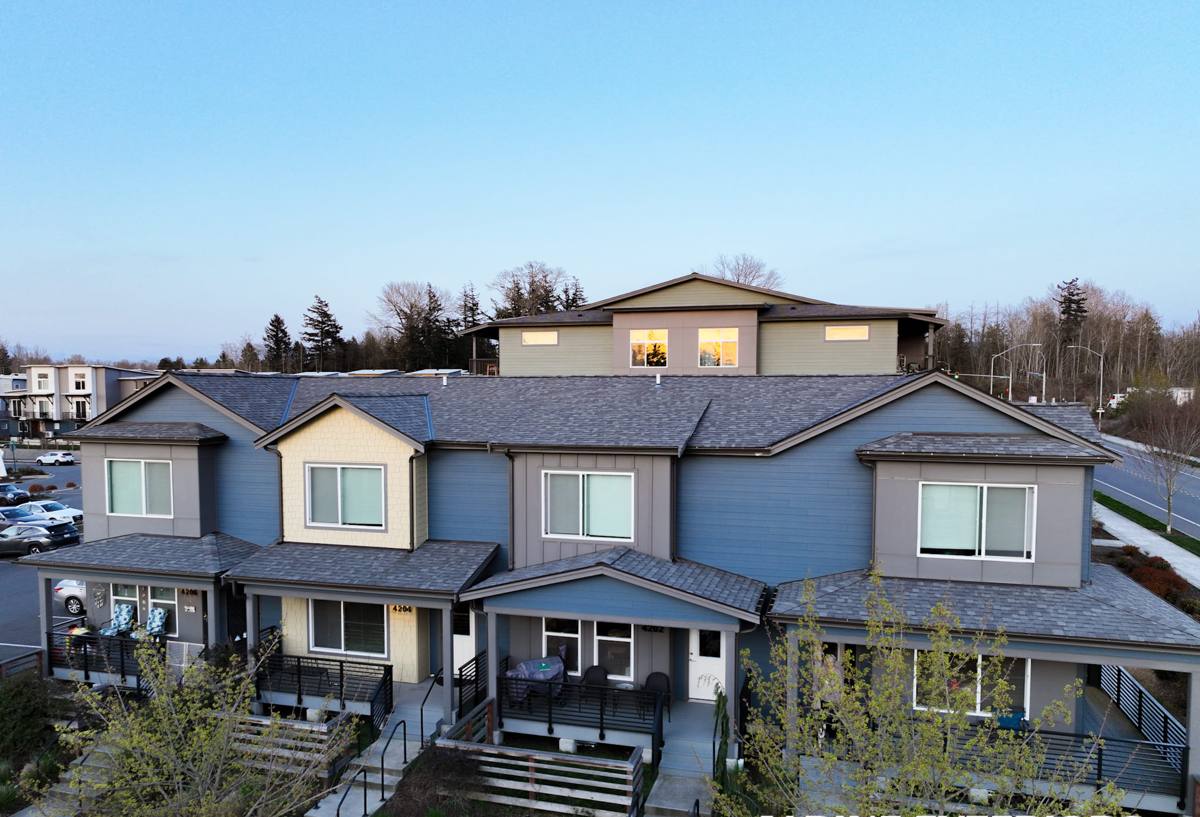
What Peace Arch's Climate Actually Demands from a Window Install
Salt air
Proximity to Semiahmoo Bay and the Strait means salt-laden air reaches homes in this area more than it does farther inland in Whatcom County. Salt accelerates corrosion on hardware, fasteners, and some window components, and it can degrade lower-grade finishes over time. On a new build, this pushes us toward corrosion-resistant fasteners and hardware packages rated for coastal exposure, and it's a real factor in frame material selection, not just an upsell.
Driving rain
Storms here don't just fall straight down — wind pushes rain sideways into wall assemblies, which puts real pressure on the flashing and sealant details around every rough opening. A window that's watertight in a lab test can still leak on site if the sill pan, flashing tape, and water-resistive barrier aren't integrated correctly. This is the single biggest source of callbacks we see on new construction in this area, and it's almost always an installation issue, not a product defect.
Long moss season
The extended damp season that supports moss growth on roofs and north-facing surfaces also means exterior wood trim, sills, and any exposed fastener heads stay wet longer than they would in a drier climate. That has direct implications for trim material choices and for how exterior sealant joints are detailed and maintained on a new home.
What a Correct New-Construction Window Install Actually Involves
On new construction, the window install happens in sequence with the rest of the building envelope, and each step depends on the one before it being done right.
- Rough opening framed square, plumb, and to the exact manufacturer-specified dimension — not "close enough"
- Sill pan flashing installed to shed any water that gets past the window to the outside, not into the wall cavity
- Water-resistive barrier (house wrap) integrated with the flashing in the correct shingle-lap order — this sequence is where most future leaks originate if skipped or reversed
- Window set level, plumb, and square in the opening, with shims at load-bearing points, before a single fastener goes in
- Nailing fin or flange fastened per the manufacturer's schedule — spacing and fastener type both matter for wind load and warranty compliance
- Head flashing installed above the unit to direct water around, not through, the top of the opening
- Exterior sealant applied at the correct joints only — sealing the wrong joints can trap water inside the wall instead of letting it drain
- Interior air-sealing at the rough opening perimeter for energy performance and draft control
Skipping or rushing any one of these steps is invisible the day the siding goes on. It shows up two, five, or ten years later as a stain on drywall or soft sheathing behind a wall — long after the crew that did it is gone.
Choosing the Right Frame and Glass Package for This Site
There's no single "best" window for every new build — the right choice depends on exposure, budget, and how much long-term maintenance the homeowner wants to take on. Here's how the common frame materials compare for a Peace Arch build specifically:
| Frame Material | Salt Air / Moisture Behavior | Maintenance | Typical Fit for This Area |
|---|---|---|---|
| Vinyl | Won't corrode; performs well in salt air | Low — no painting or sealing needed | Strong value option for most new builds |
| Fiberglass | Excellent moisture and corrosion resistance; dimensionally stable | Low | Good fit for exposed elevations facing the water or prevailing wind |
| Wood / wood-clad | Vulnerable at exposed end grain and joints if maintenance lapses | Higher — regular inspection and refinishing of any exposed wood | Workable with disciplined upkeep; we're honest that this adds a maintenance obligation in a damp climate |
| Aluminum | Conducts heat and cold; can show condensation without a thermal break | Low | Limited use here unless thermally broken |
Glass package matters too. For this area we typically recommend a dual-pane, low-E glass unit with a warm-edge spacer — the spacer type affects condensation resistance at the glass edge, which is more noticeable in a cool, damp climate than in a dry one. Argon fill is a modest, worthwhile upgrade for most budgets.
Our Process, From Framing to Final Trim
- Plan review — we look at the window schedule and rough opening dimensions before the framer even sets trusses, so any conflicts get caught early.
- Rough opening check — we verify every opening for square, plumb, and correct sizing before units arrive on site.
- Flashing and WRB integration — sill pan, jamb flashing, and house wrap lap sequence installed per a consistent, repeatable detail on every opening.
- Window set — units leveled, shimmed, and fastened to manufacturer specification.
- Head flashing and sealant — installed at the correct joints, leaving designed weep paths open.
- Interior air-seal — perimeter gaps sealed for draft and energy performance.
- Final walkthrough — every unit operated, checked for square reveal, and inspected before siding crews close the wall.
Common Mistakes We See on New Builds Near the Water
Most of the water problems we get called to diagnose on newer homes trace back to a handful of recurring shortcuts:
- Sill pan flashing skipped or improvised with the wrong tape
- House wrap lapped in the wrong order over the flashing flange
- Sealant applied at the bottom of the window instead of left open for drainage
- Fasteners over- or under-driven, distorting the frame and breaking the seal
- Standard hardware used where a corrosion-resistant package was warranted given the site's salt exposure
- Trim installed tight to the sill with no gap for drainage or ventilation
None of these are visible on move-in day. They're the difference between a window system that's still tight in fifteen years and one that starts causing problems in three.
What Drives Cost on a New-Construction Window Package
| Factor | Why It Matters Here |
|---|---|
| Frame material | Vinyl is the most budget-friendly; fiberglass costs more but handles coastal exposure with less long-term maintenance |
| Glass package | Low-E coatings and argon fill add modest cost but pay back in comfort and condensation resistance |
| Number and size of openings | Larger units and more openings mean more flashing labor, not just more glass |
| Elevation exposure | Walls facing prevailing wind and rain may warrant upgraded flashing detail or hardware |
| Access and building stage | Coordinating with the framing and siding schedule affects labor efficiency |
We don't quote a job without walking the plans or the framed structure first — window pricing that's given sight-unseen is a guess, and guesses are how change orders happen mid-build.
Why Hiring a Crew That Already Works in Peace Arch Matters
A crew that installs windows across Whatcom County generally, but works regularly in Blaine and Peace Arch specifically, has already seen how this stretch of coastline behaves through a full wet season — where wind-driven rain hits hardest, which elevations stay damp longest, and which flashing details actually hold up here versus just on paper. That's not something you can fully substitute with a spec sheet. On new construction, timing also matters: we coordinate directly with framers and siding crews so the window install happens at the right point in the sequence, with nothing rushed to keep a schedule and nothing skipped to save a step.
If you're planning a new build or addition in Peace Arch and want the window package specified and installed correctly the first time, we're happy to walk the plans with you and put together a free, no-pressure estimate — just fill out the form below.