 Blaine Window
 Windows Built for the Peace Arch Climate
Homes near the Peace Arch border crossing in Blaine sit right where the Salish Sea weather comes ashore. That means salt-laden air off Semiahmoo Bay and Boundary Bay, wind-driven rain that hits windows sideways instead of straight down, and a long, damp moss season that runs from fall through spring. Windows in this pocket of Whatcom County work harder than windows almost anywhere else in the state, and the difference shows up first in the frames, seals, and hardware — long before it shows up in the glass.
An energy-efficient window in this area has to do two jobs at once: keep heat in during our cool, wet winters, and keep moisture, salt, and organic growth out year-round. A window that's efficient on paper but not built for this exposure will underperform here faster than the same product would twenty miles inland.
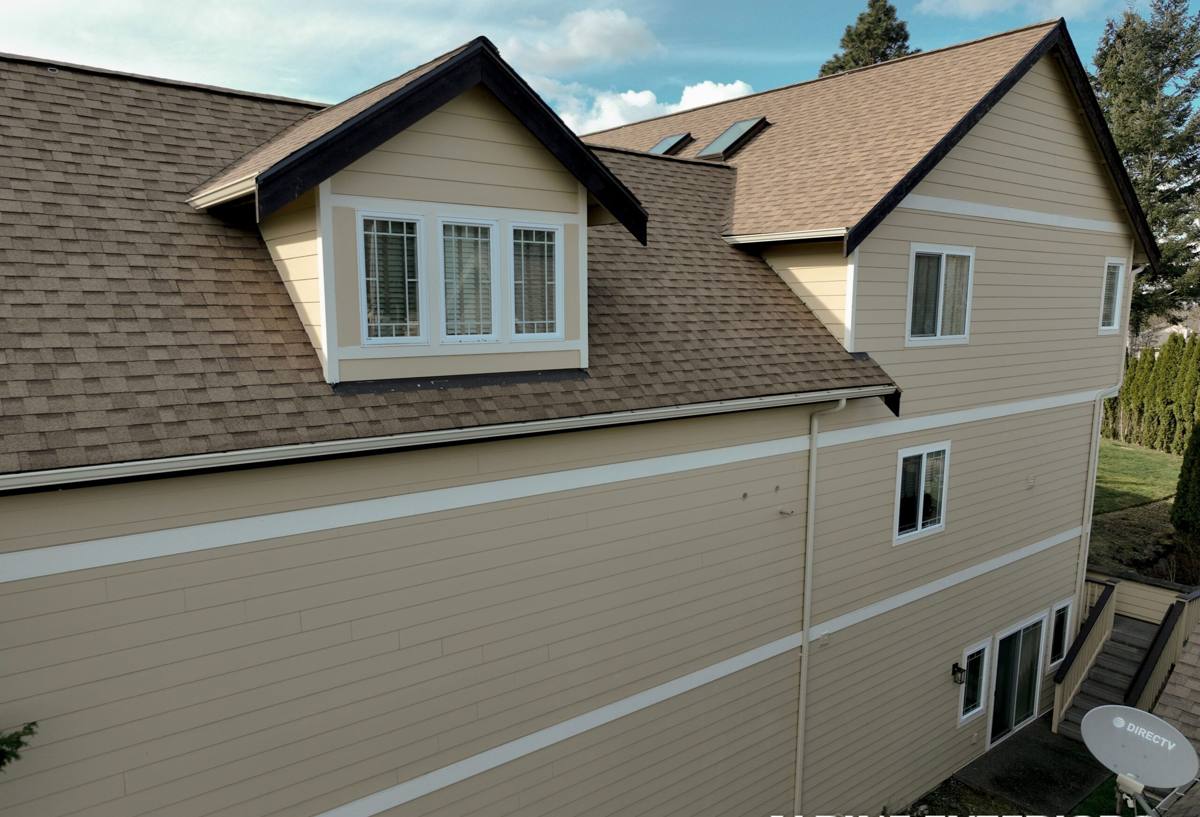
What Salt Air and Driving Rain Actually Do to a Window
Salt Air
Airborne salt is corrosive to exposed metal hardware — hinges, cranks, locks, and some aluminum cladding — and it accelerates the breakdown of exterior caulking and gasket materials over time. Homes with a direct line to the bay see this faster than homes set back or shielded by trees and other structures.
Wind-Driven Rain
Rain that's pushed sideways by wind finds any gap in flashing, sealant, or window-to-wall integration that a straight-down rain never would. Most of the leaks we find in this area aren't glass or seal failures — they're flashing and installation issues that only show themselves under wind-driven conditions.
Moss and Standing Moisture
Long damp stretches let moss, algae, and mildew take hold on horizontal surfaces like sills, exterior trim, and anywhere water sits instead of shedding. Moss holds moisture against wood and painted surfaces, which is how small paint failures turn into rot if they go unnoticed for a season or two.
What a Correct Energy-Efficient Window Job Involves
Efficiency starts with the unit itself — but in this climate, at least half of long-term performance comes from how the window is installed, not just what's installed.
- Removing the old window and inspecting the rough opening for hidden rot, soft framing, or prior water intrusion before anything new goes in
- Correcting any framing or flashing problems found during removal — not covering them up
- Installing self-adhered flashing membrane integrated with the building's water-resistive barrier, lapped correctly so water sheds outward and downward
- Setting the window level, plumb, and square, with proper shimming so the frame isn't stressed and sashes operate and seal correctly for years
- Sealing and insulating the gap between frame and rough opening with the right materials — not just spray foam alone, and not just caulk alone
- Exterior sealant at all sides, sized and tooled for a real weather seal, not a cosmetic bead
- Confirming proper drainage at the sill so any incidental water that gets past the outer seal has somewhere to go
Skip any one of these steps and the window's energy rating on the label stops mattering — a poorly flashed or poorly sealed installation will leak air and, eventually, water, no matter how good the glass package is.
Choosing the Right Window for This Exposure
Frame material matters more here than in a drier, more sheltered part of the county. Below is how the common options generally hold up under salt air, driving rain, and moss-season moisture.
| Frame Material | Salt Air Exposure | Moisture/Rot Risk | Maintenance |
|---|---|---|---|
| Vinyl | Not affected by salt corrosion | Low — doesn't rot or corrode | Low; occasional cleaning |
| Fiberglass | Not affected by salt corrosion | Low — very stable in wet cycles | Low |
| Aluminum | Can corrode/pit over time near salt air unless well-clad | Low rot risk, but condensation-prone without thermal break | Moderate |
| Wood (exterior exposed) | Vulnerable without diligent upkeep | Higher — needs consistent sealing/painting to prevent rot | High |
| Wood-clad (exterior clad in vinyl/fiberglass/aluminum) | Depends on cladding material and seams | Moderate — interior wood still needs dry conditions | Moderate |
Vinyl and fiberglass frames are generally our default recommendation for homes with direct or near-direct bay exposure, simply because they remove two of the three problems this climate creates: they don't corrode and they don't rot. Wood and wood-clad windows can still be the right call for a specific look or a historic home, but we're upfront that they carry a higher maintenance commitment in this location — that's a trade-off to go in with eyes open, not a reason to avoid them outright.
Glass Packages
For this area we typically talk homeowners through double-pane units with low-E coatings and argon fill as the baseline, with the option to step up to triple-pane on north- or west-facing exposures that take the brunt of the weather and heat loss. The right choice depends on the specific wall orientation, how exposed the home is, and budget — not a one-size answer.
Cost Factors for Peace Arch Homes
Every project is different, but the same few factors tend to move the price up or down for homes in this area:
| Factor | Why It Matters Here |
|---|---|
| Number and size of openings | More glass area and larger units mean more material and labor |
| Frame material chosen | Vinyl and fiberglass have different cost points; wood-clad typically costs more upfront |
| Condition of existing framing | Rot or prior water damage found during removal adds repair scope |
| Flashing and integration complexity | Homes with more wind exposure often warrant more thorough flashing detail |
| Glass package (double vs. triple-pane) | Higher-performance glass costs more but pays back faster on exposed walls |
| Access | Second-story or hard-to-reach openings add labor time |
We give straightforward, itemized estimates so homeowners can see exactly where the money is going — not a single lump number with no explanation.
Our Process for Peace Arch Projects
- On-site assessment — we look at each opening's exposure, current window condition, and any signs of past moisture problems around sills and trim
- Straightforward proposal — frame material, glass package, and flashing/installation approach explained in plain terms, with a real cost range
- Careful removal — old units come out cleanly, with the rough opening inspected before anything new goes in
- Correct installation — flashing, shimming, insulation, and sealing done in the order and manner that actually sheds wind-driven rain
- Final check — operation, seal, and finish are checked on every opening before we call the job done
Why a Crew That Already Works This Area Matters
Windows near the Peace Arch crossing sit in a specific microclimate — closer to the water, more exposed to wind off the Strait, and with a longer wet season than homes further inland in Whatcom County. A crew that regularly works this specific stretch of Blaine already knows which exposures need extra flashing attention, which frame materials hold up and which don't, and what moss and mildew patterns actually look like on real houses here — not just in a manufacturer's brochure. That local pattern recognition is the difference between a window that looks fine on installation day and one that's still performing correctly five wet winters later.
Signs Your Current Windows Are Losing the Fight
- Visible moss, algae, or dark staining building up on sills or exterior trim around the window
- Drafts or cold spots near the frame on windy days, even with the window fully closed and locked
- Hardware — cranks, locks, hinges — that's stiff, corroded, or leaves rust marks
- Condensation forming between panes, which usually means a failed seal on the insulated glass unit
- Paint or finish failure on wood sills or trim that keeps coming back after repainting
- Visible daylight or gaps around the frame from outside
Any one of these on its own isn't necessarily an emergency, but together they're a sign the window's ability to manage this area's weather is declining.
Maintaining Energy-Efficient Windows in This Climate
Even the right window benefits from a little seasonal attention here. Rinsing accumulated salt film off frames and glass periodically, keeping sills clear of moss and debris so water can shed properly, and checking exterior caulking once a year for cracking or separation will meaningfully extend the life of a well-installed window. None of this is heavy maintenance — it's the kind of thing that takes an afternoon and prevents small issues from becoming expensive ones.
If you're weighing options for windows on a Peace Arch-area home, we're happy to take a look and walk through what makes sense for your specific exposure and budget. Fill out the form below for a free, no-pressure estimate — there's no obligation, just a straight answer on what your home actually needs.