 Blaine Window
 Window Replacement in Nooksack: Built for This Climate
Nooksack sits inland along the Nooksack River valley, a mix of older farmhouses, mid-century homes, and newer construction spread across a rural stretch of Whatcom County. Homes here deal with a slightly different set of pressures than a house sitting right on the water in Blaine, but the same regional weather pattern touches every property in the county: long wet winters, heavy tree cover in a lot of yards, and short, humid summers that never fully dry things out. Windows take the brunt of that. A window that was installed correctly twenty years ago in dry Arizona sun would have failed here in half the time if it wasn't built and sealed for this kind of exposure.
This page is about one job, done right, in one area: replacing windows on homes in and around Nooksack. Not a general overview of every siding or roofing service we offer — just what window replacement actually requires here, what a correct installation looks like, and why the details matter more in this climate than in most.
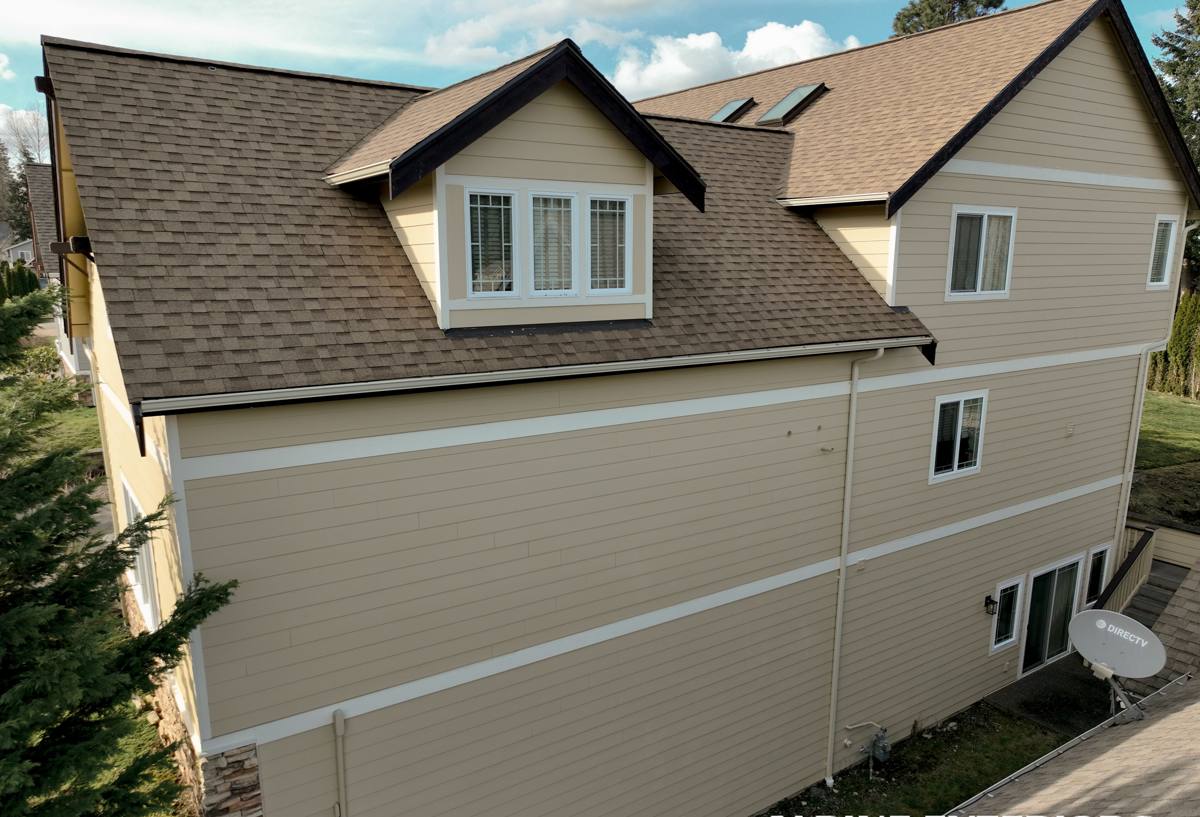
What Whatcom County Weather Does to Windows Over Time
Driving Rain and Wind
Storms coming off the water don't always hit gently. Wind-driven rain gets pushed sideways into window assemblies, and if the flashing behind the frame wasn't lapped correctly when the window went in, water finds its way behind the trim and into the wall cavity. You often don't see this happening — you see the result years later, as soft trim, a musty smell near a window, or paint that keeps bubbling no matter how many times it's touched up.
Moss, Shade, and Constant Moisture
Properties with mature trees — common around Nooksack — stay shaded and damp for a much larger share of the year than an open, sun-exposed lot. That means moss and algae get a head start on any horizontal surface, including window sills and the tops of trim boards, and wood components stay wet longer after every rain. Over a long enough moss season, that constant dampness works its way into any gap in the caulking or any spot where the original installation left a seam exposed.
Salt Air and Corrosion
Whatcom County's coastal exposure, particularly closer to Blaine and the water, adds a corrosive element to the mix — salt-laden air that accelerates the breakdown of untreated metal hardware, fasteners, and lower-grade window components. Homes further inland near Nooksack get less of this than waterfront properties, but it's still part of the regional profile, and it's one more reason we don't treat every window job the same way we would in a dry inland climate.
Signs a Nooksack Home Is Overdue for Window Replacement
Most homeowners don't replace windows because they woke up one day and decided to remodel — they replace them because something started bothering them. Here's what typically prompts the call:
- Visible condensation or fogging between the panes of a double-pane window, which means the seal has failed
- Wood trim or sills that feel soft, spongy, or show dark staining when you press on them
- Drafts you can feel near the frame even when the window is fully latched
- Windows that are difficult to open, close, or lock — often a sign the frame has shifted or swollen
- Visible gaps between the window frame and the siding or trim
- A noticeable jump in heating costs without any other explanation
- Moss or dark streaking building up on sills or the bottom of the frame faster than it should
- Paint that keeps failing on the trim around a specific window no matter how often it's redone
Any one of these on its own might not mean much. Two or three together, especially on the same window, usually means the assembly has been letting moisture in for a while.
What a Correct Window Replacement Job Actually Involves
Swapping the visible sash and calling it done is the fastest way to get a callback. A proper replacement means dealing with everything the old window was hiding, not just what you can see from the curb.
That includes pulling the old unit fully out rather than doing an insert-only replacement whenever the condition of the opening calls for it, checking the sheathing and framing behind the window for soft or rotted wood, correcting any flashing that was installed wrong the first time, and rebuilding the water management path — not just caulking over the old gaps. Insulation around the new frame needs to be continuous, not stuffed in loosely, and the exterior sealant needs to be a product rated for the kind of temperature swings and UV exposure this climate produces, not whatever was on the shelf.
Frame Material Comparison
| Frame Material | How It Handles This Climate | Maintenance |
|---|---|---|
| Vinyl | Good moisture resistance, won't rot; can flex slightly in temperature swings | Low — no painting or sealing needed |
| Fiberglass | Very stable in wet and cold conditions, holds paint well if color changes are wanted later | Low to moderate |
| Wood (unclad) | Handsome, but needs consistent upkeep to resist the rot and moss growth common here | High — regular painting and sealing |
| Wood-clad | Combines a wood interior with a weather-resistant exterior shell; performs well if the cladding and flashing are installed correctly | Low exterior, standard interior care |
We don't push wood-frame windows as the default choice for exposed or shaded elevations in this area — not because they're a bad product, but because unclad wood needs a level of upkeep most homeowners don't want to keep up with in a climate this wet. If a homeowner wants the look of wood, a properly detailed clad option or a wood-look composite is usually the more honest recommendation for long-term performance.
Choosing the Right Window for Your Property
Not every window on a house needs to be identical. A few things worth thinking through before ordering:
- Orientation: North-facing and heavily shaded windows deal with more prolonged dampness and moss pressure than sun-exposed south walls
- Glass package: A low-E coating with an argon-filled double pane is the standard baseline here; triple pane adds further insulation value but comes with added weight and cost that isn't always worth it on every elevation
- Grid style and trim: Matching the home's existing character matters for resale and curb appeal, especially on older farmhouse-style properties in the area
- Operable type: Casement windows seal tighter against wind-driven rain than double-hung units, which can matter more on an exposed wall
How We Approach a Nooksack Window Replacement
- On-site walkthrough of each window being replaced, checking the condition of the surrounding framing, not just measuring the opening
- Honest assessment of whether a full-frame replacement or an insert unit is the right call for that specific opening
- Written estimate that spells out the frame material, glass package, and scope of work — no vague line items
- Removal and inspection, addressing any rot or flashing problems found once the old window is out, rather than covering them back up
- Installation with correctly lapped flashing, continuous insulation, and sealants rated for this climate
- Final walkthrough with the homeowner to check operation, locking, and finish work before we consider the job done
Why Hiring a Crew That Already Works in Nooksack Matters
A contractor who works this area regularly already knows what to expect from an older farmhouse opening versus a newer stick-built home, knows how much rot to anticipate behind a window that's been fighting moss and shade for two decades, and isn't guessing at how a particular flashing detail will hold up through a Whatcom County winter. That local familiarity shows up in fewer surprises mid-project and fewer callbacks after the fact — which matters more here than in a drier climate, where a mediocre install might not show its problems for years.
Cost Factors to Expect
We don't quote window replacement over the phone, because the right price depends on what's actually behind the old window — but these are the main factors that move a project up or down in cost:
| Factor | Effect on Cost |
|---|---|
| Insert replacement vs. full-frame replacement | Full-frame costs more but is often necessary once rot or flashing failure is found |
| Frame material (vinyl vs. fiberglass vs. wood-clad) | Vinyl is typically the most budget-friendly; fiberglass and wood-clad run higher |
| Number of windows done at once | Doing multiple windows in one visit generally lowers the per-window labor cost |
| Glass package (double vs. triple pane, low-E coatings) | Upgraded glass adds cost but can lower long-term heating expenses |
| Extent of hidden damage found during removal | Rotted sheathing or framing adds repair cost that isn't visible until the old unit comes out |
If your Nooksack home has windows that are drafty, fogged, hard to operate, or just past their working life, we're happy to take a look and give you a straight answer about what's actually going on — no pressure, no upsell, just an honest estimate you can use to make a decision.