 Blaine Window
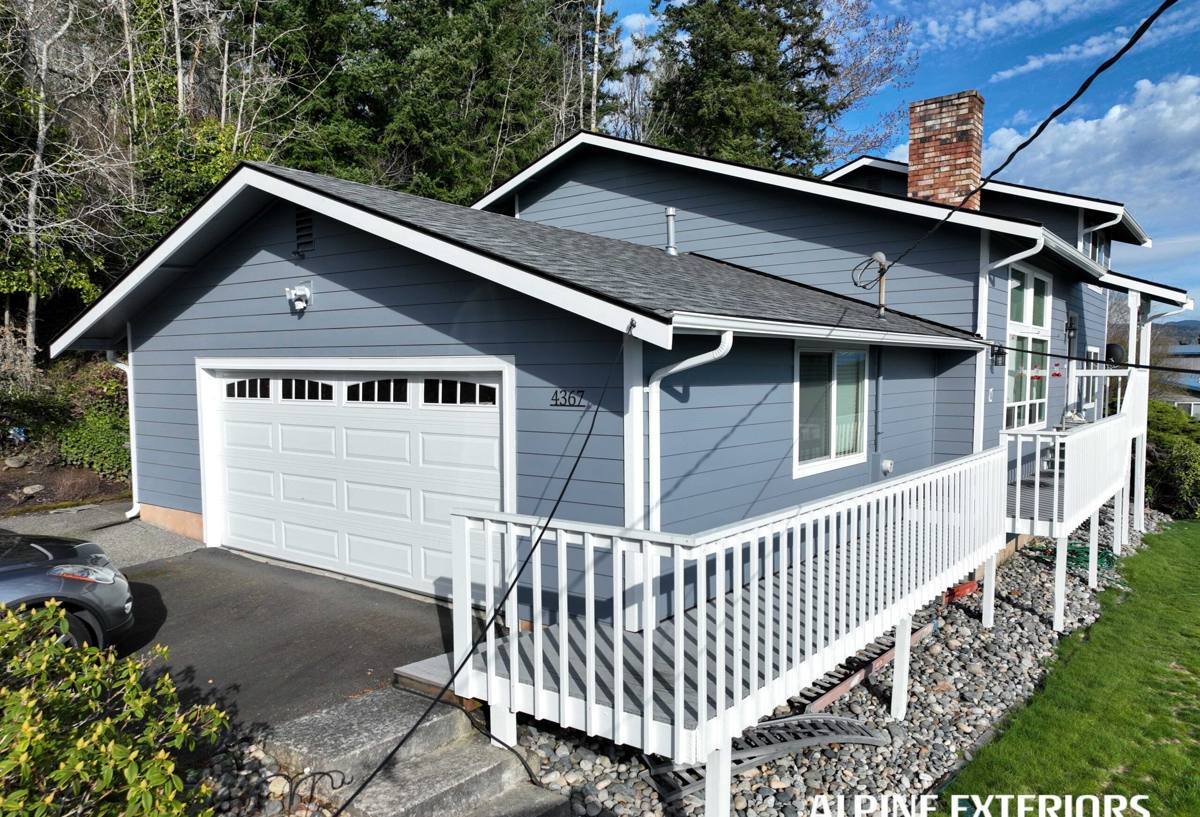
 New Roof Installation in Nooksack: Built for This Corner of Whatcom County
Nooksack sits inland from Blaine, along the river valley that gives the town its name, but it shares the same marine-influenced weather system that shapes roofing decisions across Whatcom County. That means long stretches of wet weather, wind that pushes rain sideways instead of straight down, and mild temperatures that let moss and algae grow on a roof for most of the year. Add in the salt-laden air that moves inland from the Strait of Georgia and the Blaine waterfront, and a roof here is working against a combination of loads that a lot of roofing products and installation habits simply weren't built for.
Blaine Window Co works across doors, windows, siding, and roofing, and when we install a new roof in the Nooksack area we treat it as the single most important weather barrier the house has. A roof that's installed correctly for this specific climate — not just installed to code — is the difference between a roof that quietly does its job for decades and one that starts showing problems within the first five or six years.
What Salt Air, Rain, and Moss Actually Do to a Roof Here
Moss and Sustained Moisture
Shaded roof planes, north-facing slopes, and anything under mature trees stay damp longer than sun-exposed sections. Over a few wet seasons that turns into visible moss growth, and moss holds water directly against the roofing surface. Left unchecked, it works into shingle laps and can lift roofing material, letting water find its way underneath.
Salt Air and Metal Corrosion
Nooksack is inland compared to homes right on the Blaine waterfront, so salt exposure here tends to be less severe than at the coast. It's still part of the same air system, though, and fasteners, flashing, and any exposed metal on a roof need to be rated for a marine-influenced climate rather than a standard inland one. Cutting corners on fastener quality is one of the more common reasons a roof develops leaks around flashing points years before the shingles themselves wear out.
Wind-Driven Rain and Flashing Stress
Rain in this part of Washington rarely falls straight down for long. Wind drives it sideways into roof valleys, around chimneys, and under any flashing that isn't properly lapped and sealed. A roof with weak flashing details or aging underlayment tends to show its first leak exactly where wind-driven rain finds a gap, not in the middle of an open shingle field.
Signs a Nooksack Home Needs a New Roof, Not Another Repair
Roof repairs make sense when a problem is isolated and the rest of the roofing is still sound. A full new roof installation makes sense once the roof as a system is past the point where patching keeps up. Signs worth taking seriously include:
- Shingles that are cupping, curling, or losing granules across large sections rather than one spot
- Moss coverage that comes back within a season or two of cleaning, especially on shaded planes
- Soft spots in the roof deck when walked, or visible sagging along a roof line
- Daylight or water stains visible in the attic, particularly around chimneys, vents, or valleys
- A roof that's already had multiple repairs in the same area over the past few years
- A roof approaching or past the upper end of its material's realistic lifespan in this climate
Any one of these on its own might still be a repair. Several of them together, especially on an older roof, usually mean a full replacement is the more honest and more cost-effective answer over time.
Roofing Materials: What Actually Holds Up in This Climate
There's no single correct material for every home — pitch, sun exposure, budget, and how long you plan to stay in the house all factor in. What matters is understanding the real trade-offs before deciding, rather than defaulting to whatever's fastest to install.
| Material | Moss & Moisture Behavior | Salt Air Considerations | Realistic Lifespan Here |
|---|---|---|---|
| Architectural asphalt shingle | Good with proper ventilation; moss-resistant granule options help | Use corrosion-rated fasteners and flashing | 20-30 years |
| Standing seam metal | Sheds water and moss buildup well due to smooth surface | Needs a coating and fastener system rated for coastal exposure | 40-60 years |
| Composite/synthetic shingle | Resists moisture absorption; performance varies by product line | Generally low-maintenance in salt air | 30-50 years depending on product |
| Cedar shake | Absorbs moisture readily; needs airflow underneath to dry between rains | Higher maintenance in humid, salt-influenced air | 20-30 years with consistent upkeep |
We'll walk through which option fits your roof's pitch, sun exposure, and budget instead of steering you toward whichever product is easiest for us to sell.
What a Correct New Roof Installation Actually Involves
Full Tear-Off and Deck Inspection
We remove the existing roofing down to the deck rather than layering over it. That's the only way to actually see the condition of the plywood or sheathing underneath, catch soft or water-damaged sections, and replace them before new roofing goes down over a hidden problem.
Underlayment and Water Barrier
Underlayment is the backup layer that protects the deck if wind or ice ever gets water past the shingles themselves. In a climate with this much sustained rain, synthetic underlayment and self-adhered water barrier at eaves, valleys, and penetrations aren't optional upgrades — they're the difference between a roof that survives a bad windstorm and one that doesn't.
Flashing at Every Transition
Chimneys, skylights, vent pipes, and roof-to-wall transitions are where the large majority of roof leaks actually start. Properly formed and lapped flashing at each of these points matters more to long-term leak prevention than the shingle brand itself.
Ventilation
A roof deck that can't breathe traps moisture underneath the roofing, which shortens the life of the material and can lead to rot in the deck itself. Balanced intake and exhaust ventilation is part of a correct install, not something we skip to save time.
Our Installation Process, Start to Finish
- On-site inspection of the existing roof, attic ventilation, and any visible problem areas
- Honest recommendation on repair versus full replacement, with the reasoning explained plainly
- Material selection walkthrough based on your roof's pitch, sun exposure, and budget
- Full tear-off, deck inspection, and repair of any damaged sheathing found underneath
- Installation of underlayment, water barrier at vulnerable areas, new flashing, and the chosen roofing material
- Ventilation check and correction if the existing system isn't balanced properly
- Final walkthrough so you know exactly what was done and what to expect from the new roof
Cost Factors for a New Roof in the Nooksack Area
Roofing costs vary by roof size, pitch, how many layers of old roofing have to come off, the amount of deck repair needed, and the material chosen. A straightforward asphalt shingle replacement on a moderately pitched roof typically falls in a broad mid-range compared to a standing seam metal roof, which costs more up front but spreads that cost over a much longer service life. We'll give you a specific number after seeing the roof in person — broad ranges without an actual inspection aren't useful to you and we won't pretend otherwise.
Why a Crew That Already Works This Area Matters
A crew that installs roofs across Whatcom County through every season understands how moss, salt air, and wind-driven rain actually behave on real houses over years, not just how a product performs on a spec sheet. That shows up in practical decisions on install day: how much attention a shaded north slope needs compared to an open, sun-exposed one, how flashing should be detailed around a given roof valley, and which fastener and underlayment choices are worth the extra time so you're not dealing with a leak two winters later. It also means understanding the difference between an inland valley property like one in the Nooksack area and a home right on the Blaine waterfront, and not treating both the same way.
Beyond Roofing: Windows, Siding, and Doors
Roofing is one piece of the exterior envelope, and the same climate that wears on a roof wears on windows, siding, and doors too. Blaine Window Co handles all of it, so if a roof project turns up a leaking window head flashing, water-damaged siding at a roof-to-wall transition, or an aging door that's letting moisture in, we can address it as part of the same conversation rather than sending you to find a second contractor.
If your Nooksack-area roof is showing its age, or you just want an honest read on whether repair or replacement makes more sense, we're glad to take a look. Reach out using the form below to schedule a free, no-pressure estimate.