 Blaine Window
 Roofing Built for Blaine Harbor's Waterfront Climate
Blaine Harbor sits right where the wind comes off Semiahmoo Bay and Drayton Harbor, and that proximity to salt water changes what a roof has to deal with compared to a home a few miles inland. Salt-laden air accelerates corrosion on exposed metal fasteners and flashing, driving rain gets pushed sideways into laps and seams that would stay dry in calmer weather, and the shaded, damp lots common near the water hold onto moisture long after a storm passes. Add in Whatcom County's long moss season, and you have a combination that will find every weak point in a roofing system faster than almost anywhere else in the state.
A new roof installation here isn't just about swapping old shingles for new ones. It's about choosing materials and details that are matched to this specific exposure, and installing them the way they're supposed to be installed the first time. That's the standard we hold ourselves to on every Blaine Harbor project.
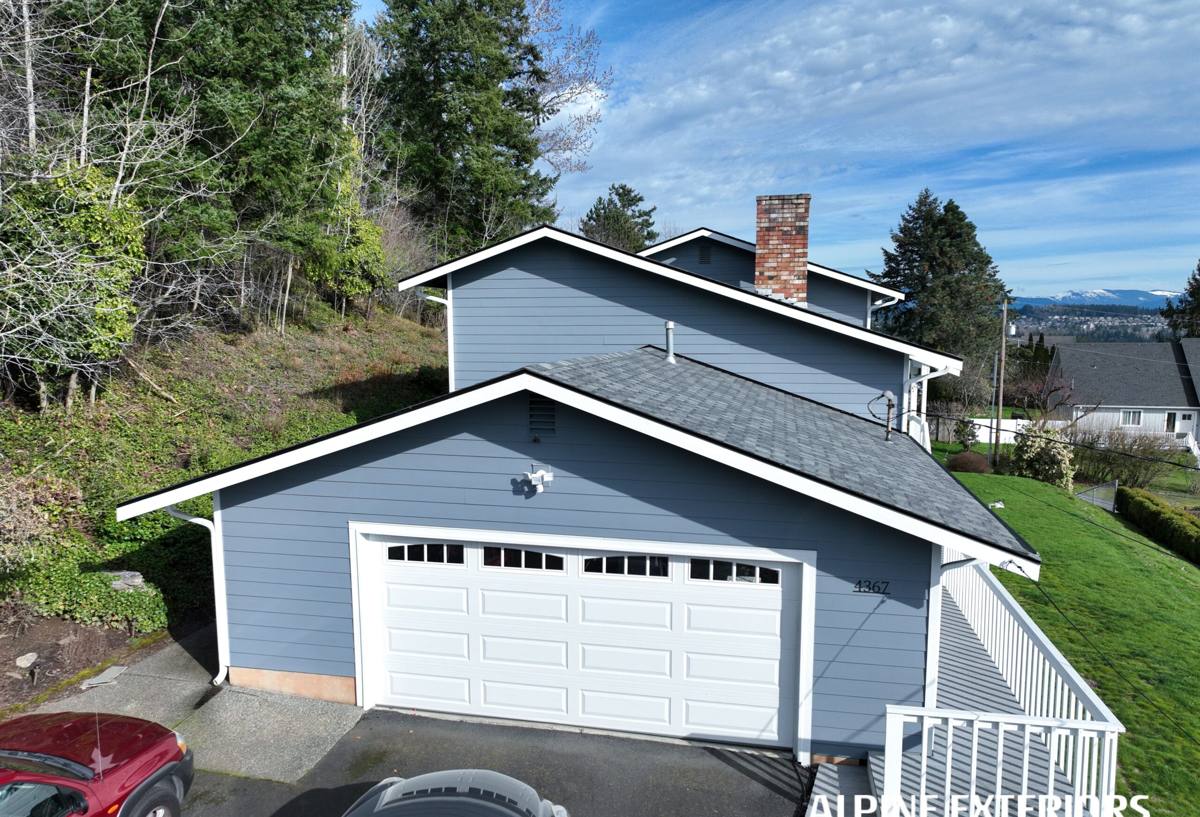
Why the Local Climate Changes the Job
Salt Air and Metal Components
Roofing systems rely on a surprising amount of exposed and semi-exposed metal: drip edge, step flashing, valley metal, vent flashing, and fasteners. Standard galvanized components can start showing surface corrosion years earlier in a salt-air environment than they would inland. We pay close attention to metal grade and coating on every waterfront job, because replacing flashing is a lot cheaper than replacing flashing twice.
Driving Rain and Wind-Driven Water
Storms coming off the water don't just drop rain straight down — wind pushes it sideways and up under shingle tabs and around penetrations. That means underlayment coverage, fastener patterns, and flashing laps all matter more here than they do in a drier, calmer climate. A roof that would pass inspection in a low-wind region can still leak in Blaine if the details weren't built for wind-driven water.
Moss, Shade, and Moisture Retention
Many Blaine Harbor lots have mature trees or sit close enough to the water that roofs stay shaded and damp for long stretches, which is exactly what moss needs to establish. Once moss takes hold, it lifts shingle edges, traps moisture against the roof deck, and shortens the life of the roofing material considerably. Preventing moss starts with material choice and ventilation design, not just periodic cleaning after the fact.
Signs Your Blaine Harbor Home Needs a New Roof
Homeowners near the water often notice roofing problems later than they should, because a roof can look fine from the ground while it's already failing underneath. Here's what we tell people to watch for:
- Granules collecting in gutters or at the base of downspouts
- Shingles that look cupped, curled, or are missing tabs after wind events
- Dark streaking or thick moss growth, especially on north-facing or shaded slopes
- Soft or spongy spots when walking the roof, which usually means deck damage underneath
- Daylight visible through the roof deck from inside the attic
- Rusting or lifted flashing around chimneys, vents, and skylights
- Interior water stains on ceilings, especially after a heavy storm
- A roof that's approaching or past the manufacturer's expected service life
Any one of these on its own might just need a repair. Several at once, especially on a roof over 15-20 years old, usually means it's time to talk about full replacement.
Material Options for Coastal Whatcom County Homes
There's no single "best" roofing material for every home — it depends on the roof's exposure, the home's structure, and the homeowner's budget and priorities. Here's how the common options stack up for a salt-air, high-moisture setting like Blaine Harbor.
| Material | Moisture & Moss Resistance | Salt Air Durability | Typical Lifespan | Maintenance |
|---|---|---|---|---|
| Architectural asphalt shingle | Good, with proper ventilation | Good with corrosion-resistant flashing | 25-30 years | Periodic moss/debris clearing |
| Standard 3-tab asphalt shingle | Fair | Fair | 15-20 years | More frequent inspection |
| Standing seam metal | Excellent — sheds moisture, little surface for moss to grip | Very good with marine-grade coatings | 40-50+ years | Low |
| Cedar shake | Requires diligent upkeep in damp shade | Fair | 20-30 years with maintenance | High — regular treatment needed |
Architectural asphalt shingle is the most common choice we install in Blaine Harbor because it balances cost, durability, and appearance well when paired with the right underlayment and ventilation. Standing seam metal is a strong option for homes with heavy shade or persistent moss history, since its smooth, continuous surface gives moss far less to hold onto. Cedar shake can look great on the right home, but in a shaded, damp waterfront lot it demands more upkeep than most homeowners want to commit to — that's a maintenance trade-off worth discussing honestly before you commit to it.
What a Correct Roof Installation Actually Involves
A roof is a system, not a single layer of shingles. Skipping or shortcutting any of these steps is where most premature roof failures near the water start.
1. Tear-Off and Deck Inspection
We remove the old roofing down to the deck rather than layering over it, because you can't properly assess or repair what's hidden underneath old material. Any soft, rotted, or delaminated decking gets identified and replaced before anything new goes down.
2. Ice, Water, and Underlayment Protection
In a wind-driven rain climate, underlayment coverage matters as much as the shingle itself. We use self-adhering ice-and-water membrane at eaves, valleys, and around penetrations — the areas most vulnerable to wind-driven water intrusion — with synthetic underlayment across the field.
3. Flashing and Metal Work
New step flashing, counter-flashing, and drip edge go in at every wall intersection, chimney, and penetration. We select corrosion-resistant metal for this reason specifically, given the salt-air exposure common around the harbor.
4. Ventilation
Balanced intake and exhaust ventilation keeps the attic dry and temperature-regulated, which reduces condensation buildup and helps prevent the trapped moisture that feeds moss and rot. This is one of the most overlooked parts of a roofing job and one of the most important for long-term performance in this climate.
5. Field Installation
Shingles or panels go on following the manufacturer's fastening pattern and exposure specs — not a shortcut version. Proper nailing and alignment directly affect wind resistance, which matters on an exposed harbor-facing roof.
6. Final Inspection and Cleanup
We walk the completed roof, check every flashing detail and penetration, and do a magnetic sweep of the property for stray fasteners before considering the job finished.
What Drives the Cost of a New Roof
Every roof is different, so we don't quote sight-unseen, but these are the main factors that move the price up or down:
| Factor | Why It Matters |
|---|---|
| Roof size and pitch | More surface area and steeper slopes increase material and labor time |
| Number of layers to remove | Tear-off of multiple old layers adds disposal and labor cost |
| Deck condition | Rotted or damaged decking requires repair before new roofing goes on |
| Material choice | Asphalt, metal, and cedar carry different material and installation costs |
| Roof complexity | Valleys, dormers, skylights, and chimneys add flashing detail and time |
| Access and site conditions | Waterfront lots with limited access or steep grades can affect staging |
We walk every roof in person and give homeowners a clear, itemized estimate before any work starts — no vague allowances that turn into surprise add-ons later.
Permits and Local Considerations
Roof replacements in Blaine typically require a building permit, and depending on the property's location, there can be additional considerations for homes close to the shoreline or within certain setback areas. We handle the permitting process as part of the job so homeowners aren't left figuring out city or county requirements on their own.
Why Hire a Crew That Already Works Blaine Harbor
A roofing crew that mainly works inland jobs may not think twice about fastener grade, flashing metal, or ventilation balance — because those details don't matter as much away from the water. On a harbor-facing roof, they're the difference between a roof that looks fine for a few years and one that actually holds up through decades of salt air, driving rain, and moss season. We work in this specific stretch of Whatcom County regularly, which means we're not guessing at what this exposure requires — we're building to it as a matter of course.
If your roof is showing its age, or you just want an honest opinion on whether repair or replacement makes more sense for your home, we're happy to take a look. Reach out for a free, no-pressure estimate using the form below.