 Blaine Window
 Building New in Birch Point Means Planning for the Exposure Before Framing Is Even Done
Birch Point sits close enough to the water that salt air, wind-driven rain, and a long wet season are part of daily life for any home built there. When you're doing new construction, you get one real chance to get the window package right from the start. Retrofitting a poorly chosen window later means cutting into finished siding, trim, and interior walls. Getting it right during the build is far cheaper and far less disruptive than fixing it after the fact.
New-construction window work is different from a replacement job in almost every way that matters: the windows go in before the weather-resistive barrier and siding are closed up, the rough openings are built to the window's exact specs rather than the other way around, and the flashing details get buried behind finished walls where nobody will see them again until there's a problem. That last part is why the install matters as much as the window itself.
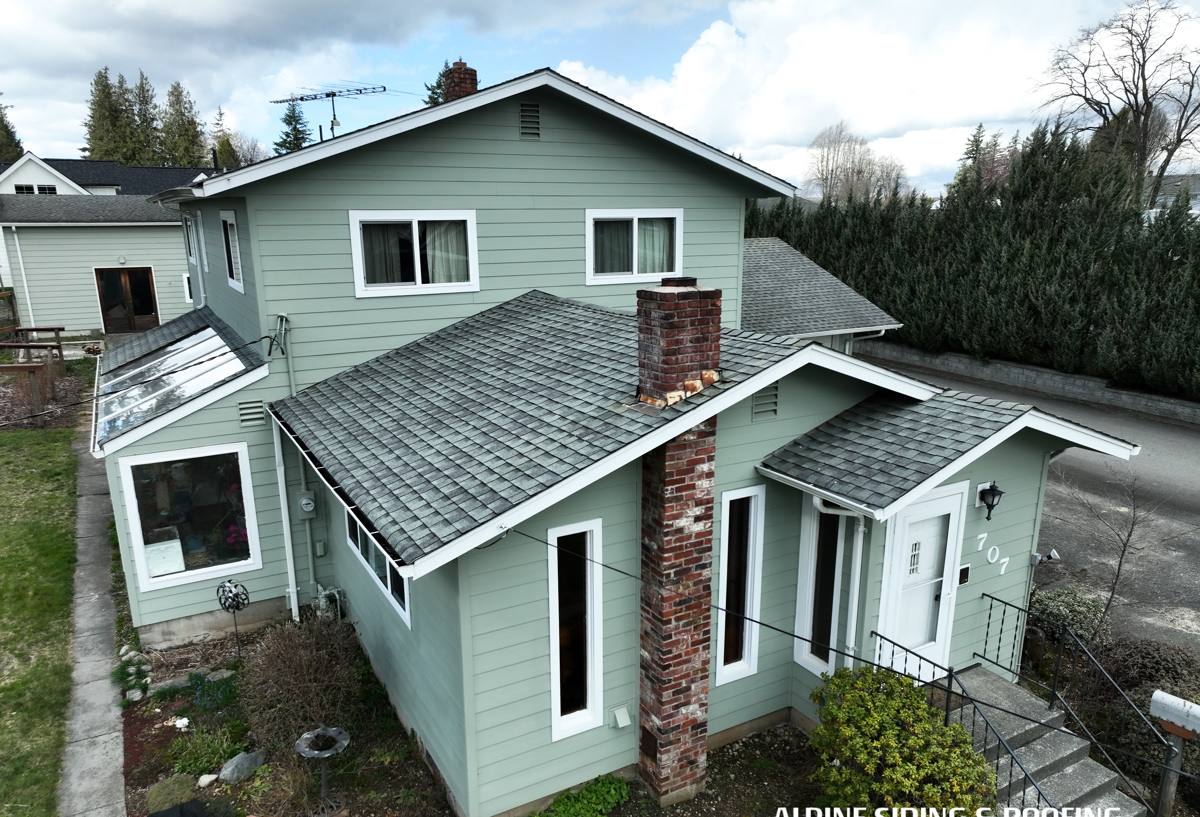
What Whatcom County's Coastal Exposure Actually Does to a Window Opening
Blaine and the surrounding shoreline communities deal with a specific combination of stresses that inland Whatcom County homes see less of:
- Salt-laden air that accelerates corrosion on unprotected fasteners, hinges, and lesser hardware finishes over years of exposure.
- Wind-driven rain off the Strait that pushes water sideways and upward against a wall, not just straight down, which is exactly the condition standard flashing details are designed to fail under if they're done sloppy.
- A long moss and algae season from fall through spring, where constant damp and low sun angles let organic growth take hold on any surface that stays wet, including window sills, exterior trim, and poorly sloped sills.
- Sustained humidity that keeps wood and lesser composite materials damp for extended stretches, which is a slow-motion problem if the window isn't sealed and flashed correctly on day one.
None of this means Birch Point needs an exotic window. It means the ordinary details — flashing sequence, sill pan, sealant selection, hardware and frame material — need to be handled correctly and not rushed, because the consequences of a mistake show up slowly, often behind finished walls where they're expensive to find.
Why Sill Details Matter More Here Than Almost Anywhere Else
A window opening on a coastal lot needs a sloped, sealed sill pan that sheds water outward even under wind pressure, not just gravity. On a standard inland build, a marginal sill detail might go unnoticed for a decade. On a site taking regular wind-driven rain, a marginal detail can show up as staining, soft trim, or interior moisture within a few wet seasons. This is the single detail we spend the most time getting right on every Birch Point opening.
What a Correct New-Construction Window Job Involves
A proper new-construction window install is a sequence, and skipping steps or doing them out of order is where problems start. On a coastal Whatcom County build, the sequence looks like this:
- Rough opening verification. The framed opening is checked against the window manufacturer's actual specified dimensions, not just "close enough" — undersized or oversized openings force compromises in shimming and sealing that create weak points.
- Sill pan flashing. A sloped, fully sealed pan goes in first, so any water that ever gets past the window has a built-in path out and away from the framing.
- Window-to-opening sealing. The window is set plumb, level, and square, then sealed to the weather-resistive barrier using a shingled, lapped sequence — top flashing always overlaps the layer below it, never the reverse.
- Fastening and hardware check. Corrosion-resistant fasteners and hardware are used throughout, since standard-grade hardware can start showing wear in salt air within a few years.
- Interior and exterior trim-out. Trim is set with enough clearance and slope that water doesn't pool against it, which also helps resist the moss and algae buildup that's common on flat or poorly sloped surfaces in this climate.
- Final inspection against the building envelope. The window's integration with the wall system is checked as a whole, not just as an isolated unit, since a window is only as weathertight as the wall it's built into.
Choosing the Right Window for a Birch Point Build
For new construction on an exposed coastal lot, we generally steer homeowners toward frame materials and hardware finishes built for sustained moisture and salt exposure, and we're upfront about the trade-offs of each option rather than pushing one product as a cure-all.
| Frame Material | Coastal Performance | Maintenance Consideration |
|---|---|---|
| Vinyl | Good moisture and corrosion resistance; consistent performance with minimal upkeep | Low maintenance; color and hardware options vary by manufacturer |
| Fiberglass | Very stable in temperature swings and humidity; holds up well to sustained salt exposure | Low maintenance; typically a higher upfront cost |
| Aluminum | Strong and slim-profile, but requires a marine-grade or well-finished coating to resist salt corrosion long-term | Moderate; finish quality matters more here than in other climates |
| Wood / wood-clad | Attractive but more vulnerable to sustained moisture and requires diligent sealing and upkeep near the water | Higher maintenance; we're honest that this is a harder choice for direct coastal exposure |
Hardware finish matters just as much as frame material here. We recommend corrosion-resistant hardware options on every coastal build, and we'll walk through what each manufacturer offers rather than assuming the standard package is good enough for a site this close to the water.
Glass and Weatherstripping Considerations
Double- or triple-pane glass with a quality low-E coating helps with both energy performance and condensation control, which is a real concern in a climate this humid — condensation between panes or on interior glass is often a sign the seal or the glazing spec wasn't right for the environment. Weatherstripping should be a durable, UV- and moisture-stable material; lesser weatherstripping can compress or degrade faster in a climate that stays damp for months at a stretch.
Our Process for New-Construction Window Work in Birch Point
We coordinate directly with the builder or general contractor so window installation lands at the right point in the build sequence — after the weather-resistive barrier is up, before siding closes everything in. Our process typically runs:
- Review of plans and rough opening dimensions before framing is finalized, to catch sizing issues early
- On-site verification of rough openings once framing is complete
- Sill pan flashing and window installation, sequenced with the builder's weather barrier and siding schedule
- Interior and exterior trim coordination with the builder's finish crew
- A final walkthrough with photos of flashing details before they're covered by siding, so there's a record of what's behind the wall
That last step matters more on a coastal build than almost anywhere else. Once siding goes up, the flashing details are hidden for the life of the house. Having a documented record of what's underneath gives the homeowner and builder peace of mind, and it gives us accountability for our own work.
Why Local Experience in This Specific Exposure Matters
A crew that mostly works inland jobs can do fine work and still get caught out by conditions specific to a shoreline lot like Birch Point — wind direction relative to the water, how far spray carries in a storm, how long a north-facing wall stays damp through a Whatcom County winter. We work new-construction window jobs in Blaine and along this stretch of coastline regularly, so the flashing sequence, sealant choices, and hardware recommendations we bring to a Birch Point build are based on what actually holds up here, not a generic install checklist.
This also shows up in small, practical decisions: how much slope to build into a sill given the specific wind exposure of a lot, which sealant chemistry stays flexible through a Whatcom County winter without drying out, or how to detail a window near a covered porch versus one on an open, exposed wall. These are judgment calls that get better with repetition in this exact environment.
A Practical Checklist for Homeowners Working with a Builder
If you're building new in Birch Point and coordinating window selection with your builder, these are worth confirming before framing locks in the rough openings:
- Frame material and hardware finish are appropriate for direct or near-direct salt air exposure
- Sill pan flashing is specified in the plans, not left to field judgment
- Rough opening dimensions match the actual window specs, with tolerance for proper shimming and sealing
- Glazing spec (pane count, low-E coating) fits the home's orientation and this climate's humidity
- There's a plan for photo documentation of flashing before siding closes the wall
- Warranty terms cover both the window unit and the installation, not just the manufacturer's product warranty
What This Costs to Get Right
New-construction window costs vary by opening size, frame material, glazing package, and window count, and we'd rather give you an honest number after seeing your plans than a broad estimate that doesn't hold up. In general, fiberglass and higher-grade vinyl packages run higher upfront than basic vinyl, and that difference is usually justified for a direct coastal lot by lower long-term maintenance and better resistance to the salt air and moisture Birch Point sees year-round. Installation labor on new construction is typically less per-window than a retrofit, since there's no existing siding or trim to remove and rebuild — but it still needs to be sequenced correctly with the rest of the build.
If you're planning a new build in Birch Point and want to talk through window selection and installation sequencing before your framing is locked in, we're happy to take a look at your plans and walk through the options. Reach out for a free, no-pressure estimate using the form below.