 Blaine Window
 Metal Roofing in Lynden: Built for This Valley's Weather
Lynden sits inland in the Nooksack River valley, in the northern part of Whatcom County near the Canadian border. It doesn't take the direct salt spray that some of our waterfront service areas see, but it still sits inside the same marine-influenced weather system that shapes exterior work across this whole corner of Washington. Moist air carries salt up the valley from the Sound, rain arrives frequently and is often driven sideways by wind rather than falling straight down, and mild, damp temperatures give moss a long season to work on any roof surface that stays shaded. A roof that isn't built with that specific combination in mind tends to show its age here faster than homeowners expect.
Blaine Window Co installs and replaces windows across Whatcom County, and we also install metal roofing, siding, and decks, because exterior systems on a house don't perform in isolation. A roof interacts with everything below it, and metal roofing in particular rewards a correct installation and punishes a rushed one. This page focuses specifically on metal roofing for Lynden homes — what the local climate demands of it, what a correct install actually involves, and how our process works from first visit to final walkthrough.
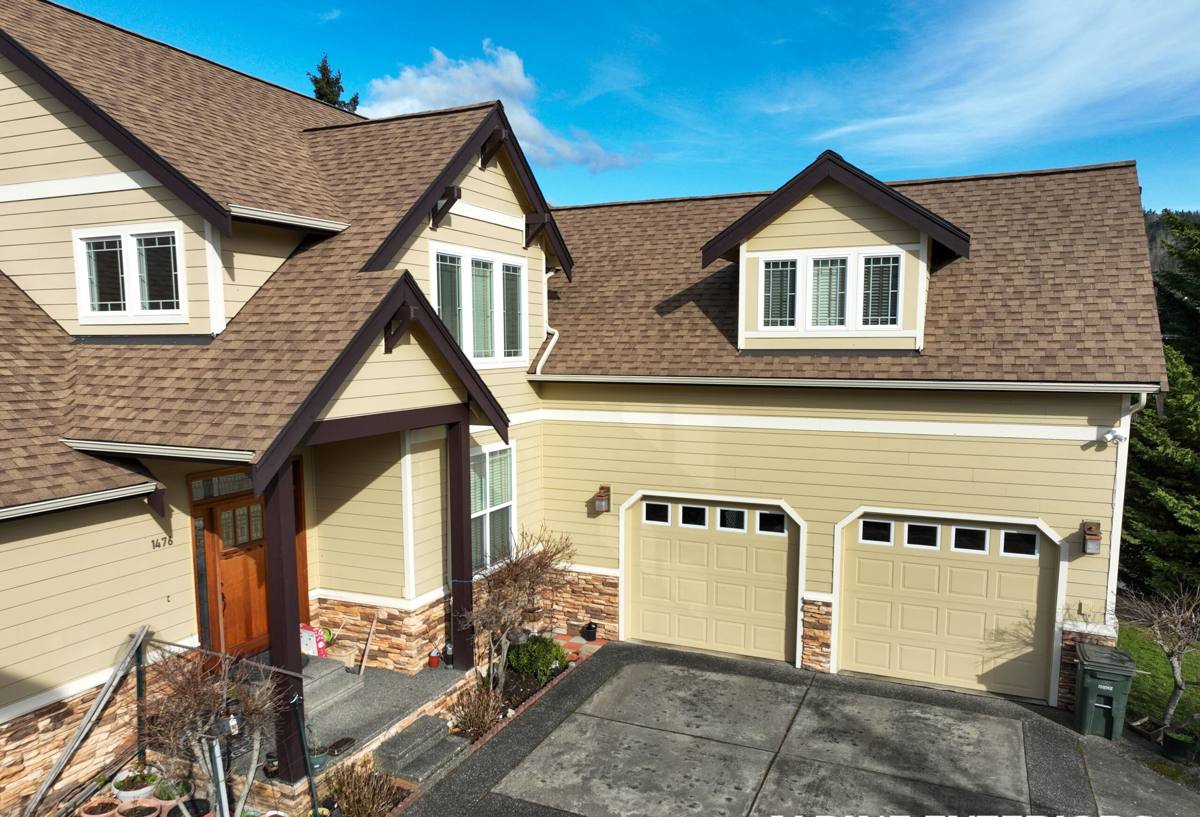
Why Homeowners in Lynden Choose Metal Roofing
Metal roofing isn't the right fit for every home or every budget, but it solves a specific set of problems that come up often in this part of the county. Its smooth, non-porous surface sheds water fast and gives moss and algae far less to grip onto than a textured shingle surface does. It handles wind-driven rain well when the panel seams and flashing are done correctly, and it holds up over a much longer service life than most other roofing materials, which matters to homeowners who'd rather not think about their roof again for decades. The trade-off is a higher upfront cost and an installation that's less forgiving of shortcuts than asphalt shingle work — a metal roof done wrong tends to show it sooner, usually as an oil-canning appearance, a leak at a fastener or seam, or noise during wind and rain that a well-built metal roof shouldn't produce.
What Lynden's Climate Demands From a Metal Roof
Salt-Tinged Air and Panel Corrosion
Even well inland, Whatcom County gets a steady dose of salt-carrying marine air moving up the valley, and that air works on any exposed metal over time. The panel finish, the fastener coating, and the flashing metal all need to be matched to that exposure rather than chosen on price alone. Galvanic corrosion is a real concern too — mixing incompatible metals, such as the wrong fastener type against a given panel material, can cause corrosion at the contact point years before the rest of the roof shows any wear.
Wind-Driven Rain and Seam Integrity
Rain in the Nooksack valley rarely falls straight down. Wind pushes it sideways into panel seams, ridge caps, and any point where the roof meets a wall, chimney, or vent pipe. On a metal roof, the seam and fastening method are what stand between that wind-driven water and the underlayment beneath. A seam that's mechanically locked and properly lapped holds up to that load; a seam that relies mainly on sealant to stay watertight is a maintenance item waiting to happen.
A Long Moss Season, and Metal's Real Advantage
Shaded roof planes and north-facing slopes in Lynden stay damp for a large part of the year, which is exactly the environment moss needs to establish itself. This is where metal roofing genuinely outperforms most other materials — moss and algae have almost nothing to grab onto on a smooth metal panel, and what does collect typically washes off with normal rainfall rather than working its way under a roofing edge the way it can with shingles. It's not a maintenance-free surface, but it's a meaningfully lower-maintenance one in exactly the conditions Lynden sees for months at a time.
Metal Roofing Panel Options for a Lynden Home
"Metal roofing" covers more than one product, and the differences matter for how the roof performs here, not just how it looks.
| Panel Type | Fastening Method | Fit for Lynden Conditions |
|---|---|---|
| Standing seam | Concealed clips, no exposed fasteners through the panel face | Best resistance to wind-driven rain and long-term corrosion since fasteners aren't exposed to weather; the most common recommendation for this climate |
| Exposed-fastener panel | Screws driven directly through the panel into the deck or purlins | Lower upfront cost, but every fastener penetration is a potential leak point over time, and washers and screws need periodic inspection and eventual replacement |
| Metal shingle or tile profile | Interlocking panels styled to resemble shingle or tile | Gives a more traditional appearance while keeping metal's moss and corrosion resistance; a reasonable middle ground for homeowners who want the material but not the standing-seam look |
For most Lynden homes, standing seam is the panel type we recommend first, specifically because it keeps fasteners out of the weather. Exposed-fastener panels aren't a wrong choice, but the homeowner should go in understanding that the fasteners themselves become a maintenance item, and that trade-off is worth weighing honestly against the lower initial price.
What a Correct Metal Roof Install Involves
Deck Inspection Before Anything Goes On
Metal panels can sometimes go over an existing roof surface, but that shortcut skips the chance to find rot, soft spots, or moisture damage that's been developing under the old roofing. On most Lynden homes we recommend a full inspection of the deck, and a tear-off when the existing roofing or deck condition calls for it, because sealing an existing problem under a new metal roof just delays the repair and makes it more expensive later.
Underlayment Built for This Climate
Metal roofing needs an underlayment rated to handle the condensation that can form on the underside of metal panels, in addition to the wind-driven rain the roof faces from above. High-temperature synthetic underlayment, with ice-and-water shield membrane at eaves, valleys, and other vulnerable transitions, gives the roof a real secondary barrier if wind ever pushes water past the panel seams themselves.
Fastening and Thermal Movement
Metal panels expand and contract with temperature swings more than most other roofing materials, and a correct install accounts for that movement rather than fighting it. Clips and fasteners on a standing seam roof need to allow the panel to move slightly without loosening the roof or stressing the seams over repeated cycles. Getting this detail wrong is one of the more common causes of oil-canning, panel noise, or seam fatigue on metal roofs that were installed without that movement in mind.
Flashing at Valleys, Penetrations, and Walls
As with any roofing material, most leaks don't start in the open field of the roof — they start at transitions. Valleys, chimney and vent penetrations, and the points where a roofline meets a wall all need flashing that's integrated with the panel system and the underlayment beneath it, not caulked on afterward as a patch.
Ventilation
Balanced intake and exhaust ventilation keeps the underside of a metal roof deck dry, which matters directly for condensation control and for the long-term health of the decking itself. A metal roof can look flawless from the ground and still be developing problems underneath because of poor attic airflow that nobody notices until it's advanced.
Cost Factors Worth Understanding
Metal roofing bids can vary widely, and the difference is almost always real scope rather than one contractor padding the number. Knowing what drives cost makes it much easier to compare estimates that look nothing alike on paper.
| Factor | What It Affects |
|---|---|
| Panel type (standing seam vs. exposed-fastener) | Upfront material and labor cost, plus long-term maintenance and leak risk |
| Panel material and gauge | Corrosion resistance, dent resistance, and expected service life |
| Tear-off vs. install over existing roofing | Whether hidden deck damage gets found and repaired before the new roof goes on |
| Underlayment grade | How well the roof resists condensation and wind-driven rain over the long term |
| Flashing and penetration scope | How thoroughly valleys, chimneys, and wall intersections are addressed |
| Roof pitch, complexity, and access | Labor time, staging needs, and the number of seams and cuts required |
A written estimate that breaks these items out individually, rather than one lump-sum number, tells you far more about what you're actually paying for. It's worth asking any contractor to walk through each line before comparing two bids side by side.
How Our Process Works
- In-person inspection: We walk the roof and attic ourselves rather than estimating from a photo or a satellite image, and document what we actually find.
- Written estimate: You get a clear, itemized bid covering panel type, underlayment, flashing, ventilation, and cleanup, not a single vague line item.
- Scheduling around weather: We build reasonable flexibility into the timeline, since wet-season delays are a normal part of working in this region rather than an excuse we reach for later.
- Tear-off and deck repair: Old roofing comes off where needed, and any deck damage we find gets addressed before new panels go on.
- Underlayment, flashing, and panel installation: Each layer goes on to manufacturer specification, with particular attention to seams, valleys, and penetrations.
- Final walkthrough and cleanup: We review the finished roof with you in person and do a full site and fastener sweep before we consider the job done.
Why Hiring a Crew That Already Works in Lynden Matters
Metal roofing is less forgiving of an inexperienced install than asphalt shingles are. Panel alignment, seam locking, and thermal movement all need to be handled correctly the first time, because there's no shingle-style patching an off-spec panel run later. A crew that regularly works roofs in Lynden and the surrounding Whatcom County valley has already seen how salt-tinged air affects fastener and panel choices here, how wind-driven rain finds its way through a poorly lapped seam, and which roof orientations hold moisture longest through the wet months. That's practical, earned knowledge that shows up in dozens of small decisions over the course of a job.
It also matters after the job wraps up. A workmanship warranty is only as good as the company standing behind it years later, and a contractor with an established, ongoing presence in the area is one you can actually reach if a question comes up down the road.
A Practical Checklist Before You Choose a Metal Roofing Contractor
- Do they have documented experience with metal panel systems specifically, not just asphalt shingle work?
- Does the estimate specify panel type, gauge, and underlayment, not just "metal roof"?
- Is flashing work at valleys, penetrations, and wall intersections explicitly written into the bid?
- Do they explain how the panels will handle thermal expansion and contraction?
- Do they carry current WA contractor licensing, liability insurance, and workers' compensation?
- Does the bid clearly separate manufacturer material warranty from the contractor's own workmanship warranty?
Signs an Existing Roof May Be Ready for a Metal Upgrade
Homeowners often start looking at metal roofing after dealing with the same maintenance issues year after year on their current roof. A few common signs worth paying attention to:
- Recurring moss growth that comes back within a season or two of being cleaned off
- Granule loss or curling shingles on a roof that's approaching the end of its expected life
- Frequent minor leaks at valleys or penetrations despite past repairs
- A roof that's due for full replacement anyway, making this a natural point to reconsider the material
- A preference for a longer-term, lower-maintenance roof rather than repeating the same upkeep cycle
None of these mean metal is automatically the right answer for every home, but they're the situations where it's worth having an honest conversation about whether it makes sense for yours.
If you'd like an honest, no-pressure look at your Lynden roof and a written estimate you can compare against anything else you've received, we're glad to come take a look. Use the form below to request a free estimate.