 Blaine Window
 Deck Replacement Built for How Lynden Actually Weathers
Lynden sits far enough inland to escape the worst of the coastal salt spray that hits Blaine and Birch Bay directly, but it still gets a heavy dose of Whatcom County's marine air, driving winter rain, and long stretches of gray, damp weather that keep outdoor structures wet for days at a time. Add in a moss and algae season that can run from October through April, and a deck here is working under conditions most manufacturers' warranty language was not written for. A deck that was fine ten or fifteen years ago is often the deck that's failing now, and replacement — not another round of patching — is usually the honest answer.
We've replaced decks throughout Lynden and the surrounding farmland-to-suburb stretch of Whatcom County, and the failure patterns repeat: rot at the ledger board where it meets the house, soft spots where standing water sat too long, rusted-through fasteners, and railings that flex more than they should. None of that is unusual for this climate. What matters is building the replacement so it doesn't repeat the same failure in another decade.
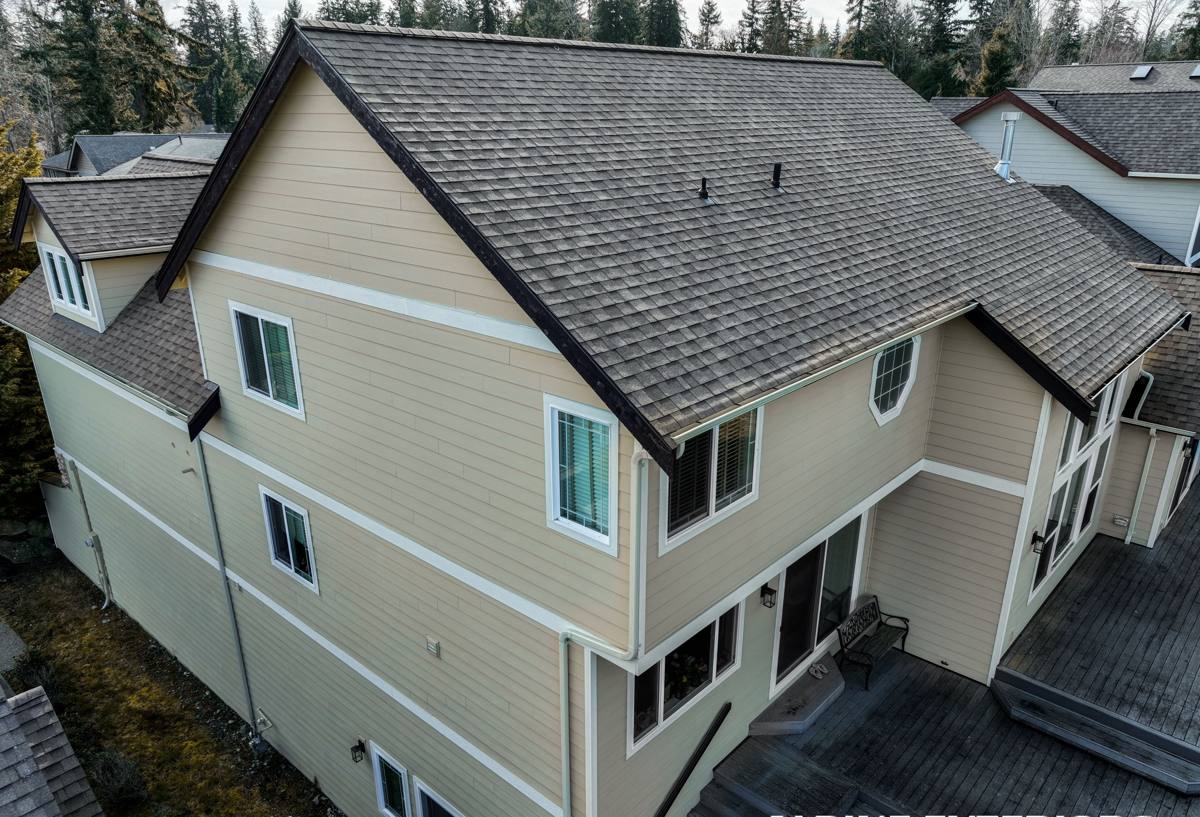
Why Decks Fail Faster Here Than in Drier Climates
Whatcom County's rain isn't just frequent, it's prolonged — low-intensity drizzle that soaks into end grain, fastener holes, and any spot where two pieces of wood or composite meet and don't fully dry between storms. A deck in a drier inland climate gets to dry out between rain events. A Lynden deck often doesn't get that chance for months at a stretch.
The Three Things That Do the Most Damage
- Trapped moisture at connection points — ledger boards, joist hangers, and post bases where water collects and can't evaporate quickly.
- Moss and algae growth — beyond the cosmetic issue, moss holds moisture against the decking surface and makes boards slick and unsafe underfoot.
- UV and freeze-thaw cycling — even with our relatively mild winters, repeated freeze-thaw at saturated wood fibers accelerates cracking and checking.
None of these are exotic problems. They're the predictable result of building a deck for average conditions instead of Whatcom County conditions.
Signs a Lynden Deck Needs Replacement, Not Repair
Not every deck problem means a full tear-out. But there's a point where patching individual boards is just delaying a bigger job and spending money on something that won't outlast the underlying structure. We look at the whole system before recommending replacement.
- Soft, spongy, or spring-back decking boards, especially near the house or in shaded areas
- Visible rot or discoloration at the ledger board connection to the house
- Rust streaks around fasteners or joist hangers
- Railings or posts that wobble or flex under normal weight
- Persistent moss or algae that comes back within weeks of cleaning
- A deck older than 15-20 years that has never had the substructure inspected
- Gaps or separation where the deck meets the house siding or foundation
If you're seeing two or more of these, it's worth having someone look at the framing underneath, not just the surface.
What a Correct Deck Replacement Actually Involves
A deck replacement done right is a structural project first and a finish project second. The parts homeowners see — the decking boards, the railing style — matter, but they're not what determines whether the deck is still solid in fifteen years.
Structural Priorities
The ledger board connection to the house is the single most important detail on most decks, and it's the most common failure point in this climate. Proper flashing at the ledger keeps water from wicking into the house's rim joist, which is both a deck problem and a home moisture problem if it's done wrong. We treat this connection as non-negotiable — flashed correctly, with appropriate fasteners and a gap or drainage path so water sheds away from the house rather than pooling against it.
Footings and post bases come next. In our climate, post bases that sit directly on or near grade stay damp far longer than post bases raised on proper concrete footings with a moisture break. We size and place footings based on local frost depth and soil conditions, not a generic minimum.
Material Priorities
Joist hangers, screws, and structural fasteners need to be rated for the environment they're in — coastal and marine-influenced air corrodes standard fasteners faster than most homeowners expect. We use fasteners and hardware rated for exterior, high-moisture use throughout, not just on the visible surface.
Decking Material Options for Whatcom County Conditions
There's no single "best" decking material — the right choice depends on budget, how much upkeep you want to do, and how much shade and moisture exposure the deck gets. We'll talk through the honest trade-offs rather than push whatever has the best margin.
| Material | Moss/Moisture Resistance | Maintenance | Typical Lifespan |
|---|---|---|---|
| Pressure-treated wood | Good with regular sealing; needs upkeep | Annual cleaning, periodic sealing/staining | 10-15 years before major work needed |
| Cedar | Naturally moderate resistance, but still needs sealing here | Regular sealing, cleaning to prevent graying and moss | 15-20 years with upkeep |
| Composite decking | Strong — resists rot, but surface can still grow algae without cleaning | Occasional washing; no sealing/staining | 25-30 years, manufacturer-dependent |
| PVC decking | Excellent — fully synthetic, low water absorption | Minimal; periodic washing | 25-30+ years |
Composite and PVC decking have become popular in this region precisely because they don't absorb water the way wood does, which matters a lot when a deck spends half the year damp. That said, a well-built, well-maintained wood deck is still a legitimate and more affordable option for the right homeowner — it just requires more of a maintenance commitment than composite or PVC.
Why We're Selective About Certain Wood-Composite Blends
Some early-generation composite products used wood-fiber cores that could absorb moisture at cut edges and fastener penetrations if not fully capped and sealed during installation. We're careful about which products we install and how we detail cut ends and fastener points, because in a climate that stays wet as long as ours does, that installation detail matters more here than it would in a drier region. This is about matching the product to the install standard we hold ourselves to, not a claim about any specific brand failing.
Our Deck Replacement Process
Homeowners generally want to know two things: what's actually going to happen, and how long it's going to disrupt their yard. Here's the outline.
1. On-Site Assessment
We inspect the existing deck's framing, ledger connection, footings, and any visible rot or damage before quoting anything. This tells us whether it's a full structural rebuild or whether some framing can be reused.
2. Tear-Out
Full removal of the old decking, railings, and any compromised framing. We haul away debris — you're not left with a pile of old lumber to deal with.
3. Structural Rebuild
New or reinforced framing, correctly flashed ledger connection, footings sized for local conditions, and corrosion-resistant hardware throughout.
4. Decking and Railing Installation
Installed per manufacturer spec for whichever material you've chosen, with attention to drainage, expansion gaps, and fastening patterns that hold up to our wet-dry cycling.
5. Final Walkthrough
We walk the finished deck with you, point out any maintenance recommendations specific to the material you chose, and answer questions before we consider the job done.
Timeline and Planning Considerations
Most single-level deck replacements in the Lynden area run from a few days to about two weeks, depending on size, material lead times, and weather windows. Because this region gets extended rainy stretches, we plan structural work around dry windows when possible — pouring footings and doing framing work in standing rain isn't good practice and we won't cut that corner to hit a date.
Practical Planning Checklist for Homeowners
- Decide on decking material early — composite and PVC often have longer lead times than treated lumber
- Ask whether your existing footings and framing can be reused or need full replacement
- Confirm whether a permit is required for your project's size and height (we can advise based on local requirements)
- Plan for a several-day window where the yard access near the deck will be limited
- Ask about drainage or grading near the deck if you've had standing water issues in that area of the yard
Why Hiring a Crew That Already Works in Lynden Matters
Deck-building fundamentals don't change much from region to region, but the details that determine whether a deck lasts do change with climate. A crew that mostly works drier inland climates may not default to the flashing details, fastener grades, or footing depth that make sense for a Whatcom County winter. We work in this specific climate regularly, which means the moisture-management details aren't an afterthought — they're the baseline we start every job from.
We're also a local business, which means we're not disappearing after the invoice clears. If a question comes up about maintenance, or you want an honest opinion on whether a spot of moss regrowth is normal or a sign of a drainage problem, we're reachable.
Get a Straightforward Estimate
If your deck is showing soft spots, persistent moss, or you just haven't had the framing looked at in over a decade, it's worth a second set of eyes before you decide between repair and replacement. We offer free, no-pressure estimates for Lynden homeowners — we'll tell you honestly what we see and what your realistic options are, whether that's a full replacement or something less involved. Fill out the form below to get started.