 Blaine Window
 Ferndale Sits in a Tough Spot for Siding
Ferndale homes sit close enough to the water and to the open farmland of the Nooksack lowlands that siding takes a beating most inland Washington towns never see. You've got salt-laden air drifting in off the Strait, long stretches of driving rain that comes in sideways more often than straight down, and a wet season that stretches on long enough for moss and algae to get a real foothold on anything that stays damp. None of that is unique to one street or one subdivision — it's the whole corridor between Bellingham and the Canadian border, Blaine included. But it does mean that whatever goes on the outside of a Ferndale home needs to be chosen and installed with that specific combination of exposures in mind, not just picked because it's what a contractor happened to have on the truck.
This page is about one job in one place: installing James Hardie fiber cement siding correctly on a Ferndale home. We're not going to cover every siding product on the market or every town in Whatcom County. We only install James Hardie, and we want to explain what that means for a house in this specific climate.
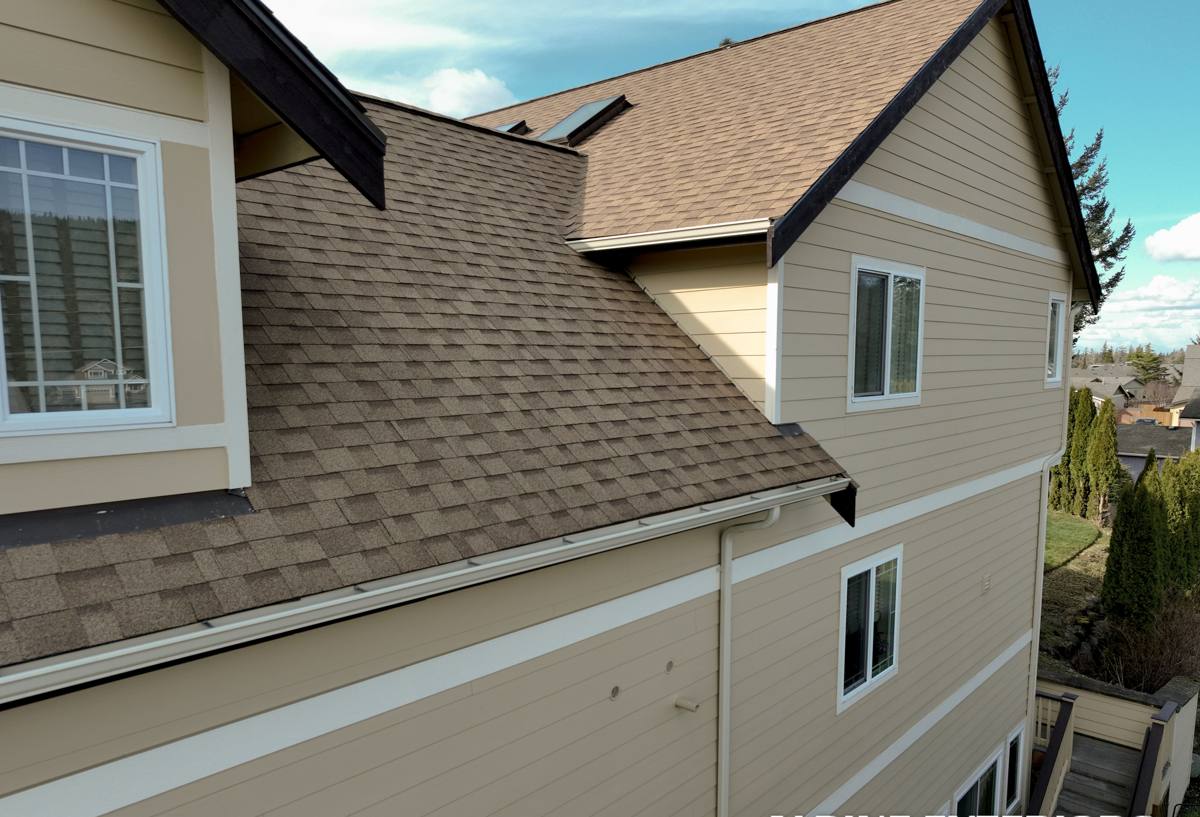
What Whatcom County's Coastal Climate Actually Does to Siding
Salt Air
Airborne salt is corrosive to exposed metal fasteners, trim flashing, and any hardware that isn't properly protected. It also accelerates the breakdown of lower-grade paint films, which is part of why factory-applied finishes hold up better than field-painted siding in areas like Ferndale — the paint isn't fighting salt exposure from day one the way a repaint would be.
Driving Rain
Wind-driven rain doesn't just wet the face of a wall — it gets pushed sideways into laps, seams, corners, and anywhere flashing is missing or undersized. A siding product can be technically "water resistant" and still fail on a house if the installation doesn't manage where that water goes once it's behind the first line of defense. This is an installation problem as much as a material problem.
Moss and Algae Season
Whatcom County's wet season runs long, and shaded north- and west-facing walls in Ferndale can stay damp for weeks at a stretch. Moss and algae need sustained moisture to establish, and once they do, they hold even more water against the siding surface, which compounds any underlying moisture problem. Siding that resists staining and that's installed with enough clearance for airflow and drainage holds up dramatically better here than siding that traps moisture against the wall.
Why We Standardized on James Hardie for Homes Like These
James Hardie fiber cement is engineered specifically for regional climate demands — the HardieZone system assigns different formulations and installation specs to different parts of the country, and the Pacific Northwest falls under the wetter, harsher HZ5 profile. That matters in Ferndale because the product arriving at a job site here is built for exactly the rain and moisture exposure we just described, not a generic national spec.
We also only install Hardie's ColorPlus factory finish rather than field-painted fiber cement wherever it's an option. A factory-baked finish is more consistent and more resistant to fading and moisture intrusion than paint applied on-site, which matters when a wall is going to spend months of the year damp. Fiber cement is also non-combustible, which is a real consideration during wildfire season even this close to the water, and it doesn't rot, delaminate, or attract insects the way some wood-based and wood-alternative products can when moisture gets past the surface.
We won't install vinyl, LP SmartSide, Cemplank, Allura, primed spruce, or cedar on a home. Those aren't bad materials in every application, and we're happy to explain the trade-offs of each if you're weighing options — but we've made a professional decision to install one product system, install it correctly, and stand behind it, rather than stock five different products and install whichever is cheapest that month.
What a Correct James Hardie Installation Actually Involves
A lot of siding problems in this region aren't material failures — they're installation shortcuts that only show up two or three winters later. On a Ferndale home, we pay particular attention to:
- Proper weather-resistive barrier and rainscreen or drainage gap behind the siding, so any moisture that gets past the face has somewhere to go instead of sitting against the sheathing
- Flashing at every window, door, deck ledger, and roof-to-wall transition — the places where driving rain actually finds its way in
- Correct fastener type, spacing, and corrosion resistance, given the salt exposure this close to the coast
- Proper clearance between the bottom of the siding and grade, decks, and roof lines, so splashback and standing water don't sit against the material
- Tight, factory-recommended joint and butt-seam treatment so seams don't become the first place moss and staining take hold
- Caulking and sealant used only where Hardie's specs call for it — over-caulking traps moisture just as easily as under-caulking lets it in
Every one of those items is boring to talk about and easy to skip if a crew is moving fast. They're also the difference between siding that looks and performs well fifteen years from now and siding that needs early repairs.
Choosing the Right Hardie Product Line for a Ferndale Home
James Hardie makes several distinct product lines, and the right choice depends on the home's style, exposure, and what you're trying to achieve visually. We'll walk through this in detail during an estimate, but here's the general shape of the decision:
| Product Line | Typical Use | Good Fit For |
|---|---|---|
| HardiePlank lap siding | Traditional horizontal lap look | Most single-family homes; the most common choice regionally |
| HardiePanel vertical siding | Board-and-batten or modern vertical lines | Accent walls, gables, contemporary or farmhouse styles |
| HardieShingle siding | Staggered or straight-edge shingle profile | Craftsman or cottage-style homes wanting texture |
| HardieTrim boards | Corners, window and door surrounds, fascia | Paired with any of the above for a finished, durable trim package |
Color and texture selection also matters more here than in a drier climate — darker ColorPlus finishes handle UV and moisture cycling well, but wall orientation (how much direct sun versus shade a given elevation gets) can influence how visible moss or algae growth becomes over time on lighter, shaded surfaces.
Is It Time to Replace Your Siding?
Not every issue means a full replacement, but a few signs are worth taking seriously before they turn into sheathing or framing damage:
- Soft or spongy spots when you press on the siding, especially near the bottom courses or below windows
- Visible warping, buckling, or gaps that have opened up at seams
- Persistent moss or algae staining that comes back within a season of cleaning
- Peeling or bubbling paint on wood or wood-composite siding, particularly on north- and west-facing walls
- Water stains or damp smell on interior walls that back up to exterior siding
- Siding that's original to a home built more than 20-25 years ago with wood or older composite products
If you're seeing more than one of these, it's worth having someone look at the wall assembly, not just the surface — that's part of what we check during an estimate.
What Affects the Cost of a Hardie Siding Job
| Factor | Why It Matters |
|---|---|
| Home size and wall complexity | More corners, gables, and dormers mean more cutting, trim, and labor time |
| Existing siding removal | Tear-off and disposal of old material adds cost versus building over a bare wall |
| Sheathing and moisture repair | Damaged sheathing found underneath old siding needs to be addressed before new siding goes on |
| Product line and finish | Lap, panel, and shingle profiles carry different material costs; ColorPlus colors vary in price |
| Trim and detail work | Window, door, and corner trim packages add material and labor beyond the flat wall area |
| Accessibility | Steep rooflines, tight lot lines, or multi-story walls affect staging and labor time |
We give a firm, itemized quote after walking the property — we don't like giving broad ballpark numbers over the phone because the variables above genuinely change the price from house to house.
Our Process, Start to Finish
The process is the same whether you're in Ferndale, Blaine, or elsewhere in Whatcom County — what changes is how we adapt the details to your specific home and its exposure.
- Walkthrough and assessment — we inspect existing siding, trim, flashing, and any visible moisture damage before quoting anything
- Written estimate — a detailed scope covering product line, color, trim, tear-off, and any sheathing repair contingencies
- Material order — Hardie product ordered to the correct HZ5 specification for this region
- Tear-off and prep — old siding removed, sheathing inspected and repaired as needed, weather barrier installed
- Installation — siding, flashing, and trim installed to Hardie's fastening and clearance specifications
- Final walkthrough — we go over the finished work with you before calling the job complete
Why a Crew That Already Works This Area Matters
A crew that regularly works Ferndale and the broader Blaine area already knows which walls tend to hold moisture, which orientations fight moss the hardest, and how much clearance and drainage detail actually holds up against this coastline's weather versus what's technically "code minimum." That local pattern recognition is hard to replace with a general specification sheet — it comes from having done the work here before, seen how it aged, and adjusted. It's also part of why we stick to one product system we know inside and out rather than spreading ourselves across several.
If you're weighing a siding replacement or repair in Ferndale, we're happy to take a look and give you a straightforward, no-pressure estimate — no scare tactics, just an honest read on what your home needs and what it would take to do it right.