 Blaine Window
 Grandview sits within Blaine, in the far northwest corner of Whatcom County, close enough to the water that salt air and wind-driven rain are simply part of what a window has to survive here. Window installation in this part of the county isn't a project you can treat the same as one done somewhere drier and more sheltered — the marine exposure changes what "correct" actually looks like, from how the flashing gets sequenced to which frame material makes sense over a twenty-year span.
This page covers window installation specifically for Grandview homes: what the local climate demands, what a properly done installation involves step by step, how our process works, and why it matters to hire a crew that already installs windows in this neighborhood rather than one that's learning the coastal conditions on your project.
What Grandview's Climate Demands From a Window Installation
Blaine's location on the water means Grandview homes deal with a combination of conditions that inland Whatcom County properties simply don't see to the same degree. None of it makes window installation impossible or unusual — it just means the details have to be right, because this climate finds shortcuts faster than a milder one would.
Salt Air
Airborne salt accelerates corrosion on hardware, fasteners, and lower-grade frame components. Locks, hinges, and cranks that would last decades in a dry inland climate can start showing pitting or stiffness years earlier here if they're not rated for coastal exposure. This is one of the first things we check when we look at what's failing on an older window during an assessment.
Driving Rain
Storms off the water push rain sideways into wall assemblies instead of letting gravity carry it straight down, which means flashing details that would be adequate somewhere calmer get tested constantly here. A gap or shortcut in the flashing sequence that might never leak in a sheltered location will find water in Grandview within a season or two.
The Moss Season
Shade, dampness, and mild temperatures support a moss and mildew season that can run most of the year on north-facing walls and trim. Moss holds moisture against wood trim and caulk lines longer than it would otherwise sit, which shortens the life of anything that isn't detailed to shed water and dry out between wet spells.
New Construction vs. Replacement Installation
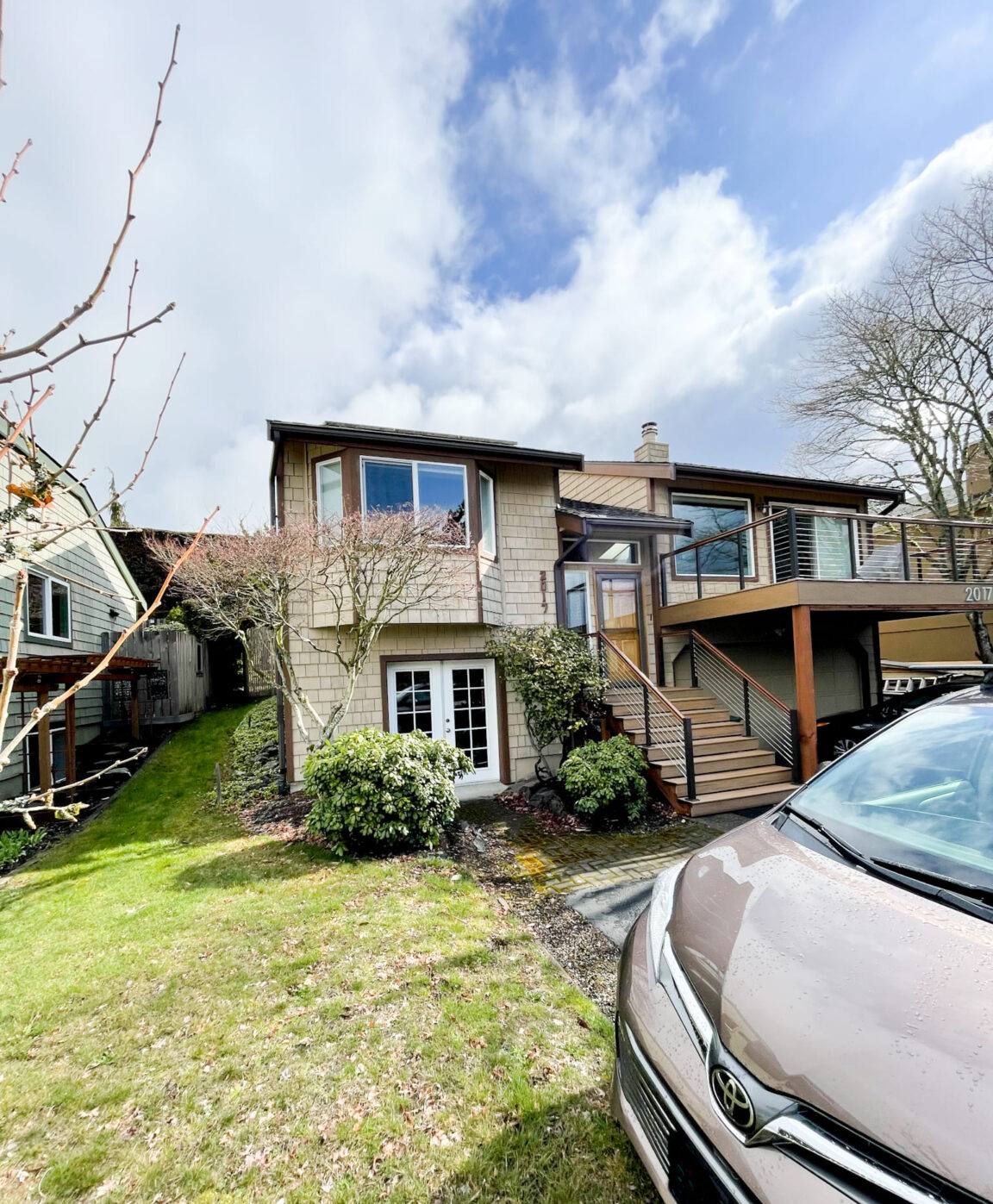
Grandview has a mix of housing — older homes that have gone through at least one round of window upgrades, and newer construction or additions where windows are going into framed openings for the first time. The two situations call for different approaches, even though the end goal is the same weathertight result.
| Factor | New Construction | Replacement |
|---|---|---|
| Access to the opening | Full access to studs, sheathing, and building wrap before siding goes on | Working around existing siding and trim, often with less room to correct framing issues |
| Flashing method | Integrated with the wall's weather-resistive barrier from scratch | Tied into existing flashing and siding, which needs to be inspected for prior damage |
| Hidden issues | Rare — the wall assembly is new | Common — rot, old flashing failures, or gaps often surface once the old unit is out |
| Timeline | Scheduled around the broader construction timeline | Usually a standalone project scoped around the number of openings |
| Best fit | Additions, new builds, or homes under full renovation | Aging or underperforming windows in an otherwise sound wall |
Replacement work in Grandview turns up hidden problems more often than new construction does, simply because the wall assembly has been exposed to the weather for years already. We treat that as expected, not a surprise change order sprung on you after the fact — we walk through what we find before moving forward.
What a Correct Window Installation Involves
Measuring and Assessment
Every installation starts with an on-site measurement of the actual opening, not a guess based on the existing window's stated size. We check for square, level, and plumb, since older openings in this area have often shifted slightly over the years, and note any signs of past moisture intrusion around the frame before ordering anything.
Removal and Opening Prep
The old unit comes out carefully so we can see the condition of the framing, sheathing, and any existing flashing underneath. This is where rot or old water damage — if it's there — gets found and addressed before a new window goes in on top of it. Installing a new window over a compromised opening just delays the same problem, it doesn't fix it.
Flashing and Weatherproofing
This is the step that matters most given Grandview's exposure. Flashing has to be layered correctly — each course overlapping the one below it — so water is directed out and down rather than finding a path behind the siding. Sill pans, head flashing, and side flashing each play a specific role, and skipping or shortcutting any one of them is exactly how driving rain finds its way in over time.
Setting, Shimming, and Sealing
The window unit gets shimmed square and plumb in the opening, fastened per the manufacturer's spec, and sealed with the right sealant for the material and exposure. In a marine climate, the sealant choice and application matter more than they would inland — the wrong product or a rushed bead is one of the more common reasons a window starts drafting or staining within a few years.
Trim and Finish
Exterior trim gets integrated to match the surrounding siding, with attention to how water sheds off the sill and away from the wall below it. A sill that doesn't slope correctly will hold water and support moss growth right where you don't want it, regardless of how good the window itself is.
Frame Material Choices for This Climate
Frame material is one of the bigger decisions on any installation, and it matters more here than it would somewhere drier. We'll walk through the honest trade-offs for your specific home rather than defaulting to whichever product is fastest to install. Vinyl frames are a common, budget-conscious choice that handles sustained coastal moisture reasonably well with low upkeep. Fiberglass holds up to the same conditions with less expansion and contraction across temperature swings, at a higher price point. All-wood exteriors can still look right on the kind of home where that matters, but they carry a real maintenance burden in a climate with this much moisture and moss pressure — that's a trade-off we'll lay out plainly rather than talk you out of if it's genuinely what you want. Wood-clad interiors paired with a low-maintenance exterior cladding are often a middle path worth considering.
Our Installation Process
- On-site assessment — we measure the opening, check for square and level, and look for signs of existing moisture damage
- Honest recommendation — the right frame material and installation approach for your home and budget, explained with the reasoning behind it
- Ordering — a realistic timeline for the windows to arrive, with lead times communicated upfront
- Removal and opening prep — old units come out carefully, and any hidden framing or flashing issues get addressed before the new window goes in
- Installation and flashing — the new unit is set, shimmed, sealed, and flashed to a sequence built for this climate
- Trim and finish — exterior trim is integrated to match the surrounding siding and shed water correctly
Signs a Grandview Home Needs a New Window Installation
- Visible fogging or condensation between the panes of a double- or triple-glazed unit
- Drafts you can feel near the frame even when the window is fully closed
- Wood trim that's gone soft, spongy, or shows staining below the sill
- Windows that are difficult to open, close, or lock — often a sign of hardware corrosion from salt exposure
- Visible gaps between the frame and siding, or caulk that's cracked and pulling away
- Persistent moss or mildew buildup on the sill or surrounding trim that keeps coming back after cleaning
What Actually Drives the Cost
Pricing on a window installation depends on a consistent set of factors: the number of openings, frame material, window size and configuration, whether the existing opening needs any repair or reframing, and access considerations for the crew. Replacement projects that turn up hidden rot or old flashing failures will cost more than a straightforward swap, simply because that work needs to be done correctly before the new window goes in. We won't quote a number without seeing the openings in person, but we'll walk through which of these factors apply to your project before you commit to anything.
Why a Local Grandview Crew Matters
Manufacturer installation instructions are written for average, moderate conditions — they don't account for salt air corroding hardware faster, driving rain testing every flashing lap, or a moss season that outlasts most of the year. A crew that installs windows in Grandview regularly knows which parts of that generic guidance are non-negotiable here and which details are worth the extra time even when they'd be optional somewhere calmer.
That experience shows up in decisions that don't come up in a sales pitch — how much lap a flashing course needs on this side of the water, which sealants actually hold up to sustained salt exposure, when a sill needs a sloped cap instead of relying on caulk alone. Those are the details that decide whether a window installation is still performing cleanly in fifteen years or showing drafts and soft trim in five.
What to Ask Before Hiring for Window Installation
- Ask how they sequence flashing for a marine climate, not a generic answer copied from a manufacturer's sheet
- Confirm current Washington contractor licensing and insurance
- Ask what frame materials and hardware they recommend for coastal exposure, and why
- Get a written scope of work and a realistic timeline before signing anything
- Ask how labor and the window unit are each covered under warranty — they're often separate
If you're weighing a window installation for a Grandview home — new construction, a straightforward replacement, or something in between — it's worth having someone look at the actual openings before you start pricing units. We offer free, no-pressure estimates for window installation in Grandview and the surrounding Blaine area; use the form below to get a time on the schedule.