 Blaine Window
 Storm Damage Roof Repair for Grandview Homes
Grandview sits close enough to the water that every winter storm system rolling off the Strait of Georgia brings the same combination: sideways rain, gusty wind, and salt-laden air that doesn't let up for months at a time. Most of the storm damage we get called out for in this part of Whatcom County isn't dramatic. It's not a tree through the roof deck. It's wind-lifted shingles, driven rain finding a weak seam, and moss quietly working its way under tabs that were already starting to lift. By the time a homeowner notices a stain on the ceiling, the damage has usually been building for a season or two.
This page covers what storm damage repair actually looks like for a Grandview roof, what we check for, and how our process works from the first call to the final walk-through.
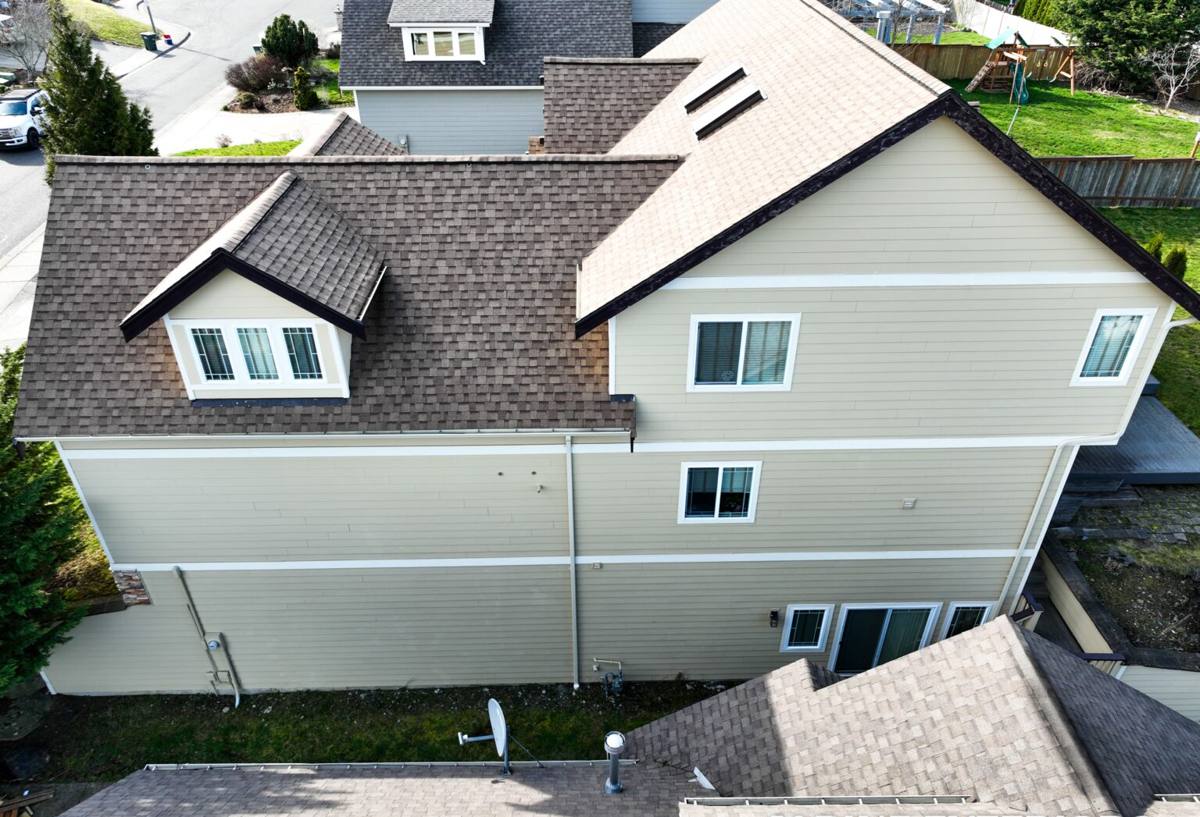
Why Grandview Roofs Take a Different Kind of Beating
Blaine's location on Semiahmoo Bay means Grandview homes deal with a mix of conditions that inland Whatcom County roofs don't see as often.
Salt Air and Metal Fatigue
Salt-carrying wind off the water accelerates corrosion on exposed fasteners, flashing, and any galvanized metal that isn't properly coated or sealed. A nail head that would last decades in a dry inland climate can start rusting and backing out years sooner here. Once a fastener loses its grip, the shingle or panel around it is free to move in the wind, and that movement is usually where storm damage starts.
Driving Rain, Not Just Rain
Wind-driven rain behaves differently than a straight downpour. It gets pushed sideways and upward under laps, around vents, and into any gap that would stay dry in calmer weather. A roof can be watertight in a normal shower and still leak during a windstorm because the water is being forced into places it was never designed to enter from that angle.
Extended Moss Season
Cool, damp, and mild — Blaine's climate is close to ideal for moss growth for a large part of the year. Moss holds moisture against the roof surface long after the rain has stopped, works its way under shingle edges as it grows, and can lift tabs enough to let wind get a grip. A roof with heavy moss going into storm season is already at a disadvantage before the first gust hits.
What Storm Damage Actually Looks Like
Storm damage rarely announces itself clearly. Here's what we typically find on a post-storm inspection in and around Grandview:
- Shingles that are creased, cupped, or lifted at the tab but not fully torn off
- Fasteners backed out or missing, leaving a shingle only partially secured
- Flashing pulled away from chimneys, dormers, or sidewalls where wind got underneath it
- Granule loss concentrated on wind-facing slopes, exposing the asphalt mat underneath
- Small punctures or bruising from wind-blown debris — branches, gravel, loose material from neighboring roofs
- Water staining on interior ceilings or in the attic that traces back to a specific point of entry
- Gutters pulled loose or clogged with storm debris, causing water to back up under the roof edge
None of these individually look like an emergency. Together, or left alone through another storm cycle, they turn into a real leak.
Our Storm Damage Assessment Process
We don't start any repair without a full look at the roof, not just the spot the homeowner is worried about. A storm that damages one area has usually stressed the whole roof.
1. Ground and Interior Check First
Before anyone gets on the roof, we walk the property looking for obvious signs — displaced shingles in the yard, damaged gutters, dented vents. Inside, we check the attic and any ceilings near suspected leak points for staining, dampness, or soft spots.
2. Full Roof Inspection
We walk the entire roof surface, not just the damaged section, checking every slope, all flashing points, and all penetrations — vents, chimneys, skylights. Wind damage on one slope often means stress on adjacent slopes too, even if it hasn't shown up as visible damage yet.
3. Photo Documentation
We document what we find with photos, which matters for two reasons: it gives the homeowner a clear record of the damage, and it's typically what an insurance adjuster will want to see if a claim is being filed.
4. Written Scope and Options
We put together a clear scope of what needs to happen — spot repair, a larger section replacement, or in some cases a recommendation that full replacement makes more sense than continuing to patch an aging roof. We explain the reasoning, not just the price.
Repair vs. Replacement: How We Decide
Not every storm-damaged roof needs to be replaced, and we're not going to tell a homeowner they need a new roof when a proper repair will hold. The decision comes down to a few factors.
| Factor | Leans Toward Repair | Leans Toward Replacement |
|---|---|---|
| Roof age | Under 10-12 years, otherwise sound | Nearing or past expected lifespan |
| Extent of damage | Localized to one slope or section | Spread across multiple slopes |
| Moss/granule condition | Light moss, granules intact elsewhere | Heavy moss coverage, widespread granule loss |
| Underlying decking | Dry, solid when damaged area opened up | Soft, water-stained, or rotted decking found |
| History of repairs | First real issue on this roof | Repeated patch jobs over the years |
When we open up a damaged area and find the decking underneath is still solid, that's usually a strong sign a targeted repair will hold. When we find soft decking or damage that's clearly not isolated, we'll say so directly and explain what a full replacement would involve instead.
What a Correct Repair Involves
A storm damage repair that's done right isn't just replacing what's missing. It has to account for what let the damage happen in the first place.
- Removing and replacing damaged shingles or panels, matched as closely as possible to the existing roof
- Re-securing or replacing corroded fasteners, not just the ones that visibly failed
- Repairing or replacing flashing at any point where wind got underneath it, with attention to how it ties back into the surrounding roofing
- Checking and clearing gutters and downspouts near the repair so water has somewhere to go
- Sealing and inspecting adjacent areas that took wind stress even if they didn't fully fail
- Removing moss buildup around the repair area rather than roofing over it
Skipping any of those steps means the same failure point is likely to open back up in the next storm.
Why Local Storm Damage Experience Matters
A crew that regularly works roofs in Grandview and around Blaine knows what to expect before they climb the ladder. That means recognizing which fastener types hold up against salt air, understanding how wind typically moves across a given roof orientation relative to the water, and knowing that a roof here needs moss management built into any repair, not treated as a separate problem for later. It also means we're not guessing at what "normal wear" looks like for this specific climate versus what's actual storm damage — that distinction matters if you're working with an insurance adjuster who isn't local and may not know the difference.
Timing and Whatcom County Weather
Storm damage repair timing in this area is shaped by the weather itself. We try to get temporary protection — tarping, sealing an active leak point — in place quickly after a storm regardless of the season, because an exposed roof deck doesn't hold up long in this climate. Permanent repair work goes faster and holds better during drier stretches, but we don't leave a Grandview homeowner waiting through an entire wet season for a fix that can be done sooner. If a storm has passed and more weather is on the way, we'll prioritize based on what's actually at risk.
A Simple Pre-Storm Checklist for Grandview Homeowners
Some storm damage is preventable, or at least catchable early, with basic seasonal attention:
- Clear moss buildup before it thickens going into fall and winter
- Clean gutters and downspouts so storm water has a clear path off the roof
- Look for lifted or curling shingle tabs after any significant windstorm
- Check the attic for daylight, dampness, or staining a couple of times a year
- Trim back branches that overhang the roof and could become wind-driven debris
- Have flashing around chimneys and vents checked periodically, since these are common failure points
None of this replaces a professional inspection after a serious storm, but it reduces how much damage a storm can do in the first place.
Get a Free Storm Damage Assessment
If a recent storm has left you with missing shingles, a new leak, or just a nagging feeling something's not right up there, we're glad to take a look. We'll give you a straight assessment of what we find, what it will take to fix it, and what it will cost — no pressure, no upsell. Reach out for a free estimate using the form below.