 Blaine Window
 Fiber Cement Siding for Lynden Homes: The Right Material for Whatcom County's Wet Side
Lynden sits inland from the coast, but inland in Whatcom County still means salt-tinged air, sideways winter rain, and a moss season that can run most of the year on shaded walls. We're based in Blaine, and Lynden is well within the territory we cover regularly — not a stretch assignment we take on once and move away from. On the siding side of our work, we install one material exclusively: James Hardie fiber cement. This page is about that specific choice for Lynden homes — what the local climate demands from a siding system, what a correctly done fiber cement installation actually involves, and why the products we don't install (vinyl, engineered wood, primed spruce, cedar, and other fiber cement brands) fall short of what we're willing to put our name behind.
We also install windows, and the two trades overlap more than homeowners often expect. A siding system can only do its job if the window openings around it are properly flashed and sealed — a failed window seal is one of the most common hidden causes of siding damage that looks, on the surface, like a material problem. Coming at a fiber cement siding project with that window-and-envelope perspective changes some of the details we pay attention to on a Lynden job.
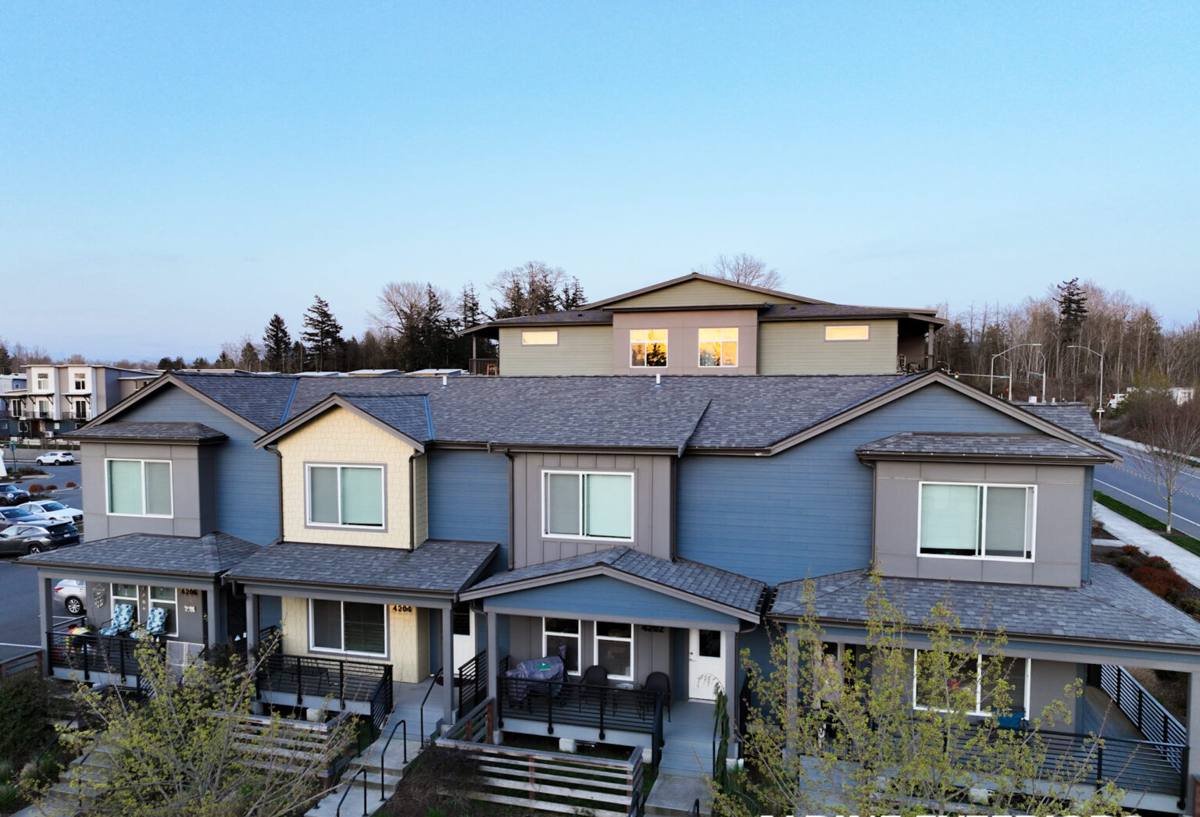
What Lynden's Climate Puts a Siding System Through
Salt Air That Still Reaches Inland
Lynden is set back from open water, and it's tempting to assume that distance means salt exposure isn't a real factor. It's a smaller factor than it is right on Semiahmoo Bay or Drayton Harbor, but it isn't absent. Marine air moves across this whole stretch of Whatcom County, and over years it works on fasteners, flashing, and lower-grade trim hardware. A siding system and its hardware need to hold up under that slow, sustained exposure, not just under a dry-climate assumption that doesn't actually apply here.
Driving Rain, Not Straight-Down Rain
Fall and winter weather across this part of the county typically arrives with wind behind it, which means rain hits walls at an angle instead of falling straight down. That matters more than most homeowners assume: wind-driven rain finds its way into siding joints, lap overlaps, and the transitions around windows and rooflines that vertical rain would never reach. A siding material and installation detail that handles vertical rain fine can still let water in behind the cladding once wind gets involved, and that's the failure mode we plan around on every Lynden job.
A Long Moss Season
Mild temperatures and consistent moisture in this region add up to a moss and mildew season that can run close to year-round on shaded and north-facing walls, and Lynden's tree cover and lot layouts mean plenty of walls stay damp and shaded for long stretches. Any siding material that's porous, or that holds moisture against the substrate instead of shedding it, becomes a growth surface over time. The result isn't just cosmetic — trapped moisture behind moss and mildew is what eventually gets into fastener points and seams.
Why Fiber Cement Is the Right Material Category for This Climate
Fiber cement siding is made from a blend of cement, sand, and cellulose fibers, pressed and cured into planks, panels, or shingle-profile pieces. That composition gives it a set of properties that line up well with what Lynden's climate demands of a wall system:
- Dimensional stability: Fiber cement doesn't swell, cup, or warp the way wood-based products can after repeated wetting and drying cycles.
- Non-combustible core: It doesn't feed a fire the way wood-based siding can, which matters for both safety and insurance underwriting.
- Resistance to moisture-driven decay: Properly installed and maintained, it doesn't rot the way wood or wood-composite siding eventually can under sustained damp exposure.
- Paint and finish longevity: A dense, stable substrate holds a factory finish far longer than a substrate that's expanding and contracting with every wet-dry cycle.
None of that means every fiber cement product performs identically. The category sets a baseline; the specific manufacturer, product engineering, and installation quality determine what a homeowner actually gets on the wall.
Why We Install Only James Hardie, and Nothing Else
We narrowed our siding work down to a single manufacturer after comparing what actually holds up in this region's climate against what looks comparable on a spec sheet. James Hardie's HZ5 formulation is engineered specifically for regions with significant moisture exposure and freeze-thaw cycling, which describes Lynden and the rest of Whatcom County reasonably well. The ColorPlus finish is baked on in a factory process rather than applied on-site, which gives it more consistent adhesion and color retention under years of damp, shaded conditions than a field-applied paint job would. Hardie also backs the product with one of the stronger transferable warranties in the industry, provided the installation follows their published specifications.
We don't install LP SmartSide, vinyl siding, Cemplank, Allura, primed spruce, or cedar. That's not a claim that those products are worthless — plenty of homeowners elsewhere are satisfied with them. It's a professional standard specific to what we've seen hold up, and not hold up, in this climate over time. Engineered wood products carry more moisture sensitivity at cut edges and fastener points than fiber cement does. Vinyl can become brittle under years of UV exposure, and its panel seams give wind-driven rain a path in. Primed spruce and cedar require an ongoing paint and moisture-maintenance cycle that most homeowners underestimate when they choose it. Other fiber cement brands may be reasonable products, but without Hardie's climate-specific HZ engineering or the depth of its factory-finish warranty, they're not a system we're willing to install and then stand behind for the long run.
James Hardie Product Lines That Fit Lynden Homes
| Product line | Best fit | Why it works here |
|---|---|---|
| HardiePlank lap siding | Most single-family homes, traditional and farmhouse styles common around Lynden | Classic horizontal lap profile with strong wind-driven rain performance when installed to spec |
| HardieShingle | Accent gables, dormers, or homes wanting a shingle-style look | Fiber cement durability without the ongoing moisture upkeep of real wood shingles |
| HardiePanel vertical siding | Board-and-batten style homes, garages, and modern exteriors | Fewer horizontal laps means fewer joints for wind-driven rain to find |
| HardieTrim | Window and door surrounds, corner boards, fascia | Matches the siding's moisture resistance so trim doesn't become the weak point |
What Correct Fiber Cement Installation Actually Involves
Fiber cement's reputation depends heavily on installation quality. A product engineered for this climate can still fail early if it's installed like a cheaper material. A few details matter more than most homeowners realize:
Weather Barrier and Flashing First
Before any siding goes up, the house wrap and flashing around windows, doors, and every wall penetration need to be continuous and correctly lapped. Most siding failures that get blamed on the material itself actually trace back to water getting behind the cladding through a gap in this layer, not through the siding itself.
Fastener Spacing and Clearances
James Hardie's warranty is tied to following their published fastener spacing, and to maintaining proper clearance above grade, roofline, and any horizontal surfaces like decks or patios. Skipping these clearances is one of the most common ways an otherwise good installation invites moisture problems within a few years.
Field Cutting, Caulking, and Expansion Gaps
Cut edges need to be sealed, and joints need the gaps Hardie specifies for material movement, rather than being butted tight or over-caulked. Fiber cement moves less than wood, but it isn't rigid, and installers who treat every joint like it needs to be airtight often create more moisture problems than they solve.
A Finish Inspection That Actually Checks the Details
The last step isn't just a walk-around for visible defects. It includes confirming that flashing, clearances, and fastener patterns were actually followed, not just that the finished wall looks right from the ground.
How a Fiber Cement Siding Project Runs on a Lynden Home
Inspection and Estimate
We start with an honest look at the current siding, checking for signs of trapped moisture or sheathing damage and how sun and shade exposure vary across the walls. That assessment shapes the estimate rather than a flat per-square-foot number.
Tear-Off and Substrate Check
Once the old siding comes off, we check the sheathing underneath before anything new goes up. Covering damaged sheathing with new siding just hides a problem that keeps getting worse behind the wall.
Weather Barrier and Flashing
This step is easy to rush and hard to inspect once siding is up, so we treat it as a required stage, not an optional upgrade — house wrap, window and door flashing, and every penetration get sealed correctly before the first plank goes on.
Installation to Manufacturer Spec
We install to James Hardie's published specifications as the baseline: fastener spacing, clearances, expansion gaps, and cut-edge sealing. That's what keeps the warranty intact and what actually determines how the siding performs over the next few decades.
Final Walkthrough
We walk the finished job with the homeowner, cover maintenance expectations specific to fiber cement, and confirm the work matches what was estimated before calling the job complete.
Signs a Lynden Home's Siding Needs a Closer Look
- Moss or dark staining that comes back quickly after cleaning, especially on shaded or north-facing walls
- Soft or spongy siding, particularly low on the wall or around window and door trim
- Visible warping, cupping, or peeling paint, most common on wood-based or engineered wood siding
- Cracked or buckled panels after a windstorm
- Rust streaking below fasteners or trim hardware
- Musty odors or staining on interior walls that back up to exterior siding
- Siding older than 20-25 years with no documented replacement or major repair
None of these automatically means a full replacement is the answer, but each is worth a professional look before another wet season adds to whatever's already started.
What Affects Fiber Cement Siding Cost on a Lynden Home
Every estimate is specific to the house, but a handful of factors consistently move the number:
| Factor | How it affects the estimate |
|---|---|
| Square footage and number of stories | More wall area and taller walls mean more material and more time, plus added scaffolding or lift needs |
| Trim and detail complexity | Homes with lots of window trim, gables, or dormers take longer to flash and finish correctly |
| Sheathing condition underneath | Rot or damage found during tear-off adds repair scope before new siding can go up |
| Product line and profile chosen | Lap, shingle, panel, and trim products carry different material costs and installation time |
| Color and finish | Factory ColorPlus finishes vary in cost by shade and product line |
We walk through these factors specifically during the estimate, rather than handing over a number with no explanation behind it.
Why Hiring a Crew That Already Works Lynden Matters
Installing fiber cement correctly isn't complicated in theory, but getting every detail right — the flashing sequence, the fastener pattern, the clearances, the caulking that shouldn't be there — takes repetition on real houses in real weather. Working across Whatcom County regularly, including Lynden, means those details aren't something we're relearning on your project. It also means that if a warranty question or maintenance issue comes up years down the line, it's a call to a crew still working in the same area, not a company that's moved on somewhere else.
Because we also install windows, we look at a Lynden siding project with the full wall assembly in mind, not just the visible cladding. A sound siding job depends on what's happening at the window openings around it, and treating those as separate, unrelated systems is how avoidable moisture problems get built into an otherwise good installation.
If your Lynden home needs new siding, or you'd like your windows looked at alongside it, we're glad to come take a look and put together a straightforward, no-pressure estimate. Reach out using the form below to get started.