 Blaine Window
 Dakota Creek's Weather Is Harder on Siding Than Most People Realize
Dakota Creek sits close enough to Drayton Harbor and Semiahmoo Bay that salt-laden air is a daily fact of life here, not an occasional storm event. Add Blaine's long, wet Whatcom County winters and the tree cover that shades many lots along the creek corridor, and you get a combination that's genuinely tough on exterior materials. Salt air accelerates corrosion on fasteners, flashing, and trim. Wind off the Strait of Georgia pushes rain sideways into joints and corners that would stay dry in a calmer climate. And shaded, slow-drying wall sections can carry moss and algae growth for most of the year.
None of that is unusual for this part of the county. It does mean that siding choices and installation habits that work fine in a drier, more sheltered climate don't always hold up the same way in Dakota Creek. The material matters, and so does how it goes on the wall.
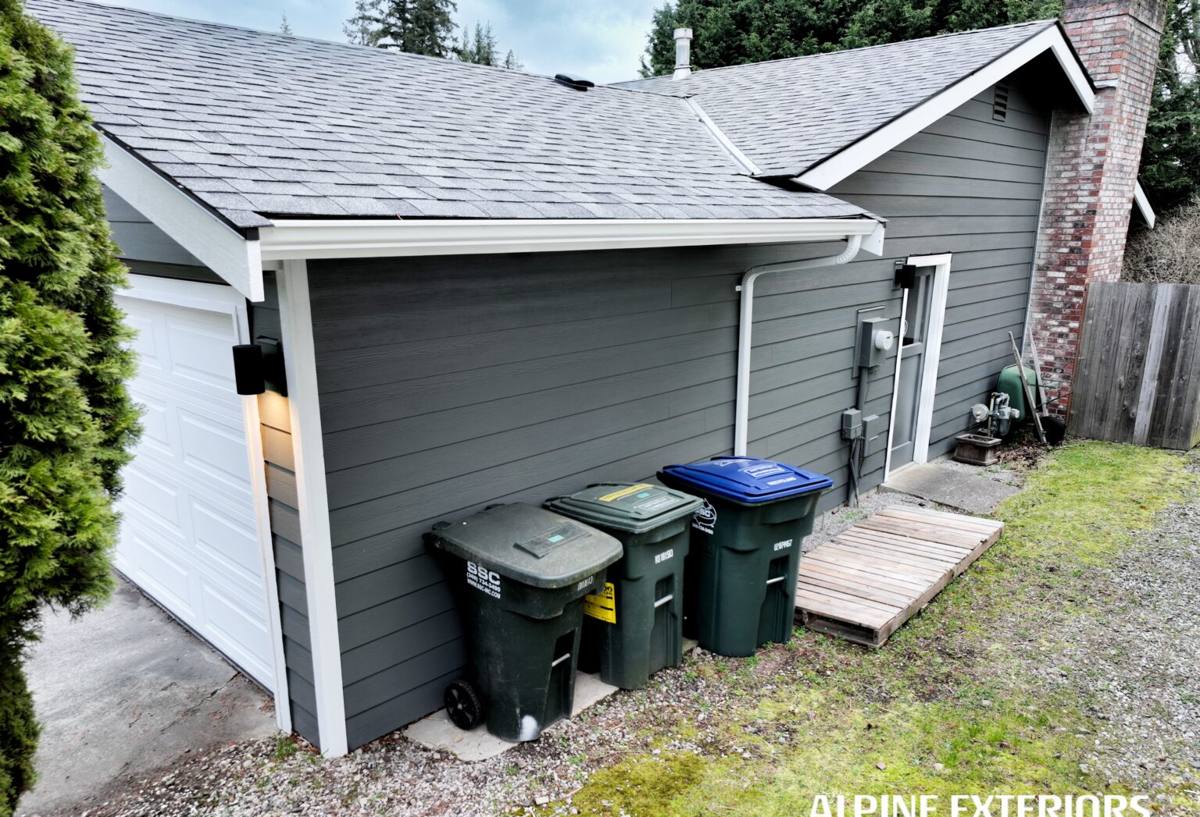
Why Fiber Cement Is the Right Material for This Location
Fiber cement siding is a composite of cement, sand, and cellulose fiber, pressed and cured into planks or panels. It doesn't rot, it doesn't feed insects, and it holds its shape and finish through repeated wet-dry cycles far better than the alternatives homeowners in this area typically compare it against.
Where Wood, Vinyl, and Engineered Wood Fall Short Here
Cedar and other solid wood sidings look good going up, but they need consistent repainting or restaining to keep water out, and a shaded, salt-exposed wall in Dakota Creek is exactly the kind of surface that breaks down maintenance schedules fast. Vinyl siding doesn't rot, but it isn't rigid, and its seams and J-channels aren't a true water barrier — driven rain can work behind it over time, and UV plus salt exposure tends to fade and chalk the surface faster than manufacturers' glossy marketing suggests. Engineered wood products like LP SmartSide use a wood-strand core with a resin-saturated outer layer; that core performs well when the outer layer stays fully intact, but any cut edge, fastener puncture, or long-term moisture exposure at a seam becomes a point where the wood substrate can start absorbing water. In a climate that stays wet for months at a stretch, that's a real vulnerability, not a hypothetical one.
Fiber cement doesn't have a wood core to protect. That's the fundamental difference, and it's why we standardized on it for every home we side, regardless of budget tier.
Why We Install Only James Hardie Fiber Cement
There are other fiber cement brands on the market, including Cemplank and Allura. We install James Hardie exclusively, for a few honest reasons rather than brand loyalty for its own sake.
Hardie's ColorPlus finish is baked on at the factory under controlled conditions, which gives it more consistent color retention and UV resistance than a field-applied paint job — something that matters on a wall that's getting steady sun exposure and salt air at the same time. Hardie also engineers its product formulations for different climate zones, with versions built around moisture exposure and humidity patterns rather than a single one-size-fits-all mix; that's a meaningful difference in a region that stays wet as much of the year as Whatcom County does. The warranty is transferable to a future buyer, which matters if you ever sell the house. And because our crew works with one manufacturer's installation specifications day in and day out, we're not switching between different fastener schedules, flashing details, and clearance requirements from one job to the next — that consistency is where a lot of installation mistakes get avoided.
We're not going to tell you Cemplank or Allura are bad products — they're also fiber cement and share the same basic rot resistance. But we made a decision to standardize on one system we can install to spec every time, back with one warranty, and that system is Hardie.
What a Correct Fiber Cement Installation Actually Involves
Fiber cement siding fails early almost exclusively because of installation mistakes, not because the material itself gave out. In a climate like Dakota Creek's, those mistakes show up faster because there's less margin for error.
- Proper clearance from grade (siding shouldn't sit too close to soil or hardscape, where it stays damp) and proper clearance below roof lines
- Corrosion-resistant fasteners — this is not optional near salt air, where standard fasteners can start staining or failing years ahead of schedule
- Flashing at every horizontal joint, and correct head flashing above windows and doors
- Kick-out flashing wherever a roofline meets a wall, so runoff is directed away from the wall instead of behind the siding — a common missing detail that causes hidden rot in high-rainfall areas
- Correct fastener spacing and placement per the manufacturer's published instructions, not "close enough"
- Sealing and caulking only at the joints Hardie's installation guide actually calls for — oversealing traps moisture behind the siding instead of letting it drain and dry
- Primed and sealed field-cut edges before installation, so raw cut edges aren't left exposed to weather
Every one of these is a small detail on its own. Skip two or three of them on a house that sits in driving rain and salt air for months of the year, and you're looking at moisture problems well before the siding's rated lifespan is up.
Comparing Your Siding Options for a Dakota Creek Home
| Material | Moisture & Rot Resistance | Salt Air Durability | Moss & Algae Resistance | Typical Maintenance |
|---|---|---|---|---|
| James Hardie fiber cement | High — no wood core to absorb water | Strong with corrosion-resistant fasteners and correct flashing | Good; factory finish sheds growth better than bare wood | Occasional rinsing, periodic caulk checks |
| Vinyl siding | Moderate — seams and channels can let water behind the panel | Fades and chalks faster under UV and salt exposure | Moderate; smooth surface but seams collect debris | Rinsing, replacement of cracked panels over time |
| Engineered wood (e.g. LP SmartSide) | Good while outer coating is intact; vulnerable at cuts and seams | Coating wears with sustained salt and moisture exposure | Moderate | Repainting and edge inspection on a regular cycle |
| Cedar / solid wood | Low without diligent upkeep — absorbs and holds moisture | Weathers and grays quickly near salt air | Poor in shaded, damp areas without regular treatment | Frequent restaining or repainting |
How We Approach a Dakota Creek Siding Project
We start with a walkthrough of the existing exterior, paying particular attention to north-facing and shaded walls, areas under tree cover, and anywhere flashing or trim looks original to the house. Those are the spots most likely to be hiding moisture damage in this climate, and we'd rather find it before the new siding goes up than after.
- Assess existing siding, trim, and flashing, and check grade clearance around the foundation
- Remove old siding and inspect the sheathing underneath; repair or replace any rotted or compromised sections before anything new goes on
- Install or verify the weather-resistive barrier, with attention to lapping and seams given how much wind-driven rain this location sees
- Install James Hardie siding to the manufacturer's fastening, flashing, and clearance specifications
- Finish trim, touch-up per the ColorPlus program, and seal only where specified
- Final walkthrough so you understand what was done and what to watch for going forward
None of these steps are unusual for a properly run siding job anywhere. What changes in Dakota Creek is how little tolerance the climate has for skipping one of them.
Living With Fiber Cement Siding Here
Once it's installed correctly, Hardie siding is genuinely low-maintenance, but "low-maintenance" doesn't mean zero attention, especially in a climate that keeps parts of a house damp and shaded much of the year.
Moss and Algae Care
Shaded, north-facing walls and anything near overhanging trees are the areas most likely to develop moss or algae growth over a wet Whatcom County winter. A periodic rinse with a garden hose or low-pressure wash handles most of it. Avoid high-pressure washing directed at the siding — it can drive water behind properly installed panels or damage the factory finish, and it's unnecessary for a material that isn't porous the way wood is.
Salt Air Checks
Once a year, it's worth a quick look at fastener heads, flashing, and any exposed trim for early staining or corrosion, particularly on walls facing the water. Catching a fastener issue early is a five-minute fix; catching it late can mean water intrusion behind the siding.
What to Ask Before You Hire a Siding Crew in This Area
Dakota Creek's climate punishes shortcuts, so the contractor you choose matters as much as the material. Before you sign anything, it's worth asking:
- Are they manufacturer-trained or certified specifically for James Hardie installation, not just "familiar" with fiber cement in general?
- Will they put clearance, flashing, and fastener details in writing as part of the scope, not just verbally?
- Do they have current licensing and insurance, and will they provide proof without being asked twice?
- Can they explain how they'll handle kick-out flashing and any existing moisture damage they find once old siding comes off?
- Will the warranty be registered with the manufacturer in your name, and is it transferable if you sell the home?
- Do they have experience working on homes in this specific area, dealing with the same salt air and rain exposure your house faces?
A contractor who works Dakota Creek regularly should be able to answer all of this without hesitation — these aren't trick questions, they're the basics of a correct installation in this climate.
Get a Straight Answer About Your Siding
If you're weighing a siding replacement on a Dakota Creek home, we're happy to take a look, walk you through what we find, and give you an honest estimate — no pressure, no hard sell. Fill out the form below and we'll get back to you to schedule a time.