 Blaine Window
 Custer's Climate Is Harder on Siding Than Most Homeowners Realize
Custer sits in the part of Whatcom County where marine air off the Salish Sea meets open farmland and long, wet winters. That combination is tougher on exterior siding than people expect. Homes here deal with salt-laden air moving in off the water, driving rain that comes in sideways during winter storms, and a moss season that can stretch from fall through spring because surfaces simply don't dry out for weeks at a time. Siding that was never engineered for this kind of exposure — or that was installed without real attention to water management — tends to show it within a handful of years: soft spots, peeling paint, streaking, and moss creeping up from the bottom courses.
None of that is unusual for the area. It's just the reality of building on this side of Whatcom County, close enough to the water and the border that the weather doesn't behave like it does twenty miles inland. The siding on a Custer home has to be chosen and installed with that in mind, not treated like a generic product from a catalog.
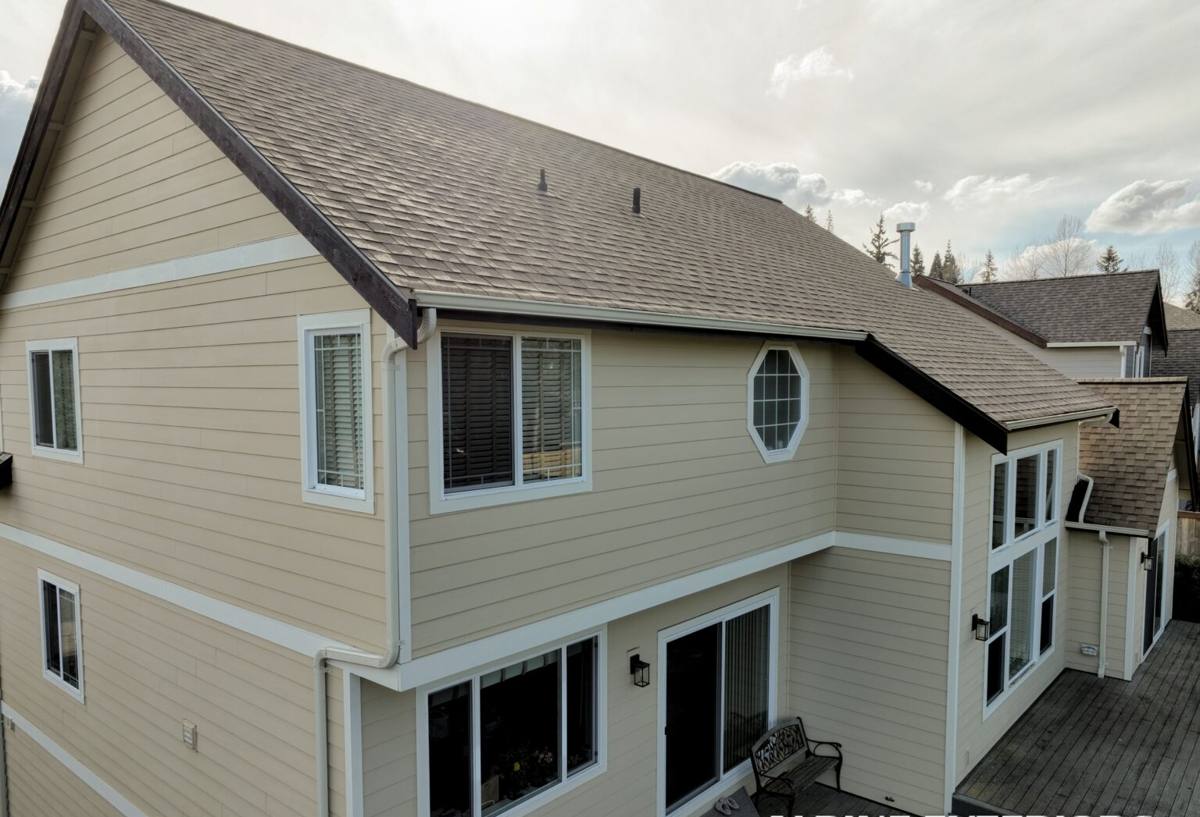
What Fiber Cement Siding Needs to Do Here
Salt Air and Slow Corrosion
Salt air doesn't just affect metal — it affects fasteners, trim, and the paint film on siding itself. Over years, salt-carrying moisture accelerates the breakdown of finishes that weren't formulated to resist it, and it corrodes ordinary fasteners faster than homeowners expect. Correct fiber cement siding work in this area means using fasteners rated for the exposure and a factory finish that's actually built to hold up to it, not just a standard paint job.
Driving Rain and Water Management
Wind-driven rain finds every gap in a wall assembly. It doesn't just run down the face of the siding — it gets pushed sideways and upward at laps, joints, and penetrations. A siding job that looks fine from the driveway can still be letting water behind the cladding if the flashing, house wrap, and clearances weren't detailed correctly. In a climate like Custer's, water management behind the siding matters as much as the siding itself.
Moss and Organic Growth
Persistent dampness and shaded exposures are ideal conditions for moss and algae. Siding with poor water-shedding detail — tight to grade, without ventilation, or with caulk used as a substitute for proper flashing — holds moisture longer and gives moss more time to take hold. The product matters, but so does the way it's hung.
Why We Only Install James Hardie Fiber Cement
We made the decision to install exclusively James Hardie fiber cement siding, and we don't install vinyl, LP-style engineered wood, primed spruce, cedar, or other fiber cement brands. That's not a marketing position — it's a standard we hold because of what this climate does to lesser-engineered products over time.
ColorPlus Factory Finish
James Hardie's ColorPlus finish is baked on in a controlled factory setting rather than field-applied. That gives it more consistent adhesion and UV resistance than a job-site paint job, which matters in an area where siding gets sustained damp exposure for months at a stretch. It also carries a longer finish warranty than most field-painted alternatives.
HZ5 Climate Engineering
James Hardie engineers its HZ product lines for specific climate zones, and the HZ5 formulation is built for the wetter, colder Pacific Northwest exposure rather than a one-size-fits-all national product. That's a meaningful difference for a home in Custer versus a home in a dry inland climate.
A Non-Combustible, Dimensionally Stable Core
Fiber cement doesn't expand and contract with moisture the way wood-based products can, and it won't support flame spread the way wood or wood-composite siding will. For a coastal, rural county with long dry spells between wet seasons, that stability and fire performance are part of why we standardized on it.
What a Correct Installation Actually Involves
Prep and the Water-Resistive Barrier
Everything starts underneath the siding. A correctly lapped, sealed water-resistive barrier is what actually keeps a wall dry — the siding is the second line of defense, not the only one. We check sheathing condition, correct any soft or damaged areas, and install the barrier system before a single piece of siding goes up.
Flashing and Clearances
Windows, doors, and any wall penetration need properly integrated flashing, not just caulk. Siding also needs the manufacturer-specified clearance from grade, roofing, and decks so water has somewhere to go instead of wicking up into the bottom courses — a common failure point on older re-sides done without enough attention to detail.
Fastening and Joint Treatment
Fastener type, spacing, and depth all affect long-term performance, especially in a salt-air environment. Butt joints and panel seams need to be treated correctly so they don't become the first place moisture gets in.
Our Process, Start to Finish
- On-site assessment — we look at the existing wall assembly, siding condition, moisture indicators, and any problem areas specific to the home's exposure.
- Written scope and estimate — a clear breakdown of product, prep work, flashing details, and cost factors, with no vague allowances.
- Removal and inspection — old siding comes off and we inspect sheathing and framing for hidden moisture damage before covering it back up.
- Water-resistive barrier and flashing — installed and integrated at every window, door, and penetration before siding starts.
- James Hardie installation — installed to manufacturer clearance, fastening, and joint specifications, not shortcuts.
- Final walkthrough — we go over the finished work with the homeowner and confirm everything meets spec.
Fiber Cement vs. Other Siding Options for Custer's Climate
| Factor | James Hardie Fiber Cement | Vinyl | Wood / Cedar | Engineered Wood (LP-style) |
|---|---|---|---|---|
| Salt air / moisture resistance | Strong when installed to spec | Resists moisture itself, but seams and fasteners can be a weak point over time | Vulnerable without frequent maintenance | Vulnerable if edges or coating are compromised |
| Moss and algae resistance | Good with correct water management | Fair, but can trap moisture behind panels | Poor without regular treatment | Fair, dependent on coating integrity |
| Fire performance | Non-combustible core | Can soften/deform under heat | Combustible | Combustible |
| Finish longevity | Factory-applied, longer finish warranty | Color can fade; not repaintable in the same way | Needs recurring paint/stain | Coating can wear at edges over time |
| Ongoing maintenance | Low — periodic cleaning and caulk checks | Low, but repairs can be visually mismatched | High — regular refinishing needed | Moderate — watch for edge swelling |
This isn't a case of one product being universally bad — vinyl and engineered wood both have legitimate uses. It's about what holds up best, with the least ongoing homeowner burden, in the specific combination of salt air, driving rain, and moss exposure that Custer sees for a good part of the year. That's the trade-off that led us to standardize on James Hardie and stop installing the alternatives.
Maintenance: What to Actually Expect
Fiber cement is low-maintenance, not no-maintenance. A few honest expectations for a Custer home:
- Rinse siding once or twice a year to clear salt residue and organic buildup, especially on north-facing and shaded walls.
- Check caulking at trim, windows, and joints annually — caulk is the first thing to fail, well before the siding itself.
- Keep gutters and downspouts clear so water isn't sheeting down the wall face during heavy rain.
- Trim back vegetation and maintain clearance from grade so bottom courses can dry out between storms.
- Watch for moss starting at shaded corners and address it early rather than letting it establish.
Why Hiring a Crew That Already Works This Area Matters
Siding installation isn't uniform across climates, and a crew that mostly works drier inland regions will make different assumptions about flashing, clearance, and drying time than one that installs in Whatcom County's marine exposure every week. A contractor already familiar with Custer and the surrounding Blaine area knows how this specific stretch of coastline behaves — where moss tends to establish first, how much rain-driving wind a given exposure gets, and what detailing has actually held up over time versus what hasn't. That local pattern recognition is hard to substitute with a generic install, no matter how good the materials are.
If your Custer home needs new siding or you're dealing with an older installation that's showing its age, we're happy to take a look and walk through what correct installation looks like for your specific exposure. The form below gets you a free, no-pressure estimate — no obligation, just a straight assessment of what your home actually needs.