 Blaine Window
 Siding Repair Built for Ferndale's Climate
Ferndale sits in the part of Whatcom County where Pacific storms come ashore with real force, and where homes are close enough to salt water that airborne salt becomes a slow, steady stressor on exterior materials. Add in the region's long wet season and the shade cover common on many lots, and you get a climate that is hard on siding in three specific ways: moisture intrusion, salt-accelerated corrosion of fasteners and trim, and persistent moss and algae growth that holds dampness against the wall. Siding repair here is not a cosmetic errand — it is maintenance work that protects the structure behind the cladding.
We repair siding for homeowners throughout the Ferndale area, and the patterns we see are consistent enough that we can tell you, in plain terms, what typically goes wrong, what a correct repair looks like, and when repair stops making sense and replacement takes over.
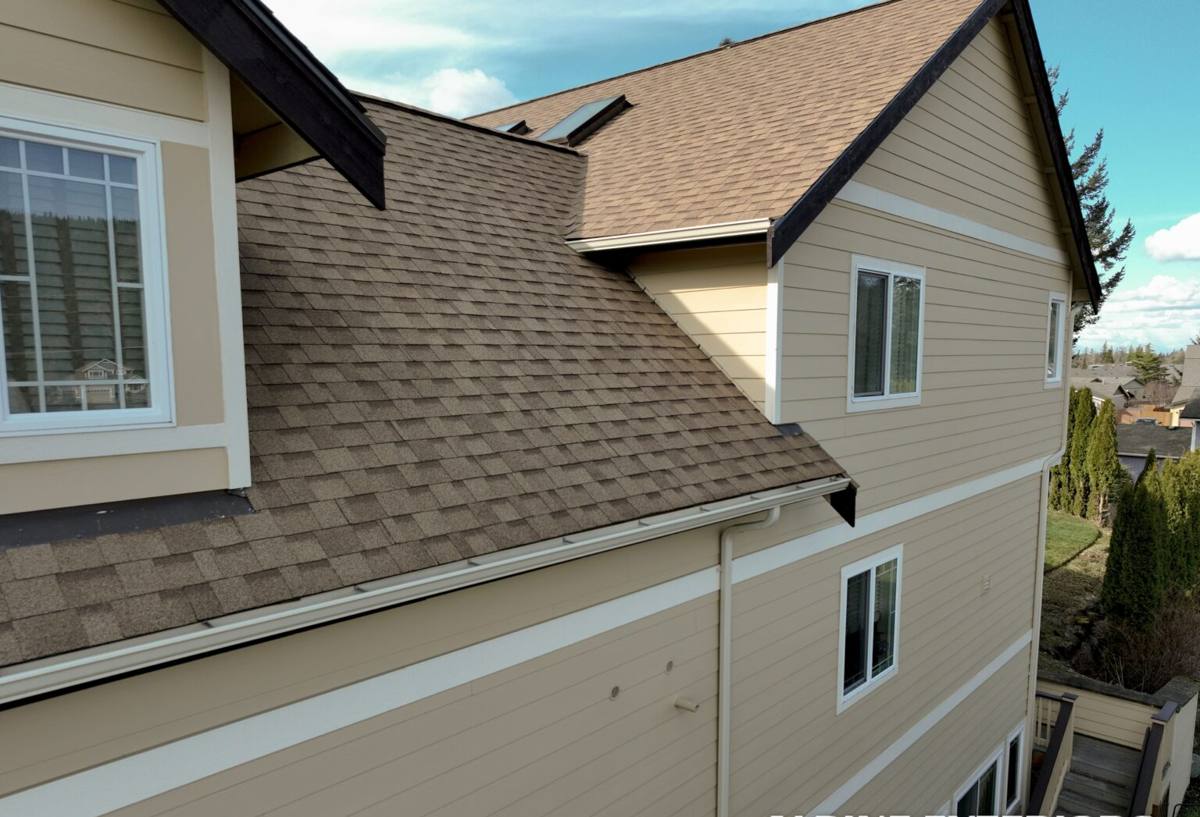
Why Ferndale Homes Need Siding Repair Sooner Than You'd Expect
Salt Air and Driving Rain
Homes within a few miles of Puget Sound and the Strait of Georgia deal with a fine mist of salt-laden air that settles on exterior surfaces. On its own, salt exposure is a slow process — but combined with wind-driven rain that gets pushed sideways into laps, joints, and trim during winter storms, it accelerates corrosion on nails, staples, and metal flashing, and it degrades paint and caulk faster than a drier inland climate would.
The Long Moss Season
Whatcom County's wet season stretches for months, and shaded north- and west-facing walls rarely get enough sun to fully dry out between rain events. Moss and algae take hold in these damp microclimates, and once established they hold moisture directly against the siding surface — which is exactly the condition that causes rot in wood-based products and swelling or delamination in engineered wood siding.
Freeze-Thaw and Wind Cycling
While Ferndale's winters are milder than inland Washington, occasional hard freezes still stress siding that already has trapped moisture in it. Water that has worked its way behind a panel or into a seam can freeze, expand, and widen the very gap that let it in — a slow-motion failure that shows up as a crack or a soft spot a season or two later.
Common Siding Repair Issues We See in Ferndale
- Soft or spongy panels — usually wood, LP SmartSide, or old primed spruce siding that has absorbed water at a seam, corner, or fastener point.
- Moss and algae staining — often mistaken for a cosmetic issue, but a sign that a section of wall isn't drying properly between storms.
- Cracked or split boards — from impact, from fastener stress, or from repeated wet/dry cycling on lower-quality wood products.
- Failed caulk and open joints — caulk has a service life, and salt air and UV exposure shorten it; once it cracks, water gets a direct path behind the siding.
- Rust streaking from fasteners — a telltale sign of standard (non-stainless) nails or staples reacting to salt-air exposure over years.
- Buckled or warped panels — a symptom of moisture trapped behind the siding with nowhere to escape, sometimes tied to a failed or missing weather-resistive barrier.
- Corner and trim separation — trim boards move differently than field siding, and in wind-driven rain areas the joint between them is often where problems start.
What a Correct Siding Repair Actually Involves
A patch job that only addresses what's visible from the ground is the most common mistake we see in prior repair work. Water damage almost never stays exactly where it shows up — by the time a stain or soft spot is visible on the surface, moisture has usually been working behind the siding for a while. A repair done right starts with finding out how far the damage actually extends.
Our diagnostic approach
- Probe and inspect beyond the visible damage — soft-spot testing at the affected area and the surrounding boards, not just the one panel that looks bad.
- Check the water-resistive barrier and flashing underneath the removed section, since siding is the last line of defense, not the only one.
- Identify the moisture source — a failed caulk joint, a missing kick-out flashing, poor grading, or a gap at a penetration (vent, hose bib, light fixture) are frequent culprits, and replacing siding without fixing the source just buys time.
- Repair or replace the sheathing underneath if it has been compromised, not just the visible cladding.
- Re-install with correct materials and fastening — matching profile and reveal, proper flashing details, and fasteners suited to a salt-air environment.
- Reseal and finish to match the surrounding wall as closely as the situation allows.
Skipping the diagnostic steps and just swapping a board is how the same repair ends up needed again in two or three years.
Repair vs. Replace: How We Help You Decide
Not every damaged section needs a full re-side, and not every repair is worth doing on siding that's already at the end of its useful life. We give homeowners a straight answer based on the extent and cause of the damage, not a sales pitch either direction.
| Factor | Favors Repair | Favors Replacement |
|---|---|---|
| Extent of damage | Isolated to one or two areas | Recurring in multiple locations across the wall |
| Siding material | Sound James Hardie fiber cement with localized damage | Original wood, LP SmartSide, or vinyl showing widespread rot, swelling, or warping |
| Underlying sheathing | Dry and structurally sound | Soft, delaminated, or showing mold |
| Age of siding | Well within expected service life | Original siding is decades old or already past its practical lifespan |
| Cause of failure | A single identifiable source (one bad flashing detail, one impact) | A systemic issue — trapped moisture, product-wide degradation, chronic moss coverage |
Why the Siding Matters When We're Making the Repair
We install and service James Hardie fiber cement exclusively — we don't install vinyl, LP SmartSide, Cemplank, Allura, or primed wood siding as a product line, and that standard shapes how we approach repair work too. When we're repairing an existing Hardie installation, matching material is straightforward: fiber cement doesn't warp, rot, or absorb moisture the way wood-based products do, and ColorPlus-finished boards can be matched and blended far more predictably than a repainted wood repair ever will.
When we're called out to repair siding that's a wood-based product, LP SmartSide, or vinyl, we'll still do an honest, correct repair if the damage is limited and the material has life left in it. But if a home's siding is showing the kind of widespread moisture damage that's common with those products in this climate — chronic swelling at seams, soft sheathing behind multiple sections, moss holding water against wood repeatedly — we'll tell you plainly when a patch is a short-term fix and a full re-side with fiber cement is the more honest long-term answer. That's not us pushing an upsell; it's the same trade-off we'd want explained to us: repeated repair costs on a product that struggles with this climate versus a one-time switch to a system engineered for it.
Our Process for Ferndale Siding Repair Calls
- Inspection — we look at the damaged area and the surrounding siding, not just the spot you called about, since related issues are common in a wet climate.
- Written diagnosis — what's failing, why, and what caused it, explained in plain language before any work starts.
- Repair plan and estimate — a clear scope, whether that's a targeted repair or a recommendation to consider a larger replacement.
- The work itself — proper removal, moisture-barrier and flashing correction where needed, and reinstallation matched to the existing siding as closely as possible.
- Final walkthrough — so you can see exactly what was done and why, and ask questions before we consider the job finished.
Why a Crew That Already Works Ferndale Matters
Siding repair in this area isn't the same job as siding repair in a drier inland climate. A contractor who mostly works dry-climate regions may not think to check kick-out flashing at a roof-wall intersection, may not recognize moss staining as an early moisture indicator rather than just a cleaning issue, or may not default to corrosion-resistant fasteners for a home this close to salt water. A crew that regularly works Ferndale and the surrounding Whatcom County communities has already seen how this specific combination of rain, wind, and salt air plays out on real houses, and builds that knowledge into every repair — not as an afterthought, but as the standard approach.
Local knowledge also matters for something less obvious: knowing which repair details actually hold up here. A caulk joint or fastener that performs fine in a milder, drier region can fail within a couple of seasons under sustained wind-driven rain and salt exposure. Getting those details right the first time is the difference between a repair that lasts and one that becomes a recurring service call.
Signs It's Time to Call for a Siding Repair Inspection
- Soft, spongy, or bouncy spots when you press on the siding
- Visible cracks, splits, or gaps at panel joints and corners
- Bubbling, peeling, or discolored paint in a specific area
- Moss or algae that keeps returning to the same section of wall
- Rust streaking below fasteners or trim
- Musty odors or visible staining on interior walls near an exterior wall
- Panels that look warped, buckled, or slightly bowed out from the wall
- Gaps opening up around window and door trim
Catching any of these early keeps a repair a repair, instead of letting it grow into a much larger project.
If you're seeing any of these signs on your Ferndale home, or you just want an honest second opinion on siding damage before it gets worse, we're happy to take a look. Reach out for a free, no-pressure estimate — use the form below to get started.