 Blaine Window
 Ferndale Roofs Work Harder Than Most People Realize
Ferndale sits in one of the wetter, greyer corners of Washington, and the roofs here take a steady beating that a lot of homeowners underestimate. It isn't one dramatic storm that wears out a roof in this part of Whatcom County — it's the accumulation of months of drizzle, wind-driven rain off the Salish Sea, and shaded, damp conditions that never really dry out between October and June. A new roof installed for this climate needs to be built differently than one going on a house in a dry, sunny region, and that starts with understanding exactly what local weather does to roofing materials over time.
This page is about one job in one area: full new roof installations for homes in and around Ferndale. If you're comparing quotes, trying to figure out whether you need a repair or a replacement, or just want to understand what a correct installation actually involves before you sign anything, this is written for you.
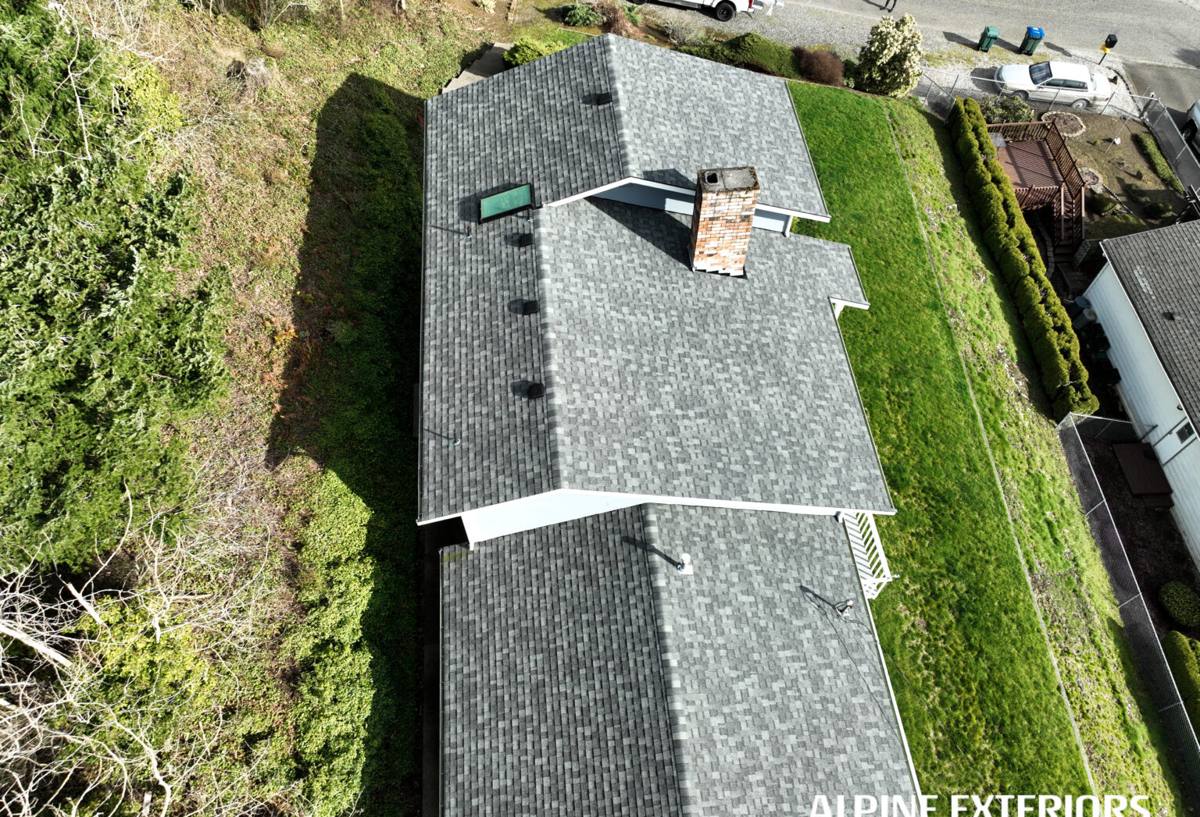
What Whatcom County Weather Does to a Roof Over Time
A Long, Serious Moss Season
Moss is not a cosmetic issue here — it's a structural one if it's left alone. Ferndale's tree cover, cool temperatures, and long stretches of damp weather create ideal conditions for moss and algae to take hold on roofing, especially on north-facing slopes and anywhere shade lingers. Moss holds moisture directly against the roofing material, works its way under shingle edges and tabs, and gradually lifts and loosens them. Left unchecked for a few seasons, moss growth can shorten the effective life of a roof significantly, no matter how good the original material was.
Driving, Wind-Driven Rain
Rain in this region rarely falls straight down. Wind off the water pushes it sideways and up under eaves, around chimneys, and into any flashing detail that isn't sealed correctly. A roof that would perform fine somewhere with calmer, more vertical rainfall can leak here if the underlayment, flashing, and edge details weren't installed with wind-driven moisture specifically in mind.
Salt Air and Metal Fatigue
Being close to the Salish Sea means a steady low-level exposure to salt-laden air, which accelerates corrosion on unprotected metal — fasteners, flashing, vents, and any exposed hardware. Roofing components that aren't rated for coastal or near-coastal exposure can start showing rust and metal fatigue well before the roofing material itself is due for replacement. This is one of the most common oversights we see on roofs that weren't built with this specific climate in mind.
Signs Your Ferndale Home Needs a New Roof, Not Another Repair
Repairs make sense when a roof is otherwise sound and the damage is isolated. A full replacement makes sense once the roof's underlying systems — decking, underlayment, flashing — are compromised broadly enough that patching one spot just shifts the problem somewhere else. Signs it's time to stop patching:
- Granule loss heavy enough that you're finding grit in gutters and downspouts every time it rains
- Shingles that are curling, cupping, or cracking across multiple areas of the roof, not just one section
- Moss or algae established deeply enough that it's lifting shingle edges rather than sitting on the surface
- Daylight visible through the roof deck from inside the attic, or damp insulation after storms
- Repeated leaks in different spots each season, rather than one consistent trouble area
- Soft or spongy decking felt underfoot during inspection, indicating rot beneath the roofing material
- A roof that's already had two or more layers of shingles installed over the years, limiting repair options
- Visible rust streaking from flashing, vents, or fasteners onto the roofing surface below
Roofing Material Options for This Climate
There's no single "best" roofing material for every home — it depends on your roof's pitch, your budget, and how much long-term maintenance you're willing to keep up with. Here's an honest comparison of the main options we install, specifically weighed against Ferndale's moss, moisture, and salt-air conditions.
| Material | Moss & Moisture Resistance | Salt Air Durability | Maintenance |
|---|---|---|---|
| Architectural asphalt shingle | Good with proper ventilation and algae-resistant granules | Good when fasteners and flashing are corrosion-rated | Periodic moss treatment and gutter clearing |
| Standing seam metal | Excellent — sheds moisture quickly, little surface for moss to grip | Very good with a quality factory coating and stainless or coated fasteners | Low; occasional fastener and seam checks |
| Synthetic/composite shingle | Very good — resists moisture absorption better than organic-based materials | Good, comparable to quality asphalt systems | Low to moderate |
| 3-tab asphalt shingle | Fair — thinner profile holds less resistance to moss intrusion over time | Fair, dependent on hardware quality | More frequent moss and algae attention |
We'll walk through these trade-offs with you in person, based on your roof's actual pitch, sun exposure, and tree cover, rather than pushing one product for every house on the street.
What a Correct New Roof Installation Actually Involves
Full Tear-Off and Deck Inspection
A correct installation starts with removing the old roofing down to the deck — not layering new material over old. This is the only way to actually see the plywood or plank decking underneath, check for rot or soft spots (common where moss has been holding moisture against the roof for years), and replace any compromised sections before anything new goes down.
Underlayment and Ice-and-Water Barrier
Given how much wind-driven rain this area sees, underlayment choice matters more here than in drier climates. We use a synthetic underlayment across the full roof and a self-adhering ice-and-water barrier at vulnerable points — eaves, valleys, and around any roof penetrations — where wind-driven moisture is most likely to find a way in.
Flashing at Every Transition
Chimneys, skylights, sidewalls, and valleys are where the large majority of roof leaks actually start, not in the open field of shingles. Correct flashing means new metal at every one of these transitions, properly layered with the underlayment and roofing material so water is always directed downhill and out, never trapped or funneled sideways under an edge.
Ventilation That Matches the Climate
Balanced intake and exhaust ventilation keeps the attic space at a consistent temperature and moisture level, which reduces condensation buildup — a real issue in a consistently damp climate — and helps the roofing material last as long as it's rated to. A roof that looks fine on the surface but is poorly ventilated underneath will often show premature wear from the inside out.
Ridge, Hip, and Edge Details
The finishing details — ridge caps, hip caps, drip edge, and starter strips — are where a lot of corner-cutting happens on lower-quality installations. These are also the areas most exposed to wind uplift and driving rain, so we treat them as functional components, not just trim.
Our Installation Process, Start to Finish
- On-site inspection and estimate — we get on the roof, check the decking where accessible, and give you a straightforward written estimate with no pressure to decide on the spot.
- Material selection — we go over the options that make sense for your roof's pitch, exposure, and budget, including realistic maintenance expectations for each.
- Scheduling and permitting — we handle the permitting process and schedule around the weather window, since a roof of this scope needs a reasonably dry stretch to install correctly.
- Tear-off and deck repair — old roofing comes off completely, decking is inspected, and any damaged sections are replaced before moving forward.
- Underlayment, flashing, and ventilation installation — the systems that actually keep water out go in first, before a single piece of finished roofing is installed.
- Roofing material installation — installed to manufacturer specification, including proper nailing patterns and exposure, which affects both wind resistance and warranty validity.
- Cleanup and final walkthrough — magnetic sweep for debris, gutter check, and a walkthrough so you know exactly what was done and what maintenance to expect going forward.
Cost Factors for a New Roof in Ferndale
We don't publish flat prices because roofs vary too much to make that honest, but these are the real factors that move cost up or down on most jobs in this area:
| Factor | Why It Matters |
|---|---|
| Roof size and number of planes | More square footage and more complex cuts mean more material and labor time |
| Pitch and access | Steeper or harder-to-access roofs require more safety equipment and time |
| Number of existing layers | Removing multiple old layers takes longer than a single-layer tear-off |
| Decking condition | Rot from long-term moss or leak damage means added repair before new roofing goes on |
| Material choice | Asphalt, metal, and composite systems carry different material and labor costs |
| Ventilation and flashing upgrades | Bringing older ventilation or flashing up to current standards adds scope but reduces future problems |
The only way to get an honest number is a physical inspection — we'll tell you upfront if we see something that's likely to change the estimate before we start.
Why a Crew That Already Works Ferndale Matters
Roofing crews unfamiliar with this specific stretch of Whatcom County tend to under-detail for the conditions — using standard fastener and flashing packages instead of corrosion-rated hardware, skipping ice-and-water barrier in spots that don't technically require it by code but do need it given local wind and rain patterns, or not accounting for how aggressively moss will return under this much shade and moisture. A crew that regularly works Ferndale roofs already knows which slopes in this area tend to hold moss, how local wind patterns drive rain into valleys and sidewalls, and which hardware actually holds up to years of marine-influenced air rather than just passing initial inspection. That local knowledge shows up in fewer callbacks and a roof that's still doing its job correctly a decade or more down the line.
After Your New Roof Goes On
A correctly installed roof still benefits from basic upkeep, especially in a climate that supports moss and algae growth this well. Simple habits that meaningfully extend a roof's service life:
- Clear gutters and downspouts at least twice a year, more often if you're under heavy tree cover
- Have moss growth treated before it establishes rather than after it's visibly thick
- Trim back overhanging branches to reduce shade and debris buildup on the roof surface
- Schedule a walk-around inspection after major windstorms to catch lifted shingles or displaced flashing early
- Keep attic ventilation paths clear of insulation or storage that can block airflow
If your roof is showing its age or you just want a straight, no-pressure look at your options, we're happy to come out, get on the roof, and give you an honest assessment. Use the form below to request a free estimate.