 Blaine Window
 Asphalt Shingle Roofing Built for Everson's Climate
Everson sits inland from the coast but still gets the full brunt of what Whatcom County weather delivers: long stretches of driving rain, damp air that never fully dries out, and a moss season that can run from fall through spring. Add in the salt-tinged air that drifts in off the Strait and Puget Sound on prevailing winds, and you have a roofing environment that punishes shortcuts. A shingle roof that's correctly installed and maintained here can last its full rated lifespan. One that's installed carelessly, or left unmaintained, tends to show problems years ahead of schedule.
We install and repair asphalt shingle roofs throughout Everson and the surrounding area, and we've seen firsthand what this climate does to roofs that weren't built for it. This page covers what a correct asphalt shingle roof looks like here, what goes wrong when it's done poorly, and how we approach the work.
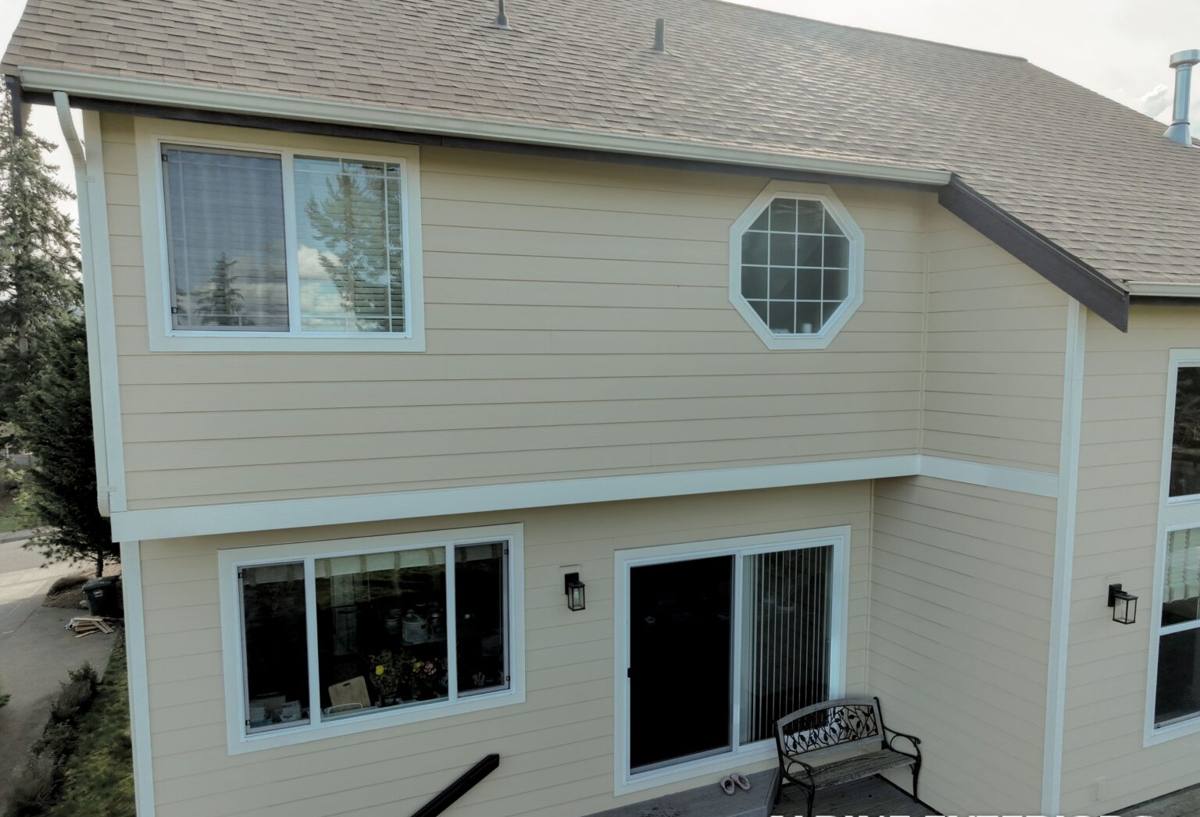
Why This Climate Is Hard on Shingle Roofs
Asphalt shingles are a proven, cost-effective roofing material almost anywhere in the country, but the Pacific Northwest asks more of them than drier climates do. A few specific stressors show up again and again on roofs we inspect around Everson:
Sustained Moisture
It's not just rainfall totals — it's how long the roof stays wet between dry spells. Shingles, underlayment, and flashing all need periods to dry out. When a roof stays damp for days or weeks at a time, moisture finds its way into any weak point: an under-nailed shingle, a poorly sealed pipe boot, a valley that wasn't lined correctly.
Moss and Organic Growth
Everson's tree cover and consistent moisture create ideal conditions for moss, algae, and lichen. Moss doesn't just look bad — it holds water against the shingle surface, works its way under shingle edges as it grows, and can lift tabs enough to let wind-driven rain underneath. Left unchecked over several seasons, moss growth shortens a roof's usable life significantly.
Wind-Driven Rain
Storms coming off the water don't just drop rain straight down — they push it sideways under eaves, into valleys, and against any flashing that isn't properly lapped. A shingle roof that would perform fine in a calmer climate can leak here if the underlayment and flashing details weren't built with wind-driven rain in mind.
Salt Air
Everson isn't right on the water, but the region's marine air still carries salt content that accelerates corrosion on exposed metal — nails, flashing, vents, and fasteners. Standard fasteners can rust and stain a roof, or fail structurally, faster in this air than they would inland.
What a Correct Asphalt Shingle Roof Looks Like Here
A shingle roof built for this climate isn't just "shingles nailed to plywood." It's a system, and every layer matters.
- Underlayment: A synthetic or high-quality felt underlayment rated for extended moisture exposure, installed with correct overlap and fastening pattern.
- Ice and water shield in vulnerable areas: Even without heavy snow loads, self-adhering membrane at eaves, valleys, and around penetrations gives a second line of defense where water is most likely to find a way in.
- Corrosion-resistant fasteners and flashing: Galvanized or stainless materials sized and spaced correctly, not general-purpose hardware that will rust prematurely in salt-influenced air.
- Proper valley construction: Open or closed-cut valleys built with the right underlayment and shingle overlap, since valleys concentrate more water than any other part of the roof.
- Ventilation that actually balances: Intake at the eaves and exhaust at the ridge, sized to move the volume of air the attic needs — not just a vent added because a code inspector required one.
- Shingles rated for wind and algae resistance: Higher wind-rated shingles hold up better to gusts off the water, and algae-resistant granules slow the staining and growth that this climate encourages.
Common Problems We Find on Everson Roofs
When we inspect an older or poorly installed shingle roof in this area, the same issues come up repeatedly:
| Problem | What Causes It | What It Leads To |
|---|---|---|
| Moss buildup on north-facing slopes | Shade, moisture retention, tree cover | Lifted shingle edges, granule loss, eventual leaks |
| Rusted or failing fasteners | Standard-grade nails in salt-influenced air | Shingle blow-off, exposed nail heads, leak points |
| Leaking valleys | Undersized underlayment or incorrect valley construction | Interior water damage, rot in the roof deck |
| Poor attic ventilation | Blocked soffit vents or undersized ridge venting | Trapped moisture, premature shingle aging from underneath |
| Wind-lifted tabs near eaves | Under-nailing or low wind-rated shingle product | Water intrusion during storms, accelerated wear |
Our Process
Inspection and Assessment
We start by getting on the roof, not just looking at it from the ground. We check shingle condition, flashing, valleys, ventilation, and signs of moisture in the attic. We'll tell you honestly whether you need a full replacement, a repair, or just maintenance — we don't sell a new roof to a homeowner who needs a repair.
Tear-Off and Deck Inspection
For a full replacement, we remove the old roofing down to the deck and inspect the sheathing for rot or soft spots, which are common on older Everson roofs that have had moisture sitting under aging shingles. Any damaged decking gets replaced before new roofing goes down — covering over a compromised deck just hides the problem.
Underlayment and Flashing First
This is the layer that determines whether your roof actually keeps water out, and it's also the layer that gets rushed on lower-quality jobs. We install underlayment and ice-and-water membrane to spec at eaves, valleys, and penetrations before a single shingle goes down.
Shingle Installation
Correct nailing pattern, correct exposure, and correct starter course at the eaves and rakes — these are basic steps that get skipped when a crew is moving too fast. They're also the details that determine whether shingles stay put during the next windstorm off the water.
Ventilation Check
We confirm intake and exhaust venting are balanced for the attic space. This step gets overlooked constantly, and it's a major factor in how long shingles actually last in a damp climate.
Final Walkthrough
We walk the job with you, confirm everything's clean, and go over what maintenance (if any) we recommend going forward.
Repair, Maintenance, or Replacement?
Not every roof problem means a full replacement. We evaluate a few factors before recommending one path over another:
- Age of the roof: A shingle roof under 12–15 years old with isolated damage is usually a repair candidate.
- Extent of moss and granule loss: Localized moss on one slope is a maintenance issue. Widespread granule loss across the whole roof usually signals the shingles are past their functional life.
- Deck condition: If the underlying deck has rot from long-term moisture intrusion, that changes the scope regardless of how the shingles look on top.
- History of leaks: A roof with one isolated leak point is different from one with a pattern of recurring leaks in different spots — the latter usually points to a systemic installation issue.
If moss and organic growth are the main concern, we can often address that with a proper cleaning and treatment rather than replacement — but it has to be done without damaging the granule surface, which is where pressure-washing a shingle roof (something we won't do) causes more harm than good.
Maintenance That Actually Extends Roof Life Here
Because Everson's climate is so consistently damp, a shingle roof benefits from more attentive upkeep than the same roof would need somewhere drier.
- Keep gutters clear so water isn't backing up under the eave line during heavy rain
- Trim back overhanging branches to reduce shade and debris buildup that feeds moss
- Have moss treated before it spreads across a full slope, not after
- Check attic ventilation isn't blocked by insulation or debris
- Get a roof inspected after any major windstorm, especially one coming off the water
- Replace corroded or failing fasteners and flashing before they cause a leak, not after
Why Local Experience with Everson Roofs Matters
A shingle roof that performs well in a drier region of the state can underperform here if it's installed to a generic standard instead of one built around this climate. Knowing how moss behaves on shaded northern slopes, how wind-driven rain moves through valleys during a coastal storm, and which fastener and flashing choices actually hold up against salt-influenced air isn't something you get from a manufacturer's install manual alone — it comes from working on roofs in this specific area, season after season.
We're a Whatcom County exterior contractor, and Everson is part of the area we regularly work in. That means we're not guessing at what this climate does to a roof — we're accounting for it in every layer of the installation, from the underlayment up.
Get an Honest Assessment
If your Everson home needs a new asphalt shingle roof, a repair, or you're just not sure what condition your current roof is in, we're glad to take a look. We'll give you a straightforward, no-pressure estimate and tell you honestly what your roof actually needs. Use the form below to get started.