 Blaine Window
 Energy-Efficient Windows Built for Nooksack's Conditions
Nooksack sits inland along the Nooksack River in the rural stretch of Whatcom County, away from the direct salt spray that coastal towns like Blaine deal with, but that doesn't mean the climate goes easy on a home's windows. Moisture-laden marine air still moves across the whole county off the Strait, and out here it combines with river-valley humidity, low-lying fog, and driving rain to create its own steady wear on window seals, frames, and glazing. Add in a long moss season on shaded, low-sun elevations and a heating bill that runs most of the year in this climate, and old or poorly performing windows cost Nooksack homeowners in comfort and dollars in a way that's easy to underestimate until you actually replace them.
This page covers energy-efficient window replacement specifically for homes in the Nooksack area: what the local climate demands from a window, what actually makes a window energy-efficient versus just new, how a correct installation protects that performance, and how our process works for homeowners out this way.
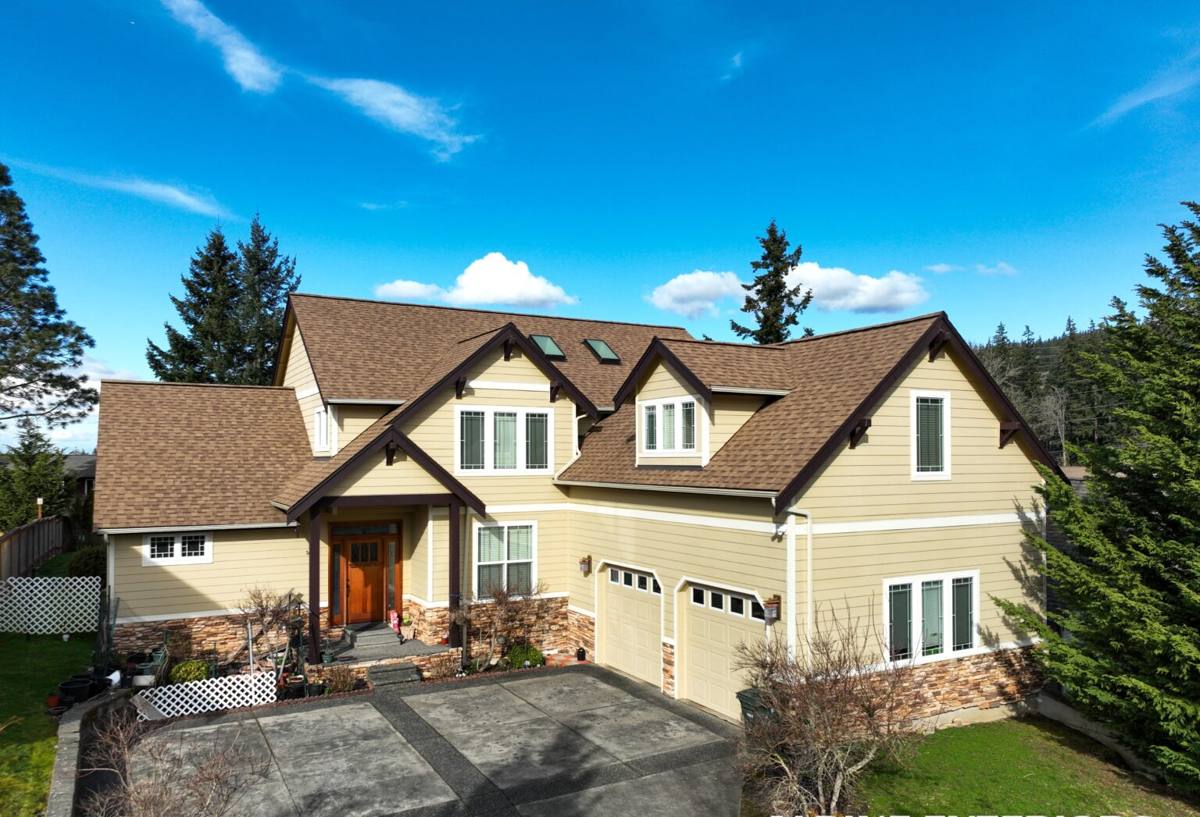
What Nooksack Homes Are Up Against
Driving Rain and Window Seals
Whatcom County storms rarely drop rain straight down. Wind pushes it sideways and even upward into window openings, and older windows with worn weatherstripping or degraded seals let that moisture find its way past the glass and into the frame or wall cavity. Once water is getting behind a window frame, energy loss is usually the least of the problem — rot and mold follow if it isn't caught.
Humidity, Fog, and a Long Moss Season
The river valley holds moisture longer than more exposed or elevated parts of the county. Morning fog, shaded tree lines, and mild temperatures add up to a moss and mildew season that can run most of the year on north-facing walls and window sills that don't drain well. Wood-frame windows without a protective clad exterior are especially vulnerable here, since sustained dampness against bare wood is exactly what invites rot at the sill and lower corners.
Temperature Swings and Heating Costs
Nooksack sees a wider daily and seasonal temperature swing than the immediate coast, with colder overnight lows in winter than you'd get right on the water. Older single-pane or early-generation double-pane windows lose heat fast through the glass and around a loose frame, and in a home that heats for most of the year, that loss shows up directly on the utility bill, not just as a cold spot by the window.
What "Energy-Efficient" Actually Means in a Window
"Energy-efficient" gets used loosely in window advertising. For a homeowner comparing options, it comes down to a handful of measurable factors that determine how much heat a window lets through, in either direction, over the life of the product.
U-Factor
U-factor measures how well a window resists heat flow — lower is better. This is the single number that matters most for a cold-winter climate like ours, since it tells you how much heat escapes through the window on a cold night regardless of how good the glass looks.
Low-E Coatings and Solar Heat Gain
A low-emissivity (low-E) coating is a microscopically thin layer on the glass that reflects heat while still letting visible light through. The right low-E package depends on which way a window faces — a south-facing window benefits from a coating tuned to manage solar heat gain, while a shaded north-facing window is more about minimizing heat loss than blocking sun that rarely reaches it directly.
Gas Fills and Spacer Systems
Most efficient double- and triple-pane windows fill the space between panes with argon or krypton gas, which conducts heat more slowly than plain air. The spacer that separates the panes matters too — a warm-edge spacer reduces heat loss and condensation risk at the glass edge, which is a common trouble spot on cheaper window units.
Air Infiltration
A window can carry excellent glass specs and still perform poorly if the frame and sash don't seal tightly when closed. Air infiltration ratings measure how much outside air leaks through the assembly itself, and it's a spec that's easy to overlook next to flashier numbers on a sales sheet.
Comparing Window Options for Energy Performance
There's no single "correct" window for every home — budget, sun exposure, and how long you plan to stay in the house all factor in. Here's how the common choices compare for energy performance in this climate.
| Option | Energy Performance | Moisture & Frame Behavior | Typical Trade-Off |
|---|---|---|---|
| Double-pane, low-E, argon-filled | Strong, cost-effective baseline | Vinyl and fiberglass frames handle this valley's humidity well | Best value for most whole-house replacements |
| Triple-pane | Best available heat retention and sound dampening | Same frame considerations as double-pane | Higher upfront cost; diminishing return on already-efficient walls |
| Vinyl frame | Good; frame itself doesn't conduct much heat | Won't rot; performs well when installed correctly | Fewer color and finish options than clad wood |
| Fiberglass frame | Very good; dimensionally stable through temperature swings | Excellent moisture and corrosion resistance | Higher cost than vinyl |
| Clad wood frame | Good; depends on glass package | Clad exterior protects wood from direct weather; unclad wood is a poor fit here | Higher cost; some upkeep on interior wood finish |
For most Nooksack homes, a double-pane, low-E, argon-filled window in a vinyl or fiberglass frame delivers the bulk of the available efficiency gain without paying for performance the house won't use. We'll walk through where triple-pane or a different frame material actually earns its cost on your specific home rather than defaulting to the most expensive option.
Why Installation Quality Determines Whether You Actually Get That Efficiency
A high-performance window installed poorly performs like a mediocre one. This is the part of the job that doesn't show up on a spec sheet but matters just as much as the glass package.
- Air sealing around the frame: Gaps between the window frame and the rough opening need to be sealed and insulated correctly, without gaps that let conditioned air leak out around a perfectly good window.
- Sill pan and flashing integration: A pitched sill pan and properly lapped flashing keep wind-driven rain out of the wall assembly, which protects both the window's frame and the wall framing around it.
- Correct shimming and squaring: A window that isn't shimmed level, plumb, and square won't close and seal the way it's designed to, no matter how good the U-factor rating is on paper.
- Interior and exterior trim sealing: The finish work around a window is often where a rushed install leaves a gap that undoes part of the efficiency gain the new window was supposed to deliver.
This is also why we treat window replacement as a full opening job, not a "pop the old one out, drop the new one in" swap. On an older Nooksack home, the wall around the window often needs some attention at the same time — old caulk removed, damaged sheathing checked, flashing brought up to a current standard — and skipping that step is how a homeowner ends up with a new window that still leaks or drafts.
How Our Process Works
- On-site assessment: We look at your existing windows, note which ones are underperforming and why, and check the condition of the surrounding wall and trim before recommending anything.
- Product selection: We go over frame material, glazing package, and U-factor options suited to your home's exposure and budget, elevation by elevation rather than one spec for the whole house.
- Opening prep: Old windows come out cleanly, and we check the rough opening, sill, and flashing for any moisture damage or gaps that need to be addressed before the new unit goes in.
- Installation: Each window is set level, plumb, and square, with sill pan flashing, air sealing, and insulation done to spec rather than rushed to move to the next opening.
- Exterior and interior finish: Trim, caulking, and any siding disturbed during the swap are finished and sealed correctly, inside and out.
- Final walkthrough: We check operation, hardware, and seals on every window with you before calling the job done.
A Practical Checklist: Is It Time to Replace Your Windows?
- Do you feel a draft near a closed window on a windy day?
- Is there condensation or fogging between the panes, which usually means a failed seal?
- Does the frame show soft spots, discoloration, or visible rot at the sill or corners?
- Is paint or finish peeling on the interior sill, which often points to trapped moisture?
- Does the window stick, drag, or fail to latch tightly when closed?
- Has your heating bill crept up without a clear explanation over the past few winters?
- Is there visible mold or persistent moss staining on or around the window trim?
Any one of these on its own might not mean much. Two or three together, especially on the same window or elevation, usually means the window is past the point where it's worth patching.
Why Hiring a Crew That Already Works Nooksack Matters
A window contractor who regularly works out in Nooksack and the surrounding Whatcom County countryside already understands how different this valley's conditions are from a job in downtown Bellingham or right on the water in Blaine. That means knowing which elevations tend to hold moisture longest, how much of the county's older housing stock still has original single-pane or early dual-pane windows that are due for replacement, and what a realistic install schedule looks like on rural properties that aren't always a quick in-and-out job. It also means being someone you can actually reach if a question comes up on a window installed two or five years ago, not a crew that disappears once the invoice is paid.
If you're weighing whether your current windows are worth keeping or it's time to replace them, we're glad to take a look and give you an honest read, with no pressure either way. Use the form below to request a free estimate for your Nooksack home.