 Blaine Window
 Windows Built for California Creek's Coastal Exposure
California Creek sits close enough to Semiahmoo Bay and the Strait of Georgia that homes here take a different kind of weather beating than houses further inland in Whatcom County. Salt-laden air moves in off the water, driving rain comes sideways during winter storms, and the long, damp shoulder seasons keep everything from siding to window frames wet for weeks at a stretch. Old single-pane or early-generation double-pane windows in this area don't just waste energy — they let that moisture and salt find every weak point in the frame, sash, and seal.
Energy-efficient window replacement here isn't a cosmetic upgrade. It's a practical response to a specific set of conditions: humidity that never fully lets up, wind-driven rain that tests every seal, and a moss and algae season that runs longer than most homeowners expect. When we talk about "energy-efficient windows" for a California Creek home, we're talking about a package — glass performance, frame material, and installation detail — that has to hold up to all three at once.
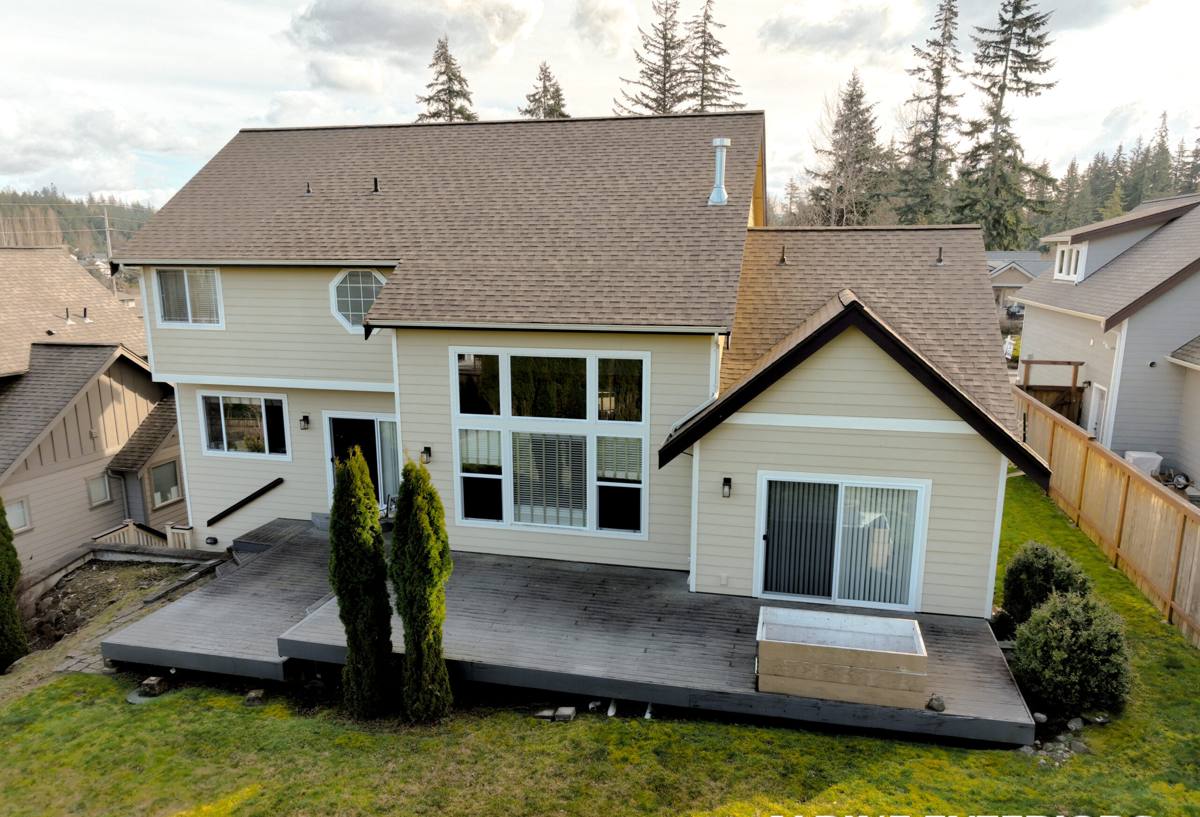
What the Local Climate Actually Does to Windows
Salt Air and Metal Fatigue
Proximity to saltwater accelerates corrosion on anything metal — hardware, hinges, and older aluminum frames in particular. Salt spray settles on glass and frames even on days without direct rain, and over years it works into hardware mechanisms, causing locks and cranks to stiffen or fail early. Windows chosen for this area need corrosion-resistant hardware and frame materials that don't rely on bare metal exposed to the weather.
Driving Rain and Wind-Loaded Water
Storms off the water don't just drop rain straight down — wind pushes it sideways and up under trim and sills. A window that performs fine in a calm rain can still leak in a wind-driven storm if the flashing, sill pan, and sealant details aren't done correctly. This is one of the most common causes of hidden water damage we find behind older windows in this area: not a bad window, but a bad installation that couldn't handle wind-loaded water.
Moss, Algae, and Prolonged Dampness
Whatcom County's moss season is long, and California Creek's tree cover and marine humidity keep surfaces damp for extended stretches. Around windows, this shows up as black streaking on sills, soft or swelling wood trim, and moss gaining a foothold in any horizontal surface that doesn't drain well. Window and trim choices that shed water quickly and dry out between rains hold up dramatically better than materials that stay saturated.
What "Energy-Efficient" Actually Means for This Area
Energy efficiency isn't a single number — it's a combination of factors that matter differently depending on climate. For a home in California Creek, the priority order looks a little different than it would inland:
- Low U-factor — how well the window resists heat loss, which matters through Blaine's long, damp, cool winters
- Solar Heat Gain Coefficient (SHGC) — moderate gain is usually right here, since summers are mild and you're not fighting extreme heat
- Air infiltration rating — critical near the water, where wind pressure is higher and gaps get tested constantly
- Condensation resistance — high indoor humidity plus cool glass surfaces can fog or sweat inefficient windows, especially in bathrooms and kitchens
- Frame material weather performance — how the frame itself holds up to salt, moisture, and UV over 15-20+ years, not just its first year
A window with a great energy rating on paper but a frame or installation that fails under coastal conditions won't deliver on that rating for long. We weigh both the glass package and the frame's real-world durability for this specific location.
Frame Material Comparison for Coastal Whatcom County Homes
| Frame Material | Salt/Moisture Performance | Maintenance | Typical Trade-Offs |
|---|---|---|---|
| Vinyl (quality, welded) | Strong — doesn't corrode or rot | Low | Limited color/finish options; expansion/contraction needs correct installation |
| Fiberglass | Very strong — dimensionally stable, resists moisture and salt well | Low | Higher upfront cost than vinyl |
| Wood (clad exterior) | Good if cladding is intact; exposed wood suffers in this climate | Moderate to high | Interior warmth of real wood, but exterior wood needs vigilant sealing near salt air |
| Aluminum (standard) | Weak — prone to corrosion and thermal bridging | Moderate | We generally steer clients away from bare aluminum this close to the water |
We don't push one material on every job. A vinyl window installed correctly with proper flashing will outperform a premium frame installed poorly. That said, for homes with direct salt exposure or heavy wind-driven rain, fiberglass or well-clad options tend to need less babying over the years.
What a Correct Installation Involves
Most window failures we're called to inspect in this area trace back to installation gaps, not the window product itself. A correct job for a California Creek home includes:
- Removing old windows and inspecting the rough opening for hidden rot or prior water damage before anything new goes in
- Installing a proper sill pan flashing that directs any water that gets past the window back outside, not into the wall cavity
- Integrating window flashing with the home's existing weather-resistive barrier in the correct shingle-lap order, so water always sheds downward and outward
- Using sealants and backer rod rated for the temperature swings and UV exposure of exterior marine climates
- Shimming and fastening per manufacturer spec so the frame isn't racked, which is a common cause of early seal failure and hardware binding
- Insulating the gap between the frame and rough opening properly — too little insulation hurts energy performance, too much (or the wrong type) can bow the frame
Every one of these steps matters more here than it would in a drier, more sheltered part of the state, because any shortcut gets tested by real weather within the first season.
Signs a California Creek Home Needs Window Replacement
- Visible condensation or fogging between panes (a sign the seal has failed and the insulating gas is gone)
- Drafts you can feel near the frame on windy days, especially during winter storms
- Soft, swollen, or discolored wood trim or sill around the window
- Difficulty opening, closing, or locking — often a sign of corroded hardware or a racked frame
- Rising heating bills without another clear explanation
- Visible daylight or gaps around the frame from outside
- Persistent moss or black streaking on sills that keeps returning after cleaning
Our Process for California Creek Projects
Because we already work in this immediate area, we know what to check for before we ever quote a job. Our process typically looks like this:
1. On-Site Assessment
We look at the existing windows, the condition of the surrounding trim and wall assembly, and any signs of past water intrusion. This tells us whether it's a straight window swap or whether there's underlying damage that needs addressing first.
2. Product Recommendation Based on Exposure
A window on a sheltered wall facing away from prevailing weather doesn't need the same spec as one on a wall that takes direct wind-driven rain. We match the product to each elevation of your specific home, not a one-size-fits-all package.
3. Installation With Proper Flashing and Sealing Detail
This is where most of the long-term performance is actually decided — we treat flashing and sealing as non-negotiable steps, not line items to rush through.
4. Final Check and Cleanup
We confirm every window operates correctly, seals properly, and that the surrounding area is left clean and weathertight before we consider the job finished.
Cost Factors Homeowners Should Understand
| Factor | Why It Affects Cost |
|---|---|
| Frame material | Vinyl is typically the most affordable; fiberglass and clad-wood cost more upfront but may reduce long-term maintenance |
| Number and size of openings | More windows or larger openings increase material and labor time |
| Existing damage | Rot or water damage found during removal requires repair before new windows go in, adding cost |
| Glass package | Upgraded low-E coatings or gas fills cost more but improve energy performance over the window's life |
| Access and site conditions | Second-story or hard-to-access windows take more labor time |
We give straightforward, itemized estimates so you can see exactly what you're paying for and where — no vague bundled numbers.
Why Local Experience Matters Here
A crew that hasn't worked near the water in Whatcom County can install a technically fine window and still get the flashing detail wrong for this specific exposure, because they're used to conditions that don't push water and salt the same way. Working regularly in and around Blaine and communities like California Creek means we've already seen how different elevations of a house handle a winter storm, where moss tends to establish first, and which installation shortcuts show up as leaks two or three years down the road instead of immediately. That local pattern recognition is worth as much as the window product itself.
If you're noticing drafts, fogged glass, or trim damage on your California Creek home, we're happy to take a look and give you a straightforward, no-pressure estimate — just fill out the form below.