 Blaine Window
 Why Decks in the Everson Area Wear Out on Their Own Schedule
A deck in Everson doesn't fail the same way a deck in a dry climate fails. Out here, the damage is slow and mostly hidden until it isn't. Whatcom County gets long stretches of driving rain, humidity that lingers under tree cover and along the river bottoms, and a moss season that can run half the year on anything shaded or north-facing. Add in the salt-tinged air that moves inland off the Salish Sea during storms, and you've got a combination that goes after fasteners, ledger boards, and framing long before the decking boards on top look like a problem.
That's the trap with deck replacement in this region: the surface can look fine while the structure underneath is already compromised. We've based our whole approach to deck work around that reality — treat the wood, moisture, and hardware as the job, not just the boards you walk on.
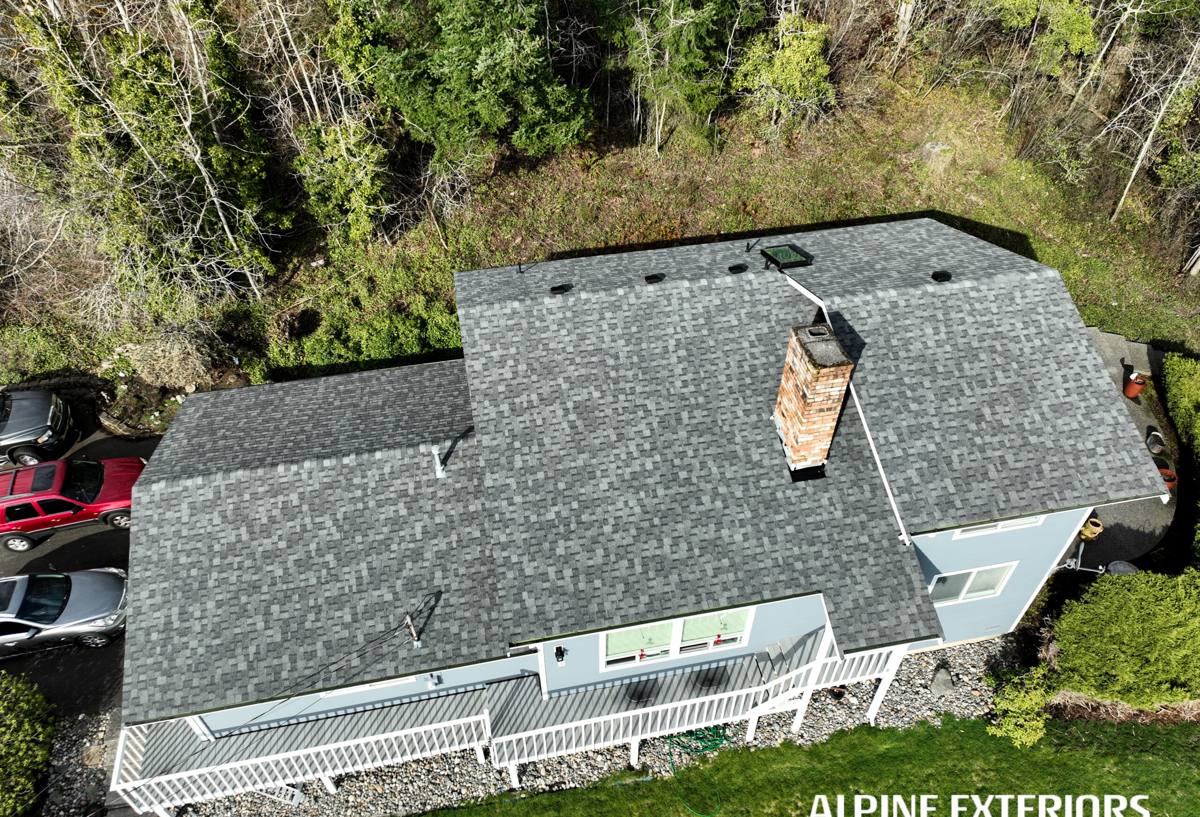
Repair, Rebuild, or Full Replacement?
Not every deck needs to come out completely. But in a climate like ours, it's important to be honest about where the line is.
Signs You're Past Repair
- Soft, spongy, or spring-back decking when you walk across it
- Rot or discoloration where the ledger board meets the house
- Rust streaking or crumbling around joist hangers and fasteners
- Posts that have shifted, or footings that have heaved or settled unevenly
- Persistent black or green growth that comes back within weeks of cleaning
- A railing that flexes noticeably when you lean on it
When Repair Still Makes Sense
If the framing and ledger connection are sound and the damage is limited to a handful of surface boards, board-for-board replacement can buy real years without a full teardown. The key is confirming the substructure is actually sound — not just assuming it is because the top looks okay. That's a judgment call worth having someone experienced make in person, not over the phone.
What a Correct Deck Replacement Actually Involves
A deck replacement done right is mostly about the parts you won't see once it's finished.
Ledger and House Connection
This is the single most common failure point on decks attached to a home in a wet climate. Correct flashing at the ledger board — the piece that ties the deck to the house — keeps water from tracking behind siding and into the wall assembly. A deck can look brand new and still be actively rotting the house behind it if this detail was rushed.
Framing, Fasteners, and Hardware
Everything below the decking — joists, beams, posts, hangers, and screws — should be rated for ground contact and exterior exposure, not just "treated enough for now." In a region with this much sustained moisture, mismatched or under-spec hardware is where corrosion starts, and corroded hardware is a structural problem, not a cosmetic one.
Drainage and Airflow
Water needs somewhere to go, and air needs to move underneath the deck so wood can dry out between storms. Decks built tight to grade, or with poor slope away from the house, hold moisture against the framing far longer than they should. Post-tension footings, proper joist spacing, and clearance underneath all factor into how long a deck actually lasts here versus how long it's rated to last on paper.
Choosing Decking Material for This Climate
There's no single "best" decking material — there's a best fit for how much maintenance you want to do and how the deck sits (sun, shade, tree cover). Here's how the common options actually compare once you factor in Whatcom County's wet, mossy conditions.
| Material | Moss/Moisture Behavior | Maintenance | Typical Lifespan |
|---|---|---|---|
| Pressure-treated wood | Absorbs moisture, needs regular sealing to resist moss and swelling | Annual cleaning and re-staining/sealing | 10–15 years with upkeep |
| Cedar | Naturally rot-resistant but still surface-stains and grows moss if untreated | Periodic cleaning and oil/sealant | 15–20 years with upkeep |
| Capped composite | Sheds moss and water well; won't absorb and swell | Occasional washing, no sealing | 25+ years |
| PVC decking | Fully synthetic, sheds water, moss can grow on the surface film but doesn't penetrate | Occasional washing | 25–30+ years |
In shaded yards or lots with heavy tree cover — common around Everson's river-bottom properties — composite and PVC hold up with a lot less babysitting than natural wood. If you like the look and feel of real wood and are willing to do the maintenance, cedar is the more forgiving choice than standard treated lumber.
Why We're Selective About Certain Wood Products
We're upfront with clients about lower-grade treated lumber that's inconsistently kiln-dried or dimensionally unstable — it can look fine at install and start cupping or checking within a season in a climate this wet. Our standard is to spec lumber and hardware rated for the actual moisture load this region sees, not the minimum a supplier will sell.
Moss Season and Long-Term Deck Care
Moss doesn't just make a deck look neglected — it holds moisture against the surface, and on wood decking that trapped moisture is what starts rot underneath the growth. A few design choices at replacement time make a real difference in how much moss you deal with going forward:
- Spacing boards correctly so water and debris don't pool between them
- Choosing decking with a lower surface porosity if the area gets a lot of shade
- Keeping the deck surface graded to shed water away from the house
- Trimming back overhanging branches where possible to cut down on shade and leaf litter
None of this eliminates the need for occasional cleaning, but it changes whether you're pressure-washing moss off twice a summer or once every couple of years.
Permits, Guardrails, and Code Basics
Deck replacement in Whatcom County typically involves a permit when you're rebuilding structure — framing, footings, or ledger attachment — rather than a simple board swap. Guardrail height, baluster spacing, and stair requirements are governed by code and get checked at inspection. We handle the permit process as part of the job rather than leaving it for the homeowner to sort out, and we won't cut corners on guardrail or footing requirements to save a step — those are the parts of a deck that matter most if something goes wrong.
How We Handle a Deck Replacement in Everson
- On-site assessment of the existing deck — framing, ledger, footings, and decking condition, not just a visual walk-through
- Honest recommendation: repair, partial rebuild, or full replacement, with the reasoning explained
- Material selection based on sun/shade exposure, tree cover, and how much upkeep you want to take on
- Permit filing and code review where the scope requires it
- Demolition and disposal of the old deck
- Rebuild: ledger flashing, framing, hardware, decking, and railing installed to spec
- Final walkthrough covering drainage, guardrail security, and basic care going forward
What Drives Deck Replacement Cost
Deck replacement pricing varies a lot based on size, material, and how much of the existing structure can stay. Broad factors that move the number:
| Factor | Why It Matters |
|---|---|
| Deck size and footprint | More square footage means more framing, hardware, and decking material |
| Decking material | Composite and PVC cost more upfront than treated lumber but need far less long-term maintenance |
| Framing condition | If posts, footings, or the ledger need full rebuilding, that adds labor beyond just swapping boards |
| Height and stairs | Elevated decks with stairs and multiple guardrail runs take more time and material than a low, single-level deck |
| Site access | Tight yards or decks over sloped ground add labor for demo and material staging |
We give a firm, itemized quote after seeing the deck in person — not a phone estimate — because the framing condition underneath is usually what actually decides the price.
Why It Matters to Hire a Crew That Already Works This Area
A deck built to a generic national spec doesn't always account for what Whatcom County actually throws at it — sustained wet seasons, humidity that doesn't burn off quickly even in summer, and moss pressure that varies block to block depending on tree cover and sun exposure. A crew that regularly works decks in Everson and around Blaine has already seen which ledger details fail here, which lumber grades hold up, and which shaded lots need extra attention to drainage. That's the difference between a deck that looks good at handoff and one that's still solid in fifteen years.
If you're weighing repair versus full replacement, or just want an honest read on what your current deck actually needs, we're happy to take a look. Use the form below to request a free, no-pressure estimate — there's no obligation, and we'll tell you straight if replacement is even the right call.