 Blaine Window
 Deck Repair Built for Nooksack's Weather, Not Just the Deck
Nooksack sits inland enough to escape some of the wind Blaine gets off the water, but it doesn't escape the rain, the humidity, or the moss. Decks in this part of Whatcom County spend a good chunk of the year damp — not soaked, just consistently damp, which is actually harder on wood than a hard freeze or a big storm. Consistent moisture is what feeds rot, softens fasteners, and lets moss and algae get a foothold on anything horizontal. Add in the salt-laden air that drifts inland from Boundary Bay and the Strait of Georgia, and you've got a combination that ages an unmaintained deck faster than most homeowners expect.
We're not describing anything exotic here — it's the same weather pattern that shapes exterior work across our whole service area, from Blaine down through the county. But deck repair specifically has its own failure points, and knowing which ones show up first in this climate is what separates a repair that actually holds from one that's papering over rot.
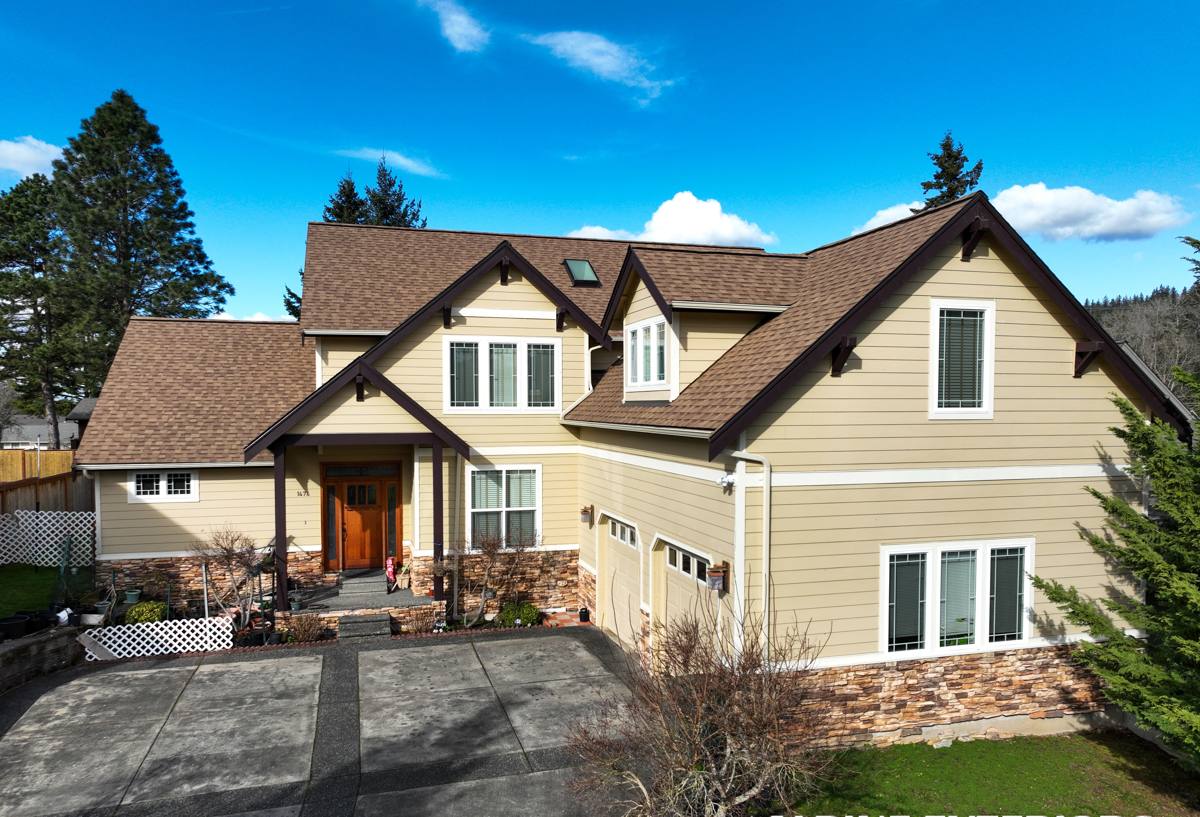
How Local Weather Attacks a Deck, Piece by Piece
Every part of a deck fails differently, and the causes are almost always tied to how water moves through and around the structure.
Moss and Surface Buildup
A long moss season means anything shaded or slow to dry — under trees, on the north side of a house, near a hot tub or planter — builds up organic growth that holds moisture against the wood or composite surface. Left alone, that turns boards slick and, over years, feeds rot in real wood decking or staining in composite.
Rot at Connection Points
Decks don't rot evenly. They rot where water sits: the ledger board where the deck meets the house, joist ends, post bases, and anywhere fasteners have created a tiny gap for water to collect. Driving rain pushes moisture into these joints sideways, not just from above, which is why a deck can look fine on the surface while the framing underneath is failing.
Fastener and Hardware Corrosion
Salt-influenced air corrodes untreated or low-grade metal faster than people expect. Older decks built with standard galvanized nails or non-rated screws often show rust streaks and loosening hardware well before the wood itself is a problem — and once fasteners let go, boards start to lift, cup, or squeak.
Signs Your Deck Needs Repair — Not a Full Rebuild
Most decks we look at in the Nooksack area don't need to be torn out. They need targeted repair to the parts actually failing, while the sound framing and structure stay in place. Here's what we check for before recommending anything:
- Soft, spongy, or dark-stained decking boards, especially near the house or in shaded corners
- Visible gaps, cracking, or rust bleed around the ledger board where the deck attaches to the house
- Railings or posts that flex, wobble, or feel loose when you lean on them
- Nails backing out or screw heads that have rusted and stripped
- Moss or dark green-black staining that keeps coming back after cleaning
- Stairs that feel bouncy or uneven, or stringers with visible splitting
- Standing water or slow drainage after a normal rain, rather than a downpour
If you're seeing two or three of these, it's usually still a repair job. The exceptions are widespread structural rot in the main framing or a ledger connection that's failed outright — those get flagged honestly as a rebuild conversation, not patched over.
What a Correct Deck Repair Actually Involves
A repair that lasts starts with figuring out what's actually wrong underneath, not just replacing whatever looks bad on the surface.
Ledger Board and Flashing
Since the ledger board is the single most important structural connection on most decks, we check the flashing behind it — the metal or membrane that's supposed to keep water from running down the house wall and into the joint. A lot of older decks in wetter climates were built without proper flashing at all, which is often the real reason a ledger board has rotted even though the rest of the deck looks solid.
Framing: Joists, Beams, and Posts
We sister in new lumber alongside any joist or beam that's soft or split rather than assuming the whole board needs to go, when the damage is localized. Post bases get checked for rot at ground contact and for correct standoff from soil or concrete — a post sitting directly on wet concrete or soil is one of the fastest ways to reintroduce the same problem a few years later.
Railings and Guardrails
Railing repair isn't just cosmetic — it's a safety system, and Washington building code has specific requirements for guardrail height and baluster spacing on decks above a certain height. When we repair a railing, we make sure it actually meets code, not just that it looks the way it used to.
Decking Surface
Individual board replacement is straightforward when the framing underneath is sound. The bigger judgment call is fastener choice and gapping — boards need enough space between them to shed water and dry out, especially given how long moss season runs here.
Repair vs. Replacement: What Actually Drives the Decision
Homeowners often assume any rot means the whole deck is done. In practice, the decision comes down to where the damage is and how far it's spread.
| Factor | Usually a Repair | Usually a Rebuild |
|---|---|---|
| Rot location | Isolated boards, one or two joists, a single post | Ledger board failure, multiple beams, widespread framing rot |
| Age of structure | Newer deck, one weak spot from a past leak | Original deck decades old, multiple systems near end of life |
| Railings | Loose posts or a damaged section | Entire railing system out of code and structurally unreliable |
| Drainage/flashing | Minor regrading or spot flashing fix | No flashing ever installed, chronic water intrusion at the house |
| Cost trajectory | Repair cost is a fraction of rebuild cost | Repair cost approaches 60-70% of a full rebuild |
We'd rather tell you honestly that a section needs sistering or a few boards need swapping than sell a full rebuild you don't need. We'll also tell you plainly when patch repairs are just delaying an inevitable rebuild, because that's information you need to plan around, not something to find out later.
Our Process for a Nooksack Deck Repair
- On-site inspection. We check the deck from underneath as well as on the surface — probing suspect boards, checking the ledger connection, and looking at post bases and drainage.
- Honest scope and estimate. You get a clear breakdown of what's failing, what's sound, and what it'll take to fix it — repair or rebuild, whichever the deck actually needs.
- Demo of only the damaged sections. We remove what's failed without disturbing sound structure unnecessarily.
- Structural correction first. Framing, flashing, and connections get fixed before anything cosmetic happens — a new deck board over a bad joist just hides the problem.
- Surface and railing work. Boards, railings, and stairs get repaired or replaced with appropriate fasteners and spacing for drainage.
- Final check. We walk the deck with you, point out what we did, and flag anything worth keeping an eye on going forward.
Materials: What We Use and the Trade-Offs We're Honest About
There's no single "right" decking material for this climate — there are trade-offs, and we'd rather walk you through them than push one option.
- Pressure-treated lumber is the most affordable repair option and matches most existing decks, but it needs periodic sealing or staining to keep performing well in a wet, mossy climate.
- Composite decking resists rot and doesn't need refinishing, but it's a bigger upfront cost and, in shaded or damp spots, still needs occasional cleaning to keep algae and moss from staining the surface.
- Cedar looks great and holds up reasonably well to moisture, but it's a softer wood that dents and requires more consistent maintenance than pressure-treated lumber.
For fasteners and hardware, we use corrosion-resistant, exterior-rated screws and connectors rather than standard galvanized nails — given how air quality and moisture in this area corrode lower-grade hardware over time, it's a small cost difference that pays off in years of service life.
Why It Matters to Hire a Crew That Already Works in This Area
Deck repair isn't complicated in theory, but doing it right in a climate like Whatcom County's means understanding how water actually moves through a structure over a long wet season, not just how a deck is supposed to be built on paper. A crew that repairs decks across Blaine and the Nooksack area regularly sees the same failure patterns — ledger boards without flashing, posts set wrong for drainage, fastener corrosion — and knows what to check for before it becomes obvious.
Local permitting and code requirements around guardrails and structural repairs also vary enough between jurisdictions that it helps to work with a crew that already knows what Whatcom County expects, rather than learning it on your job.
Ready for an Honest Look at Your Deck?
If your deck has soft spots, a wobbly railing, or moss that won't stay gone, it's worth having someone check the framing underneath before you decide between a repair and a rebuild. We'll give you a straightforward assessment and a free, no-pressure estimate — just fill out the form below and we'll take it from there.