 Blaine Window
 Why Decks in California Creek Wear Differently
California Creek sits close enough to the water that salt-laden air is a constant, low-grade stressor on anything built outdoors — and a deck, with its exposed fasteners, open joints, and horizontal surfaces, takes more of that stress than almost any other structure on a property. Add Whatcom County's long wet season, frequent driving rain off the water, and tree cover that keeps many yards shaded and damp for months at a time, and you get a specific combination of problems: metal that corrodes faster than the manufacturer's rating suggests, wood that stays wet longer than it should, and moss that takes hold anywhere sunlight and airflow are limited.
None of this means decks in this area are doomed to fail early. It means they need to be built and repaired with those conditions in mind, not treated the same way you'd treat a deck in a dry inland climate. A lot of the deck problems we see here trace back to a repair or original build that didn't account for the salt air and moisture load this specific area deals with.
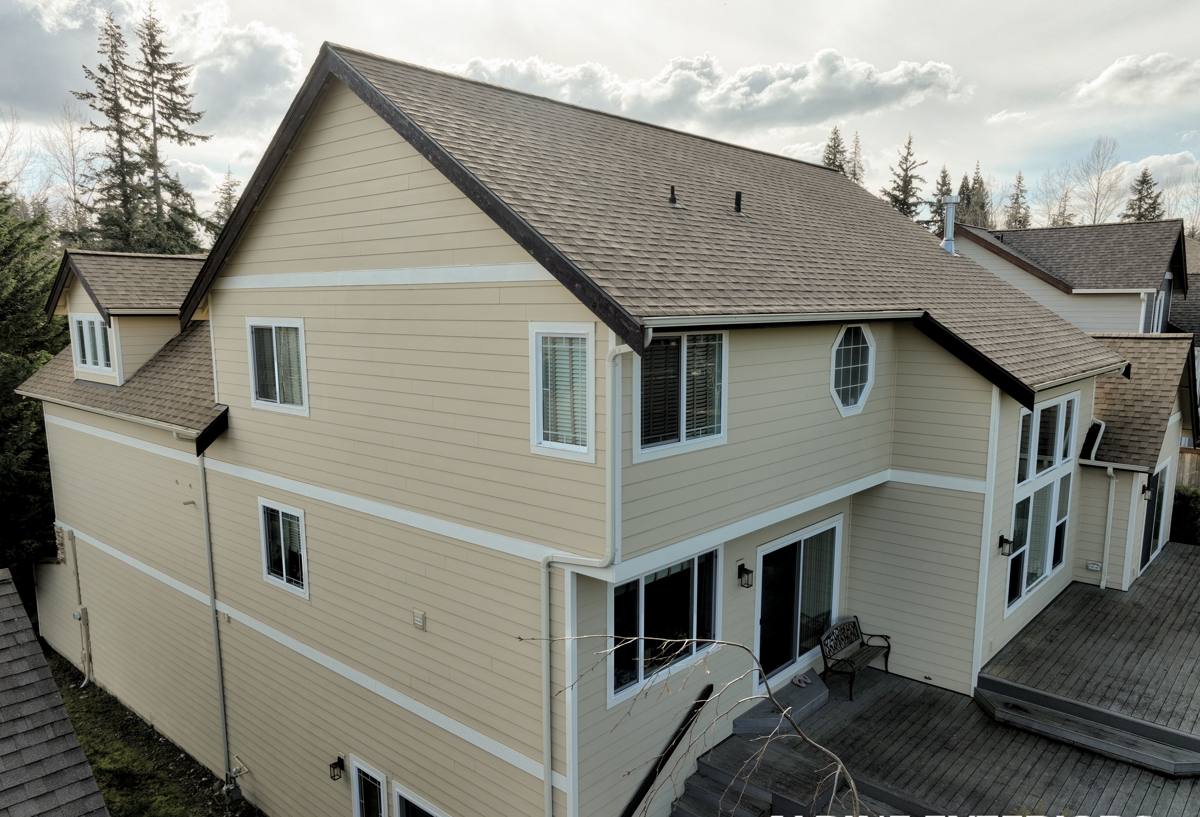
Signs Your Deck Needs Repair, Not Replacement
Most decks don't fail all at once. They show warning signs for months or years before a board gives way or a rail feels loose. Catching those signs early is usually the difference between a repair bill and a full rebuild.
Surface Problems vs. Structural Problems
Surface issues — graying wood, peeling finish, minor splintering — are cosmetic and don't affect safety. Structural issues are a different category entirely: soft or spongy decking, joists that flex more than they used to, a ledger board pulling away from the house, posts that feel loose at the base, or rust streaks bleeding out from under fasteners. Structural issues don't get better on their own, and in a climate this wet, they tend to get worse quickly once moisture finds a way in.
Moss and Algae as a Warning Sign, Not Just an Eyesore
Moss on a deck surface isn't only cosmetic. Where it grows thick, it holds moisture against the wood around the clock, which accelerates rot underneath a surface that can still look intact from a few feet away. A deck that's green or slick more often than not, especially in shaded corners, is a deck that's likely losing structural wood faster than the owner realizes.
What a Correct Deck Repair Actually Involves
A repair that's done right starts below the decking, not at it. Boards are the easiest part to see and the easiest part to replace — but if the framing underneath is compromised, new boards on top of bad joists just buys a little time before the same problem resurfaces.
A proper repair looks at:
- The ledger board connection to the house — the single most common source of catastrophic deck failure when it's improperly flashed or fastened
- Joists and beams for soft spots, checking (splitting), and rot, especially where they meet the ledger or sit in hangers
- Posts and footings for movement, rot at grade, and adequate bearing
- Fasteners and joist hangers for corrosion, especially in older decks built before corrosion-resistant hardware was standard
- Guardrails and stair railings for code-required height and baluster spacing, which get overlooked in cosmetic-only repairs
Whatcom County follows the Washington State amendments to the International Residential Code, and any structural deck repair — not just new construction — should meet those same standards for guardrails, stair geometry, and connection hardware. A repair that ignores code isn't really finished, even if it looks fine.
Repair vs. Replace: How We Make That Call
| Factor | Favors Repair | Favors Replacement |
|---|---|---|
| Framing condition | Joists and ledger are solid, only isolated boards affected | Widespread soft framing, especially at the ledger |
| Age of structure | Under 15-20 years, built to reasonable standards | Older deck with outdated hardware and undersized framing |
| Extent of moss/rot damage | Localized to shaded or low-airflow areas | Present across most of the deck surface |
| Code compliance | Rails and stairs already meet current code | Guardrails, stairs, or spacing are out of code and would need rebuilding anyway |
| Cost over time | Repair cost is a fraction of replacement | Repair cost approaches or exceeds a meaningful share of rebuild cost |
Fasteners, Flashing, and the Details That Get Skipped
Salt air shortens the working life of standard fasteners and hardware. Screws, nails, and joist hangers that would last decades further inland can start corroding visibly within just a few years near the water, and once a fastener weakens, the connection it's holding is only as strong as the corroded metal — regardless of how solid the wood around it looks.
When we repair a deck in this area, we specify stainless steel or high-grade coated fasteners and hardware rated for exposure and treated lumber contact, not the cheapest hardware that happens to fit. We also pay close attention to ledger flashing, since a poorly flashed ledger board is one of the most common reasons decks let water into the house framing itself — a problem that starts as a deck issue and becomes a much more expensive siding or framing issue if it's missed.
Moss, Shade, and Long-Term Maintenance
Many lots in and around California Creek have tree cover that keeps parts of a deck shaded most of the day. Shade is pleasant to sit under, but it's also exactly the condition moss and algae need to establish themselves, and it slows how quickly a deck dries out after Whatcom County's frequent rain. A deck repair here isn't complete without a maintenance plan that accounts for that.
What We Recommend Homeowners Do Between Professional Checkups
- Sweep debris (needles, leaves, seed pods) off the deck regularly — trapped debris holds moisture and feeds moss growth
- Clean visible moss and algae with an appropriate deck cleaner before it spreads, rather than waiting for a full seasonal cleaning
- Keep gutters and downspouts clear so runoff isn't draining directly onto or under the deck
- Reapply sealant or finish on schedule — UV and moisture exposure break it down faster here than in drier climates
- Check under the deck once or twice a year for standing water, soft framing, or pest activity
- Trim back overhanging branches where practical to improve airflow and sun exposure on shaded sections
None of this replaces a periodic structural check, but it slows down the moisture and moss cycle that causes most of the repair calls we get in shaded, coastal-influenced neighborhoods like this one.
Our Deck Repair Process
We keep the process straightforward because homeowners deserve to know exactly what's happening to their deck and why.
1. On-Site Inspection
We walk the deck surface, check the framing from underneath where accessible, probe suspect areas for soft or rotted wood, and inspect the ledger connection, posts, and hardware. This is where we tell you honestly whether you're looking at a repair or something larger.
2. Clear Scope and Explanation
Before any work starts, we explain what's failing, why it failed (often tied directly to moisture, shade, or corrosion patterns specific to this area), and what the repair involves — in plain terms, not a vague line item.
3. The Repair Itself
We replace only what needs replacing — rotted joists, compromised ledger sections, corroded hardware, damaged decking — using fasteners and materials suited to this climate, and we bring any out-of-code guardrail or stair elements up to current standard as part of the work.
4. Final Check
We test the repaired areas for solidness, confirm rails and connections are secure, and walk you through what maintenance will help the repair last, including the specific moss and moisture habits of your particular yard.
Repair Materials: Matching Wood, Composite, and Hardware
Repairs go smoother and last longer when materials are matched thoughtfully rather than by whatever's on the shelf. Pressure-treated lumber remains a solid, economical choice for framing repairs since it's rated for ground and moisture contact. For visible decking repairs, we'll talk through the tradeoffs honestly: wood is easier to spot-repair and blends with an existing deck, while composite decking resists moss staining and moisture absorption better but can be harder to patch invisibly if only part of a deck needs new boards, and it carries a higher upfront cost. Neither is automatically "better" — it depends on the deck's age, what's already there, and what the homeowner wants to maintain long-term.
Whatever material is used, we don't cut corners on the hardware underneath it. A composite deck surface fastened with undersized or non-rated hardware fails the same way a wood deck does — the visible material was never the weak link to begin with.
Why Hire a Crew That Already Works California Creek
A deck repair done by someone unfamiliar with this specific stretch of Whatcom County often misses the conditions that actually caused the damage — they'll replace a rotted board without asking why that particular corner rotted first, or use standard hardware without accounting for salt air corrosion rates. A crew that already works in California Creek and the surrounding Blaine area has seen the pattern before: which corners of a deck fail first under tree cover, how fast moss returns without airflow, and which fastener grades actually hold up this close to the water.
That familiarity shows up in the repair itself — fewer callbacks, fewer surprises once we open up the framing, and a fix that accounts for the next ten winters, not just the current problem. It's also why we can usually give you a straight answer on-site about whether you're looking at a repair or something bigger, instead of guessing.
If your deck has soft spots, visible moss buildup, loose rails, or you're just not sure what condition it's really in underneath, we're happy to take a look. Reach out for a free, no-pressure estimate — the form below gets you started.