 Blaine Window
 Why Bellingham Decks Wear Differently
A deck in Bellingham lives a harder life than the same deck built somewhere dry and inland. Whatcom County sits right on the water, which means salt-laden air moving off Bellingham Bay and the Strait of Georgia settles into every exposed fastener, hinge, and railing bracket. Add in months of driving rain each winter and a moss season that can stretch from October well into May, and you have a structure that's fighting three separate battles at once: corrosion, moisture intrusion, and organic growth that traps water against wood and composite surfaces alike.
None of that means a deck is doomed. It means a deck needs to be built and repaired with those specific conditions in mind, not with a generic approach borrowed from a drier climate. We work on decks throughout Whatcom County, and Bellingham's mix of older homes, waterfront and near-waterfront lots, and heavily treed properties gives us a good read on how local decks actually fail — and what it takes to fix them properly instead of temporarily.
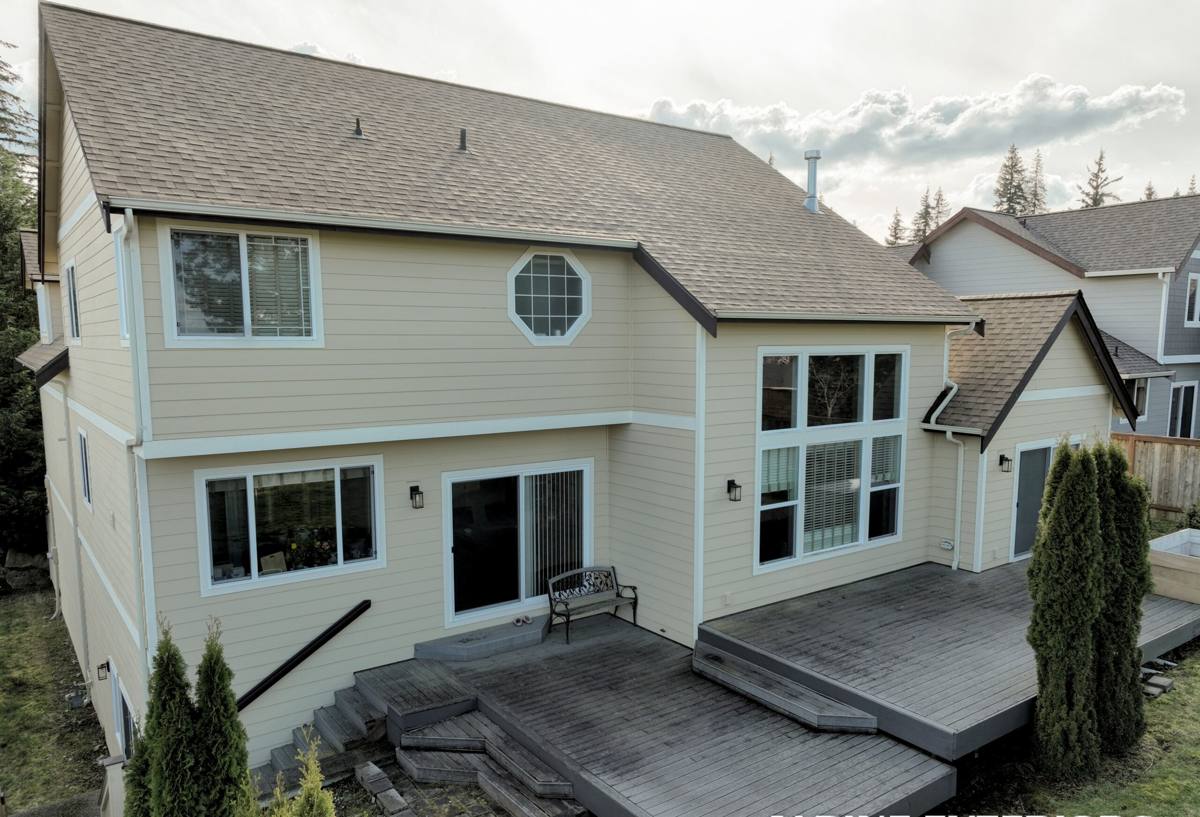
How Salt Air, Rain, and Moss Actually Damage a Deck
Salt Air and Corrosion
Salt-bearing air doesn't need to be blowing straight off the water to do damage — it travels on prevailing winds well inland from the shoreline. Over time it accelerates corrosion in the metal components most homeowners never think about: joist hangers, structural screws, post bases, and railing hardware. A deck can look solid on the surface while its connectors are quietly rusting underneath. That's a structural issue, not a cosmetic one.
Driving Rain and Moisture Intrusion
Bellingham's rain isn't just frequent, it often comes in sideways during winter storms, which pushes water into places a simple overhead roof or awning wouldn't stop. Ledger boards where the deck attaches to the house, end grain on cut boards, and gaps between decking planks are the usual entry points. Once moisture gets behind flashing or into end grain, it doesn't dry out quickly in our climate — and wood that stays damp for extended periods is exactly what leads to rot.
Moss, Algae, and Trapped Moisture
A long, mild, wet moss season means organic growth gets a real foothold on horizontal surfaces, especially in shaded spots under trees or on the north side of a house. Moss and algae hold moisture against the deck surface long after the rain has stopped, which softens wood fibers and slowly degrades even some composite products. It also makes stairs and walking surfaces slick, which is a safety issue as much as a maintenance one.
What "Correct" Deck Repair Looks Like Here
A repair that only addresses what's visible from above tends to fail again within a season or two in this climate. A repair that's done right accounts for what's happening underneath and behind the surface. That generally means:
- Inspecting structural framing — joists, beams, and posts — not just the decking boards themselves
- Checking ledger board attachment and flashing where the deck meets the house, since this is the single most common source of hidden rot
- Evaluating fasteners and hardware for corrosion, not just visible rust on the surface
- Confirming proper drainage and spacing so water sheds off the deck instead of pooling or wicking into end grain
- Matching repair materials to what's already there, or recommending an upgrade where the original material or hardware wasn't suited to a marine climate in the first place
Skipping any of these steps usually means the same problem resurfaces, just in a different spot, a year or two down the road.
Common Bellingham Deck Repairs We Handle
Rotted or Soft Boards
Individual boards that have softened from trapped moisture usually get replaced rather than patched. We match species and dimension as closely as possible and make sure the surrounding boards and framing underneath aren't hiding the same problem before closing things back up.
Ledger Board and Flashing Repair
This is the highest-stakes repair on most decks because it's a structural connection to the house, and it's also the area most likely to have been under-flashed or improperly sealed originally. Correcting it properly means pulling decking back far enough to actually see the condition of the ledger and the house's rim joist, not just caulking over a symptom.
Railing and Post Repair
Loose or wobbly railings are often a hardware or post-base corrosion issue rather than a railing problem itself. We check post attachment at the framing level, since a railing that's cosmetically tightened but structurally loose underneath is a liability, not a fix.
Stair Repair and Rebuilds
Stairs take the most direct hit from foot traffic, standing water, and moss buildup, and they're also where a failure is most likely to cause an injury. We look at stringer condition, not just tread boards, since a stringer that's been quietly rotting is far more serious than a worn tread.
Fastener and Hardware Replacement
Where original fasteners weren't rated for a coastal environment, we replace them with hardware appropriate for the exposure — this alone extends the life of an otherwise sound structure considerably.
Repair vs. Replace: How We Help You Decide
Not every deck with problems needs to be torn out. But a deck with widespread structural issues, or one that's had repeated surface repairs without ever addressing the underlying cause, often costs more to keep patching than to rebuild properly. Here's a general framework for how we think through it:
| Condition Found | Typical Approach | Why |
|---|---|---|
| Isolated soft or rotted boards, sound framing | Board-level repair | Structure is fine, only the wear layer failed |
| Rusted hardware, framing still solid | Hardware replacement | Corrosion caught before it compromised structural wood |
| Rot at ledger board or multiple framing members | Targeted structural rebuild | Structural integrity is affected, not just the surface |
| Widespread rot, corrosion, and repeated past patch jobs | Full deck replacement | Cost of chasing individual failures exceeds a proper rebuild |
We'll always tell you honestly which category your deck falls into rather than defaulting to the most expensive option.
Materials That Hold Up in a Marine Climate
Material choice matters more here than in drier parts of the state. Pressure-treated lumber, cedar, and composite decking all perform differently under constant moisture and salt exposure, and each comes with real trade-offs around maintenance, appearance, and long-term moisture behavior. We'll walk through those trade-offs honestly for your specific deck rather than steering you toward whatever's easiest to install. What matters most regardless of decking material is that the fasteners, flashing, and structural hardware underneath are rated for coastal exposure — that's where a lot of otherwise-good decks run into trouble.
Our Deck Repair Process
- On-site inspection — we look above and below the decking, checking framing, ledger attachment, and hardware condition, not just what's visible on the surface
- Honest assessment — you get a clear picture of what's failing, what's still sound, and what your realistic options are
- Written estimate — scope and approach laid out plainly before any work begins
- Repair work — done to hold up against the conditions your deck actually faces, not a generic standard
- Final walkthrough — we confirm the repair addressed the cause, not just the symptom
Simple Maintenance That Extends the Life of a Repair
A good repair lasts longer with a little seasonal attention. A short checklist worth keeping in mind between visits:
- Sweep leaves and debris off the deck regularly, especially in fall, so moisture and organic matter don't sit on the surface
- Treat moss and algae growth before it spreads across the whole deck surface
- Check that gaps between boards stay clear so water can drain instead of pooling
- Look at railings and stair treads periodically for any looseness, which often shows up before visible damage does
- Keep an eye on the area where the deck meets the house, since that's the most common spot for hidden moisture problems to start
Why Hire a Crew That Already Works in This Area
A contractor who mostly works inland or in a drier climate can still build a deck that looks right — but "looks right" and "built for Whatcom County weather" aren't always the same thing. Knowing how far salt air travels inland, how long moss season really lasts here, and which failure points show up first on a Bellingham deck comes from doing this work locally and repeatedly, not from a general contracting background. That local knowledge shows up in the details: which hardware we reach for, how we handle ledger flashing, and where we know to look first during an inspection.
If your deck has soft spots, loose railings, visible rot, or you just haven't had it looked at in a while, we're happy to come take a look. We offer free, no-pressure estimates — you'll get an honest read on what your deck actually needs, with no obligation to move forward. The form below is the easiest way to get started.