 Blaine Window
 Deck Building in Cherry Point
Cherry Point sits close enough to the water that salt air, wind, and moisture are part of daily life for anyone building outdoors here. A deck built the way it would be built forty miles inland — standard fasteners, standard drainage details, standard maintenance schedule — will show its age faster in this setting. A deck built for Cherry Point's actual conditions holds its finish, its structure, and its footing for years longer. That difference is the whole point of this page: what a deck needs to survive here, and what a correctly built one actually involves.
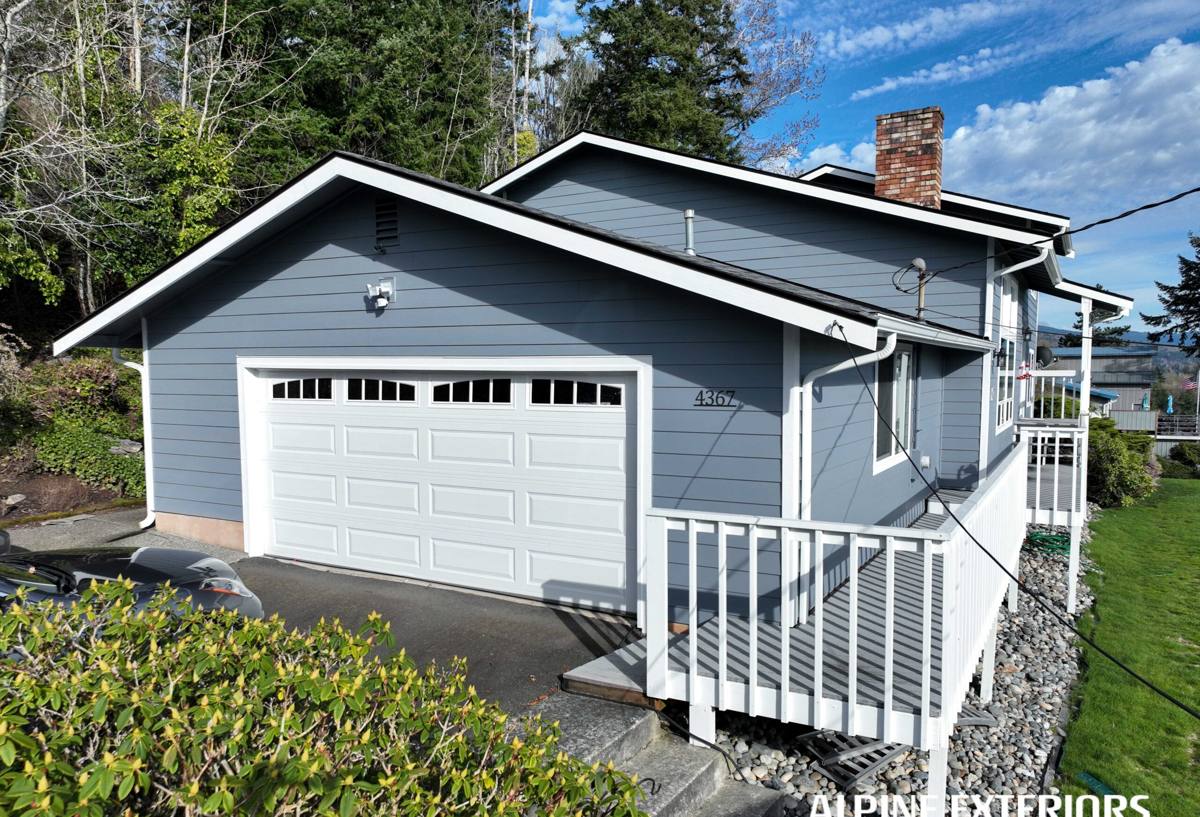
Why Cherry Point's Conditions Are Hard on Decks
Whatcom County's northwest corner gets a specific combination of stressors that most decking materials and hardware weren't designed around by default.
Salt Air and Corrosion
Airborne salt from the Strait of Georgia and Puget Sound doesn't just affect homes right on the waterfront — it travels on the wind and settles on anything exposed outdoors, including decks set back from the shoreline. Salt accelerates corrosion in fasteners, hangers, and any exposed metal hardware. Standard electro-galvanized screws and joist hangers that would last decades in a dry inland climate can start rusting, staining the decking, and losing holding strength within a few seasons out here.
Driving Rain
Storms coming off the water don't just fall straight down — wind-driven rain gets pushed sideways into ledger boards, fascia, and any gap in the flashing. That means water intrusion points that would be minor elsewhere (a poorly flashed ledger, a missed sealant joint) become real rot risks in Cherry Point. Water finds its way behind rim joists and into end grain faster when it's arriving at an angle under wind pressure.
The Long Moss Season
Cool, damp, and shaded conditions for much of the year make this a strong moss climate. Moss holds moisture against decking surfaces and structural wood far longer than a dry surface would, which speeds up rot in untreated or poorly ventilated framing and makes boards slick and slippery underfoot. A deck with poor airflow underneath or too little slope for drainage becomes a moss magnet within a couple of seasons.
Choosing the Right Decking Material
There's no single "best" decking material for every project — it depends on budget, maintenance tolerance, and how exposed the site is. Here's how the common options actually perform under Cherry Point conditions.
| Material | Salt Air Performance | Moss/Moisture Resistance | Maintenance |
|---|---|---|---|
| Pressure-treated fir/hem-fir | Good with stainless or coated fasteners | Needs regular cleaning and resealing to resist moss and rot | Annual cleaning, refinish every 2-3 years |
| Cedar | Naturally decay-resistant, holds up well | Still needs airflow underneath; surface grays without maintenance | Periodic cleaning and oiling to preserve color |
| Capped composite decking | Excellent — no corrosion of the board itself | Resists rot; can still get slick with moss film if shaded and unwashed | Occasional washing, no sealing or staining |
| PVC/vinyl decking | Excellent, fully non-porous | Best moisture resistance of the group | Lowest maintenance; periodic washing only |
Composite and PVC decking cost more up front but remove most of the rot and refinishing burden that Cherry Point's climate creates for wood. Wood costs less initially and can look great here, but only if the homeowner is realistic about the cleaning and resealing schedule it needs to actually last. We'll walk through this trade-off honestly for your specific site and sun/shade exposure rather than push one material across the board.
Framing and Hardware: Where Decks Actually Fail First
The decking surface is the part everyone sees, but the framing and fasteners underneath are what determine whether a deck lasts 10 years or 30. This is where corner-cutting shows up years later as a structural problem, not just a cosmetic one.
- Fasteners: stainless steel or heavy hot-dip galvanized screws and bolts rated for coastal exposure, not standard interior-grade coated screws
- Joist hangers and connectors: coastal-rated (ZMAX or equivalent) hardware to resist the corrosion standard galvanized hardware sees near salt air
- Ledger flashing: properly lapped, self-adhering flashing membrane at the house connection — the single most common source of hidden rot on any deck
- Footings: sized and set to the frost depth and soil bearing requirements for this part of Whatcom County, not guessed at
- Post bases: elevated, standoff-style bases that keep post end grain off standing water rather than embedded directly in concrete
None of this is visible once the deck is finished, which is exactly why it matters who builds it and how carefully. A deck that looks identical on day one can behave very differently by year eight depending on what's happening below the boards.
Drainage, Airflow, and Moss Prevention Built In
Given how long the damp season runs here, we treat drainage and ventilation as part of the design, not an afterthought.
Board Spacing and Slope
Correct gapping between boards and a slight slope away from the house lets water shed instead of pooling, which cuts down significantly on the standing moisture that moss and mildew need to establish.
Under-Deck Airflow
Low decks or decks close to grade need enough clearance and cross-ventilation underneath to let the framing dry out between rain events. Skirting, when used, should still allow airflow rather than sealing the underside completely — a fully enclosed, unventilated underside is one of the most common causes of hidden rot we see on older decks in this area.
Keeping Moss From Taking Hold
No deck is moss-proof if it sits in shade through a wet winter, but design choices — spacing, slope, material selection, and keeping surrounding vegetation trimmed back — make a real difference in how often it needs cleaning and how quickly moss returns.
Our Deck Building Process
- On-site assessment: we look at sun/shade exposure, wind exposure, existing drainage patterns, and soil conditions specific to your lot
- Design and material selection: honest conversation about wood versus composite/PVC based on your budget and how much maintenance you actually want to do
- Permitting: we handle the permit application and inspections required for your project
- Framing: footings, ledger flashing, and structural connections built to coastal-grade hardware standards
- Decking and railing installation: proper spacing, fastening, and finish work
- Final walkthrough: we go over the maintenance schedule specific to the material you chose so there are no surprises
Permits and Local Code Considerations
Deck projects in Blaine and unincorporated Whatcom County generally require a building permit once the deck exceeds a certain height or size, and guardrail and stair requirements apply once a deck reaches a certain elevation above grade. Setback requirements from property lines also come into play depending on your lot and zoning. We handle the permit process as part of the job so you're not navigating county requirements on your own, and so the finished structure is inspected and documented correctly — which matters both for safety and for resale down the line.
Maintenance Checklist for Cherry Point Decks
Whatever material you choose, a little seasonal attention goes a long way in this climate:
- Sweep debris and standing leaves off the deck surface regularly, especially in fall
- Wash the surface at least once a year to remove salt film, dirt, and early moss growth
- Check fastener heads and hardware annually for early signs of rust staining
- Inspect ledger flashing and the house connection point for any gaps or wear
- Reseal or re-stain wood decking on the schedule the product actually requires — don't stretch it
- Keep nearby shrubs and trees trimmed back to reduce shade and improve airflow across the surface
- Confirm gaps between boards stay clear so water keeps draining properly
Why Local Experience Matters for This Project
Deck building isn't exotic work, but building one that actually holds up in a place like Cherry Point takes more than a generic materials list. A crew that already works this stretch of Whatcom County knows which fastener grades hold up against the salt air here, how much slope actually clears water given the rainfall this area sees, and how much shade and moss pressure a given lot is realistically going to deal with. That local pattern recognition is the difference between a deck that needs major repair in year six and one that's still solid at year twenty. It also means we're not learning the region's quirks on your project — we're applying what we've already seen work on homes near yours.
If you're planning a new deck or replacing one that hasn't held up to Cherry Point's weather, we're happy to take a look and talk through your options honestly. Fill out the form below for a free, no-pressure estimate.