 Blaine Window
 Why Window Installation in Dakota Creek Is Different
Dakota Creek sits close enough to the water and to the open exposure of Whatcom County's coastline that homes here take a different kind of weathering than houses further inland. Salt-laden air corrodes hardware and fasteners faster than it does even twenty miles east. Driving rain, pushed sideways by wind off the water, finds every gap in a poorly flashed window and works it wider over time. And the long, damp moss season that runs through fall, winter, and much of spring keeps wood trim and sills wet for weeks at a stretch, which is exactly the condition that rot and failed sealant need to spread.
None of that means Dakota Creek homes need exotic materials or gimmicks. It means the installation itself — the flashing, the sealing, the fastener choice, the flush-and-level fit — has to be done correctly the first time, because this climate does not forgive shortcuts the way a drier region might. A window that's "close enough" in Spokane can leak steadily in Blaine within a season or two.
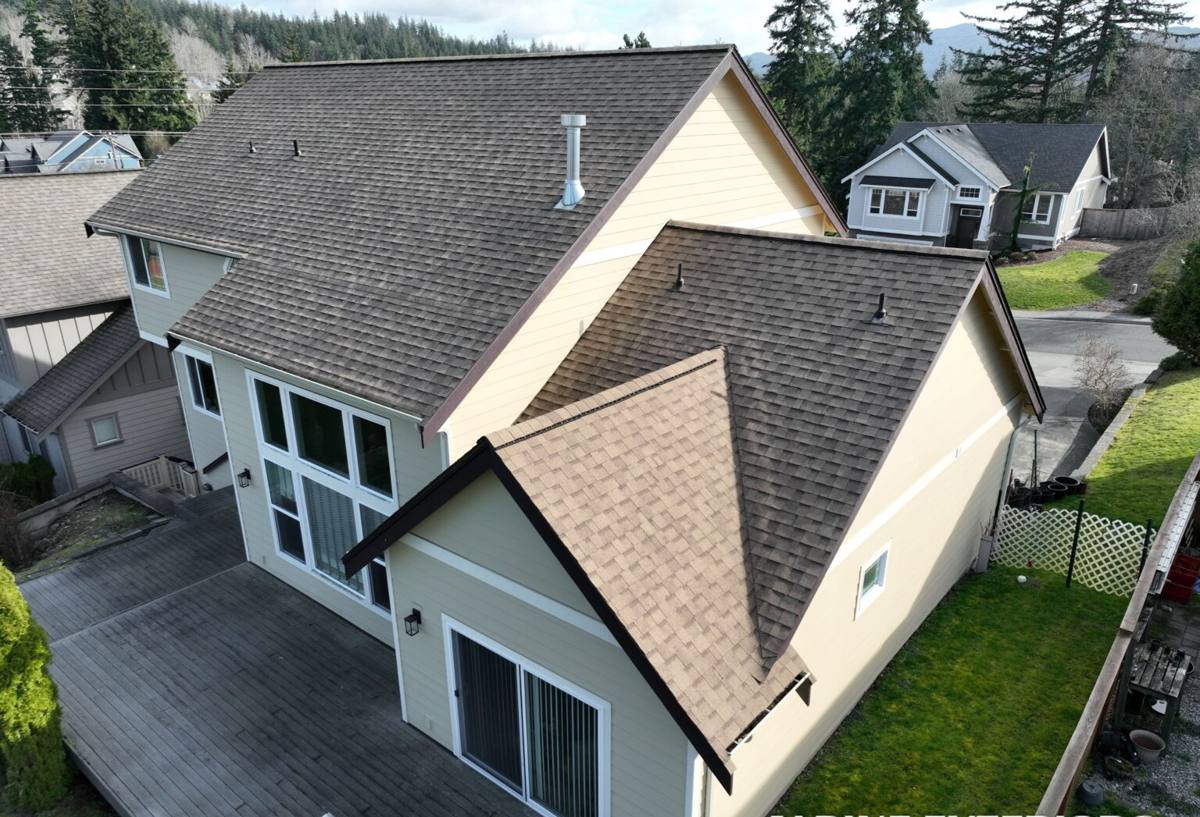
How Local Conditions Show Up in Failing Windows
When we get called out to a home in this area, the problems tend to follow a pattern. Recognizing the early signs saves homeowners from a much larger repair down the road.
- Soft or discolored wood at the bottom corners of the window frame or sill — usually the first sign of trapped moisture
- Fogging or a visible haze between the panes of a double-pane window, meaning the seal has failed
- Difficulty opening, closing, or locking a window that used to operate smoothly, often from swelling or corroded hardware
- Visible moss or dark green-black staining building up on sills, trim, or the siding just below a window
- A draft you can feel on a windy day, even with the window fully latched
- Peeling or bubbling paint on interior trim near the window, which usually points to moisture getting in from outside
- Corroded or rusted screws, hinges, or cranks — common on older aluminum and steel-hardware windows exposed to salt air
Any one of these on its own might just need attention. Several at once, especially on the same window, usually means the installation is failing rather than just the glass or the hardware.
What a Correct Installation Actually Involves
Removal and Opening Inspection
Pulling the old window is also the one chance to see what's happening behind it. We check the sheathing, the framing, and the sill for rot or hidden moisture damage before anything new goes in. Installing a new window over a compromised opening just hides the problem for a while — it doesn't fix it, and in a wet climate it tends to resurface faster than homeowners expect.
Flashing and the Moisture Barrier
This is the step that matters most in Dakota Creek's climate and the one most often rushed by crews unfamiliar with coastal exposure. Proper flashing directs any water that gets behind the siding back out, rather than letting it pool at the sill or track down into the wall cavity. We integrate flashing tape and pan flashing with the home's existing weather-resistive barrier so water has a continuous path out, not a dead end where it collects.
Sealing and Fastening
We use fasteners and sealants rated for coastal, high-salt environments. Standard hardware that would hold up fine inland can start corroding within a couple of years this close to the water. Sealant gets applied at the right points — not everywhere, since over-sealing a window can trap moisture just as badly as under-sealing it can let water in.
Insulation and Interior Finish
The gap between the window frame and the rough opening gets filled with low-expansion foam or backer rod, never packed tight with standard spray foam, which can bow the frame and cause the window to bind or operate poorly. Interior trim goes back cleanly, and we check operation — opening, closing, locking — before calling the job done.
Choosing the Right Window for This Climate
Frame material and glass package both affect how a window holds up to salt air, wind-driven rain, and sustained dampness. There's no single "best" choice for every home — it depends on the home's exposure, the homeowner's maintenance preferences, and budget.
| Frame Material | How It Handles Salt Air & Moisture | Maintenance |
|---|---|---|
| Vinyl | Does not corrode or rot; handles coastal humidity well | Low — occasional cleaning |
| Fiberglass | Very stable in temperature and moisture swings; strong long-term performance | Low |
| Aluminum | Durable but prone to corrosion near salt air unless properly coated | Moderate — watch for pitting over time |
| Wood (clad exterior) | Good insulator; the exposed wood interior needs protection from sustained moisture | Higher — periodic inspection and finish upkeep |
For homes in Dakota Creek's direct wind and rain exposure, we usually steer homeowners toward vinyl or fiberglass frames for their resistance to corrosion and rot. That's a recommendation based on how these materials hold up physically in coastal conditions over years of service — not a knock on wood or aluminum, which both have a place depending on the look and performance a homeowner wants and how much upkeep they're willing to do.
Our Installation Process, Step by Step
1. On-Site Assessment
We look at each window opening individually — exposure direction, current condition, framing, and how water has historically moved around that part of the house. Two windows on the same house can need different approaches depending on which way they face.
2. Product Selection
We walk through frame material, glass package, and hardware options based on that assessment, with honest pros and cons for each rather than steering toward whatever has the highest margin.
3. Removal and Prep
Old window comes out, opening gets inspected and repaired if needed, and the area is prepped for flashing.
4. Flashing, Set, and Seal
New window goes in level and square, flashed and sealed to integrate with the home's existing water management, then fastened with coastal-rated hardware.
5. Insulation, Trim, and Final Check
Gaps get insulated properly, trim is finished on both the interior and exterior, and every window is operated and checked before we consider the job complete.
6. Walkthrough
We go through the finished work with the homeowner, point out anything they should know about care or operation, and answer questions before we leave.
What Affects the Cost
Every home and every window opening is different, so we don't quote a single flat number for "window installation." These are the main factors that move the price up or down.
| Factor | Why It Matters |
|---|---|
| Frame material and glass package | Vinyl, fiberglass, aluminum, and clad-wood windows carry different material costs, and upgraded glass packages add cost but improve performance |
| Condition of the existing opening | Hidden rot or framing damage found during removal adds repair time before the new window can go in |
| Number and size of windows | Larger openings and full-house jobs have different labor and material needs than a single-window replacement |
| Access and height | Second-story or hard-to-reach windows take more time and sometimes equipment |
| Trim and finish work | Matching existing interior or exterior trim profiles can add labor beyond a basic install |
We give a written estimate after seeing the actual windows and openings, not a phone-quote guess — coastal exposure and hidden moisture issues are too variable to price sight unseen.
Why a Crew That Already Works Dakota Creek Matters
There's a real difference between a contractor who occasionally does a window job and one who regularly works homes in this specific stretch of Whatcom County. A crew familiar with Dakota Creek's wind exposure, rain patterns, and the way moss and moisture behave here knows which details to be strict about — flashing integration, fastener choice, sealant placement — because they've seen what happens when those details get skipped in this exact climate. That local pattern recognition is hard to replace with a generic installation checklist written for a different part of the country.
It also matters for troubleshooting. A crew that's worked in the neighborhood has a better sense of common framing setups, siding types, and moisture histories in homes of a similar age and style, which speeds up diagnosis when something's gone wrong behind the wall.
Maintenance After Installation
A correctly installed window in this climate still needs some basic upkeep to stay watertight and operating smoothly.
- Rinse salt residue and debris off frames and hardware periodically, especially after storms
- Check and clear weep holes so water can drain out rather than pool at the sill
- Remove moss or algae buildup on sills and nearby trim before it holds moisture against the surface
- Inspect exterior sealant lines annually and have any cracked or separated caulk addressed promptly
- Operate each window a few times a season to keep hardware from seizing
None of this is heavy maintenance, but skipping it in a wet, salt-exposed climate shortens the life of even a well-installed window.
If your Dakota Creek home has drafty, foggy, or hard-to-operate windows — or you're planning ahead for a full replacement — we're happy to take a look and put together a free, no-pressure estimate using the form below.