 Blaine Window
 Siding in Dakota Creek Has to Answer to the Water
Dakota Creek sits close enough to Semiahmoo Bay and the Strait of Georgia that "coastal" isn't a marketing word here — it's a maintenance problem. Homes in this part of Blaine deal with salt-laden air moving in off the water, wind-driven rain that hits siding sideways instead of straight down, and a wet season that runs long enough for moss and algae to get a real foothold on anything that stays damp. Whatcom County's marine climate is mild compared to a lot of the country, but mild and dry are not the same thing. Siding here needs to shed water fast, resist salt corrosion at every fastener and edge, and not feed the moss that thrives in shade and shoreline humidity.
That combination is exactly why we install James Hardie fiber cement siding exclusively. We don't offer vinyl, LP SmartSide, Cemplank, Allura, or raw wood siding as alternatives — not because those products don't have a place somewhere, but because after years of servicing homes in this exact climate, we don't think they hold up the way a Dakota Creek homeowner deserves. Below is what that actually means for your house.
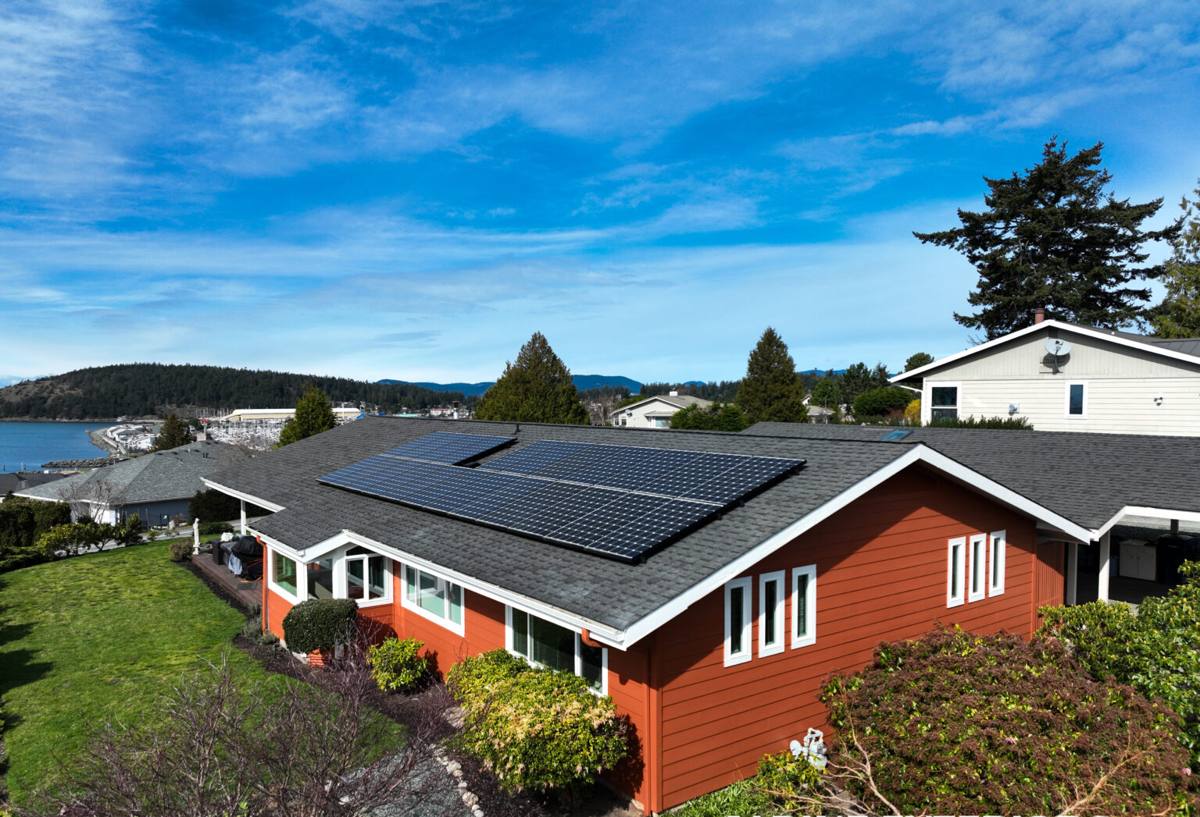
What Salt Air and Driving Rain Do to the Wrong Siding
Three things wear siding down faster near the water than they do further inland:
- Salt-laden air accelerates corrosion on fasteners, flashing, and any exposed metal trim — and it degrades cheap coatings and finishes faster than a dry-climate paint job was ever tested for.
- Wind-driven rain gets pushed under laps, into seams, and around penetrations that would stay dry in a calmer climate. Siding systems that rely on face-sealing rather than proper drainage planes struggle here.
- Extended damp periods — the long shoulder seasons and the shaded, humid microclimates near creeks and tree cover — give moss and algae months at a time to establish themselves on any surface that doesn't dry out quickly or resist organic growth.
Vinyl siding can warp and become brittle with UV and temperature cycling, and its seams and J-channels give wind-driven rain plenty of places to work its way behind the panel. Wood siding — cedar or primed spruce — looks right at home in the Pacific Northwest, but it's the material most vulnerable to moss, rot, and repaint cycles in exactly this kind of moisture load. Engineered wood products like LP SmartSide use a wood-strand core that, while treated, is still an organic substrate; if the factory finish or field seal ever gets compromised at a cut edge or fastener, moisture intrusion becomes a structural concern, not just a cosmetic one. These are honest trade-offs, not defects — but they're trade-offs we don't think make sense to build into a Dakota Creek home when a non-organic alternative exists.
Why James Hardie Fiber Cement Fits This Climate
James Hardie siding is cement, sand, and cellulose fiber — there's no wood core to rot, no organic substrate for moss to root into, and it doesn't warp, crack, or become brittle from UV and salt exposure the way vinyl can. It's also non-combustible, which matters increasingly in Washington as wildfire smoke and ember exposure become part of the conversation even in wetter counties.
HZ5 Engineering for the Pacific Northwest
James Hardie engineers its products by climate zone, and the Pacific Northwest falls into the HZ5 category — formulated for regions with sustained moisture exposure. That's not a marketing distinction; it affects the moisture-resistance characteristics of the board itself. We spec HZ5 product for Dakota Creek homes because it's built for the exact conditions this neighborhood sees most of the year.
ColorPlus Factory Finish
James Hardie's ColorPlus finish is baked on in a controlled factory environment, not brushed on at the jobsite. That matters near the water: factory-cured finishes hold color and resist fading, chalking, and moisture penetration far better than field-applied paint, which is more exposed to application variables like humidity and temperature at the time of the job. A ColorPlus finish also comes with its own dedicated finish warranty, separate from the substrate warranty, so both the board and the color are backed.
What a Correct Installation Actually Involves
Fiber cement siding is only as good as the installation behind it. A rushed or shortcut install can undermine even the best product, and near salt water the margin for error is smaller. A correct Hardie install on a Dakota Creek home includes:
- A properly lapped weather-resistant barrier (house wrap) installed before any siding goes up, not patched around it afterward.
- Flashing at every window, door, and horizontal trim transition — this is where wind-driven rain finds its way in if it's skipped or done wrong.
- Correct fastener placement, spacing, and penetration depth per James Hardie's published installation specs, using fasteners rated for the exposure.
- Proper clearance between the bottom of the siding and grade, decks, patios, and roof lines, so water and moisture have somewhere to go instead of wicking up into the board.
- Caulking only where James Hardie's guidelines call for it — over-caulking traps moisture just as badly as under-caulking lets it in.
- Field-cut edges sealed per manufacturer specification, since an unsealed cut edge is the one place factory protection doesn't reach on its own.
Every one of those steps is a place where a rushed crew can cut a corner that won't show up as a problem for a year or two — and by the time it does, it's a repair, not a warranty claim, because improper installation isn't what the manufacturer's warranty covers.
Why Local Experience in This Exact Area Matters
A siding crew that's worked in and around Blaine and Whatcom County understands things a crew from a drier region has to learn on your house. That includes reading how sun and shade patterns on a given lot affect moss growth, knowing which orientations catch the worst of the wind off the water, and understanding how the local building department expects flashing and drainage details handled on homes exposed to this kind of weather. It also means we've already seen how James Hardie siding performs here over years, not just on paper — which shapes how we detail penetrations, trim, and terminations on every job.
What Affects the Cost of a Dakota Creek Siding Job
Every home is different, so we don't quote sight unseen — but these are the factors that most commonly move the price of a James Hardie install up or down. We're not going to put specific dollar figures here since your quote should reflect your actual house, not a generic range.
| Factor | Why It Matters |
|---|---|
| Removal of existing siding | Tear-off, disposal, and sheathing repair add labor before new siding can go on |
| Home size and wall complexity | More corners, gables, and dormers mean more cutting, flashing, and trim detail |
| Trim, soffit, and fascia scope | Full exterior packages take more time than a siding-only swap |
| Board profile and reveal | Lap siding, panel systems, and shingle-style profiles differ in material and labor |
| Color and finish choice | Factory ColorPlus vs. field-painted primed board changes both material cost and finish durability |
| Site access | Steep grades, tight lots near the water, and scaffolding needs affect labor time |
| Underlying moisture damage | If old siding failed and let water in, sheathing or framing repair may be needed first |
Our Process, Start to Finish
- On-site assessment — we look at your existing siding, sheathing condition, drainage details, and sun/shade/wind exposure specific to your lot.
- Written plan and product spec — we walk you through the HZ5 product, profile, and ColorPlus color options that fit your home, and put the scope in writing.
- Prep and removal — old siding comes off, sheathing is inspected and repaired if needed, and the weather-resistant barrier goes on correctly the first time.
- Installation to James Hardie spec — flashing, fastening, clearances, and sealing done per manufacturer requirements, not shortcuts.
- Final walkthrough — we go over the finished job with you before we call it done.
A Homeowner's Checklist Before Hiring Anyone
Whether you go with us or someone else, these are worth confirming before you sign a siding contract in this climate:
- Is the crew James Hardie certified or specifically experienced installing Hardie products, not just siding in general?
- Will they specify HZ5 product for this climate zone, and can they explain why?
- Does the written quote mention house wrap, flashing details, and fastener spec — or just "install siding"?
- Is the finish factory-applied ColorPlus, or field-painted primed board, and do you understand the warranty difference?
- What clearance will they leave at grade, decks, and roof lines?
- Does the warranty cover installation defects, or only the product itself?
Ready When You Are
If your Dakota Creek home is showing moss buildup, chalky or peeling paint, soft spots, or siding that's just tired of fighting the salt air and rain, we're happy to take a look and give you a straight, no-pressure estimate. Use the form below to get started.