 Blaine Window
 Why Dakota Creek Homes Ask About Energy-Efficient Windows
Dakota Creek sits close enough to the water and to open farmland that homes here take a different kind of weathering than houses further inland. Salt-tinged air moves in off the bay, wind-driven rain comes at windows sideways rather than straight down, and the long gray stretch from fall through spring keeps humidity high enough that moss and algae get a foothold on anything that stays damp too long. Windows are one of the first places all of that shows up — as fogged glass, swollen sashes, drafts around the frame, or trim that's started to go soft.
When homeowners here ask about energy-efficient windows, they're usually not just chasing a lower power bill. They're dealing with a specific room that's always cold in January, a sill that's staying wet longer than it used to, or a window that won't latch tight anymore. In Whatcom County's climate, those problems and energy loss are almost always the same problem wearing two different hats — a window that's no longer sealing correctly is losing heat and letting moisture in at the same time.
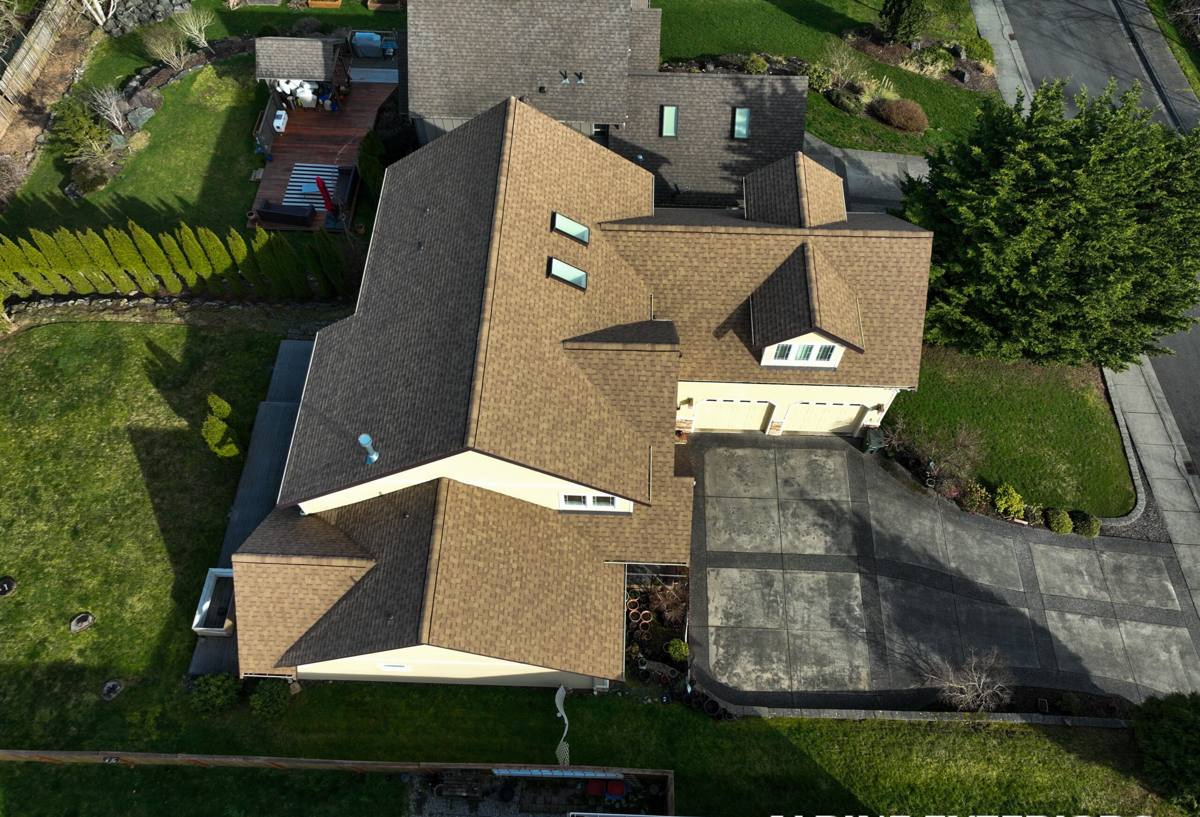
What This Climate Actually Does to Windows
Salt Air and Metal Components
Proximity to the water means airborne salt settles on everything, including window hardware. Over years, that accelerates corrosion on hinges, locks, and balance mechanisms — especially anything not built with marine-grade or well-coated fasteners. A window that operates stiffly or won't lock flush is often a hardware problem before it's a glass problem.
Driving Rain and Wind-Loaded Water
Storms coming off the strait don't just drop rain — they push it. Wind-driven water gets forced sideways into any gap in the flashing, sealant, or frame-to-wall joint that a calm-weather rain would never reach. This is why so many window failures in this area show up as water stains below the sill rather than obvious leaks around the glass itself — the water is entering at the perimeter, not the sash.
Moss, Algae, and the Long Wet Season
Whatcom County's wet season runs long, and anything shaded or north-facing stays damp for weeks at a stretch. That's ideal growing conditions for moss and algae on sills, exterior trim, and cladding around the window opening. Left alone, that growth holds moisture against wood trim and accelerates rot at exactly the joints that are supposed to keep water out.
What "Energy-Efficient" Actually Means for This Job
Energy efficiency in a Dakota Creek window isn't a single spec — it's a combination of glass performance, frame material, and installation quality working together. A high-performance window installed with a poor perimeter seal will still leak air and water. A modest window installed correctly will often outperform a premium one that was rushed in.
- Low-E glass coatings — reduce heat loss through the glass and cut UV fading indoors
- Insulated (multi-pane) glazing — argon or air-filled spacing between panes slows heat transfer
- Warm-edge spacer systems — reduce condensation risk at the glass edge, which matters in a humid climate
- Frame material and construction — affects both insulating value and how well the frame tolerates repeated wet-dry cycles
- Weatherstripping and hardware quality — determines how well the window still seals five and ten years from now, not just on install day
- Correct flashing and sealant detailing at install — the single biggest factor in whether wind-driven rain stays outside
Frame Material Trade-Offs for a Salt-Air Climate
There's no single "right" frame material for every home — the right call depends on the home's exposure, existing trim details, and budget. Here's how the common options generally compare for a climate like Dakota Creek's:
| Frame Type | Moisture / Salt-Air Behavior | Maintenance | Typical Fit |
|---|---|---|---|
| Vinyl | Doesn't rust or corrode; performs well in salt air | Low — no painting required | Most homes prioritizing value and low upkeep |
| Fiberglass | Very stable through wet-dry and temperature cycles | Low | Homes wanting extra durability and a slimmer sightline |
| Wood (clad or unclad) | Classic look, but exposed wood needs protection from driving rain and prolonged damp | Higher — cladding or repainting over time | Homes prioritizing a specific historic or architectural look |
| Aluminum | Hardware and frame components need corrosion-resistant coatings near salt air | Moderate | Larger openings or specific architectural styles |
We'll walk through these trade-offs honestly for your specific home rather than pushing one material for every job — a north-facing wall exposed to weather off the water may call for a different choice than a sheltered, south-facing room.
Where Installation Quality Makes or Breaks the Result
In a climate that throws wind-driven rain at a house for months at a time, the window unit itself is only part of the equation. How it's tied into the wall determines whether it actually keeps water out.
Flashing and Water Management
Proper flashing directs any water that gets behind the siding back out and away from the framing, rather than letting it pool at the sill or wick into the wall cavity. This is especially important on walls that catch prevailing wind and rain directly.
Sealant Selection and Placement
Not every gap should be sealed solid — some joints need to stay able to drain and vent, or trapped moisture becomes a bigger problem than the draft it was meant to fix. Sealant placement has to follow a logic, not just fill every visible gap.
Shimming and Square
A window that isn't shimmed level and square will bind, won't lock tightly, and will develop gaps as the house settles further. This shows up later as drafts or a sash that's hard to operate — problems that trace back to install day, not the product.
Interior and Exterior Trim Integration
Trim has to be re-integrated with the existing siding and interior finish in a way that sheds water outside and looks finished inside. Rushed trim work is one of the most common sources of callbacks in this trade.
Our Process for a Dakota Creek Window Job
- On-site assessment — we look at each window's current condition, the wall's exposure to wind and rain, and any signs of past moisture intrusion around the opening
- Honest scoping — we tell you plainly which windows need full replacement, which could be repaired, and why, without upselling work that isn't needed
- Product selection — we walk through frame material, glass package, and hardware options suited to that specific wall's exposure
- Removal and opening prep — old units come out carefully to check the condition of the framing and sheathing underneath before anything new goes in
- Flashing and weatherproofing — water management details are built correctly before the new window is set, not patched afterward
- Installation, leveling, and sealing — the unit is shimmed, squared, insulated, and sealed to spec
- Trim and finish work — interior and exterior trim is reintegrated cleanly
- Final walkthrough — we operate every window with you before we call the job done
Signs a Dakota Creek Home May Need Window Attention
- Visible condensation or fogging between the panes (a sign the seal has failed)
- Drafts you can feel near the frame on a windy day
- Soft, discolored, or moss-covered trim around the window opening
- A sash that's difficult to open, close, or lock
- Water staining on the interior wall or sill below a window
- Noticeably higher heating costs compared to similar-sized homes nearby
- Visible corrosion on hinges, locks, or cranks
Why Local Experience with This Exposure Matters
A crew that's worked homes throughout the Blaine area and greater Whatcom County knows which walls in a given neighborhood take the worst of the weather, what corrosion looks like on hardware before it becomes a functional failure, and how moss establishes itself on trim in this specific climate. That's different knowledge than a general handyman or an out-of-area crew brings to the job. It means fewer surprises during the estimate, and a install that's built for what this particular stretch of coastline actually does to a house over the years — not a generic install spec pulled from a drier climate.
It also means we're not guessing at how a product will hold up here — we're basing recommendations on what we've actually seen perform, and what we've seen fail, on homes with the same salt air, wind-driven rain, and long wet season that Dakota Creek deals with every year.
What a Realistic Budget Looks Like
Costs vary by window size, frame material, glass package, and how much trim or wall repair is needed once the old unit comes out — a home with hidden moisture damage behind a window will cost more to do correctly than one in good shape. Rather than quote a number that doesn't reflect your actual home, we provide a clear written estimate after seeing the windows in person, broken out so you can see what you're paying for and where.
If you're weighing whether to repair or replace, or just want an honest read on what your windows actually need, we're happy to take a look. Fill out the form below for a free, no-pressure estimate.