 Blaine Window
 Why Peace Arch Homes Need Windows Built for This Climate
Homes near the Peace Arch border crossing sit in one of the more demanding window environments in Whatcom County. You're close enough to Semiahmoo Bay and the Salish Sea to catch salt-laden air off the water, exposed to the driving rain that rolls in off the Strait during fall and winter storms, and shaded enough in places to grow moss on anything that stays damp too long. A window that performs fine in a drier inland climate can start showing problems here within a few seasons if it wasn't chosen and installed with this specific combination of exposures in mind.
Custom windows aren't just about matching an odd-sized opening or getting a particular grid pattern. In Peace Arch homes, "custom" also means selecting materials, seals, and installation details that are matched to salt air, wind-driven moisture, and a wet season that can stretch on for months. That's the lens we bring to every project in this neighborhood.
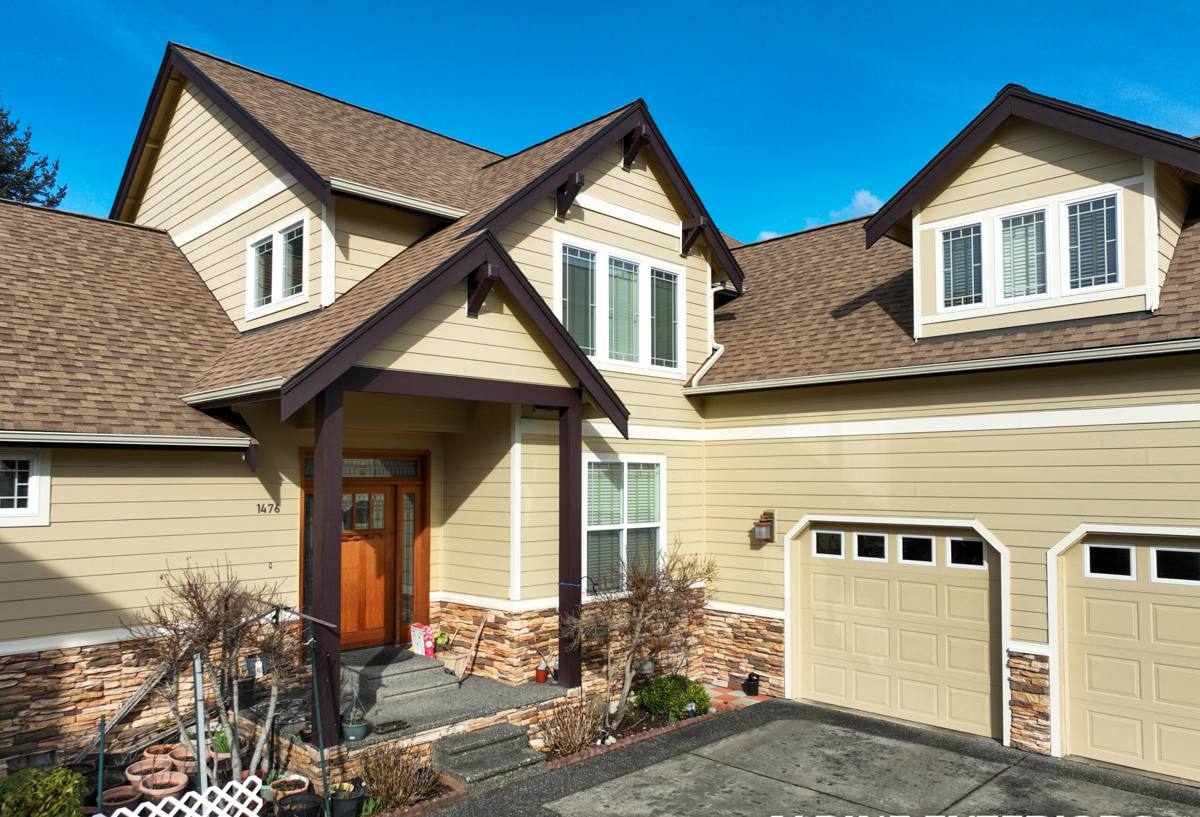
What Salt Air, Rain, and Moss Actually Do to Ordinary Windows
Salt-Laden Air and Metal Components
Proximity to Drayton Harbor and the bay means airborne salt settles on exterior surfaces even on homes that aren't waterfront. Over years, that salt exposure accelerates corrosion on unprotected metal hardware — hinges, locks, balance systems, and screen frames — long before the glass or frame itself fails. Windows with poorly protected or bargain-grade hardware tend to show stiff operation, pitting, or streaking discoloration well ahead of schedule in this kind of air.
Driving Rain and Water Intrusion
Blaine gets weather that doesn't just fall straight down — wind off the water pushes rain sideways into wall assemblies, especially on west- and southwest-facing elevations. A window that relies on caulk alone, rather than proper flashing and drainage detailing, will eventually let water past the frame. Once that happens, the damage is often hidden inside the wall for months before it shows up as a soft spot, a stain, or a musty smell.
Moss, Mildew, and Prolonged Moisture
Whatcom County's long, mild, wet stretch of the year keeps exterior surfaces damp for extended periods, which is exactly the condition moss and mildew need to take hold. Wood trim and sills that stay wet without a chance to dry out are especially vulnerable. This doesn't mean wood windows are off the table — it means the trim, sill design, and finish schedule have to account for a much longer damp season than most manufacturers assume in their standard specs.
Choosing the Right Frame Material for This Location
There's no single "best" window material for every home — the right choice depends on your home's exposure, your maintenance appetite, and your budget. Here's how the common options hold up specifically against salt air and driving rain conditions:
| Frame Material | Salt Air / Moisture Behavior | Maintenance | Best Fit |
|---|---|---|---|
| Vinyl | Won't corrode or rot; performs consistently near the water | Low — occasional cleaning | Budget-conscious replacement, rental properties, most exposures |
| Fiberglass | Very stable dimensionally, strong resistance to moisture and salt | Low | High-exposure elevations, larger custom openings |
| Wood (clad exterior) | Good if exterior cladding is intact; interior wood adds warmth | Moderate — watch cladding seams and sills | Historic character, interior-visible sightlines |
| Aluminum | Conducts cold, can corrode without a marine-grade finish | Moderate | Specific architectural styles, not our default near the water |
For most Peace Arch homes, we steer clients toward vinyl or fiberglass for water-exposed elevations, and reserve wood-interior/clad-exterior combinations for openings where the interior look matters most and the exterior detailing can be done right. We're honest about the trade-offs rather than pushing whatever's easiest to install.
What a Correct Custom Window Installation Involves
Flashing and Water Management
The window unit itself is only part of the job. Proper installation means integrating flashing tape and drainage paths so that any water that does get past the exterior trim is directed back out, not into the wall cavity. In a climate with as much driving rain as this one, skipping or shortcutting this step is the single most common reason "new" windows leak within a few years.
Sizing, Sills, and Structural Fit
Custom work means measuring the actual opening — which, in older Peace Arch homes, is rarely perfectly square — and either building the window to fit or correcting the opening so the unit seats properly. Sills need enough slope to shed water away from the house, and any wood sill or trim needs a finish schedule built for a climate that doesn't fully dry out for months at a stretch.
Sealing Without Trapping Moisture
It's tempting to seal everything heavily to stop drafts and leaks, but overs-sealing a window assembly can trap moisture that has no way to escape, which leads to rot from the inside out. Correct sealing balances weathertightness with the ability for any incidental moisture to drain and dry.
Our Process for Peace Arch Custom Window Projects
- On-site assessment — we look at each opening's exposure, current frame condition, and any signs of past water intrusion before recommending anything.
- Material and glazing selection — matched to that specific wall's sun, wind, and rain exposure, not a one-size-fits-all spec.
- Accurate measurement and ordering — custom sizing to the actual opening, not a generic stock size with gaps to fill.
- Removal and opening prep — checking framing and sheathing behind the old window for hidden moisture damage before anything new goes in.
- Flashing, installation, and sealing — done in the sequence that keeps water moving out and away from the structure.
- Final check and walkthrough — operation, weatherstripping, and finish details confirmed before we call it done.
Signs Your Current Windows Are Losing the Battle
A lot of window problems in this area develop slowly enough that homeowners adjust without noticing. Watch for:
- Sashes that stick, drag, or won't stay up without a prop
- Visible fogging or moisture between panes of double-glazed units
- Soft or discolored wood trim around the frame, inside or out
- Green or black growth on sills or exterior casing that returns after cleaning
- Noticeable draft or cold spot near the frame on a windy day
- Hardware that's stiff, pitted, or won't lock securely
- Paint or finish that's failing faster on certain windows than others (usually a sign of exposure differences)
Any one of these on its own isn't necessarily urgent, but a window showing two or three of them at once is usually past the point where repair makes more sense than replacement.
What Affects the Cost of Custom Windows Here
| Factor | Why It Matters |
|---|---|
| Frame material | Vinyl is generally the most economical; fiberglass and clad-wood cost more but hold up differently under salt exposure |
| Opening condition | Rot or structural repair behind an old window adds labor before the new unit ever goes in |
| Glazing package | Low-E coatings and gas fills add cost but improve comfort and energy performance year-round |
| Elevation and access | Second-story or hard-to-reach windows take more time and equipment |
| Number of units | Whole-house projects typically bring a better per-window cost than one-off replacements |
| Custom sizing or shapes | Non-standard openings, arches, or historic proportions require custom manufacturing |
We give straightforward, itemized estimates so you can see exactly what's driving the number — no vague lump-sum pricing.
Why It Matters to Hire a Crew That Already Works This Area
Window installation practices that work fine in a drier or more sheltered part of the state aren't automatically correct for a property exposed to Peace Arch weather. A crew that regularly works homes in this part of Blaine already knows which elevations take the worst of the wind-driven rain, how quickly moss establishes on north-facing trim, and how salt air shortens the life of untreated hardware. That familiarity shows up in the small decisions — flashing details, sealant choice, hardware grade — that don't show up on a spec sheet but determine whether a window is still performing well in ten years.
It also means we're not learning on your house. We've seen how different frame materials and installation approaches actually hold up in this specific microclimate, not just how they're rated in a manufacturer's brochure written for a national market.
Caring for Your New Windows Year-Round in Whatcom County
Even a well-installed, well-chosen window benefits from a little seasonal attention in this climate. Rinse salt residue off exterior surfaces periodically, especially after storms, and keep weep holes and drainage tracks clear of debris so water can exit as designed. Check exterior caulking annually for cracking or separation — small gaps are easy to address early and expensive to ignore. If moss starts forming on sills or trim, remove it promptly rather than letting it hold moisture against the surface through the wet season. None of this is heavy maintenance, but skipping it in a climate this wet shortens the life of even good windows.
If your windows are showing their age, letting in drafts, or you're planning a renovation and want the openings done right the first time, we're happy to take a look and talk through your options. Fill out the form below for a free, no-pressure estimate on your Peace Arch home.